Skip to Content Facebook Feature Image

News from outside disappears in North Korea

News

News from outside disappears in North Korea
News

News

News from outside disappears in North Korea

2025-11-25 11:51 Last Updated At:16:04

SEOUL, South Korea (AP) — For two hours every day, Lee Si-young and her colleagues broadcast uncensored foreign news into authoritarian North Korea. Her radio audience could go to jail if caught listening.

Lee's Seoul-based Free North Korea Radio station has tried for two decades to give real-time news to North Korea's 26 million people. But Lee says she now feels a sense of crisis about her work as big government-funded broadcasters in the United States and South Korea have fallen silent this year because of major funding cuts and policy changes.

More Images
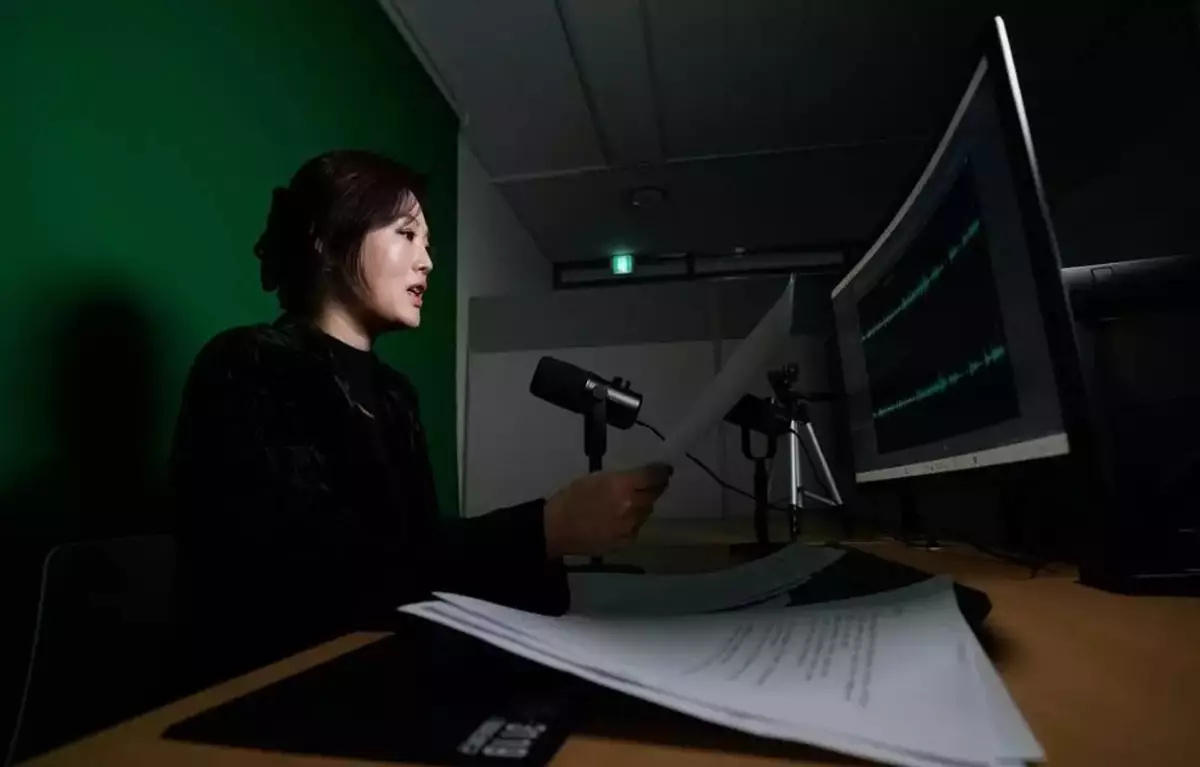
Lee Si-young, head of the Free North Korea Radio station, demonstrates how to record her station's radio programs at her office in Seoul, South Korea, Monday, Nov. 17, 2025. (AP Photo/Ahn Young-joon)
Lee Si-young, head of the Free North Korea Radio station, demonstrates how to record her station's radio programs at her office in Seoul, South Korea, Monday, Nov. 17, 2025. (AP Photo/Ahn Young-joon)

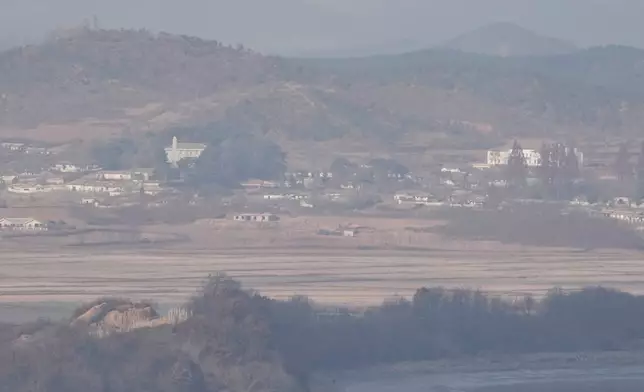
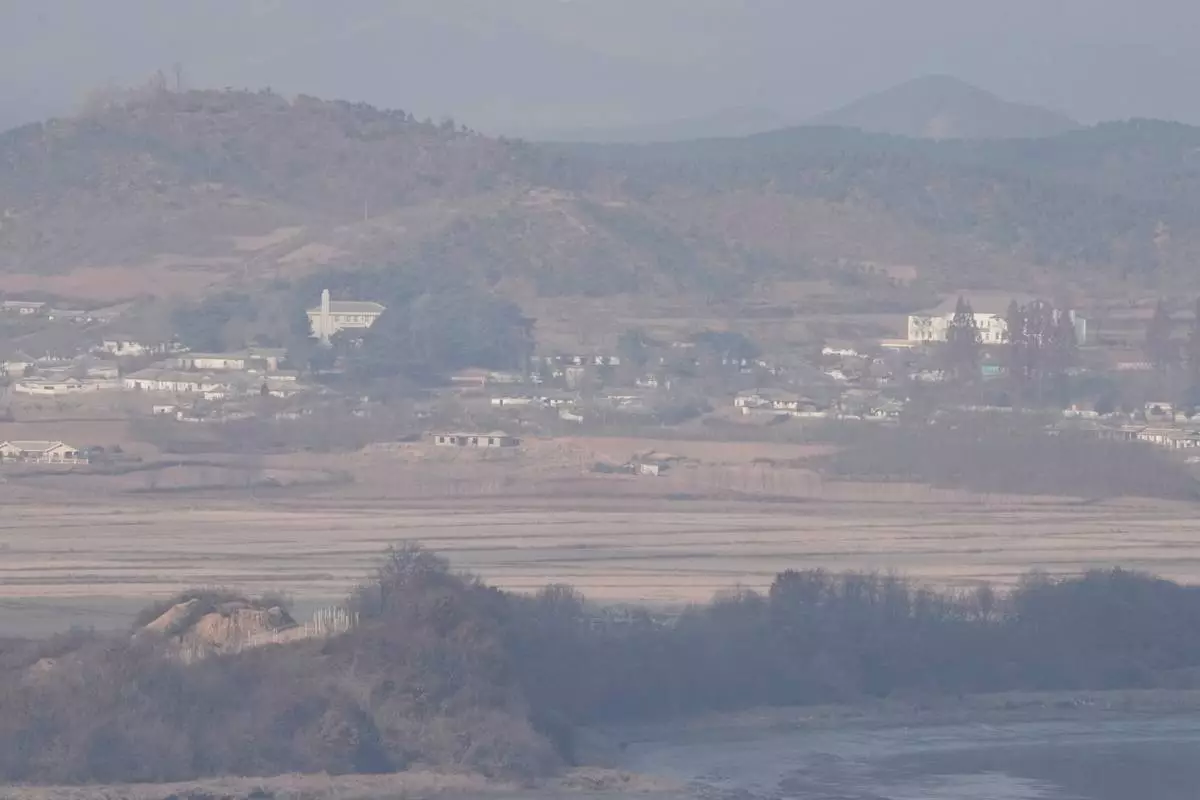
North Korea's Kaepoong town is seen from the Unification Observation Post in Paju, South Korea, Saturday, Nov. 22, 2025. (AP Photo/Ahn Young-joon)
North Korea's Kaepoong town is seen from the Unification Observation Post in Paju, South Korea, Saturday, Nov. 22, 2025. (AP Photo/Ahn Young-joon)

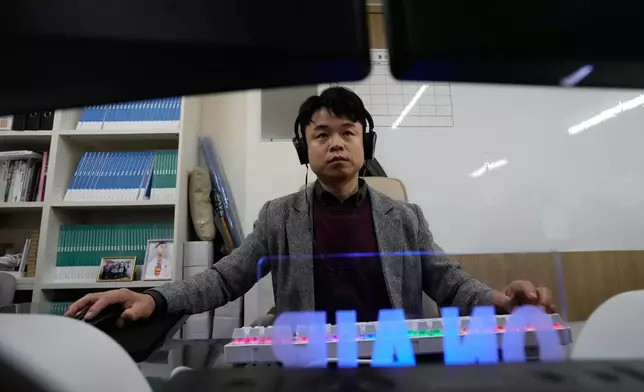
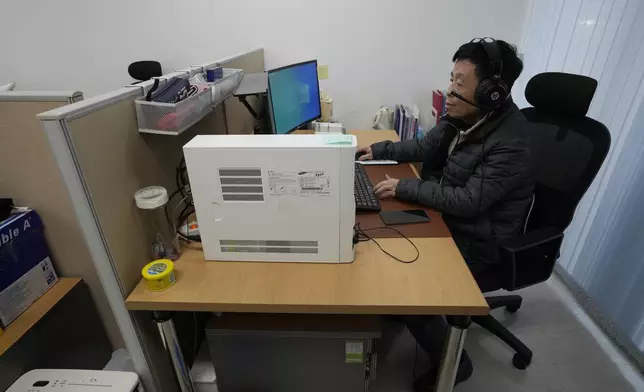
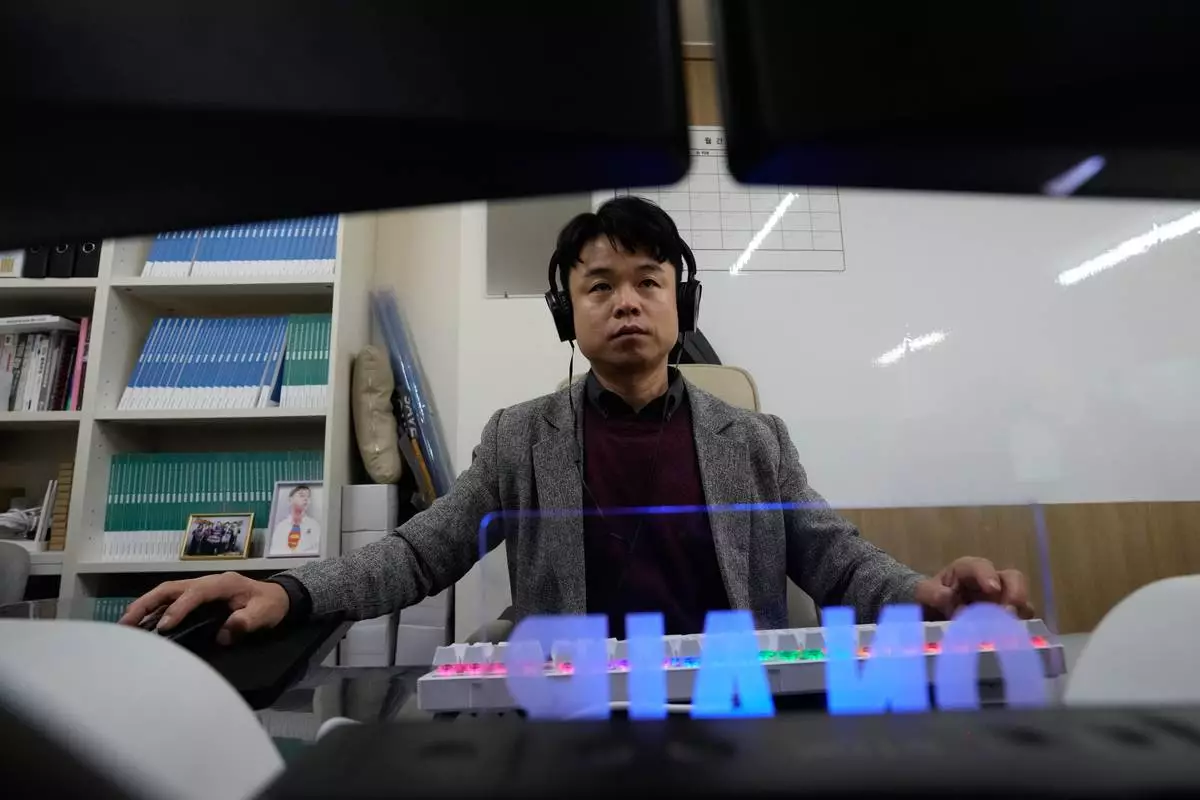
Paek Yosep, a staff of the Korea Internet Studio, works at his office in Seoul, South Korea, Tuesday, Nov. 18, 2025. (AP Photo/Ahn Young-joon)
Paek Yosep, a staff of the Korea Internet Studio, works at his office in Seoul, South Korea, Tuesday, Nov. 18, 2025. (AP Photo/Ahn Young-joon)

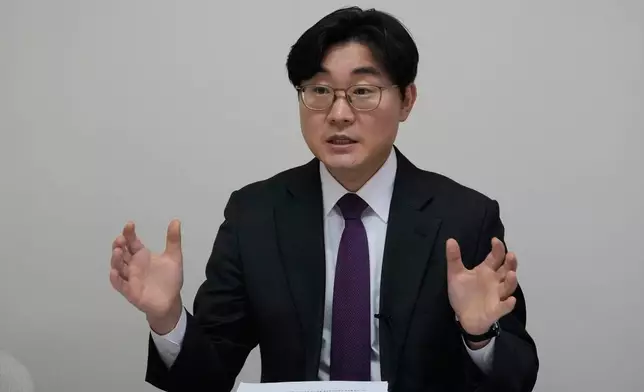
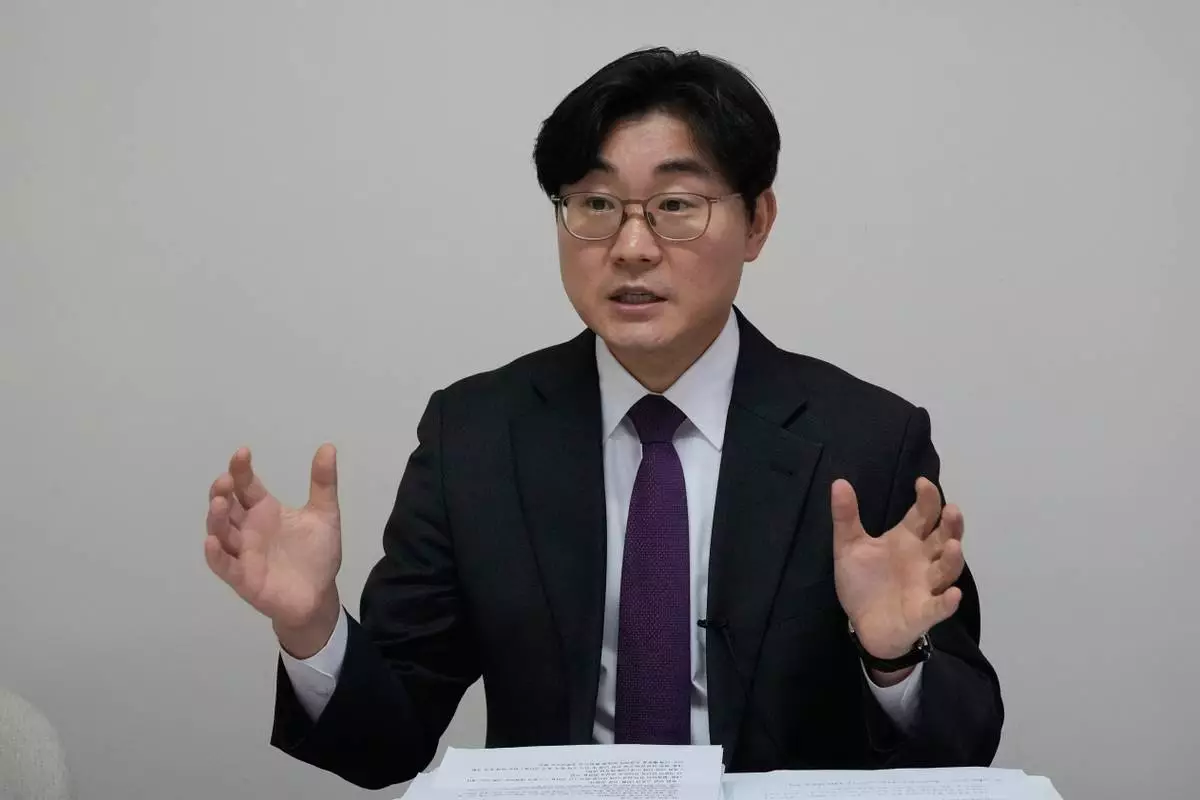
Lee Young-hyeon, head of the Korea Internet Studio, speaks during an interview with The Associated Press at his office in Seoul, South Korea, Tuesday, Nov. 18, 2025. (AP Photo/Ahn Young-joon)
Lee Young-hyeon, head of the Korea Internet Studio, speaks during an interview with The Associated Press at his office in Seoul, South Korea, Tuesday, Nov. 18, 2025. (AP Photo/Ahn Young-joon)

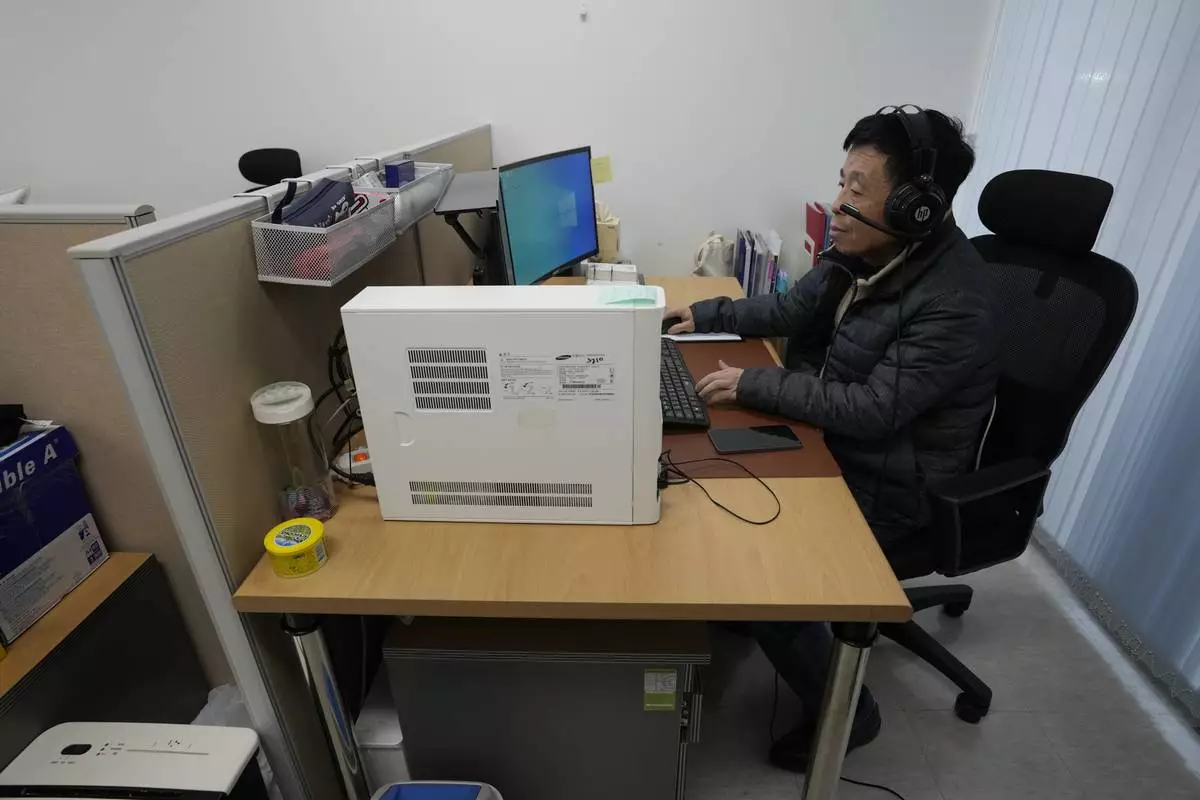
HOLD - Kim Ki-sung, a staff of the Free North Korea Radio station, works at his office in Seoul, South Korea, Monday, Nov. 17, 2025. (AP Photo/Ahn Young-joon)
HOLD - Kim Ki-sung, a staff of the Free North Korea Radio station, works at his office in Seoul, South Korea, Monday, Nov. 17, 2025. (AP Photo/Ahn Young-joon)

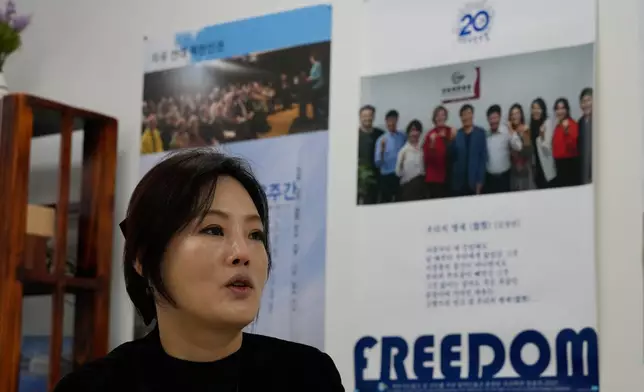
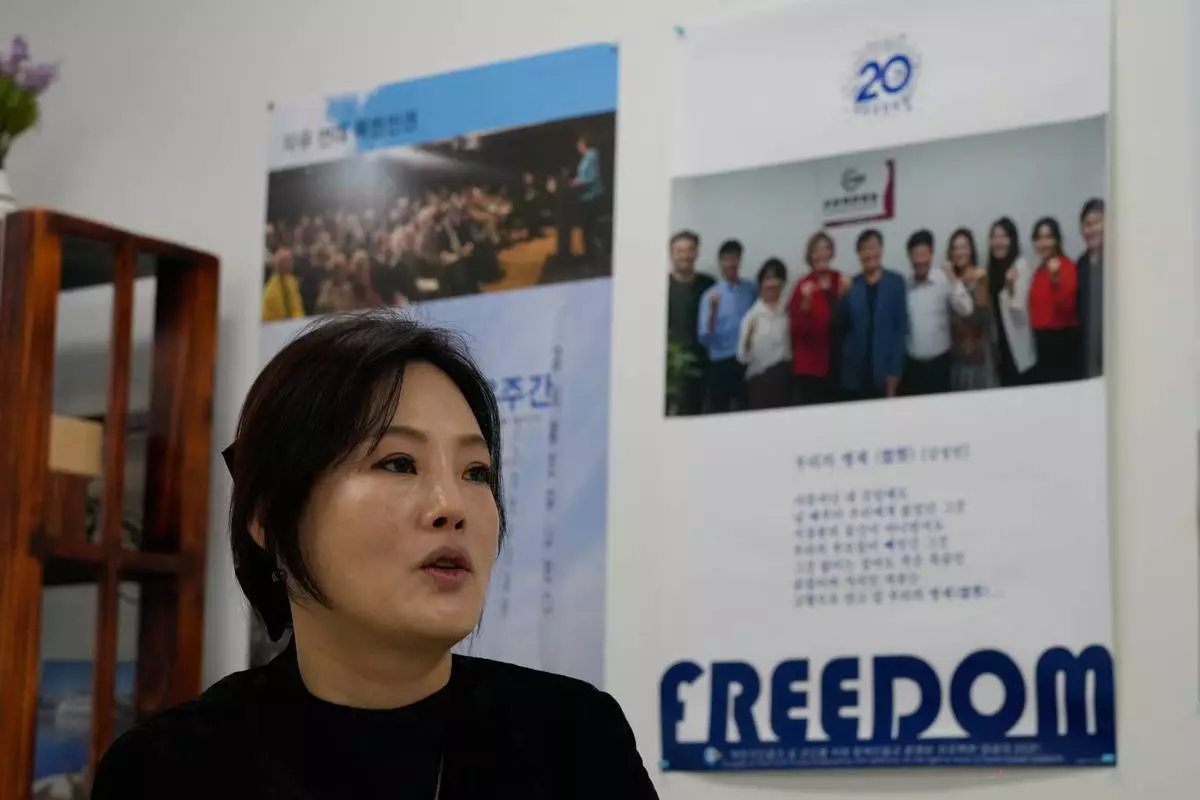
Lee Si-young, head of the Free North Korea Radio station, speaks during an interview with The Associated Press at her office in Seoul, South Korea, Monday, Nov. 17, 2025. (AP Photo/Ahn Young-joon)

Lee Si-young, head of the Free North Korea Radio station, speaks during an interview with The Associated Press at her office in Seoul, South Korea, Monday, Nov. 17, 2025. (AP Photo/Ahn Young-joon)

“Our frustrations with the U.S. and South Korean governments are growing over their suspensions of radio broadcasts," said Lee, a defector who heads the small, nongovernmental FNK radio station. "We're afraid that they've abandoned North Korean residents.”

In North Korea, all radio and TV sets are fixed to state-run channels.

But defectors have testified that they modified their radios or used smuggled ones to covertly tune in to foreign broadcasts at night for news their government didn't want them to hear. That includes outside perspectives of the North's ruling Kim dynasty, more affluent and freer Western lifestyles, and success stories about defectors.

But a respected academic website focused on North Korea, 38 North, assessed last month that such outside radio broadcasting toward North Korea was down by 85% after cuts made by the U.S. and South Korean governments.

Two major U.S.-funded broadcasters — the Voice of America and Radio Free Asia — were forced to stop their Korean-language radio broadcasts after U.S. President Donald Trump in March signed an executive order effectively dismantling the agency that oversaw or provided funding to media networks. Trump said the networks had a liberal bias or were wasteful.

South Korea's liberal government led by President Lee Jae Myung halted cross-border radio broadcasts in an attempt to lower animosities with North Korea. His government also turned off frontline loudspeakers blaring K-pop songs and world news, and banned activists from flying balloons with propaganda leaflets and USB sticks across the border.

The FNK station is now one of several small civil or religious organizations that still transmit radio broadcasts into North Korea. Lee, the FNK head, said that VOA and RFA were much bigger than her group, which has only five workers, all defectors from North Korea.

“We feel heavy-hearted and have a conflict over whether we should tell North Koreans that those suspended broadcasts were paused only temporarily and they would definitely be restarted or that we're the only one of the few who survived,” she said.

Despite setbacks in efforts to spread outside news in North Korea, Lee Young-hyeon, a defector-turned-lawyer in South Korea, this month launched a website and a mobile app meant to provide North Koreans with an alternative way to get outside information.

Lee said his Korea Internet Studio would first target tens of thousands of North Koreans living abroad, including laborers, students, diplomats and their family members. Many of these North Koreans abroad use mobile phones with access to the global internet, a privilege citizens in the North don't have.

Lee said his group aims to produce practical content that North Koreans abroad could use, such as how students can get better credits at foreign schools, what gifts laborers can buy for their loved ones at home and what cryptocurrency is.

“We don't expect the public using our content to launch an uprising and topple the North Korean government,” Lee said. The objective, he said, is for North Koreans to "learn there is such a good world where they can enjoy some freedom and rights.”

Lee said he thinks North Korea will eventually ease its strict restrictions on the internet in a limited manner as it could allow Chinese, Russian, Vietnamese and other foreign companies to open local offices in the North.

Many observers are skeptical, though.

Since 2020, North Korea has enacted highly oppressive laws to toughen its fight against foreign cultural influences, especially South Korea's. The Reactionary Ideology and Culture Rejection Law reportedly imposes up to 10 years of imprisonment with hard labor on those who consume, possess or spread foreign movies and music, and up to five years on those who use unauthorized radio and TV channels.

Some question whether campaigns to provide outside news to North Korea have made a difference. Launches of propaganda balloons and loudspeaker broadcasts have also been a major source of tension with North Korea.

In July, South Korean Unification Minister Chung Dong-young called radio and loudspeaker broadcasts “a relic of the Cold War" and expressed hope that their suspension would improve ties with North Korea. In response to questions posed by The Associated Press, the South Korean Defense Ministry said the suspension of its “Voice of Freedom” radio broadcast was designed to ease military tensions with North Korea.

South Korean officials say North Korea has also switched off its own border loudspeakers and stopped transmitting jamming signals targeting South Korean radio broadcasts. But North Korea is still refusing to resume long-dormant talks with South Korea and the U.S.

Before his defection in 2003, Paek Yosep said he was shocked when South Korean radio broadcasts reported about anti-government protests in Seoul, something that is unthinkable in North Korea. Paek said when he served as a soldier at a frontline unit, he enjoyed listening to music blared from South Korean loudspeakers across the border.

Kim Ki-sung at the FNK station said that the South Korean radio broadcasts he listened to for a decade before he fled North Korea in 1999 influenced his defection. He said he learned that South Korea was rich enough to grant loans to the Soviet Union and that it had so many cars there were traffic jams.

“I'm not sure how strongly addictive drugs are but I think those broadcasts were the same,” Kim said. “Many ask us whether we've confirmed that people in North Korea are truly listening to our programs. But I believe we should keep doing this even if just one person listens to our broadcasts.”

Lee Si-young, head of the Free North Korea Radio station, demonstrates how to record her station's radio programs at her office in Seoul, South Korea, Monday, Nov. 17, 2025. (AP Photo/Ahn Young-joon)
Lee Si-young, head of the Free North Korea Radio station, demonstrates how to record her station's radio programs at her office in Seoul, South Korea, Monday, Nov. 17, 2025. (AP Photo/Ahn Young-joon)

North Korea's Kaepoong town is seen from the Unification Observation Post in Paju, South Korea, Saturday, Nov. 22, 2025. (AP Photo/Ahn Young-joon)
North Korea's Kaepoong town is seen from the Unification Observation Post in Paju, South Korea, Saturday, Nov. 22, 2025. (AP Photo/Ahn Young-joon)

Paek Yosep, a staff of the Korea Internet Studio, works at his office in Seoul, South Korea, Tuesday, Nov. 18, 2025. (AP Photo/Ahn Young-joon)
Paek Yosep, a staff of the Korea Internet Studio, works at his office in Seoul, South Korea, Tuesday, Nov. 18, 2025. (AP Photo/Ahn Young-joon)

Lee Young-hyeon, head of the Korea Internet Studio, speaks during an interview with The Associated Press at his office in Seoul, South Korea, Tuesday, Nov. 18, 2025. (AP Photo/Ahn Young-joon)
Lee Young-hyeon, head of the Korea Internet Studio, speaks during an interview with The Associated Press at his office in Seoul, South Korea, Tuesday, Nov. 18, 2025. (AP Photo/Ahn Young-joon)

HOLD - Kim Ki-sung, a staff of the Free North Korea Radio station, works at his office in Seoul, South Korea, Monday, Nov. 17, 2025. (AP Photo/Ahn Young-joon)
HOLD - Kim Ki-sung, a staff of the Free North Korea Radio station, works at his office in Seoul, South Korea, Monday, Nov. 17, 2025. (AP Photo/Ahn Young-joon)

Lee Si-young, head of the Free North Korea Radio station, speaks during an interview with The Associated Press at her office in Seoul, South Korea, Monday, Nov. 17, 2025. (AP Photo/Ahn Young-joon)


Lee Si-young, head of the Free North Korea Radio station, speaks during an interview with The Associated Press at her office in Seoul, South Korea, Monday, Nov. 17, 2025. (AP Photo/Ahn Young-joon)

NEW YORK (AP) — Wall Street is losing ground on Monday at the start of a week full of economic reports that could drive where interest rates, and thus stock prices, go.

The S&P 500 fell 0.3% in afternoon trading, coming off its first losing week in the last three. The Dow Jones Industrial Average was down 137 points, or 0.3%, as of 12:55 p.m. Eastern time, and the Nasdaq composite was 0.5% lower.

Technology stocks, including companies in the artificial-intelligence industry, were among the heaviest weights on the market following their scary swings last week.

Nvidia, the chip company that’s become the face of the AI boom, rose 1.7%. It was one of the strongest forces pushing upward on the S&P 500 and cushioning some of the impact from losses elsewhere on Monday after dropping 4.1% last week.

Oracle sank another 1.9% following its 12.7% tumble last week, which was its worst in more than seven years. Broadcom fell 5.1%.

AI stocks have been shaky on worries that all the billions of dollars flowing into chips and data centers may not produce a big-enough payoff of profits and productivity to make it worth it. The doubts are causing cracks for the industry, whose earlier surges was the main driver for the U.S. market’s rally to records.

Besides AI, the main focus on Wall Street this week will be what several big updates on the U.S. economy’s health say.

On Tuesday will come the jobs report for November, and economists expect it to show employers added 40,000 more jobs than they cut during the month. Thursday will bring an update on the inflation that U.S. consumers are feeling, and economists expect it to show inflation was at 3.1% last month, still higher than households and policymakers would like.

Such data is under the microscope because the Federal Reserve is trying to figure out if a slowing job market or high inflation is the bigger problem for the economy. The Fed is in a potentially tough spot because fixing one of those problems by moving interest rates would likely worsen the other in the short term.

The hope on Wall Street is that the job market weakens, but only by a little: enough to get the Fed to lower interest rates but not so much that a recession swamps the economy. Wall Street loves lower rates because they can give the economy and prices for investments a boost, even if they also may worsen inflation.

“With the Fed still appearing to be more focused on labor-market weakness than inflation, we’re likely facing a ‘bad news is good’ scenario for the jobs report,” according to Chris Larkin, managing director, trading and investing, at E-Trade from Morgan Stanley.

“As long as the numbers don’t suggest employment is falling off a cliff,” that would mean the market would likely welcome soft numbers, he said.

The spotlight will be brightest on the unemployment rate, not the overall job growth numbers, because the latter is feeling downward pressure from a drop-off in immigrant workers. Economists expect Tuesday’s report to show the unemployment rate at 4.4%, which would keep it near its highest and worst level since 2021.

Treasury yields eased in the bond market ahead of the updates. A report earlier on Monday morning also said that a measure of manufacturing strength in New York state unexpectedly weakened, when economists expected to see continued growth.

The yield on the 10-year Treasury fell to 4.18% from 4.19% late Friday.

Elsewhere on Wall Street, shares of iRobot tumbled 72.6% after the maker of Roomba vacuums said holders of its stock will likely face a total loss after it filed for Chapter 11 bankruptcy protection over the weekend. The company has reached an agreement with its primary contract manufacturer, Picea, to buy it through a process supervised by a U.S. bankruptcy court.

In stock markets abroad, indexes rose in Europe following weaker finishes in Asia.

Indexes fell 1.3% in Hong Kong and 0.6% in Shanghai after the Chinese government reported a drop in investment in factory equipment, infrastructure and other fixed assets. It’s the latest signal that demand in the world’s second-largest economy remains weak.

Japan’s Nikkei 225 sank 1.3% after a quarterly survey of big manufacturers by the central bank showed a slight improvement in sentiment. That could encourage the Bank of Japan to go ahead with a hike to interest rates.

AP Business Writer Elaine Kurtenbach contributed.

Specialists Alex Weitzman, left, and Meric Greenbaum work on the floor of the New York Stock Exchange, Thursday, Dec. 11, 2025. (AP Photo/Richard Drew)

Specialists Alex Weitzman, left, and Meric Greenbaum work on the floor of the New York Stock Exchange, Thursday, Dec. 11, 2025. (AP Photo/Richard Drew)

A currency trader watches monitors near a screen showing the Korea Composite Stock Price Index (KOSPI), left, and the foreign exchange rate between U.S. dollar and South Korean won at the foreign exchange dealing room of the Hana Bank headquarters in Seoul, South Korea, Monday, Dec. 15, 2025. (AP Photo/Ahn Young-joon)

A currency trader watches monitors near a screen showing the Korea Composite Stock Price Index (KOSPI), left, and the foreign exchange rate between U.S. dollar and South Korean won at the foreign exchange dealing room of the Hana Bank headquarters in Seoul, South Korea, Monday, Dec. 15, 2025. (AP Photo/Ahn Young-joon)

A currency trader passes by a screen showing the Korea Composite Stock Price Index (KOSPI), left, and the foreign exchange rate between U.S. dollar and South Korean won at the foreign exchange dealing room of the Hana Bank headquarters in Seoul, South Korea, Monday, Dec. 15, 2025. (AP Photo/Ahn Young-joon)

A currency trader passes by a screen showing the Korea Composite Stock Price Index (KOSPI), left, and the foreign exchange rate between U.S. dollar and South Korean won at the foreign exchange dealing room of the Hana Bank headquarters in Seoul, South Korea, Monday, Dec. 15, 2025. (AP Photo/Ahn Young-joon)

A currency trader works near a screen showing the Korea Composite Stock Price Index (KOSPI), top center left, and the foreign exchange rate between U.S. dollar and South Korean won, top center, at the foreign exchange dealing room of the Hana Bank headquarters in Seoul, South Korea, Monday, Dec. 15, 2025. (AP Photo/Ahn Young-joon)

A currency trader works near a screen showing the Korea Composite Stock Price Index (KOSPI), top center left, and the foreign exchange rate between U.S. dollar and South Korean won, top center, at the foreign exchange dealing room of the Hana Bank headquarters in Seoul, South Korea, Monday, Dec. 15, 2025. (AP Photo/Ahn Young-joon)

Trader William Lawrence works on the floor of the New York Stock Exchange, Thursday, Dec. 11, 2025. (AP Photo/Richard Drew)

Trader William Lawrence works on the floor of the New York Stock Exchange, Thursday, Dec. 11, 2025. (AP Photo/Richard Drew)

Recommended Articles