Skip to Content Facebook Feature Image

China analyst recaps Asian stock markets' Friday performance

China

China

China

China analyst recaps Asian stock markets' Friday performance

2025-12-05 21:17 Last Updated At:21:47

Hong Kong stocks edged higher on Friday powered by renewed optimism on Chinese chipmakers, while Tokyo stocks fell on a stronger yen as the rate hike speculation of the Bank of Japan (BOJ) grows, according to a market analyst.

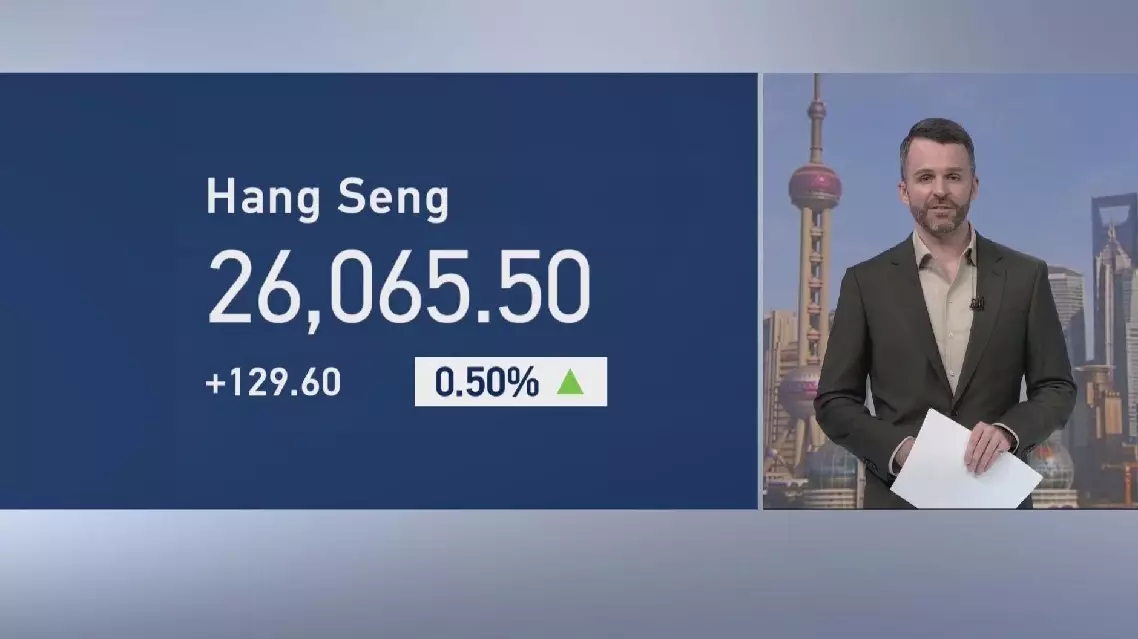
Hong Kong stocks ended higher on Friday with the benchmark Hang Seng Index up 0.58 percent to close at 26,085.08 points.

The Hang Seng China Enterprises Index gained 1.01 percent to end at 9,198.3 points, and the Hang Seng Tech Index rose 0.84 percent to close at 5,662.46 points.

The 225-issue Nikkei Stock Average ended down 536.55 points, or 1.05 percent, from Thursday at 50,491.87, after briefly dropping over 800 points. The broader Topix index finished 35.65 points, or 1.05 percent, lower at 3,362.56.

Timothy Pope, a market analyst, recapped stock market performances in Hong Kong on Friday. He noted Chinese internet giant Baidu made gains following news reports regarding its artificial intelligence division.

"Baidu was the standout there, rising 5 percent after Reuters reported that its AI division Kunlunxin is planning a Hong Kong IPO. Kunlunxin only just completed a funding round actually, which saw it valued at around 21 billion yuan, which is almost 3 billion U.S. dollars. And this takes us back to what I was just saying really about the rush among Chinese chip and AI stocks looking for listings. So, this is very much true on the Hong Kong Exchange, as it is in Shanghai and Shenzhen. On the more traditional front, we saw gains for the publishing group China Literature today. Its stock was up 1.8 percent after it announced a pretty hefty share buyback. It's going to be spending up to 1.2 billion Hong Kong dollars on that," he said.

Tokyo stocks retreated Friday, weighed down by selling of exporter shares as the yen strengthened on speculation the Bank of Japan (BOJ) may lift interest rates this month, despite apparent reluctance from Japanese Prime Minister Sanae Takaichi, according to Pope.

"Over in Japan, we saw the markets going the other way today. The Nikkei 225 snapped a three-session winning streak to close down by 1 percent. It is still hanging on above 50,000 points though. A lot of this was renewed expectations of an interest rate hike by the Bank of Japan (BOJ). The markets are pretty confident that the Bank of Japan is going to raise interest rates. That's been stoked by recent comments from the BOJ governor. He apparently has been having talks with the prime minister, who has previously been thought of to be a little bit negative towards an interest rate hike so soon in her premiership. But of course, the bank doesn't meet for another two weeks or so. In the meantime, we're going to have another meeting from the Fed, which is widely expected to deliver a rate cut in the United States," said the analyst.
China analyst recaps Asian stock markets' Friday performance

China analyst recaps Asian stock markets' Friday performance

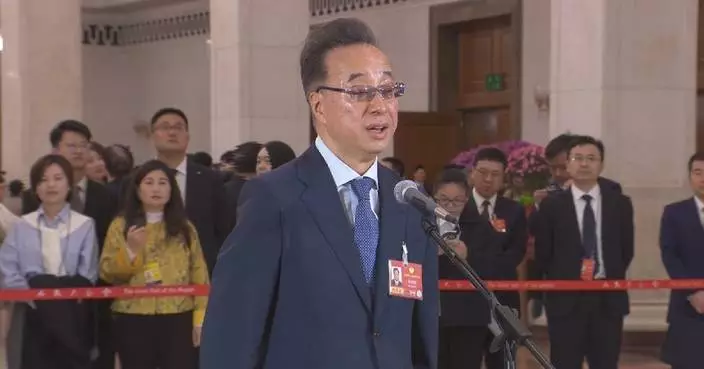
Uruguay's Ambassador to China Anibal Cabral said China's five-year plan should be examined closely as a "basic input" to understand how the world will develop when talking about the significance of China's "two sessions" in a recent interview with China Central Television.

The "two sessions," or the annual gatherings of the National People's Congress (NPC) and the Chinese People's Political Consultative Conference (CPPCC), are currently being held in Beijing. The draft outline of the 15th Five-Year Plan (2026-2030) for China's national economic and social development was submitted to the fourth session of the 14th NPC for review on March 5.

Cabral said Uruguay is paying close attention to the new five-year plan, highlighting the growing ties between the two countries. He shared his views about China's development blueprint and its global importance.

"China has been Uruguay's main trading partner for the past 14 years, both for exports and imports. Of course, since it is a planned economy with five-year plans, we are always very interested in studying them. In fact, many staff members at the Ministry of Economy asked me to obtain a copy of the five-year plan so they could study it. What can we see in the five-year plan? The modernization of China, the rejuvenation of its population, and its development. It includes some of the highest planned growth rates today -- around 5 percent. But above all, it also emphasizes the consolidation of its domestic market and internal economy. The growth of income among the Chinese population is very important, as it creates a consumer base for the entire world and a very advantageous market. We should also highlight the developments China has achieved in green economy," he said.

Cabral also stressed China's positive role in promoting global stability, suggesting that China's five-year plans are good references to studying future development trends.

"It is a very uncertain world, with many changes, but China provides us with stability. With China, Uruguay shares very important principles in the international arena, especially the promotion of multilateralism, respect for international rules, and compliance with the regulations of the World Trade Organization -- topics on which Uruguay and China share a vision. This vision is part of a broader goal of a more multipolar, more democratic world with stronger global governance. I believe that nowadays, because of China's importance, most economists, politicians and international analysts are studying the Chinese five-year plan and examining it closely as a basic input to understand how the world will develop in the next five years," said the ambassador.

Uruguay's Ambassador calls China's five-year plan "basic input" to understand future world development

Uruguay's Ambassador calls China's five-year plan "basic input" to understand future world development

Recommended Articles