Skip to Content Facebook Feature Image

Original source of fire preliminarily identified: HK fire services

China

China

China

Original source of fire preliminarily identified: HK fire services

2025-12-07 16:43 Last Updated At:18:37

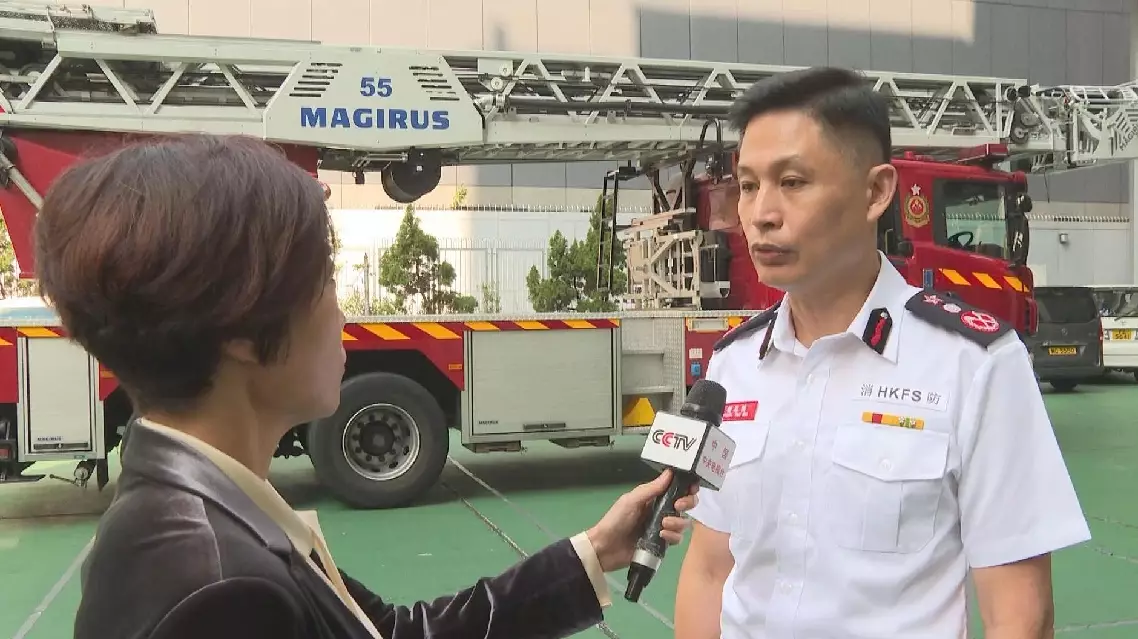
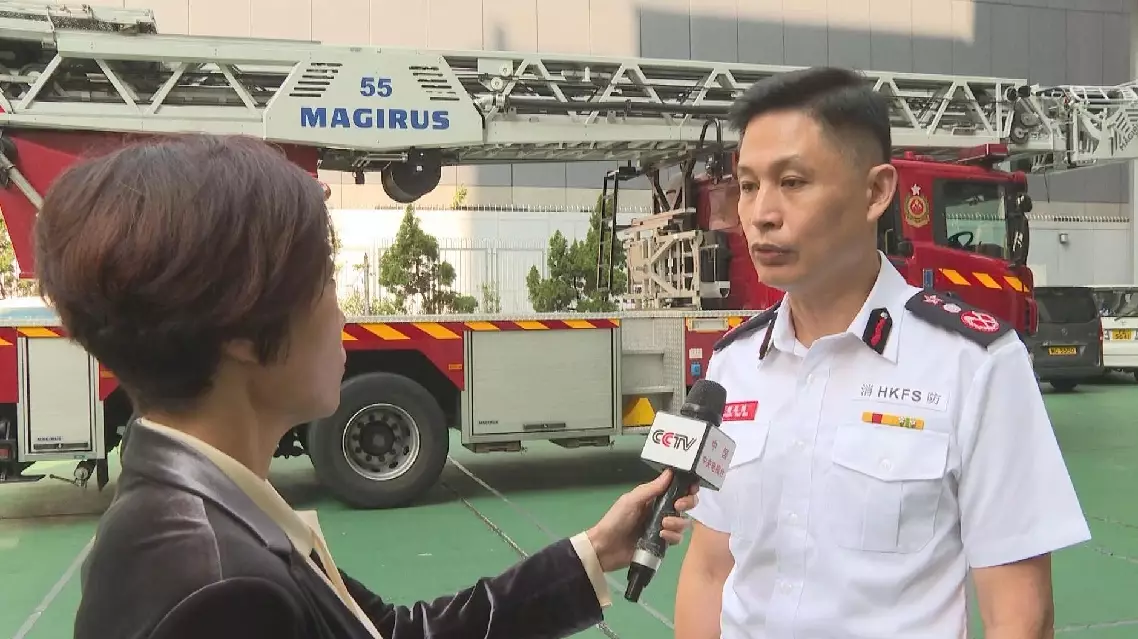
The original poin of the deadly fire in the housing complex Wang Fuk Court in Hong Kong Special Administrative Region (HKSAR) has been preliminarily identified, but the cause of the blaze is still under further investigation, Andy Yeung Yan-kin, director of Fire Services of the HKSAR government said on Saturday.

The blaze, the deadliest Hong Kong had witnessed for decades, broke out at around 14:50 on Nov 26 at eight-towered residential estate Wang Fuk Court, which was under renovation, in the Tai Po district. The fire quickly engulfed seven of the towers, leaving at least 159 dead, 79 injured and thousands of families homeless.

Firefighters have completed rescue operations in Wang Fuk Court residential complex, and authorities are investigating the cause of the blaze and its heavy casualties, according to Yeung.

"The fire rescue operation on site has been completed. The next focus will be the investigation into the cause of the fire. We've set up a task force with multiple government departments to determine how the fire started and why it caused so many casualties. So far, we've roughly identified the original point of the fire. Next, we will use computer simulations to study how the fire spread, and we'll build a model to recreate the scene for fire simulation and cause analysis," he said.

Under the coordination of the Hong Kong and Macao Work Office of the Communist Party of China Central Committee, the neighboring Guangdong Province swiftly mobilized a series of rescue equipment, medical supplies and consumables at the request of the HKSAR government, providing advanced equipment, such as illuminating drones, reconnaissance drones, robotic exoskeletons and fire protective boots.

"I'd like to thank the central government, the National Fire and Rescue Administration, and the Guangdong Fire Brigade for supporting the Hong Kong Fire Services in this operation. They provided drones equipped with thermal imaging which greatly improved the efficiency of our firefighting efforts. In particular, the thermal imaging devices allowed us to monitor the scene and identify the units that were burning most severely," Yeung said.
Original source of fire preliminarily identified: HK fire services
Original source of fire preliminarily identified: HK fire services

Original source of fire preliminarily identified: HK fire services

Original source of fire preliminarily identified: HK fire services
The two-day 2025 Brain-Computer Interface (BCI) Conference concluded on Friday in Shanghai, where multiple globally leading "China solutions" took center stage.

Under the theme "Brain connects the world, wisdom gathers in Shanghai," the event gathered research teams from major universities, leading industry developers, and experts across the BCI sector to strengthen the connection between research, application, and policy.

As part of the event, the first BCI competition featured four categories—fatigue detection, emotion recognition, brain-controlled robotic cars, and brain-controlled robotic arms - with 40 out of nearly 100 teams from across China received prizes.

In the BCI Industry Innovation Exhibition Zone, more than a dozen frontier-tech companies presented cutting-edge technologies ranging from key components to comprehensive system-level solutions.

Exhibits spanned the entire technology chain, from underlying hardware to clinical applications, covering fields such as sleep intervention, mental illness treatment, and rehabilitation for degenerative diseases—highlighting the latest trends in BCI development.

"We completed the first domestic clinical trial this March, and next year we will launch large-scale clinical trials," said an exhibitor named Chen Yaoxu.

Shanghai has established China's first future industry cluster dedicated to BCI technologies. During the conference, several new innovation platforms—including a BCI service platform and a joint laboratory for digital neuromedicine - were inaugurated.

"We are guided by clinical needs and clinical scenarios. At the same time, we are opening high-quality EEG datasets for enterprises to support their algorithm research and guide them in developing concrete products that truly address real-world needs," said Wang Zhuoyao, BCI Project manager of Shanghai Municipal Science and Technology Commission.

Shanghai conference highlights China's cutting-edge brain-computer interface innovations

Shanghai conference highlights China's cutting-edge brain-computer interface innovations

Recommended Articles