Nanjing, capital of east China's Jiangsu Province, has launched the country's first city-level scenario-based public service platform to capitalize on opportunities in advanced industrial application innovation and socioeconomic development.
The Scenario Service Platform was officially launched on Thursday at the 2025 Nanjing Scenario Innovation and Development Conference.
In early November, China's State Council unveiled a guideline aimed at accelerating the cultivation and opening of scenarios to promote the large-scale application of new scenarios.
The document defines a scenario as a specific context for systematically validating the industrial application of new technologies, new products, and new business models, along with supporting infrastructure, business models, and institutional policies.
The Nanjing Scenario Service Platform provides full lifecycle services for application scenarios, including sourcing, releasing, showcasing, matching and tracking the implementation of application scenarios.
Through data sharing and process collaboration, it breaks down "information silos" scattered across urban sectors, initially forming a scenario innovation network linking districts and multi-party collaboration.
"A scenario is a kind of resource, scattered throughout the city. As the government, we need to integrate these resources and welcome various enterprises to pilot and validate them," said Wu Gang, deputy head of the Nanjing Municipal Bureau of Industry and Information Technology.
Nanjing is encouraging its state-owned enterprises to proactively open up various scenarios, including technology verification and production applications, to the public, while it is also creating a number of scenarios, including virtual power plants, artificial intelligence ecological streets, and civil drone test zones, to foster innovation across the entire city.
Meanwhile, leveraging its unique advantage of open scenarios, Nanjing has fully tapped its potential of debut economy, as more than 1,500 first-of-their-kind stores have debuted in the city over the past three years, enriching the supply of consumption scenarios and providing a solid ground for developing new business models.
"Every year we release a list of 1,000 application scenarios to the public. We also hope to attract more innovative ideas, products and technologies to be tested, validated and matured within these scenarios, ultimately commercialized and scaled into industries," said Wu.
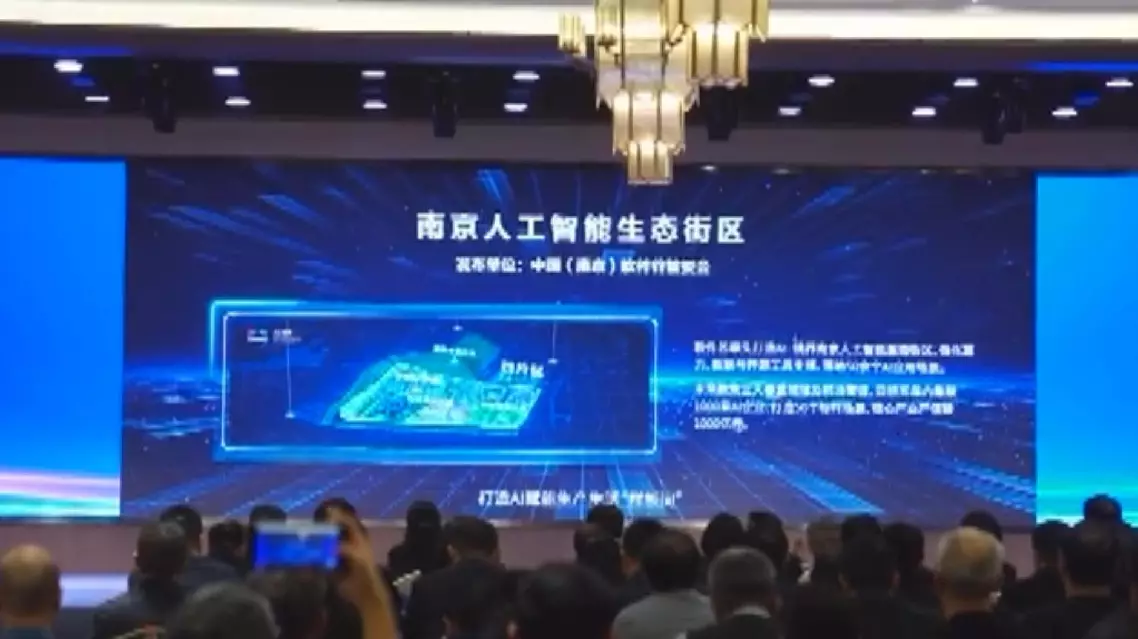
China's first city-level scenario-based public service platform starts operation in Nanjing