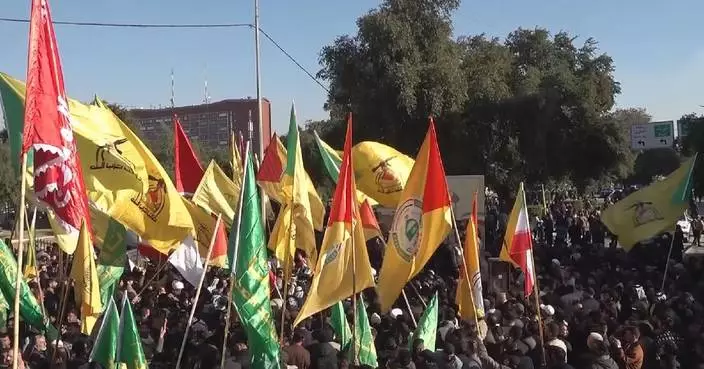
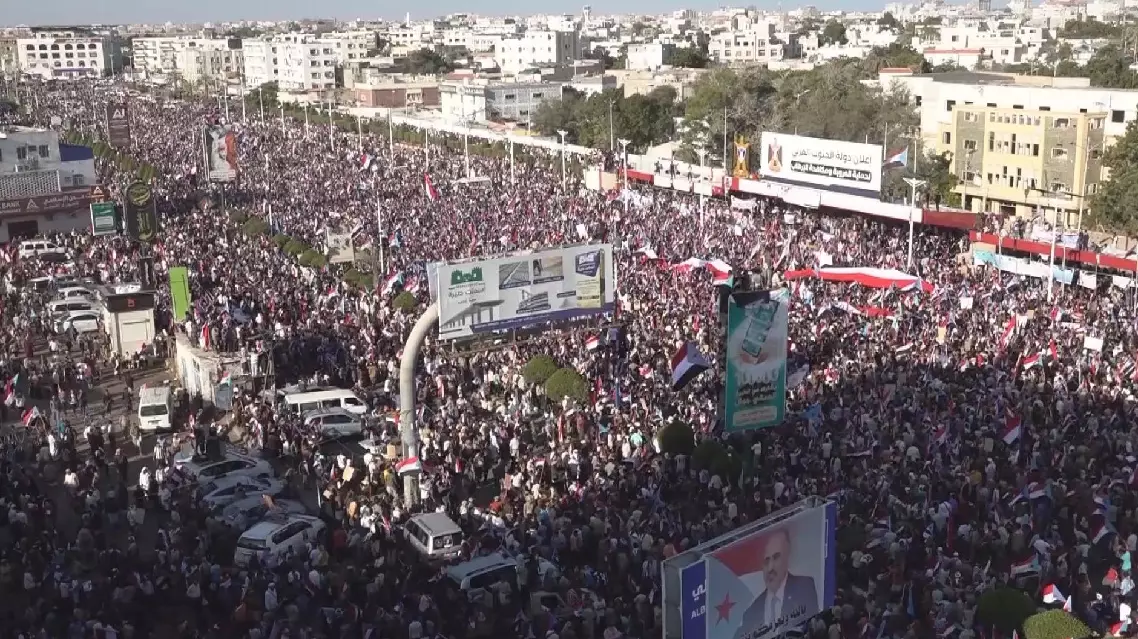
Large crowds of people from across southern Yemen gathered on Friday in the port city of Aden's Parade Square for a rally to show support for the secessionist Southern Transitional Council (STC).
In the rally organized by the STC, demonstrators held banners expressing their demands for future political arrangement in the south and voiced their opposition to the dissolution of the STC. The Yemeni government deployed a significant security presence at the scene, and the situation remained generally under control.
"This massive public participation you see is a response to the call of the leader of the Southern Transitional Council, [Aidarous] al-Zubaidi. We oppose the unilateral decisions made by [Rashad] al-Alimi, president of the Presidential Leadership Council (PLC), and we also oppose the exclusion of southern forces from the political process," said Tariq Abdul Rahman, a participant at the rally.
The rally came amid a backdrop of rising public sentiment and calls for the issue of southern Yemen to be resolved within the broader framework of the regional peace process, despite ongoing efforts to advance political dialogue.
The day before the rally, Yemen's PLC appointed two new members, replacing STC leader Aidarous al-Zubaidi and another member affiliated with the group.
Established in 2017, the Southern Transitional Council seeks the restoration of the pre-unification borders of North and South Yemen, which existed before 1990. Despite joining the Saudi-led coalition against the Houthi group and integrating into Yemen's Presidential Leadership Council in 2022, the group has continued to press for southern "sovereignty", fueling recurring disputes over power-sharing and control of resources.
Conflicts between the Yemeni government and the STC have escalated since the STC seized control of the eastern provinces of Hadhramaut and Al-Mahra in December 2025. Earlier this month, the Yemeni government, with the support of Saudi air power, launched a military operation against the STC and reclaimed the two provinces.
Mass rally held in southern Yemen in support of Southern Transitional Council

Mass rally held in southern Yemen in support of Southern Transitional Council
Two weeks after a major U.S. military strike on Venezuela and the and the illegal capture of President Nicolas Maduro, the Venezuelan government has begun to implement a series of recovery and post-conflict initiatives.
On Saturday, Venezuela's acting president Delcy Rodriguez ordered the immediate start of repair work on buildings damaged during the attack.
Post-conflict cleanup and restoration efforts are now steadily advancing across Caracas. The Fuerte Tiuna military base was one of the areas most severely damaged in the U.S. airstrikes, with over 463 apartments sustaining damage. Rodriguez said that most of the aid needed for housing repairs has already been secured.
She also announced the launch of several special community programs. These initiatives include special care activities and psychological support services for children in affected communities. The government also plans to implement food supply deployments, set up open-air markets, establish mobile supply points, and provide comprehensive assistance, including medical and health services.
Meanwhile, legal experts and representatives from social organizations across Venezuela have voiced strong condemnation against the U.S. actions during a legal conference held on Friday.
They demanded that the United States respect international law and Venezuelan sovereignty by immediately releasing President Maduro and his wife, Cilia Flores, who were forcibly removed from the country.
"What we are demanding from Venezuela is that international law must be respected and saved, because once we fall into a state of disorder, what follows is war. We have already seen peace being trampled upon. The sovereignty of a country, officially declared a 'territory of peace' by the international community, has been violated. This has never happened before," said Indhriana Parada Rodriguez, a Venezuelan legal professional.
"We firmly demand the release of President Maduro and his wife, Cilia Flores. They were forcibly taken from their homeland in violation of all basic norms of international law," said Silio Sanchez, vice rector of territorial development of the Bolivarian University of Venezuela.
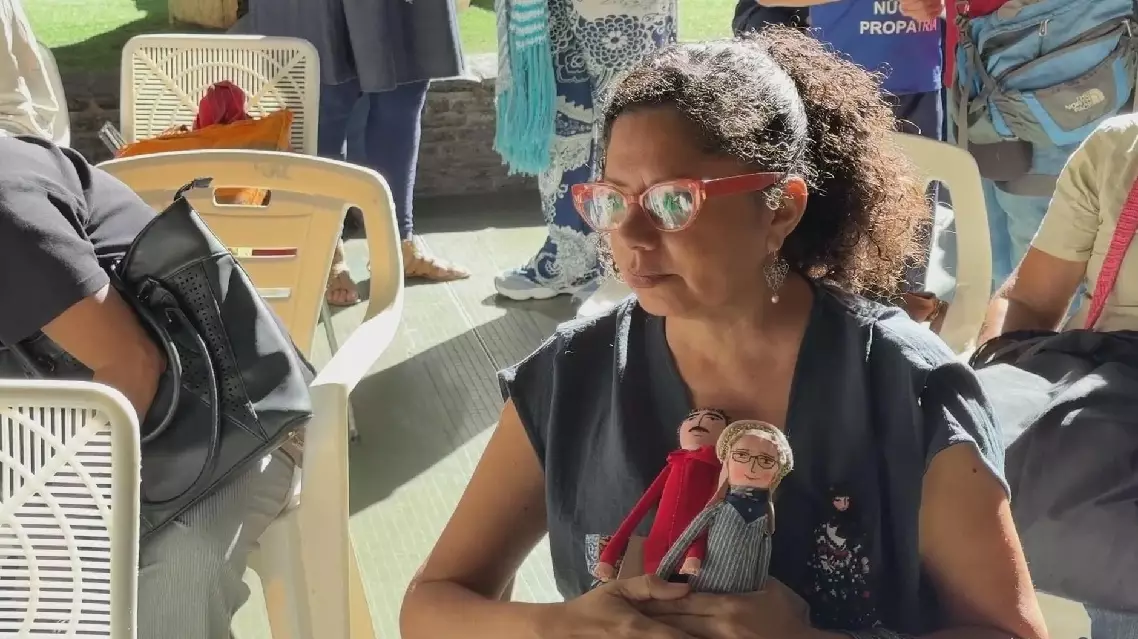
Call for Maduro's release continues as Venezuela moves to deal with aftermath of U.S. military strike