The black-necked crane, a national first-class protected species, is widely regarded as a key indicator of the ecological health of high-altitude wetlands on the Qinghai-Xizang Plateau, reflecting broader conservation outcomes in fragile plateau ecosystems.
Listed as Near Threatened on the International Union for Conservation of Nature Red List, black-necked cranes mainly inhabit plateaus, meadows and marshlands at elevations ranging from 2,500 to 5,000 meters.
The species migrates seasonally between breeding grounds in the north and wintering sites in southwest China's Xizang Autonomous Region.
The crane is the only large wading bird in the world that completes its entire life cycle on the plateau. As a flagship species of plateau wetlands, its survival and migration routes are seen as a "barometer" of changes in environment, offering important insights into the condition of high-altitude wetland ecosystems.
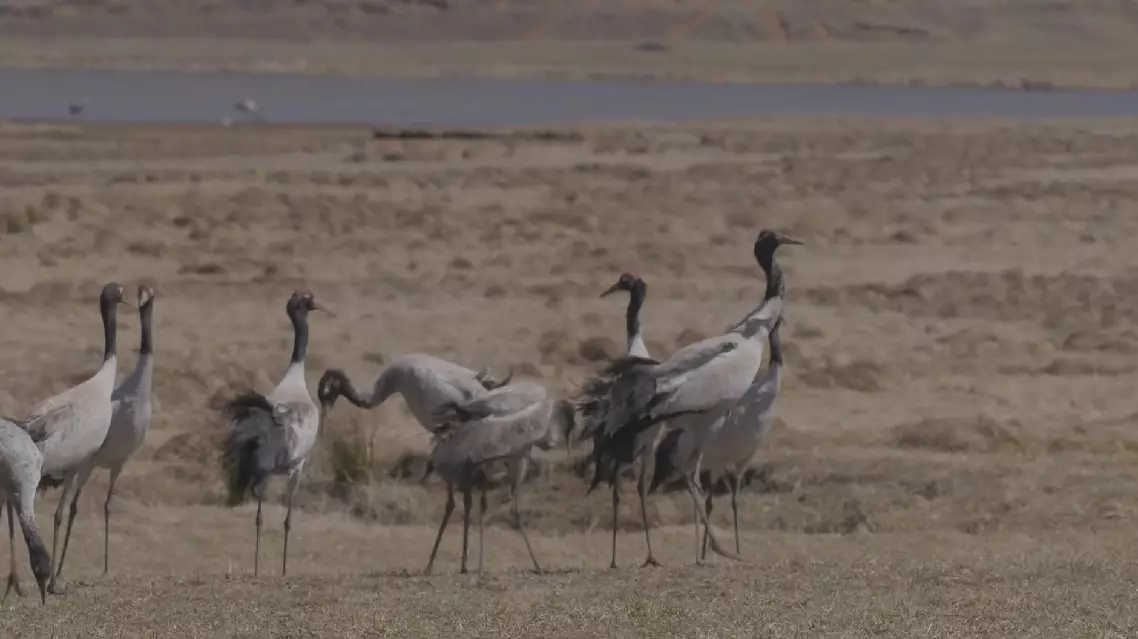
Black-necked cranes highlight plateau wetland conservation efforts
Chinese Vice Premier Zhang Guoqing said Tuesday that China is willing to collaborate with all parties to ensure nuclear energy better supports the development and prosperity of all nations.
Zhang, also a member of the Political Bureau of the Communist Party of China Central Committee, made the remarks during the second Nuclear Energy Summit in Paris which he attended as Chinese President Xi Jinping's special representative.
Zhang said China has always adhered to a sensible, coordinated, and balanced nuclear security strategy proposed by President Xi and has made concrete contributions to promoting the global development of nuclear energy.
China is willing to work with all parties to jointly implement the Global Development Initiative, the Global Security Initiative, the Global Civilization Initiative and the Global Governance Initiative, and promote nuclear energy innovation-driven development, safety foundation building, industrial collaboration and win-win cooperation, so that nuclear energy can better benefit the development and prosperity of all countries, he said.
Zhang noted that China stands ready to join hands with all parties to make new contributions in building a clean, beautiful and sustainable world and a community with a shared future for humanity.
Heads of state, government leaders and senior representatives from over 30 countries, as well as heads of relevant international organizations, attended the summit and issued a joint statement titled "Safe and affordable nuclear energy for all."

Chinese vice premier calls for global nuclear cooperation