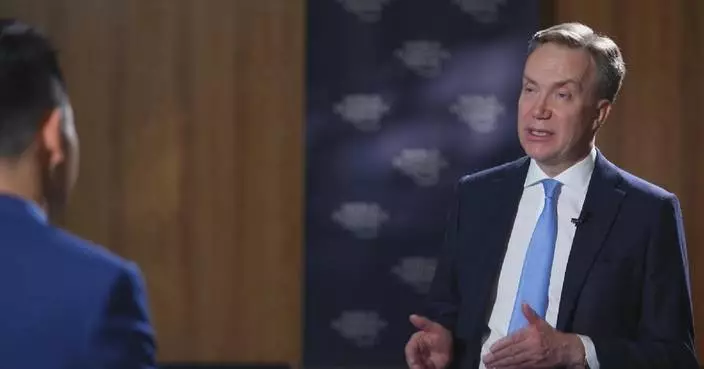
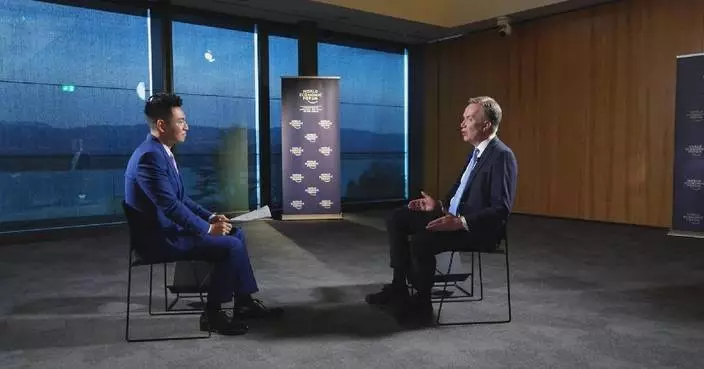
China and the World Economic Forum (WEF) have forged great partnership over the past decades and will go on with it, said WEF President Borge Brende in a recent exclusive interview with China Media Group (CMG) in Geneva, Switzerland.
Founded in 1971, the WEF has forged an enduring bond with China.
In 1979, China sent its first delegation to the Davos meeting, a tradition that continues to date.
In 1996, the WEF began hosting the "China Business Summit" in China.
In 2006, the WEF established its Beijing office, marking the first office outside Switzerland.
Since 2007, the forum has hosted the "Annual Meeting of the New Champions" in China every year, known as the "Summer Davos".
Brende said China and the WEF have both benefited from their strong partnership.
"I think we have been privileged to have the trust also of China and its opening-up. And we have brought a lot of international delegations and CEOs to China. We have a large office of the World Economic Forum in Beijing. And the Summer Davos has been incredibly important, but we also have brought Chinese leaders to Davos. And I think this has been an important partnership, also in the opening-up of the Chinese economy. We do hope that we can continue this great partnership in the years to come," he said.
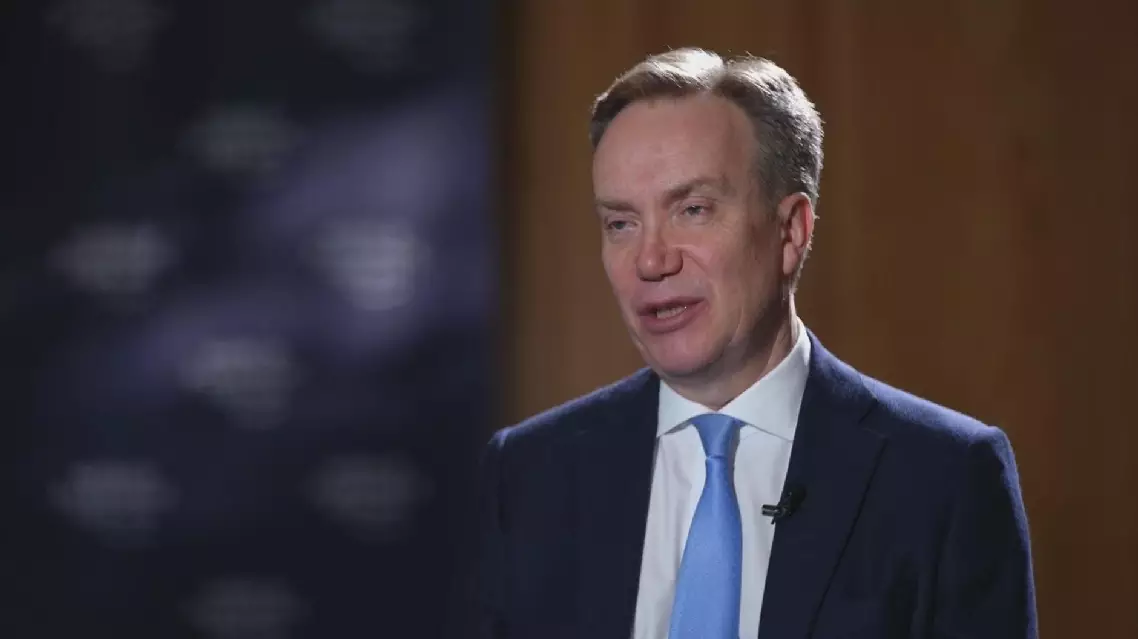
China, WEF to continue their strong partnership: WEF president
Dialogue now serves as a new form of infrastructure for facilitating connections among both businesses and governments around the world, World Economic Forum (WEF) Managing Director Kiva Allgood said on the sidelines of the 2026 annual WEF meeting.
In an interview with China Global Television Network (CGTN), Allgood stressed the importance of open discussions and a broader diversity of voices at the event for making real breakthroughs.
"I actually think dialogue is now the new infrastructure. It's the path for industry, and it's the path for governments that are willing to engage," she said.
Speaking of artificial intelligence, Allgood called the technology a next-generation instrument that grants people in the world a faster and equitable access to information.
"AI is a tool, right? I look at it as the new user interface. It's allowed us access into information that's inside a lot faster than anything else in the past. When I grew up, I had encyclopedias, then you went to the internet. And AI is that next-generation user interface. Full stop. It can be used for good and bad, and I think it's our obligation. Actually, going back to the basic, it's about access to the information. And if people actually use it, then perhaps you can give people time back to spend a little more time with their families. It doesn't necessarily have to be used to make billionaires or trillionaires," she said.
Having witnessed open and healthy dialogues at this year's Davos forum, Allgood said she's optimistic about the year ahead.
"I'm always optimistic. I think the fact that we are able to get so many diverse voices into dialogue and discussion and into engage. We saw a lot of really open, good debates. I think the most beautiful part about what we do in Davos is that we are encouraging different points of view to get them known and have that discussion, and really figure out what they can do together," she said.
However, Allgood acknowledged that new topics might emerge at next year's forum, calling for an open mind to embrace the unpredictable future.
"I think we'll be discussing different stressors and different issues. I think if anything the last year has really taught us is that you can't predict the future. Crystal balls don't exist. I think we have to remain agile, and I think we have to remain nimble," she said.
The 2026 annual WEF meeting was held from Jan 19 to 23 in the Swiss Alpine town of Davos. The five-day event drew nearly 3,000 leaders and experts worldwide to discuss five pressing global challenges, including enhancing cooperation, unlocking new sources of growth and deploying innovation at scale and with responsibility.
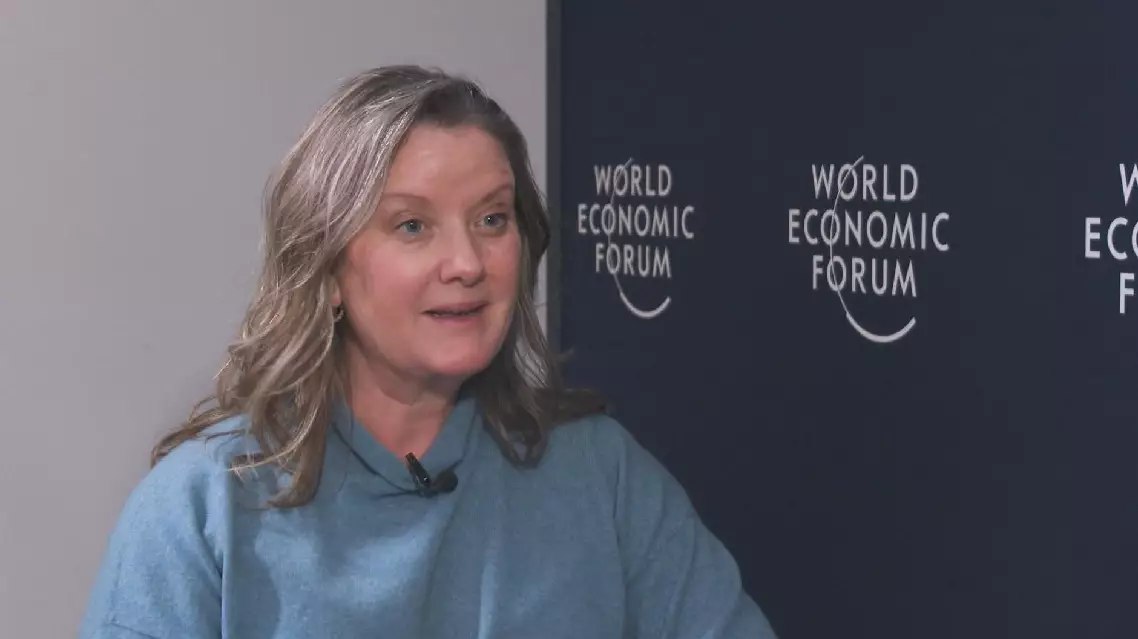
WEF official highlights dialogue as world's new infrastructure