Skip to Content Facebook Feature Image

WEF official highlights dialogue as world's new infrastructure

China

China

China

WEF official highlights dialogue as world's new infrastructure

2026-01-24 16:27 Last Updated At:17:07

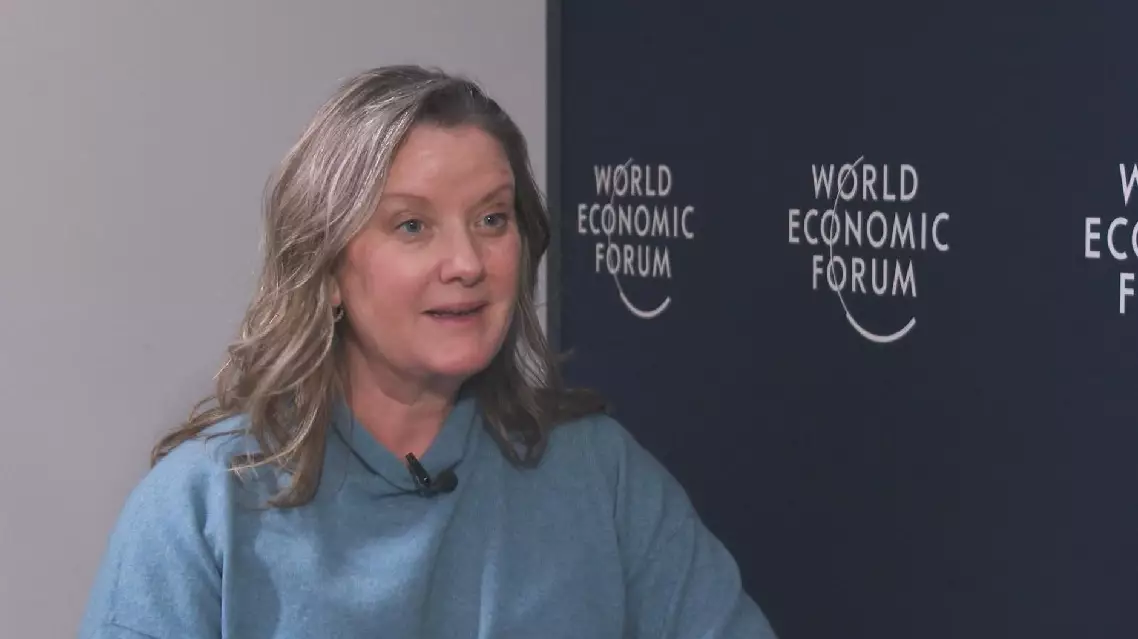
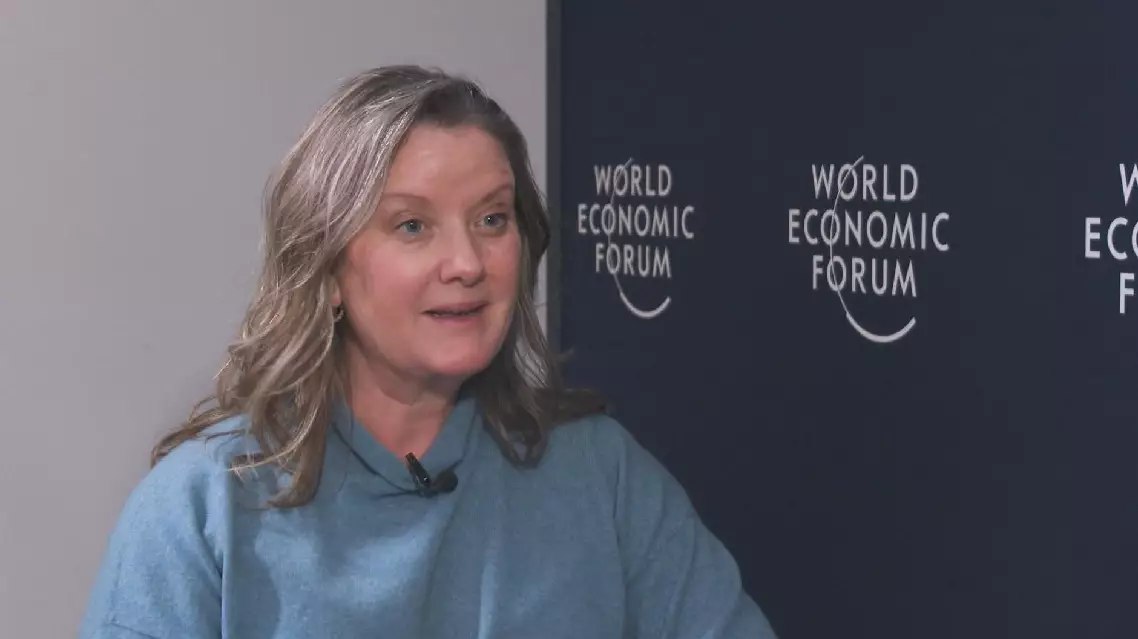
Dialogue now serves as a new form of infrastructure for facilitating connections among both businesses and governments around the world, World Economic Forum (WEF) Managing Director Kiva Allgood said on the sidelines of the 2026 annual WEF meeting.

In an interview with China Global Television Network (CGTN), Allgood stressed the importance of open discussions and a broader diversity of voices at the event for making real breakthroughs.

"I actually think dialogue is now the new infrastructure. It's the path for industry, and it's the path for governments that are willing to engage," she said.

Speaking of artificial intelligence, Allgood called the technology a next-generation instrument that grants people in the world a faster and equitable access to information.

"AI is a tool, right? I look at it as the new user interface. It's allowed us access into information that's inside a lot faster than anything else in the past. When I grew up, I had encyclopedias, then you went to the internet. And AI is that next-generation user interface. Full stop. It can be used for good and bad, and I think it's our obligation. Actually, going back to the basic, it's about access to the information. And if people actually use it, then perhaps you can give people time back to spend a little more time with their families. It doesn't necessarily have to be used to make billionaires or trillionaires," she said.

Having witnessed open and healthy dialogues at this year's Davos forum, Allgood said she's optimistic about the year ahead.

"I'm always optimistic. I think the fact that we are able to get so many diverse voices into dialogue and discussion and into engage. We saw a lot of really open, good debates. I think the most beautiful part about what we do in Davos is that we are encouraging different points of view to get them known and have that discussion, and really figure out what they can do together," she said.

However, Allgood acknowledged that new topics might emerge at next year's forum, calling for an open mind to embrace the unpredictable future.

"I think we'll be discussing different stressors and different issues. I think if anything the last year has really taught us is that you can't predict the future. Crystal balls don't exist. I think we have to remain agile, and I think we have to remain nimble," she said.

The 2026 annual WEF meeting was held from Jan 19 to 23 in the Swiss Alpine town of Davos. The five-day event drew nearly 3,000 leaders and experts worldwide to discuss five pressing global challenges, including enhancing cooperation, unlocking new sources of growth and deploying innovation at scale and with responsibility.
WEF official highlights dialogue as world's new infrastructure
WEF official highlights dialogue as world's new infrastructure
WEF official highlights dialogue as world's new infrastructure
WEF official highlights dialogue as world's new infrastructure

The People's Bank of China (PBOC), the country's central bank, will continue to implement a moderately loose monetary policy in 2026, and utilize tools such as reserve requirement ratio (RRR) cuts and interest rate reductions to ensure liquidity remains sufficient, according to its governor Pan Gongsheng.

Monetary policy will focus on promoting stable economic growth and reasonable price recovery, with the use of both incremental and existing policies to create a favorable monetary and financial environment for the high-quality development and stable operations of financial markets, said Pan.

"We will carefully calibrate the intensity, pace, and timing of policy implementation, and make flexible and efficient use of monetary policy instruments such as RRR cuts and interest rate reductions to maintain adequate liquidity. This will ensure that increases in aggregate financing and money supply are in step with projected economic growth and Consumer Price Index levels. There remains room for RRR and interest rate cuts this year. The PBOC will also strengthen the implementation and supervision of interest rate policies to keep overall financing costs low," said Pan.

For 2026, financial institutions will be guided to enhance support for key areas, including expanding domestic demand, advancing technological innovation, and assisting micro, small, and medium-sized enterprises, he said.

"Efforts will be made to improve consumer finance services, further facilitate payment service, and effectively implement the one-off credit repair policy to improve the consumer finance environment. We will also support eligible financial institutions in issuing financial bonds to boost funding supply in the consumption sector," said Pan.

In addition, policy backing will be further strengthened for technological innovation, said Pan.

The relending quota for sci-tech innovation and technological upgrades will be raised from 800 billion yuan (about 114.81 billion U.S. dollars) to 1.2 trillion yuan, with the scope extended to include small and medium-sized private enterprises (SMEs) with higher levels of research and development investment.

"The relending and rediscounting quota targeting agriculture and small businesses will be increased by 500 billion yuan, bringing the total to 4.35 trillion yuan. Meanwhile, a dedicated relending facility of 1 trillion yuan will be established specifically for private enterprises, prioritizing support for private SMEs. Financial institutions will also be supported in issuing financial bonds for micro and small enterprises, and the credit enhancement system for private SMEs will be improved," he said.

China's central bank signals further RRR, interest rate cuts to bolster growth

China's central bank signals further RRR, interest rate cuts to bolster growth

Recommended Articles