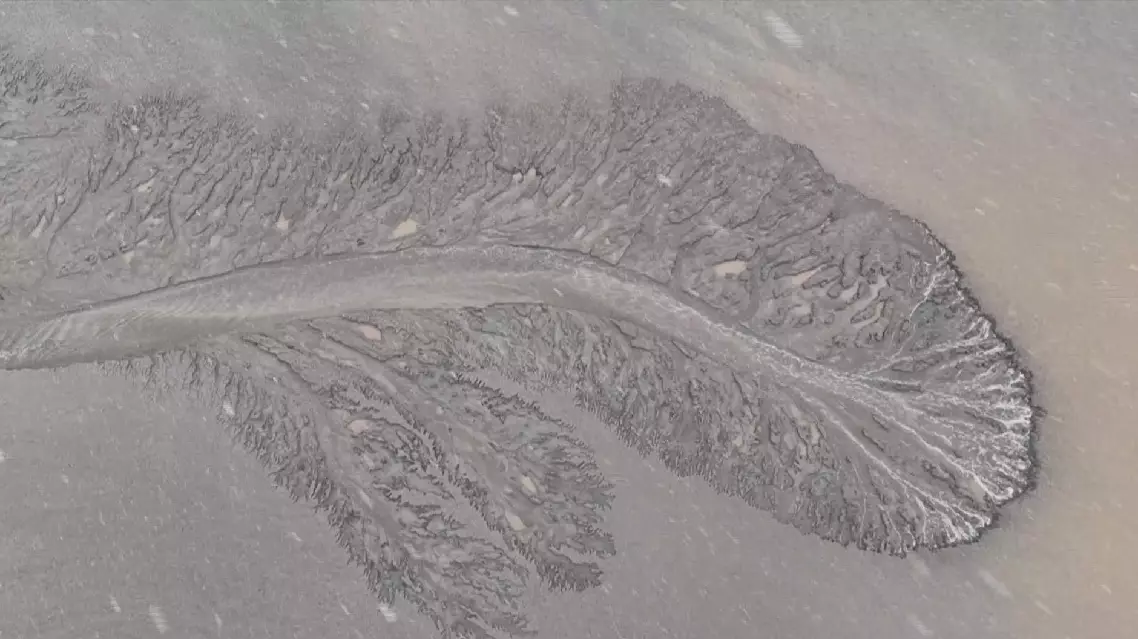
A stunning tidal tree landscape was captured on the Qiantang River in east China's Zhejiang Province, where falling snow added to the picturesque scenery.
The scenery, usually in shape of trees which have a backbone and branches, is created by daily erosion caused by ebb tides.
The Qiantang River runs for more than 500 kilometers through Zhejiang, passing through the provincial capital Hangzhou before flowing into the East China Sea via the Hangzhou Bay south of Shanghai.
The river is known for having the world's largest tidal bore, which is called the Silver Dragon locally. The tides usually reach their peak between the 15th to 18th day of the eighth month on the Chinese lunar calendar with spectacular scenes to be marveled at by countless visitors.
Stunning tidal tree landscape captured on east China river amid snow
U.S. President Donald Trump said Sunday that Israel's attack on Beirut "should not have happened," while the Israeli military said it will continue its operations in Lebanon.
Israeli Prime Minister Benjamin Netanyahu and Defense Minister Israel Katz said in a joint statement that the Israeli military struck Hezbollah targets in southern Beirut's Dahieh suburb on Sunday, in response to firing into Israeli territory.
Meanwhile, Lebanese media reported an Israeli airstrike targeted a building in the Ghobeiri area in Beirut's southern suburbs.
The strike drew criticism from Trump, who said a regional peace deal, including Lebanon, was "very close" and urged all parties, especially Israel, to stand down.
"We are very close to a deal that will bring peace to the region, including to Lebanon, and all sides should stand down," he wrote on Truth Social.
"This morning's attack on Beirut should not have happened, particularly on a special day when we are so close to a Peace Deal with Iran," he wrote.
Israel's Sunday strikes should not disrupt the diplomacy efforts for a U.S.-Iran peace deal, Trump said.
"There should be no more attacks by Israel anywhere in Lebanon, but there should also be no more attacks by any other party, including Hezbollah, against Israel," the U.S. president added.
On the same day, the Israel Defense Forces said in a statement that Israeli military chief Eyal Zamir, during his inspection of the Northern Command, said Israeli forces will continue military operations in Lebanon in an effort to secure more favorable terms in future U.S.-mediated negotiations between the two sides.
Zamir said the IDF's operations in key areas such as the Beaufort Ridge in southern Lebanon were crucial, and that Israeli forces will continue their offensive and deepen their ground advance in necessary areas to eliminate security threats posed by Hezbollah.
He added that the IDF remains on high alert for potential developments on other fronts.
Trump says Israeli strike on Beirut should not have happened; Israel says it will continue Lebanon operations