Skip to Content Facebook Feature Image

Lingnan University Launches STEAM Programme for 190 Students to Prepare Rare Whale Skeleton

HK

Lingnan University Launches STEAM Programme for 190 Students to Prepare Rare Whale Skeleton
HK

HK

Lingnan University Launches STEAM Programme for 190 Students to Prepare Rare Whale Skeleton

2026-02-02 11:38 Last Updated At:11:43

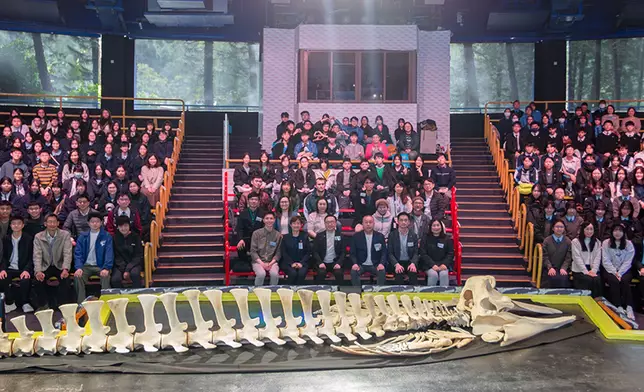
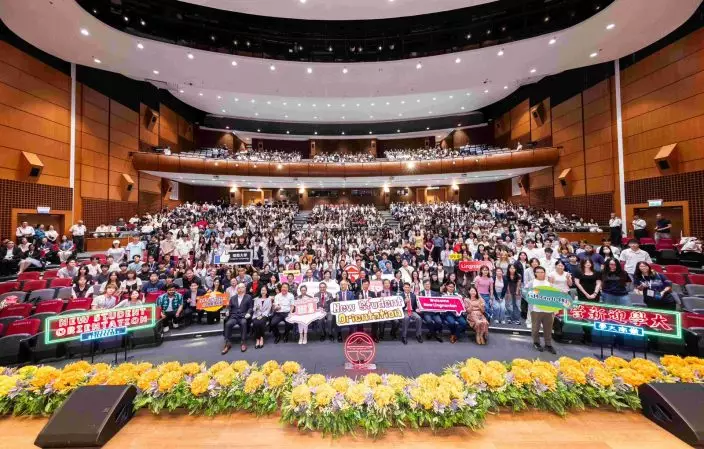
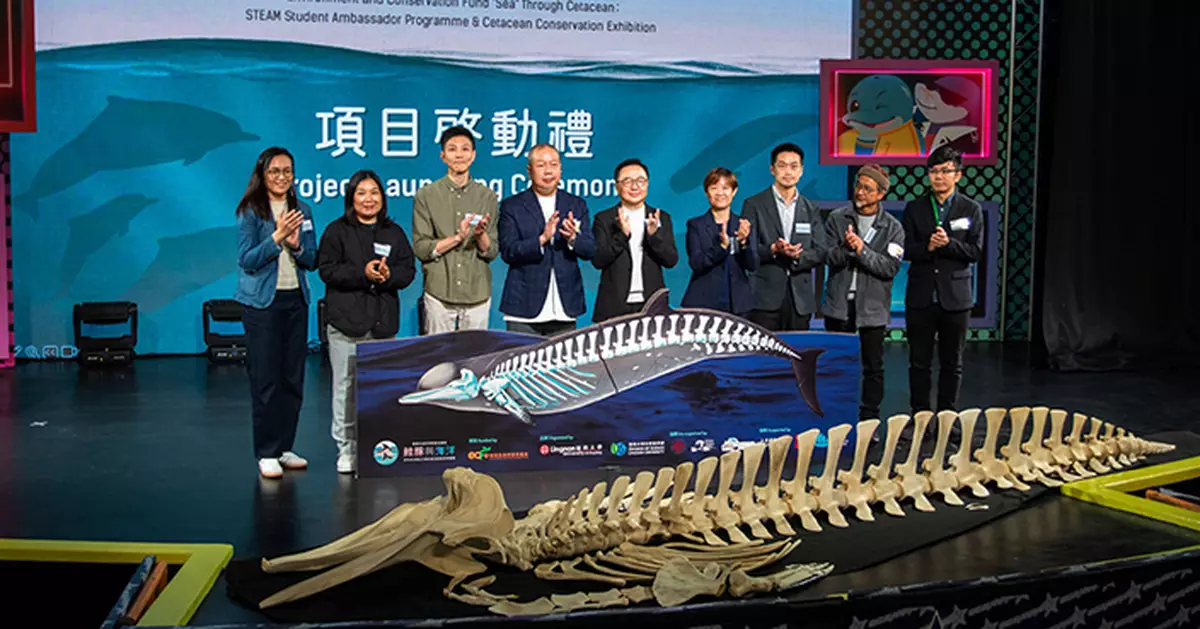
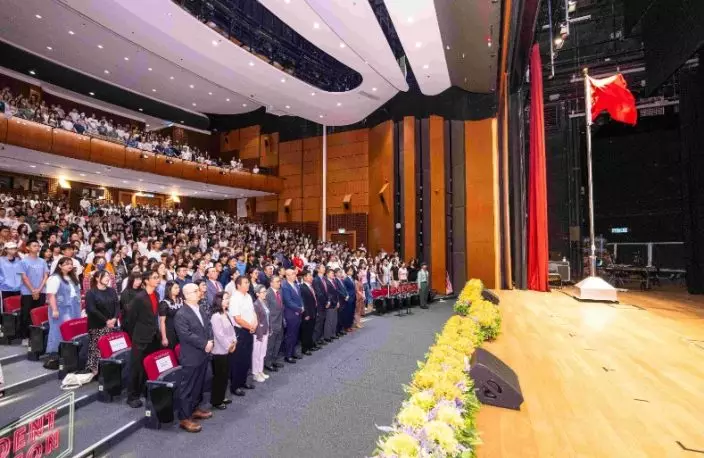
More than 190 students from 13 local secondary schools will take part in a year-long programme to gain hands-on experience in preparing an extremely rare whale specimen for public exhibitions scheduled for 2027. The Environment and Conservation Fund “Sea” Through Cetacean: STEAM Student Ambassador Programme & Cetacean Conservation Exhibition, organised by the Division of Science of Lingnan University in collaboration with The Hong Kong Polytechnic University, Cetacea Research Institute, and Ocean Park Conservation Foundation Hong Kong, was officially launched on 1 February 2026. This initiative builds on the rare stranding of a Longman's beaked whale in Hong Kong in 2024, providing students with a unique opportunity to assist in the preparation of skeletal specimens of one of the world's most mysterious marine mammal species. The project also promotes cetacean conservation and will educate the public in key marine environmental issues, including plastic pollution in the oceans.
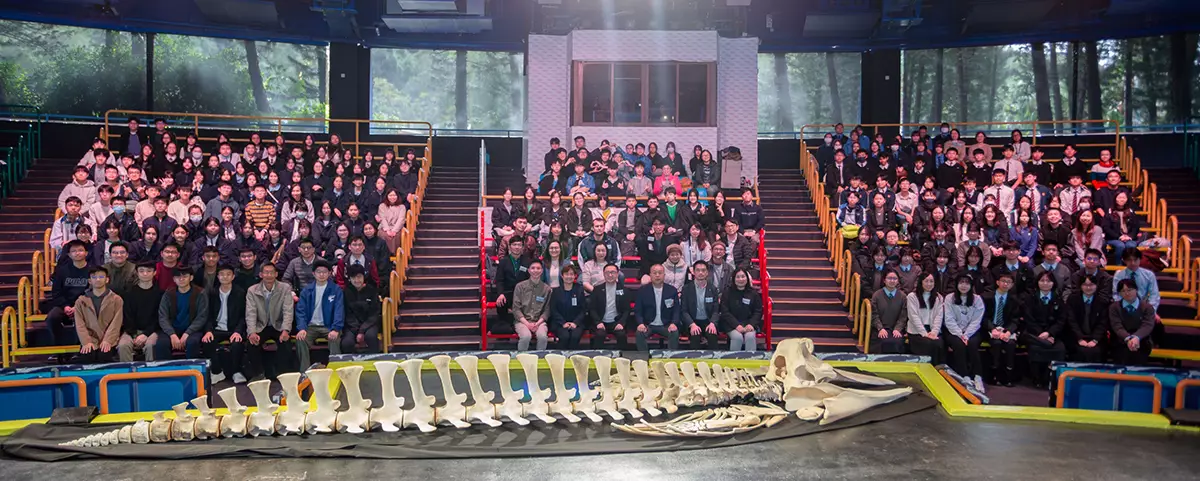
The programme has involved over 190 students from 13 secondary schools across Hong Kong. They will assist in the preparation of a complete skeleton of the rare Longman's beaked whale, with public exhibitions of the specimen scheduled for the second and fourth quarters of 2027.
The programme has involved over 190 students from 13 secondary schools across Hong Kong. They will assist in the preparation of a complete skeleton of the rare Longman's beaked whale, with public exhibitions of the specimen scheduled for the second and fourth quarters of 2027.

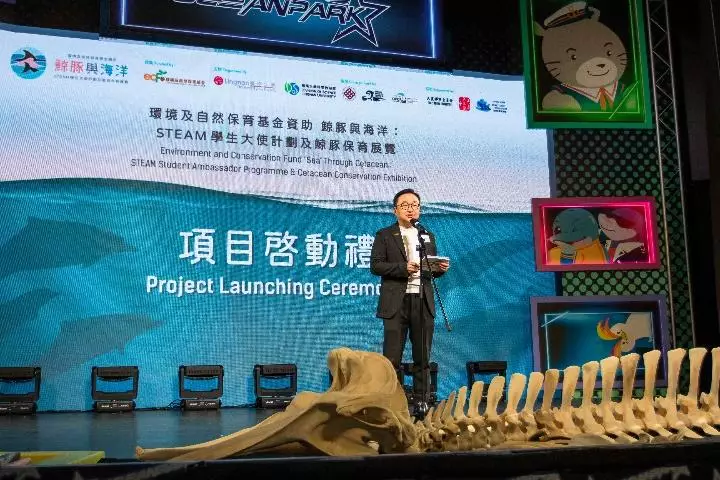
Dr Eric Cheng Kam-chung, SBS, MH, OStJ, JP Chairman of the Environment and Conservation Fund Committee, delivered a speech at the launch ceremony: “This Environment and Conservation Fund funded project turns a marine ecological conservation event into a highly meaningful educational programme. It is believed that the project will not only raise public awareness of whale and dolphin conservation as well as environmental sustainability but also encourage a deeper reflection on marine ecological conservation."

More Images
The programme has involved over 190 students from 13 secondary schools across Hong Kong. They will assist in the preparation of a complete skeleton of the rare Longman's beaked whale, with public exhibitions of the specimen scheduled for the second and fourth quarters of 2027.

The programme has involved over 190 students from 13 secondary schools across Hong Kong. They will assist in the preparation of a complete skeleton of the rare Longman's beaked whale, with public exhibitions of the specimen scheduled for the second and fourth quarters of 2027.

Dr Eric Cheng Kam-chung gives a speech
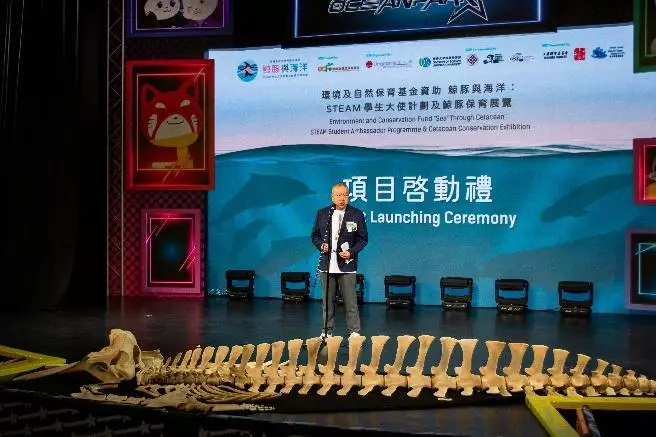
Dr Eric Cheng Kam-chung gives a speech

Dr Chu Chun-wa gives a speech
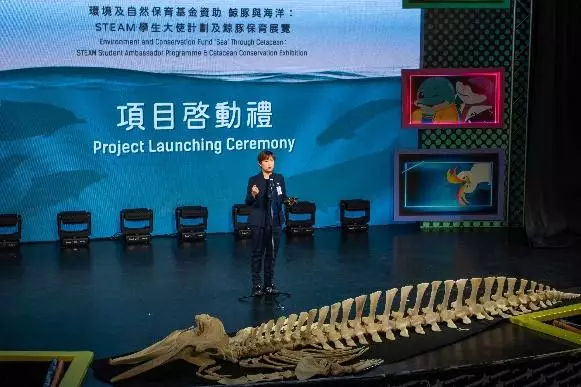
Dr Chu Chun-wa gives a speech

Prof Paulina Wong Pui-yun gives a speech
Prof Paulina Wong Pui-yun gives a speech

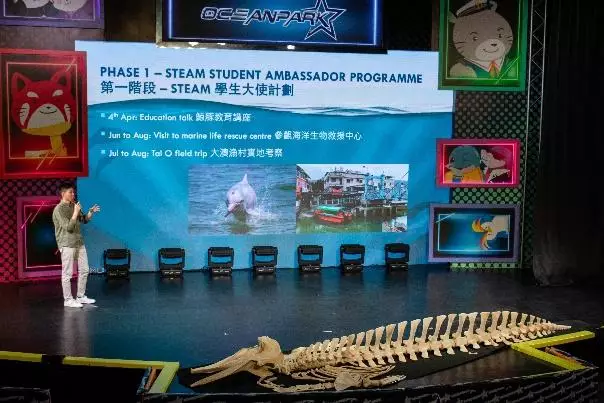
Prof Scott Chui Yik-suen introduces the series of STEAM activities

Prof Scott Chui Yik-suen introduces the series of STEAM activities

Dr Eric Cheng Kam-chung gives a speech

Dr Eric Cheng Kam-chung gives a speech

Dr Chu Chun-wa, Assistant Director (Fisheries and Marine Conservation) of the Fisheries and Marine Conservation Branch of the Agriculture, Fisheries and Conservation Department (AFCD), said “The AFCD has long been committed to promoting marine conservation. We believe this skeletal preparation programme will cultivate a sense of responsibility among young people towards marine ecology, foster greater interest in fisheries and marine conservation, transform scientific knowledge into action, and facilitate the long-term protection of biodiversity in Hong Kong waters.

Dr Chu Chun-wa gives a speech

Dr Chu Chun-wa gives a speech

Prof Paulina Wong Pui-yun, Head and Associate Professor (Presidential Early Career Scholar) of Division of Science at Lingnan University, agreed “Complete Longman's beaked whale specimens are extremely rare worldwide, and this has presented a precious opportunity to study rare deep-sea cetaceans. Lingnan University is honoured to host this programme, which allows students to study whale specimens through STEAM interdisciplinary experiences. We hope to teach students to understand marine conservation from multiple perspectives — science, technology, engineering, and arts — so they can become a new generation of ambassadors, spreading conservation messages among the public and raising awareness of the importance of protecting marine ecosystems.”

Prof Paulina Wong Pui-yun gives a speech

Prof Paulina Wong Pui-yun gives a speech

This two-year project, led by Prof Scott Chui Yik-suen, Research Assistant Professor of the Division of Science at Lingnan University, starts with providing introductory training and guidelines on the preparation of whale skeleton specimens to over 190 students from 13 secondary schools across Hong Kong. Students will assist with an 11-month specimen processing procedure and gain hands-on experience in handling, degreasing, measuring, and documenting the condition of the assigned whale skeletal specimens to preserve them for both scientific study and public exhibition. Throughout the process, they will regularly and systematically monitor and record any changes to the specimens, and will also participate in diverse STEAM-based experiential learning activities, including science and conservation lectures, visits to research facilities and marine animal rescue centres, and field trips to Tai O, as well as creating works of art to exhibit. These multidisciplinary skills will help them become ambassadors advocating for cetacean and marine conservation.

Prof Scott Chui Yik-suen introduces the series of STEAM activities

Prof Scott Chui Yik-suen introduces the series of STEAM activities

In the second phase, the project will extend its reach to the public through two Cetacean Conservation Exhibitions scheduled for the second and fourth quarters of 2027. These will showcase the Longman's beaked whale skeleton prepared with the students' assistance in the first phase, together with specimens of two local cetacean species—the Chinese white dolphin and the finless porpoise. The exhibitions will also display the canvas bag found in the whale's stomach to highlight the threats of plastic pollution to marine ecosystems. During the exhibitions, student ambassadors will serve as docents, guiding public tours and describing their own experiences to deliver key messages about cetacean ecology and marine conservation. The digital 3D model and 1:1 3D-printed replica of the Longman's beaked whale skeleton will serve as lasting educational and scientific resources, contributing to 3DTEACH—a newly established educational alliance among universities in Hong Kong. This initiative will create ongoing and lasting value to public education, conservation efforts, and the scientific community.

Prof Chui said “There are typically 20 to 50 cases of dolphin stranding reported in Hong Kong each year, predominantly involving two local cetacean species—Chinese white dolphins and finless porpoises. Strandings of other species are rarer, with only a few reported annually. Cetaceans inhabiting inshore habitats, such as Chinese white dolphins and finless porpoises, are particularly susceptible to threats from human activities, including coastal development, marine traffic, and pollution. Plastic debris and fishing hooks are sometimes found in the stomachs of stranded animals, and entanglement in abandoned fishing nets and gear is not uncommon. One study even found up to 145 microplastic particles in the stomach of a stranded Chinese white dolphin in the Pearl River Estuary, highlighting the critical issue of plastic pollution in the marine ecosystem. We hope to educate the public in environmental issues such as cetacean conservation and marine plastic pollution through this project.”

Participating Secondary Schools (in alphabetical order):

• Diocesan Boys' School

• DMHC Siu Ming Catholic Secondary School

• Elegantia College

• HKCCCU Logos Academy

• Kau Yan College

• La Salle College

• Lingnan Hang Yee Memorial Secondary School

• Po Leung Kuk Laws Foundation College

• St. Catharine's School for Girls

• Sha Tin Methodist College

• Shun Tak Fraternal Association Leung Kau Kui College

• The ELCHK Yuen Long Lutheran Secondary School

• Ying Wa College

About the Longman's beaked whale

The Longman's beaked whales (Indopacetus pacificus), also known as Indo-Pacific beaked whales or tropical bottlenose whales, belong to the beaked whale family (Ziphiidae) within the order Cetacea. They live in the deep, open, tropic waters of the Pacific and Indian Oceans, and are rarely seen near coastal waters. As of 2021, there have only been seven other complete skeleton specimens of Longman's beaked whales reported worldwide, and they are widely regarded as one of the most mysterious and least understood marine mammals.
Lingnan University held its 2026 Chinese New Year media reception on the Tuen Mun campus today, 17 March, hosted by Prof S. Joe Qin, President and Wai Kee Kau Chair Professor of Data Science; Prof Raymond Chan Hon-fu, Vice-President (Academics) cum Provost and Lam Man Tsan Chair Professor of Scientific Computing; Prof Xin Yao, Vice-President (Research and Innovation) and Tong Tin Sun Chair Professor of Machine Learning; Mr Ernest Chan Chi-man, Vice-President (Administration); Prof Sam Kwong Tak-Wu, Associate Vice-President (Strategic Research) and J.K. Lee Chair Professor of Computational Intelligence, and Prof Lau Chi-pang, Special Advisor to President on Publicity cum Director of Communications and Public Affairs. They announced the University’s most recent news and its strategic development blueprint for the coming years, which includes a series of campus development initiatives which will continue to improve teaching, research, and innovation.

Lingnan University hosts its Chinese New Year media reception. From the left: Mr Ernest Chan Chi-man, Vice-President (Administration); Prof Raymond Chan Hon-fu, Vice-President (Academics) cum Provost and Lam Man Tsan Chair Professor of Scientific Computing; Prof S. Joe Qin, President and Wai Kee Kau Chair Professor of Data Science; Prof Xin Yao, Vice-President (Research and Innovation) and Tong Tin Sun Chair Professor of Machine Learning; and Prof Sam Kwong Tak-Wu, Associate Vice-President (Strategic Research) and J.K. Lee Chair Professor of Computational Intelligence. Photo source: Lingnan University

Lingnan University hosts its Chinese New Year media reception. From the left: Mr Ernest Chan Chi-man, Vice-President (Administration); Prof Raymond Chan Hon-fu, Vice-President (Academics) cum Provost and Lam Man Tsan Chair Professor of Scientific Computing; Prof S. Joe Qin, President and Wai Kee Kau Chair Professor of Data Science; Prof Xin Yao, Vice-President (Research and Innovation) and Tong Tin Sun Chair Professor of Machine Learning; and Prof Sam Kwong Tak-Wu, Associate Vice-President (Strategic Research) and J.K. Lee Chair Professor of Computational Intelligence. Photo source: Lingnan University

President S. Joe Qin said that to meet Lingnan’s growing need for more space, the University recently acquired a new 3,600-square-metre facility, Lingnan T-Plus, which will support the main campus by providing additional teaching venues and classrooms. Conveniently located and about 15 minutes’ walk from the main campus, Lingnan T-Plus is expected to be operational in the 2026/2027 academic year. Students and staff will be able to commute to the main campus easily and stay involved with campus life.

President S. Joe Qin announces campus development initiatives to further improve teaching, research and innovation. Photo source: Lingnan University

President S. Joe Qin announces campus development initiatives to further improve teaching, research and innovation. Photo source: Lingnan University

The expansion of Lingnan’s main campus in Tuen Mun has begun with the construction of the seven-storey Lingnan Education Organization Building, the University’s first dedicated science building, which will have a floor area of approximately 8,000 square metres and house the School of Data Science (SDS) and the interdisciplinary research hub. It is scheduled to be completed in 2028, and will upgrade University teaching and research facilities.

The Tuen Mun Main Campus will have a new 200-square-metre lecture theatre in the Lau Chung Him Building with seating for about 200 people, which will provide another venue for teaching, academic lectures, and large conferences. It is intended to come into use in the 2026/2027 academic year, improving the educational environment and strengthening support for academic events and the exchange of ideas.

In addition, a new 150-square-metre, 110-seat, multi-purpose venue with a large-scale LED display will be built on the Main Campus near the landmark Wing On Plaza for campus activities, academic seminars, press conferences, providing a high-quality space for teaching and discussions. It is scheduled for completion in 2027.

The University has recently acquired a new facility, Lingnan T-Plus. Photo source: Lingnan University

The University has recently acquired a new facility, Lingnan T-Plus. Photo source: Lingnan University

Looking back at 2025, President S. Joe Qin said that Lingnan University achieved several “No. 1 in the Hong Kong SAR” and “Only one in the Hong Kong SAR” distinctions across key indicators, demonstrating that the University’s strengths in teaching and research, as well as its commitment to whole-person education, have received international recognition. These accolades include coming first globally in “SDG 4: Quality Education” in the 2025 Times Higher Education Impact Rankings, and becoming the first university in Asia to partner with the United Nations University (UNU) to establish the UNU Hub on Humanitarian Innovation and Technology at Lingnan University. The UNU Hub plans to commence operations in the middle of this year, and will promote interdisciplinary collaboration in engineering, data science, and design innovation, encouraging faculty members and students from different disciplines to co-design humanitarian technologies to address real-world challenges in a practical and sustainable way.

President Qin also noted that in recent years, the University has implemented the “Liberal Arts + Technology” innovative education model, solidifying its position as a leading research-oriented liberal arts university, comprehensive in arts and sciences, in the digital era. More than 20 per cent of its faculty members were on the 2025 Stanford University “World’s Top 2% Scientists” list. As its 60th anniversary approaches in 2027, the University has launched the “Lingnan-60 Global Talent Recruitment” campaign to attract 60 leading scholars. As of February 2026, 33 top scholars have joined the University, strengthening Lingnan’s engineering and research capabilities in interdisciplinary fields such as industrial data science, smart infrastructure, carbon neutrality technologies, and sustainable energy and materials. This will enable the University to take a leading role in major cross-disciplinary, high-impact engineering projects related to the Hong Kong SAR’s re-industrialisation and carbon neutrality.

President Qin also announced that the University will officially launch the Samuel C.C. Ting Elite Class (CCT Class) in the 2026/27 academic year. Named in honour of the Nobel Prize-winning physicist Prof Samuel C.C. Ting, the class will select a group of top talents from its outstanding undergraduate students, who receive full University Entrance Scholarships, and will offer them comprehensive learning opportunities and support. The CCT Class symbolises the University’s commitment to an educational philosophy grounded in Creative and Critical Thinking. Through this initiative, the University aims to nurture a new generation of globally minded academic leaders, carrying forward Prof Ting’s legacy of bold innovation and rigorous research integrity, while further strengthening the University’s leading position as a research-oriented liberal arts university comprehensive in arts and sciences.

The Lingnan Education Organization Building is scheduled for completion in 2028. Photo source: Lingnan University

The Lingnan Education Organization Building is scheduled for completion in 2028. Photo source: Lingnan University

Recommended Articles