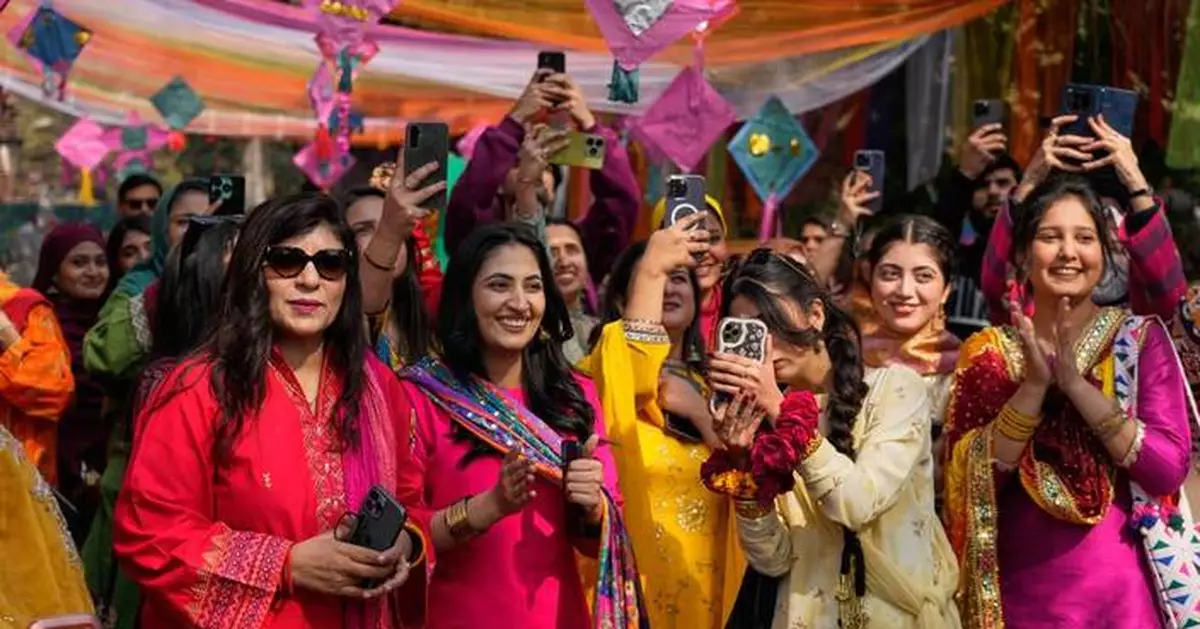
LAHORE, Pakistan (AP) — A burst of color lit up Lahore’s night sky overnight as Pakistan’s cultural capital relaunched the Basant kite-flying festival after nearly two decades.
Authorities said Friday that the celebration has been allowed only under strict safety regulations, warning that the use of hazardous kite strings that endanger lives could lead to arrests.
Click to Gallery
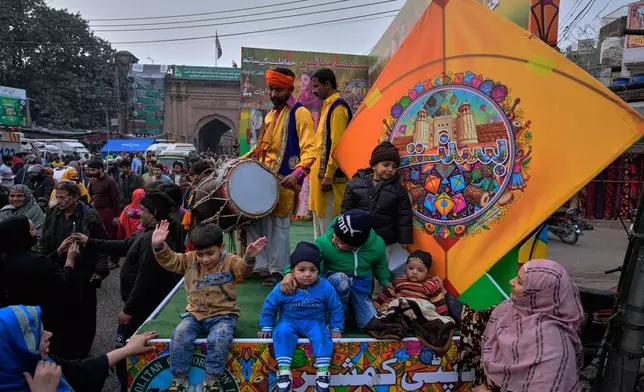
Children pose for a photograph on a truck decorated with colourful kites ahead of the three-day kite flying Basant festival celebration, in Lahore, Pakistan, Tuesday, Feb. 3, 2026. (AP Photo/K.M. Chaudary)
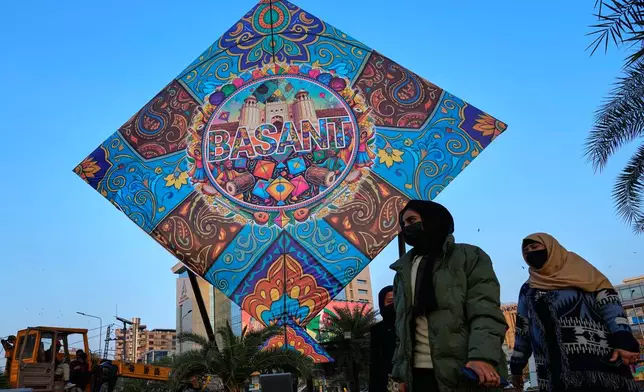
Women walk past a giant kite model placed by local administration to celebrate the upcoming three-day kite flying festival 'Basant' in Lahore, Pakistan, Wednesday, Feb. 4, 2026. (AP Photo/K.M. Chaudary)
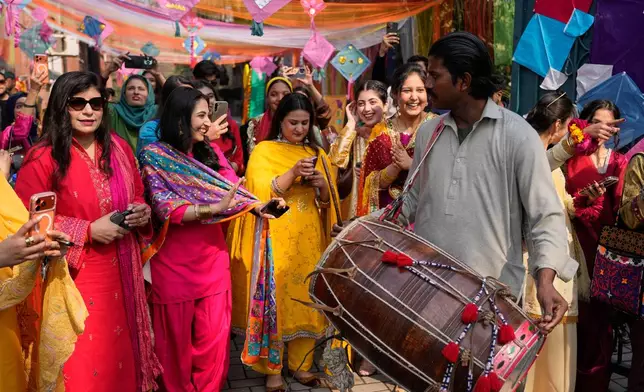
Students dance on traditional drum beat during a gathering to celebrate three-day kite flying festival 'Basant' at their university campus, in Lahore, Pakistan, Friday, Feb. 6, 2026. (AP Photo/K.M. Chaudary)
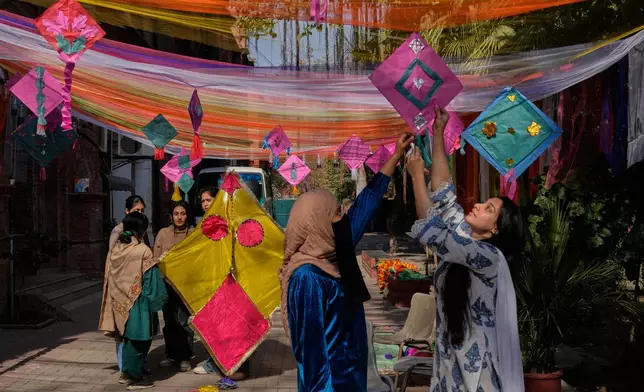
Students decorate their university campus with variety of kites ahead of the upcoming three-day kite flying festival 'Basant' celebrations, in Lahore, Pakistan, Thursday, Feb. 5, 2026. (AP Photo/K.M. Chaudary)
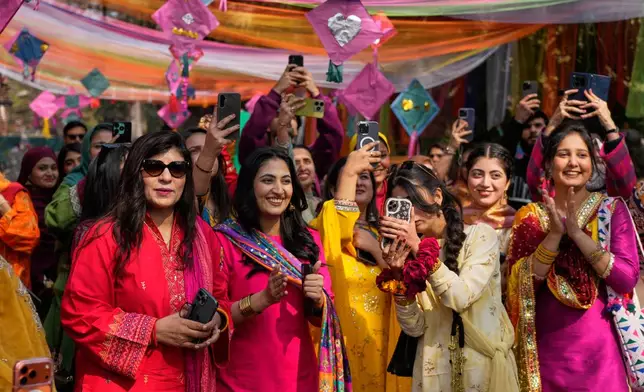
Students take part in a gathering to celebrate three-day kite flying festival 'Basant' at their university campus, in Lahore, Pakistan, Friday, Feb. 6, 2026. (AP Photo/K.M. Chaudary)
Kite-flying had been banned in the province since 2005 following a series of fatal accidents. Razor-sharp metal- or glass-coated strings used in competitive kite fighting killed about a dozen people, mostly motorcyclists and bystanders two decades ago, prompting the government to impose broad restrictions across Punjab and effectively halt Basant.
This year, officials say strict safety measures are in place.
Motorcyclists are required to install tall, antenna-like metal rods on their bikes to prevent airborne strings from causing injury. The provincial government also declared a two-day public holiday to reduce traffic and lower accident risks.
The government of Punjab Chief Minister Maryam Nawaz Sharif recently lifted the ban, emphasizing that the festival’s revival would be strictly regulated and violators could face fines or imprisonment.
As midnight marked the start of the two-day celebration, rooftops across the city came alive with families and friends launching vibrant kites into the cool night air.
“We’re finally seeing it again after so many years,” said Ashfaq Ahmed, 23, flying a kite from his rooftop in Lahore’s old city. “If people avoid dangerous strings, hopefully this joyful festival can continue safely in the future.”
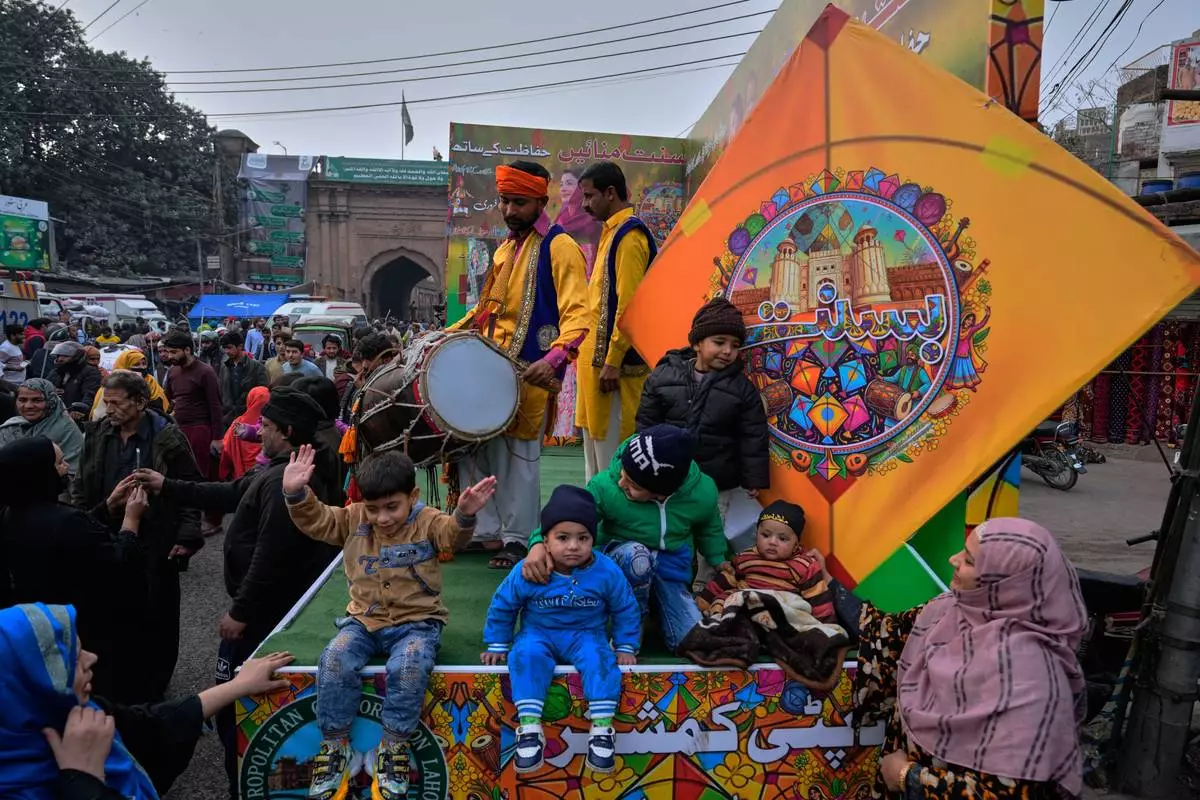
Children pose for a photograph on a truck decorated with colourful kites ahead of the three-day kite flying Basant festival celebration, in Lahore, Pakistan, Tuesday, Feb. 3, 2026. (AP Photo/K.M. Chaudary)
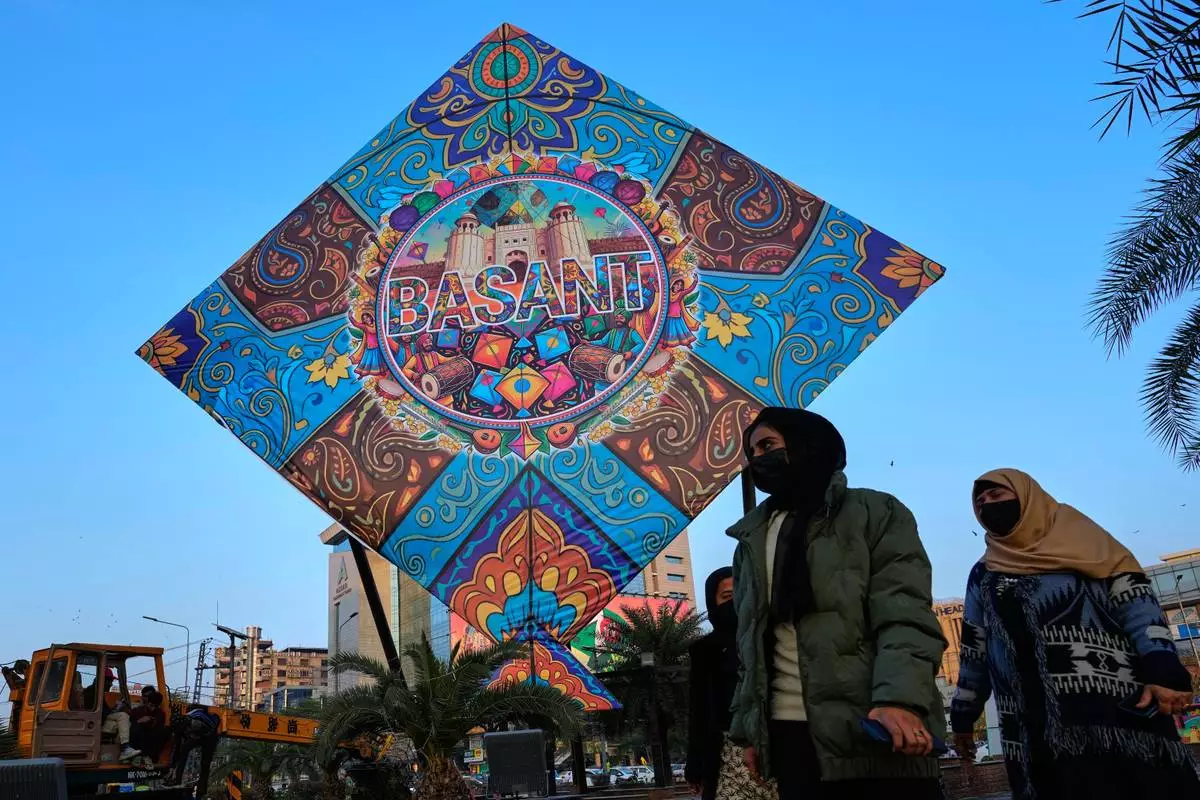
Women walk past a giant kite model placed by local administration to celebrate the upcoming three-day kite flying festival 'Basant' in Lahore, Pakistan, Wednesday, Feb. 4, 2026. (AP Photo/K.M. Chaudary)
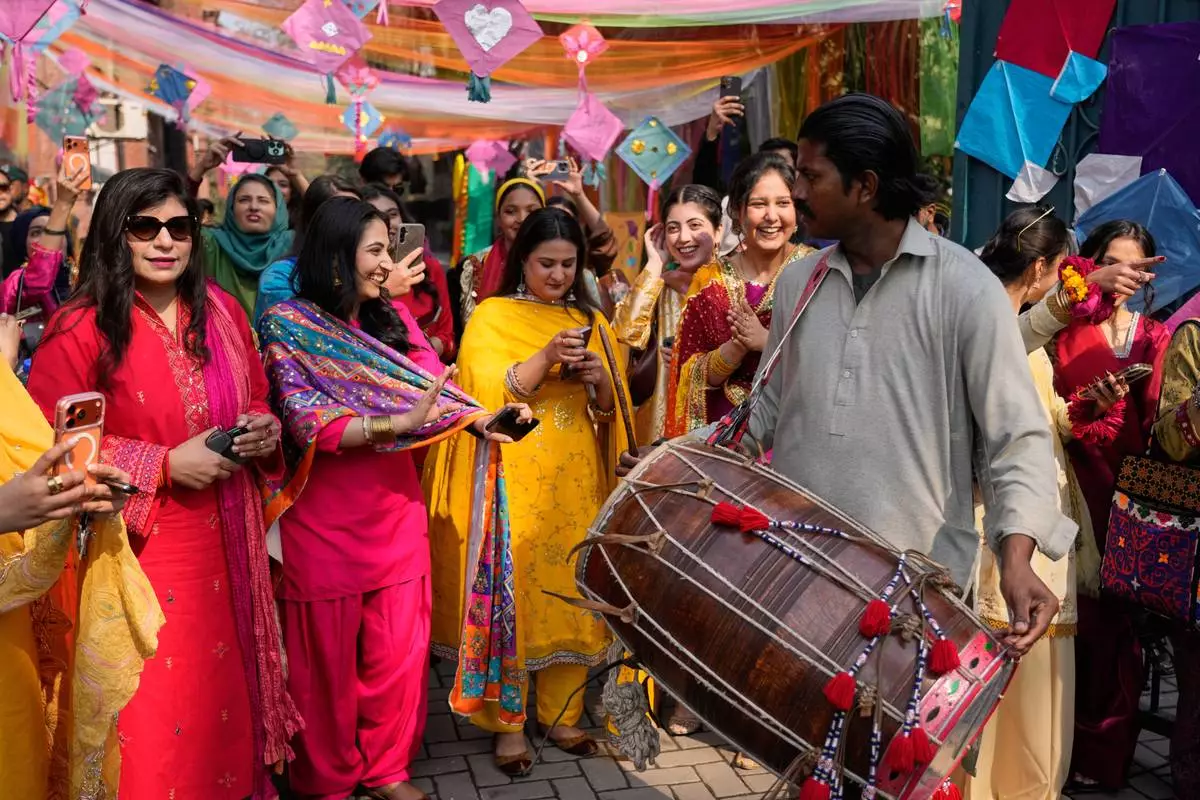
Students dance on traditional drum beat during a gathering to celebrate three-day kite flying festival 'Basant' at their university campus, in Lahore, Pakistan, Friday, Feb. 6, 2026. (AP Photo/K.M. Chaudary)
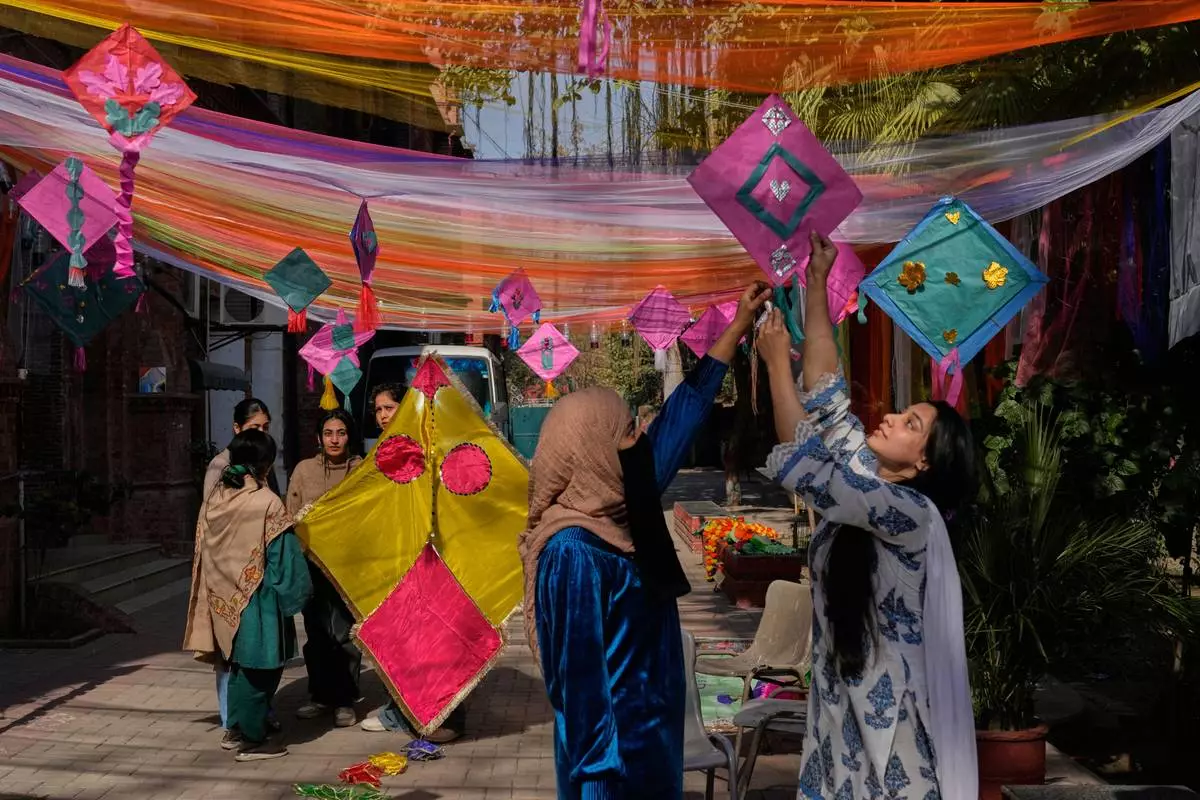
Students decorate their university campus with variety of kites ahead of the upcoming three-day kite flying festival 'Basant' celebrations, in Lahore, Pakistan, Thursday, Feb. 5, 2026. (AP Photo/K.M. Chaudary)
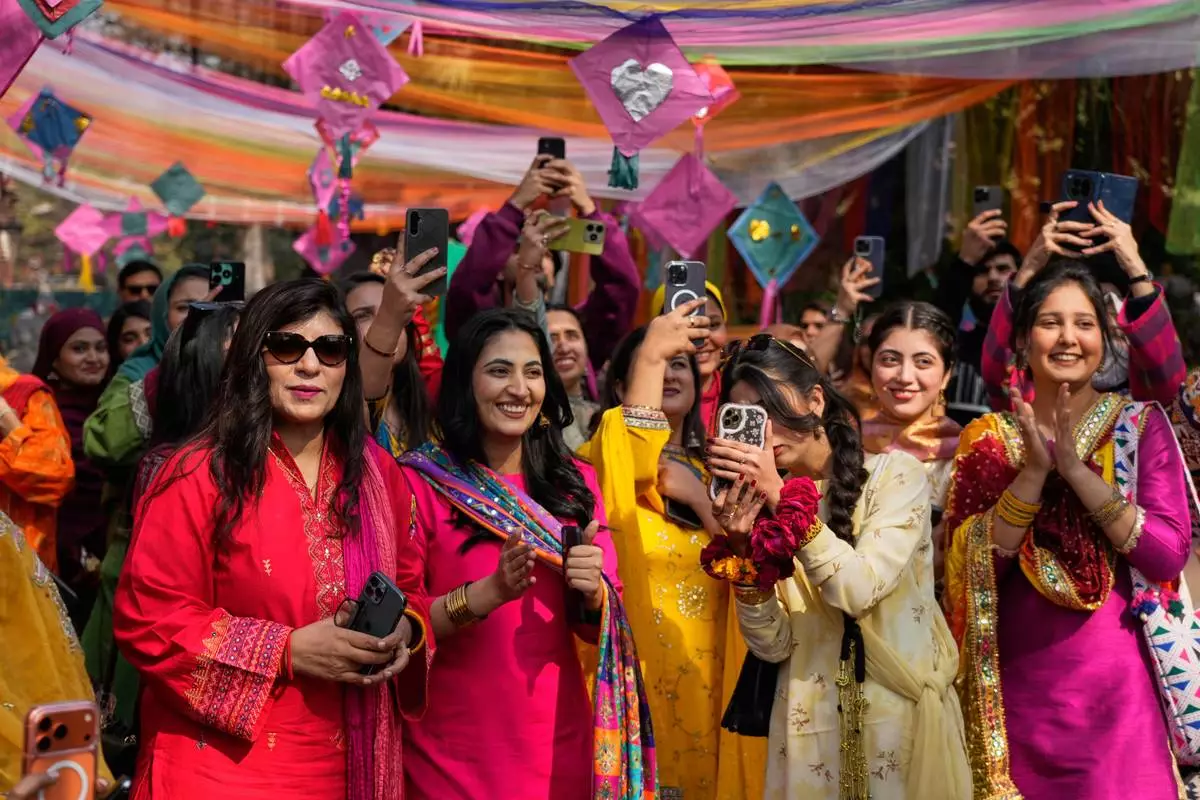
Students take part in a gathering to celebrate three-day kite flying festival 'Basant' at their university campus, in Lahore, Pakistan, Friday, Feb. 6, 2026. (AP Photo/K.M. Chaudary)

ISLAMABAD (AP) — A massive bombing ripped through a Shiite mosque on the outskirts of Pakistan 's capital during Friday prayers, killing 31 people and wounding at least 169 others, according to officials. Police said they were investigating whether the attack was carried out by a suicide bomber.
There were fears the death toll from the bombing at the sprawling Islamabad mosque of Khadija Al-Kubra could climb even higher as some of the wounded were reported to be in critical condition. Television footage and social media images showed police and residents transporting the wounded to nearby hospitals.
Rescuers and wounded described a harrowing scene, with bodies and wounded lying on the mosque's carpeted floor. Hussain Shah said he was praying in the mosque courtyard when he heard a sudden, loud explosion.
“I immediately thought that some big attack has happened,” he said. He then went into the mosque to utter chaos — many of the wounded were screaming and crying out for help. Shah said he counted around 30 bodies inside the mosque, while the number of wounded appeared to be significantly higher.
No one immediately claimed responsibility for the explosion, but suspicion is likely to fall on militants such as the Pakistani Taliban or the Islamic State group, which has been blamed for previous attacks on Shiite worshippers, a minority in the country. Militant groups across Pakistan often target security forces and civilians.
Though attacks are not so frequent in Islamabad, Pakistan has seen a surge in militant violence in recent months, largely blamed on Baloch separatist groups and the Pakistani Taliban, known as Tehrik-e-Taliban Pakistan, or TTP, which is a separate group, but allied with Afghanistan’s Taliban. A regional affiliate of the Islamic State group has also been active in the country.
In the initial aftermath of the explosion, a lower number of casualties was released, but Islamabad Deputy Commissioner Irfan Memon gave the latest tolls.
President Asif Ali Zardari and Prime Minister Shehbaz Sharif condemned the attack in separate statements and extended condolences to the families of those killed. They instructed that all possible medical assistance be provided for those wounded.
“Targeting innocent civilians is a crime against humanity,” Zardari said. “The nation stands with the affected families in this difficult time.”
Sharif said he has ordered a full investigation. “Those who are responsible must be identified and punished,” he said.
Pakistan’s Interior Minister Mohsin Naqvi also condemned the attack, and asked authorities to ensure the provision of best medical care to the wounded.
Friday’s attack occurred as Uzbekistan President Shavkat Mirziyoyev, who is on an official two-day visit, was attending an event with Sharif. The event in Islamabad was several miles away from the site of the explosion.
A top Shiite leader, Raja Nasir, expressed deep sorrow over the attack at Khadija Al-Kubra.
“Such a terrorist act in the federal capital is not only a serious failure in protecting human lives but also raises significant questions about the performance of the authorities and law enforcement agencies,” he said and asked for people to give blood as the hospitals in Islamabad were in urgent need for blood supplies for the wounded.
The last deadliest attack in Islamabad was in 2008, when a suicide bombing targeted the Marriott Hotel in the capital, killing 63 people and wounding over 250 others. In November, a suicide bomber had struck outside a court in Islamabad, killing 12 people.
The latest attack comes nearly a week after the outlawed Baloch Liberation Army carried out multiple attacks in insurgency-hit southwestern Balochistan province, killing about 50 people.
Security forces responding to those attacks also killed more than 200 “terrorists,” according to the military.
Associated Press writers Babar Dogar in Lahore and Asim Tanveer in Multan, Pakistan, contributed to this story.
People comfort a man, center, mourning over the death of his relative, close to the site of a bomb explosion at a Shiite mosque, in Islamabad, Pakistan, Friday, Feb. 6, 2026. (AP Photo/Anjum Naveed)
Pakistani security officers and rescue worker gather at the site of a bomb explosion at a Shiite mosque, in Islamabad, Pakistan, Friday, Feb. 6, 2026. (AP Photo/Anjum Naveed)
Pakistani paramilitary and police commandos take positions at the site of a bomb explosion at a Shiite mosque, in Islamabad, Pakistan, Friday, Feb. 6, 2026. (AP Photo/Anjum Naveed)
People comfort a man, center, mourning over the death of his relative, close to the site of a bomb explosion at a Shiite mosque, in Islamabad, Pakistan, Friday, Feb. 6, 2026. (AP Photo/Anjum Naveed)
Pakistani security officers and rescue worker gather at the site of a bomb explosion at a Shiite mosque, in Islamabad, Pakistan, Friday, Feb. 6, 2026. (AP Photo/Anjum Naveed)