Helicopter tours are taking off across the Yangtze River Delta during the nine-day Spring Festival holiday starting from Feb 15, offering faster travel and a glimpse into China's growing low-altitude economy.
What looks like a cinematic journey is becoming a new form of holiday travel. While most of these services are still in trial operation, the trend highlights the burgeoning potential of China's low-altitude economy.
A helicopter from Shanghai Newsky Helicopter Company was seen lifting off over Shanghai's skyline, flying past Pudong, the coastline, and out over the open sea.
"We take off from Fuxing Island in Shanghai's Yangpu District to Shengsi Islands, on a flight of about 30 minutes. From the air, you can see the Pudong New Area, and then we will pass over the Lin-gang Special Area of China (Shanghai) Pilot Free Trade Zone and the Donghai Bridge," said Xu Jianjun, the captain.
For passengers, it's not just about the view, it's about travel time. Routes that once took hours by road and ferry can now be completed in around half an hour by air. Flight bookings are available via a WeChat mini program, with prices ranging from 600 yuan (about 94 U.S. dollars) to 2500 yuan (about 362 U.S. dollars).
During the Spring Festival travel rush, demand for air transport is rising, as more travelers choose speed, flexibility, and efficiency.
"Spring Festival demand has surged. Bookings are about 1.5 times higher than usual," said Li Xin, manager of the flight department of Shanghai Newsky Helicopter Company.
Passengers can reserve flights in advance via the mini-program, Li added.
Such kind of air taxis are becoming part of a broader transport system across the Yangtze River Delta and creating new options for regional mobility.
Low-altitude routes ease peak-hour pressure and meet demand for better travel options, said Xu Shengnan, chief of the Traffic Support Section of Chongchuan District, Nantong City, Jiangsu Province, adding that new measures will be introduced to make low-altitude travel become a new normal in regional transport.
According to the Civil Aviation Administration of China (CAAC), China's low-altitude economy is projected to reach 3.5 trillion yuan (around 506.6 billion U.S. dollars) by 2035. The Yangtze River Delta and the Guangdong–Hong Kong–Macao Greater Bay Area are China's two most active regions for low-altitude helicopter routes, and the growth is accelerating.
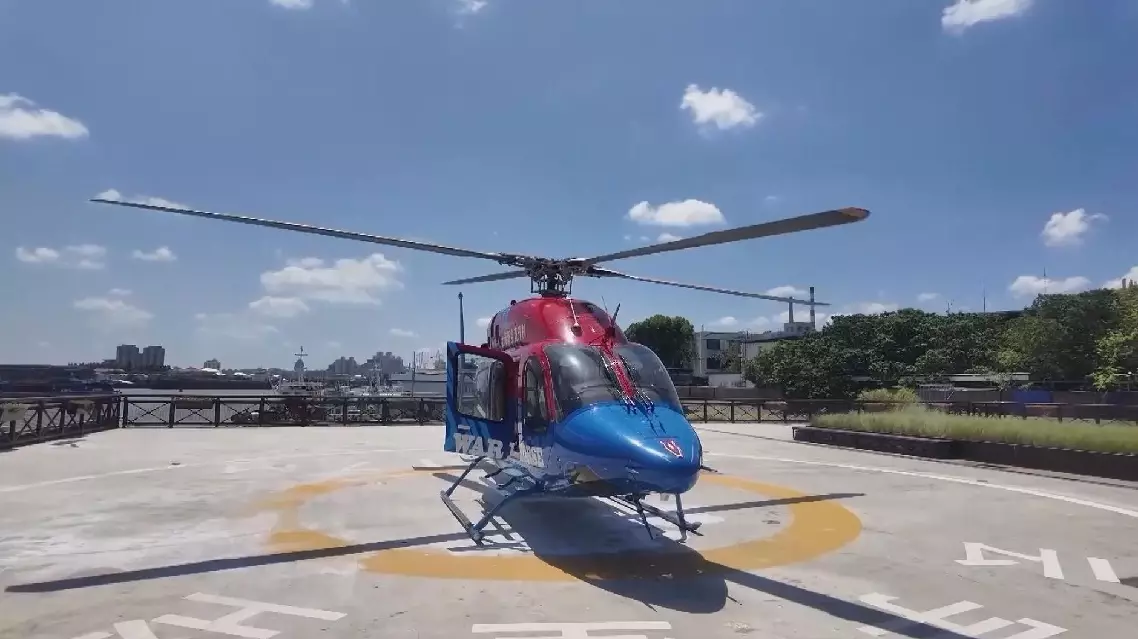
Helicopter tour demand takes off during Spring Festival