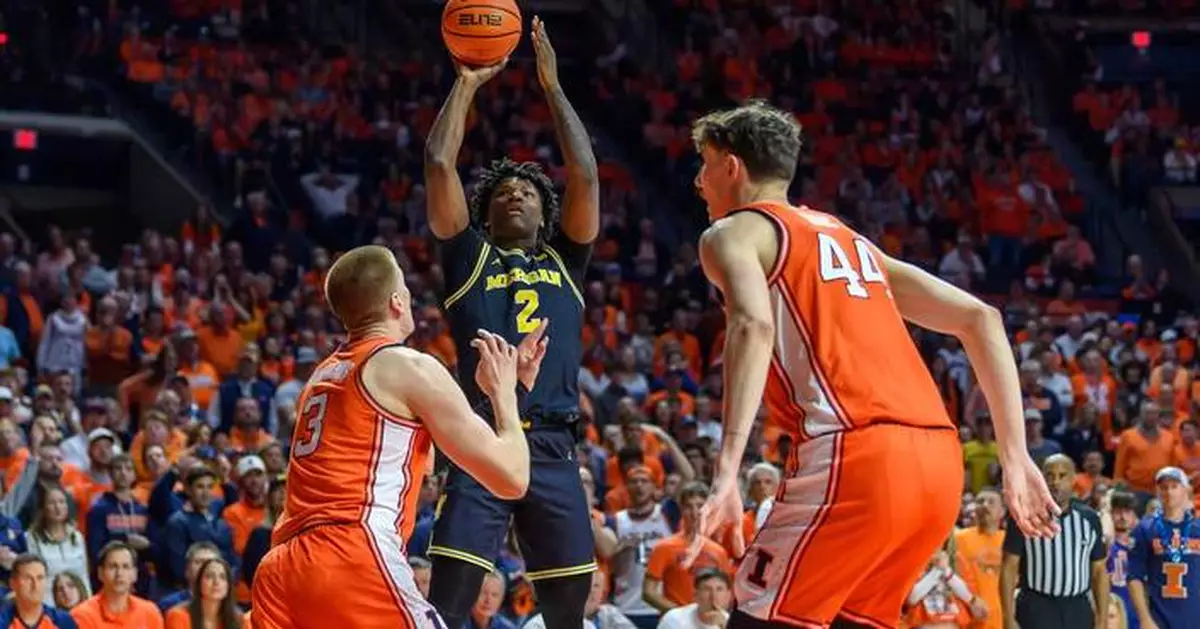
ANN ARBOR, Michigan (AP) — No. 3 Michigan sophomore guard L.J. Cason will miss the remainder of the season with a torn ACL in his right knee, the team announced Saturday.
Cason came up limping a day earlier in an 84-70 win at Illinois in which the Wolverines (27-2, 17-1) clinched the Big Ten regular-season title.
He appeared to be initially hurt when falling to the court after chasing down a defensive rebound late in the first half. Cason returned to play for two-plus minutes in the second half before leaving the game with about 13 minutes left, and finished with nine points.
“First and foremost, our hearts hurt for L.J.,” coach Dusty May said in a statement.
“You never want to see a young man who has poured so much into this program have something like this happen,” he added. “However, if there’s anyone equipped to handle this and the rehab process, it’s LJ.”
Cason is a primary backup, who was sixth on the team in averaging 8.4 points per outing, while going 33 of 82 in 3-point attempts in 28 games this season.
“This isn’t how I wanted my season to end, but I trust God’s plan, and I’ll attack rehab the same way I approach everything -- with focus and determination,” Cason said. “We’ve got many goals as a team, and I’ll be locked in supporting my brothers every step of the way.”
Michigan plays at Iowa on Thursday before closing its season hosting Michigan State on March 8. The team has earned a bye through the opening rounds of the Big Ten tournament, which it will open in the quarterfinals on March 13.
Get poll alerts and updates on the AP Top 25 throughout the season. Sign up here and here (AP News mobile app). AP college basketball: https://apnews.com/hub/ap-top-25-college-basketball-poll and https://apnews.com/hub/college-basketball
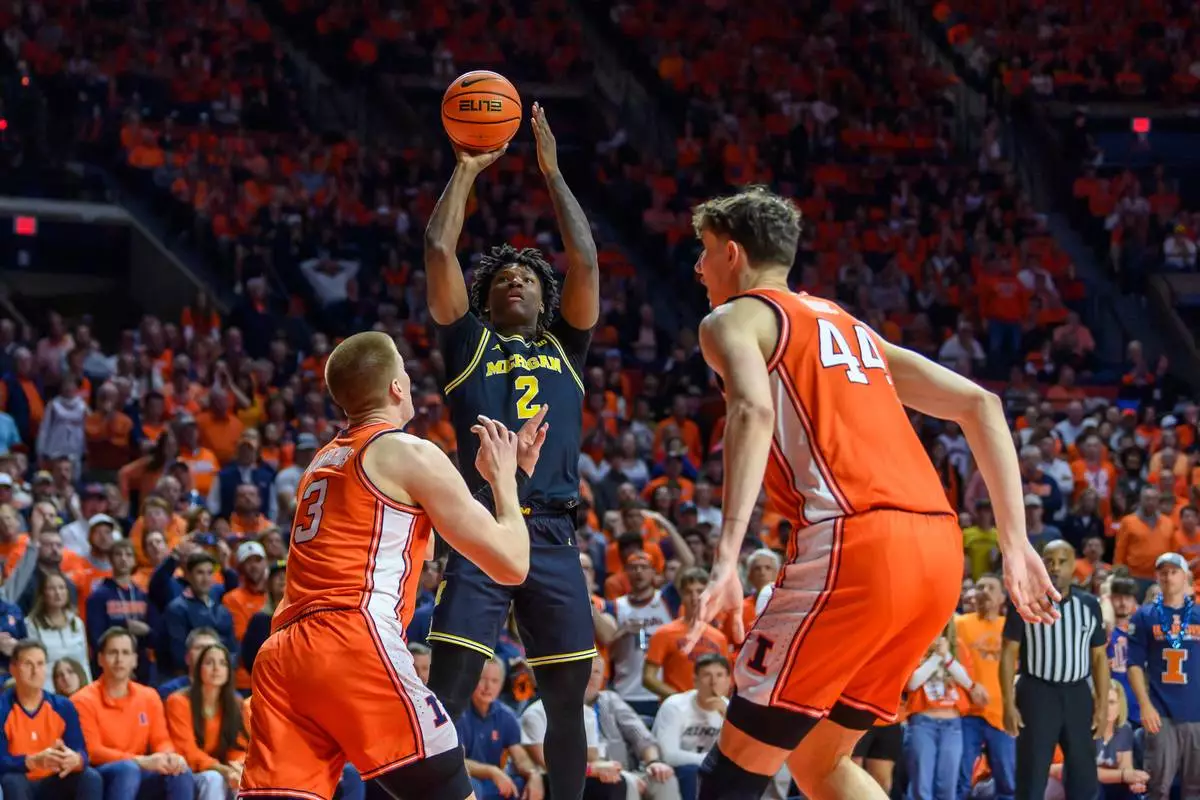
Michigan's L.J. Cason (2) looks to shoot between Illinois' Ben Humrichous, left, and Zvonimir Ivisic, right, during the second half of an NCAA college basketball game Friday, Feb. 27, 2026, in Champaign, Ill. (AP Photo/Craig Pessman)
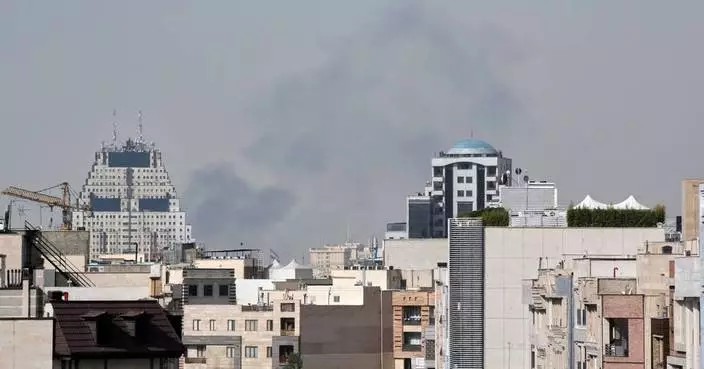
UNITED NATIONS (AP) — The United States and Israel clashed with Iran at an emergency meeting of the U.N. Security Council on Saturday where the U.N. chief and many countries urged a halt to their attacks and a return to negotiations to prevent the conflict from spreading further into the region and beyond.
Secretary-General António Guterres told the council that everything must be done to prevent an escalation. “The alternative,” he warned, “is a potential wider conflict with grave consequences for civilians and regional stability.”
Guterres said the U.S. and Israeli airstrikes violated international law, including the U.N. Charter. He also condemned Iran’s retaliatory attacks for violating the sovereignty and territorial integrity of Bahrain, Iraq, Jordan, Kuwait, Qatar, Saudi Arabia and the United Arab Emirates.
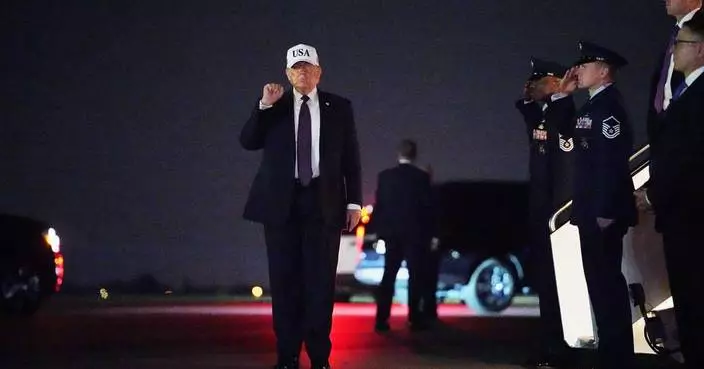
The U.S. ambassador to the United Nations, Mike Waltz, insisted the U.S. military action was lawful.
“Iran cannot have a nuclear weapon," he told the council. “That principle is not a matter of politics. It’s a matter of global security. And to that end, the United States is taking lawful actions.”
Israel’s U.N. Ambassador Danny Danon defended the airstrikes as necessary to stop an existential threat.
“We are stopping extremism before it becomes unstoppable,” he said. “We will ensure that no radical regime armed with nuclear weapons and ballistic missiles can threaten our people or the entire world.”
Amir Saeid Iravani, Iran's ambassador to the U.N., told the council that the airstrikes have killed and injured hundreds of Iranian civilians, which he called a war crime and a crime against humanity.
He blasted the U.N. and the Security Council, its most powerful body, for not heeding Tehran’s warnings about the “warmongering statements" by the U.S. in recent weeks and urged the council to act now.
“The issue before the council is straightforward: whether any member state may, including a permanent member of this council, through the use of force, coercion or aggression, determine the political future or system of another state or impose control over its affairs,” Iravani said.
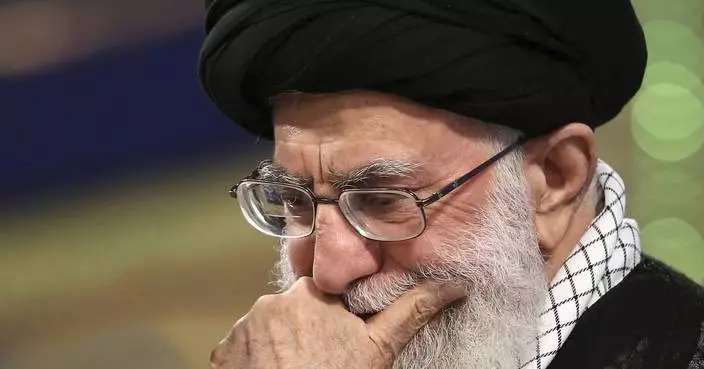
During his speech, the Iranian diplomat did not mention or comment on President Donald Trump's statement that Supreme Leader Ayatollah Ali Khamenei was killed in the strikes. The assassination of the second leader of the Islamic Republic, who had no designated successor, raised the prospects of a protracted conflict given Iranian threats of retaliation.
In a rare exchange, the U.S. and Iranian ambassadors traded warnings and direct rebuffs toward the end of the emergency session as military aggression between their countries risked spilling into a regional war.
After Waltz responded to Iranian claims that the U.S. had violated international law, Iravani asked to speak again to issue a warning: “I advise to the representative of the United States to be polite. It will be better for yourself and the country you represent.”
Waltz responded immediately, saying, “This representative sits here, in this body, representing a regime that has killed tens of thousands of its own people, and imprisoned many more, simply for wanting freedom from your entire tyranny.”
Russia's ambassador condemned the U.S.-Israeli airstrikes, while China's ambassador was more measured in his criticism.
“We demand that the United States and Israel immediately cease their aggressive actions,” Russian U.N. Ambassador Vassily Nebenzia said. “We insist on the immediate resumption of political and diplomatic settlement efforts … based on international law, mutual respect and a balance of interests.”
China’s U.N. Ambassador Fu Cong said China was very concerned by “the sudden escalation of regional tensions” and supported Russia’s call for a return to diplomatic negotiations.
The permanent observer of the 22-nation Arab League, Maged Abdelaziz, suggested Israel was being hypocritical in justifying its military attack by saying it was intended to prevent Iran from acquiring nuclear weapons. Abdelaziz, a former Egyptian ambassador to the U.N., noted that Israel has refused to subject its own nuclear facilities to inspection by the U.N. nuclear watchdog.
The emergency meeting was called by five council members: Bahrain, which is the Arab representative on the council, France, Russia, China and Colombia,.
In a joint statement, the leaders of Britain and France — both veto-wielding members of the council — along with Germany’s chancellor called for a resumption of U.S.-Iranian talks on Tehran’s nuclear program. The three countries, part of the 2015 nuclear deal with Iran, have led efforts to reach a negotiated solution. Trump pulled the U.S. out of the deal in 2018.
The three European leaders strongly condemned Iranian airstrikes in the region — not the U.S.-Israeli airstrikes — and urged Iran’s leaders to seek a negotiated solution, saying: “Ultimately, the Iranian people must be allowed to determine their future.”
The Security Council meeting is taking place on the last day of the United Kingdom’s presidency and a day before the United States takes over the rotating presidency for the month of March.
Amiri reported from Atlanta.
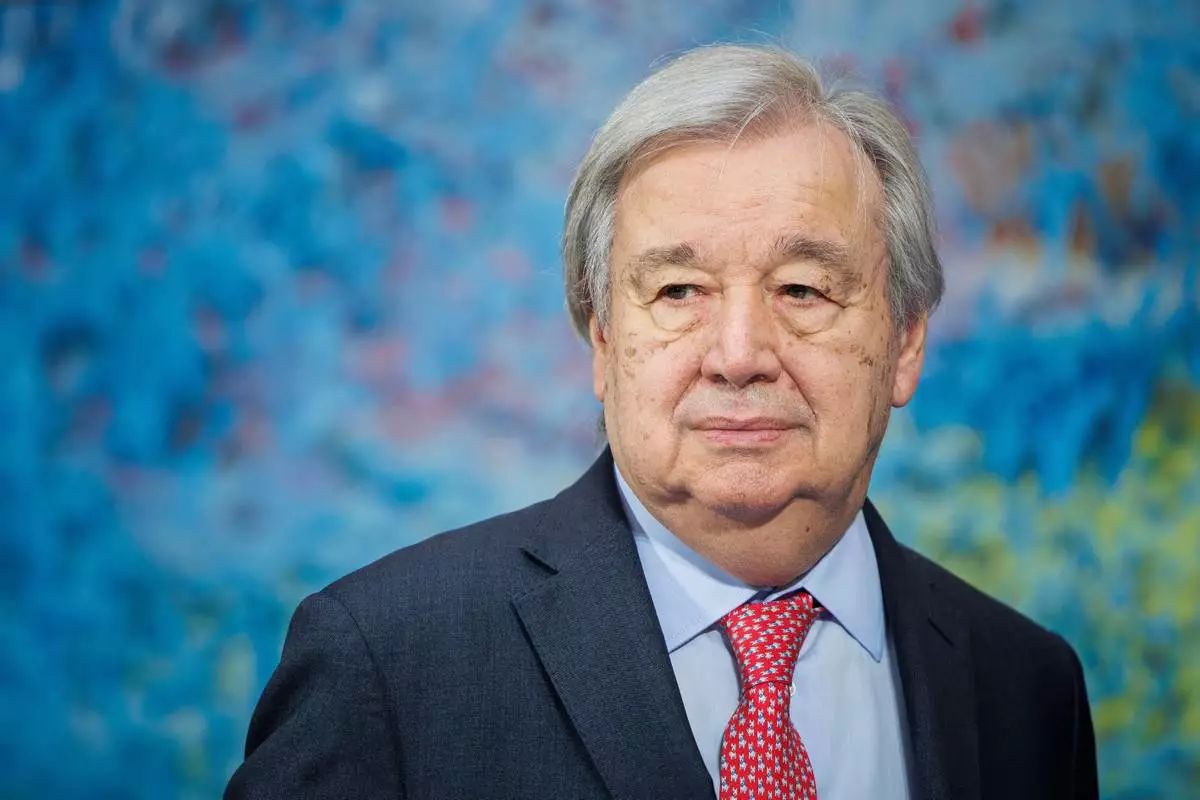
U.N. Secretary-General Antonio Guterres attends the opening of the 61st session of the United Nations Human Rights Council at the European headquarters of the United Nations in Geneva, Monday, Feb. 23, 2026. (Valentin Flauraud/Keystone via AP)