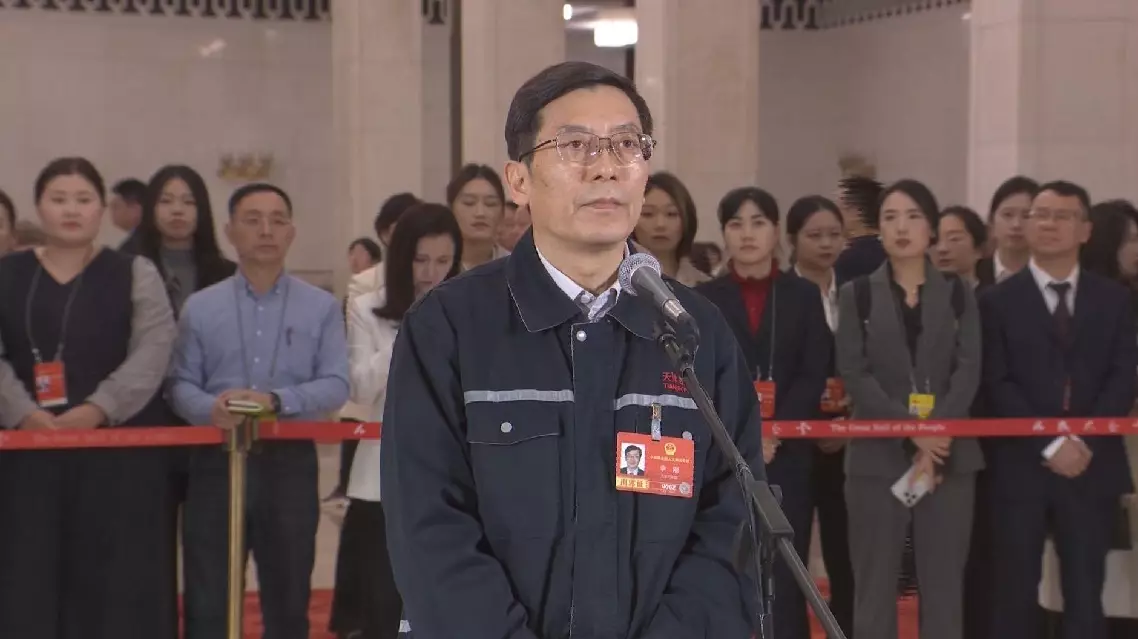
Li Gang, a deputy to the 14th National People's Congress (NPC) and electrical engineer at Tianjin Pipe Corporation (TPCO), said on Thursday that core technologies must be "firmly held in our own hands", highlighting how sustained scientific and technological innovation is strengthening China's high-end manufacturing capabilities.
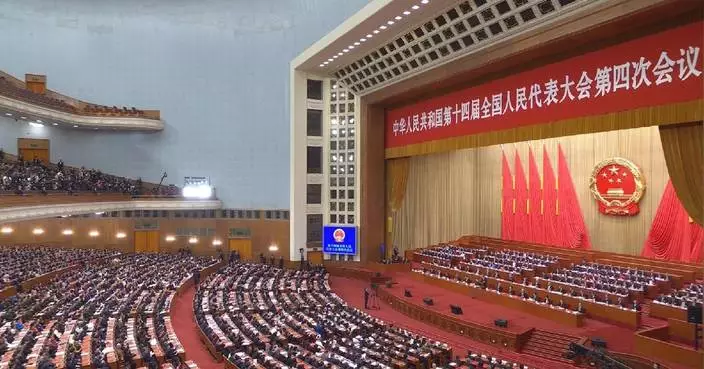
He made the statement and shared fruitful achievements brought by sci-tech innovations during a group interview in Beijing prior to the closing meeting of the fourth session of the 14th NPC at the Great Hall of the People in Beijing.
Li cited China's largest offshore gas field, Deep Sea No. 1, as a vivid example of how domestically developed capabilities are being applied in major national projects.
"China's largest offshore gas field is Deep Sea No. 1. In waters with depths more than 1,000 meters, all 9,425 seamless subsea pipelines with the largest diameter in China were manufactured by us. Currently, our products are used in more than 100 countries and regions and that is the market's vote of confidence in made-in-China products, cast through orders," he said.
According to Li, behind such large-scale deliveries lies persistent work to overcome bottlenecks in key processes, especially in areas where precision, reliability and consistency are essential for deepwater and high-pressure environments.
Li also said that these breakthroughs were part of a broader innovation push within the company and the industry at large.
"In recent years, we have participated in seven major national research and development projects and completed five breakthroughs in key materials for the industry, contributing to its overall development. TPCO's products have supported a wide range of major projects -- from oil and gas transmission pipelines for the West-East Gas Pipeline Project, to corrosion-resistant casing for deepwater drilling platforms in the South China Sea, and specialized tubular products for the new energy sector. Taking deepwater oil and gas tubular products as an example, previously, such products relied heavily on imports. Now, China can produce them independently while reducing costs to about 60 percent of comparable foreign products and cutting delivery time by half. These advances have helped lower China’s import dependence for oil and gas tubular products from around 90 percent to below 30 percent. Breakthroughs in these chokepoints have provided solid underpinning for the country's energy security strategy," he explained.
Li emphasized that what struck him most is that core technologies must be firmly held in the hands of the Chinese people. He also noted that TPCO will continue to strengthen scientific and technological innovation and use its steel pipes to forge the "steel backbone" of major national capabilities.
NPC deputy calls for strenuous efforts to develop homegrown core technologies