PROVIDENCE, R.I.--(BUSINESS WIRE)--Mar 12, 2026--
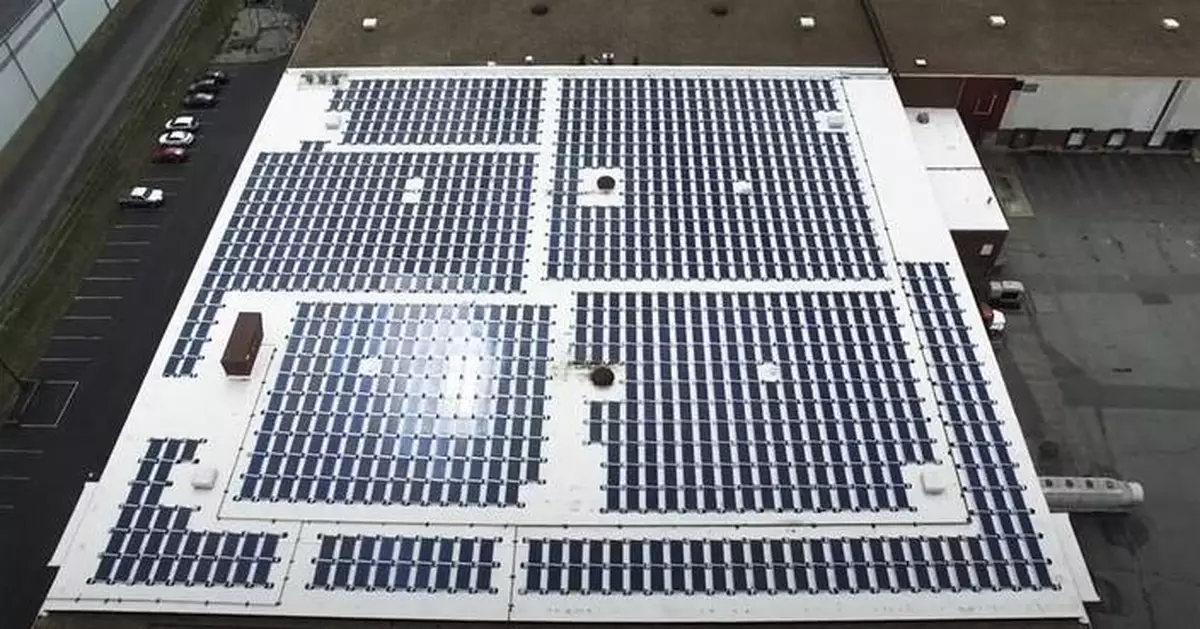
Property owners seeking new revenue opportunities without deploying capital may find an overlooked asset directly overhead. Solect Energy has published an article outlining how rooftop solar site leases allow commercial and industrial property owners to generate long-term, contractually defined income from unused rooftop space.
This press release features multimedia. View the full release here: https://www.businesswire.com/news/home/20260312070136/en/
As commercial property owners seek new ways to strengthen net operating income and enhance asset performance, rooftop solar site leases are emerging as a practical strategy for generating long-term, non-operational income. The structure aligns with long-term property strategy without disrupting business operations.
The article, “Rooftop Solar Site Leases: A New Revenue Stream for Commercial Property Owners” explains how third-party rooftop commercial solar lease structures transform non-revenue-producing roof space into a 20–25 year income stream.
Under a rooftop solar site lease, a solar developer leases the rooftop, finances and installs the solar energy system, and manages long-term operations and maintenance. Property owners retain full ownership and control of their buildings while receiving predictable lease payments. Because the system occupies rooftop space only, tenant operations, interior square footage, and parking areas remain unaffected.
“Rooftop solar site leases function much like a long-term tenant occupying otherwise unused space,” said Matt Shortsleeve, SVP of Policy & Marketing at Solect Energy.“For many property owners, it represents a practical way to generate stable income without capital investment or additional operational complexity.”
Properties best suited for rooftop solar site leases often include industrial and warehouse properties, flex and distribution facilities, and large retail buildings with significant usable roof area and long-term site control.
The article also discusses current federal incentive considerations, including eligibility for the 30% federal Investment Tax Credit (ITC) under existing “Safe Harbor” provisions. Project timing can influence eligibility, development flexibility and financial outcomes.
The full article, detailing lease structure, qualification criteria, and federal incentive considerations, is available here:
Rooftop Solar Site Leases: A New Revenue Stream for Commercial Property Owners
About Solect Energy
Founded in 2009 and headquartered in Hopkinton, Massachusetts, Solect Energy is a nonresidential solar and energy storage developer and integrator serving the Northeast. A Pattern Energy company, Solect provides comprehensive services spanning design, development, installation, financing, and long-term asset management, including operations and maintenance.
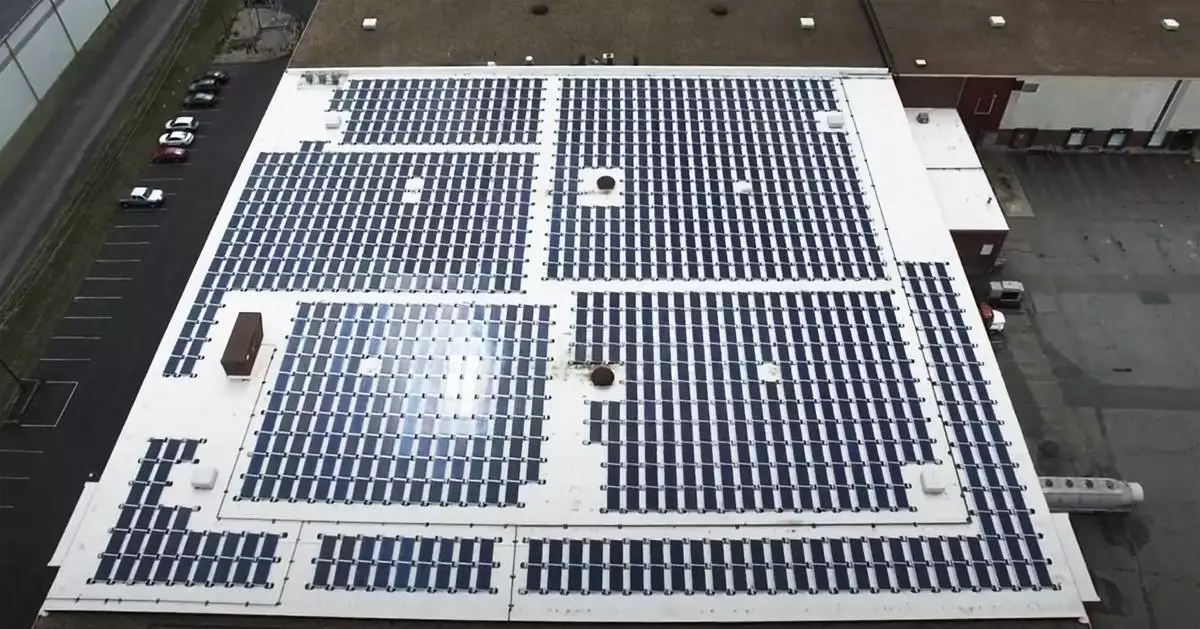
Commercial rooftop solar installation
NEW YORK (AP) — More than 30 states will resume their antitrust trial against Live Nation and Ticketmaster on Monday after negotiations this week failed to result in many states joining a tentative settlement reached by the Justice Department.
Lawyers told the judge Friday at a hearing in New York that seven states — Arkansas, Iowa, Mississippi, Nebraska, Oklahoma, South Carolina and South Dakota, all of which of Republican attorneys general — were joining the Justice Department in settling with the live music giant.
The other 32 states plan to continue trying to convince a jury that Live Nation Entertainment and its ticketing subsidiary, Ticketmaster, are squelching competition and driving up prices for fans. They say this was done through threats, retaliation and other tactics to control virtually every aspect of the industry, from concert promotion to ticketing.
The companies say they do not monopolize their industry and that artists, sports teams and venues set prices and decide how tickets are sold.
A jury had already begun hearing testimony in the trial when the U.S. Justice Department, which had taken the lead in suing Live Nation, said it had reached a deal with the company that would save the public money by letting competitors of Live Nation into some ticket markets where they are currently excluded.
Many states criticized the deal, saying the federal government failed to get enough concessions from the company.
Testimony was put on hold for a week for more settlement negotiations, but with no breakthrough in sight, Judge Arun Subramanian said Friday the trial would resume.
The judge also ruled against Live Nation's objection to trial exhibits in which a company employee several years ago tells another worker that the prices Live Nation charges to access the VIP area of a Tampa, Florida, amphitheater are “outrageous,” that customers paying the fees "are so stupid” and that “I almost feel bad taking advantage of them” before writing, “BAHAHAHAHAHA.”
Live Nation had argued against their inclusion in the trial, saying the employees were making “passing references to non-ticket ancillary products — such as VIP club access, premier parking, or lawn chair rentals — sold to concertgoers at two amphitheaters” in Florida and Virginia.
The judge said the overall fan experience is relevant to the relationship between performers and their customers and some artists might not want to perform if fans were being charged too much for lawn chairs or other amenities.
Subramanian said it was no different than the harm that might occur to the film industry if movie theaters began charging $50 for concessions such as soda, candy and popcorn.
At a hearing on Tuesday, Live Nation attorney Dan Wall told the judge that the chance all states would settle their claims this week was “about zero.”
FILE - The Ticketmaster logo is seen along the sideline of the field before an NFL football game, Sept. 15, 2024, in Jacksonville, Fla. (AP Photo/Phelan M. Ebenhack, File)