
Skip to Content Facebook Feature Image

Trump's Iran Fiasco: Kushner Lit the Fuse, the World Pays the Price

Blog

Trump's Iran Fiasco: Kushner Lit the Fuse, the World Pays the Price
Blog

Blog

Trump's Iran Fiasco: Kushner Lit the Fuse, the World Pays the Price

2026-03-14 22:11 Last Updated At:22:11

The US-Israeli war on Iran has now ground on for two weeks. And guess what’s the most jaw-dropping part of this entire conflict? Trump decided to go to war on pure gut instinct, consulting only a handful of advisers — chief among them his son-in-law Jared Kushner — with apparently zero contingency plan for Iran's response.

The Strait of Hormuz blockade is case in point: Trump has been completely paralyzed, leaving the war effort in shambles. Facing this disaster, he's doing what he always does — refusing to own it. Instead, he's throwing Kushner under the bus, saying "based on what he told me, I thought Iran was going to attack the United States." The implication is stark: his son-in-law may have fed him bad intelligence that dragged America into war.
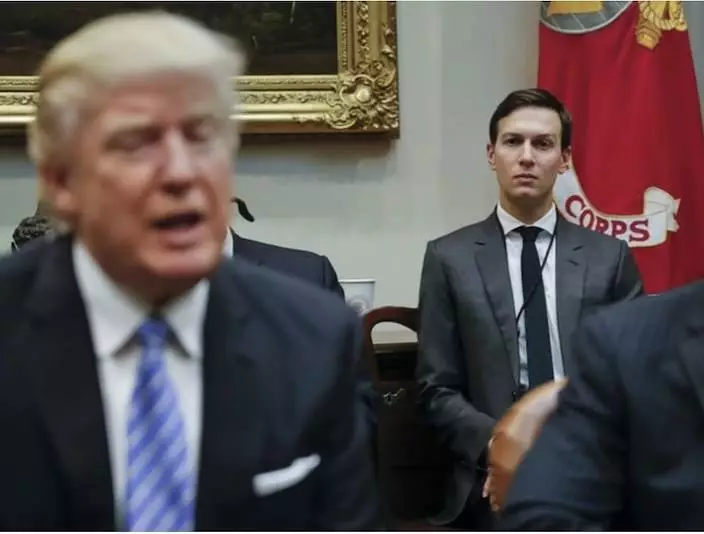
Trump’s Iran war is falling apart. He now blames son-in-law Kushner (right), saying Kushner’s intel pushed him to strike.

Trump’s Iran war is falling apart. He now blames son-in-law Kushner (right), saying Kushner’s intel pushed him to strike.

The reality: Kushner, Middle East envoy Steve Witkoff, and the rest of the White House's so-called "Jewish clique" were the key architects of this conflict — openly siding with Israel while dragging the rest of the world into the wreckage.

When the war kicked off, Trump was riding high. He was convinced that America's overwhelming military firepower would bring Iran to its knees within days.
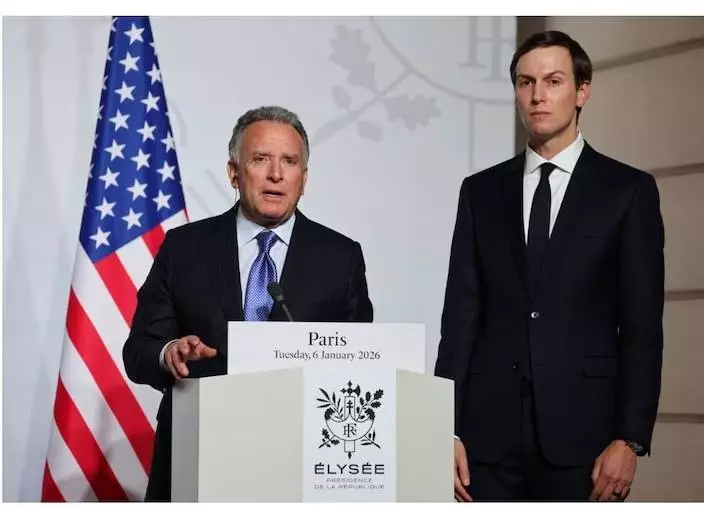
Envoy Witkoff (left) is also in his sights — another key player in the White House “Jewish clique” driving Middle East policy.

Envoy Witkoff (left) is also in his sights — another key player in the White House “Jewish clique” driving Middle East policy.

He badly miscalculated. Iran did way more than just holding the line — it hit back hard and relentlessly, pushing the situation to the edge of Trump's control. The Strait of Hormuz remains firmly in Iranian military hands, and Washington has no answer. Reports say shipping companies have begged the US Navy for warship escorts, only to be flatly turned down — too few navy ships, risks too high. It is a humiliating display of impotence.

With the strait sealed shut, global oil and gas supply chains are in chaos and prices keep climbing. US allies are seething, and it's only a matter of time before that anger boils over at home too. Caught in a catastrophe of his own making, Trump is working two angles at once — engineering a face-saving exit while furiously offloading blame. This time, the scapegoats he has chosen are Kushner and Witkoff.

A few days ago, Trump told reporters his decision to go to war was built on what Kushner and Witkoff had told him — intelligence that made him believe "I thought [Iran] was going to attack us", and something needed to be done. Translation: if their advice was wrong, the blood is on their hands, not his.

What Kushner Actually Told Trump

So what exactly did Kushner and Witkoff tell him? The picture is coming into focus. Shortly before hostilities began, the two men flew to Geneva to negotiate with Iranian representatives. On their return, they briefed Trump, reporting that Iran had claimed to possess enough enriched uranium to build 11 nuclear warheads — and that both men believed Iran could use those weapons to strike the United States. Trump later told Fox News the US had no choice but to act pre-emptively. His analogy: in a gunfight, the gunman has to draw first.

Now that the war has sunk into a quagmire, Trump is leaning on that same briefing to explain why he "felt" Iran was about to strike — and to justify his rush to war. The subtext is impossible to miss: they may have fed him bad intelligence, and he would never have acted so recklessly on his own.

Whether or not Kushner actually misled his father-in-law, the fact that Trump launched a war on his son-in-law's word alone is breathtaking in its recklessness. Democratic lawmakers have said so bluntly: a president who bypasses the CIA, the NSA, and the entire US intelligence apparatus — choosing instead to act on the advice of a family member and a tight inner circle — and then drags the country into a costly, deadly war that harms innocents and devastates allies, has a serious problem of judgement.

There's another layer of absurdity that demands scrutiny. Kushner is Jewish, and his family business carries deep, entangled financial ties to Israel. His father is a close personal friend of Israeli Prime Minister Netanyahu.

There is every reason to believe that the intelligence and advice Kushner delivers to Trump tilts in Israel's favour — and that he may be actively steering Trump's decision-making toward Israeli objectives. Whose interests he puts first is not a difficult question to answer.

The "Jewish Clique" at the Core

Chinese Mainland commentator "Chairman Tu" has written a sharp exposé of the White House "Jewish clique" and its stranglehold on American policy. Kushner tops the list — a five-star inner-circle figure in terms of proximity to Trump. Second is Middle East envoy Witkoff, also Jewish, a real estate magnate with equally tight financial ties to Israel. Third is Commerce Secretary Lutnick, who also wields meaningful influence over Trump's Middle East agenda.

This "Jewish clique" at the heart of American power is the single greatest force behind Trump's decision to go to war with Iran. They have covertly helped Israel pursue its goal of destroying Iran, while dragging the rest of the world into the wreckage — forcing everyone to pay an enormous price for a war that was reckless, absurd, and entirely avoidable.

Lai Ting-yiu


What Say You?

** The blog article is the sole responsibility of the author and does not represent the position of our company. **

America and Israel went in hard against Iran, expecting a quick, clean win. Instead, they kicked the hornet's nest — and now the whole world is reeling. Iran struck back with ruthless precision, cutting off the Strait of Hormuz and triggering a global energy crisis that hit America where it hurts most. That masterstroke forced Trump to rethink his next move. But the bigger fear now isn't oil prices or shipping lanes. It's probably the war coming home.

According to US media reports, the Department of Homeland Security has issued a warning to government departments and companies to beware of terrorist attacks and cyberattacks, and the FBI has also increased its vigilance against terrorist attacks. In addition, Nobel laureate Krugman sounded the alarm, saying that the war could trigger a financial crisis and burst the stock market bubble.

Kill Orders and Rising Terror Threat

The US-Israeli killing of Supreme Leader Khamenei — followed by indiscriminate bombing and mass civilian casualties — has dramatically raised the terror stakes on American soil. CNN and other US outlets report that the DHS issued a "Critical Incident Memorandum," revealing that two Iranian religious leaders issued fatwas — kill orders — calling on Muslims worldwide to avenge Khamenei's death. The Islamic Revolutionary Guard Corps followed with its own operational command: "The enemy will no longer be safe anywhere, not even home".

Iran's religious leaders have issued fatwas to avenge blood debts, sharply raising the terrorism risk on US soil. The DHS has issued a warning and placed the country on high alert.

Iran's religious leaders have issued fatwas to avenge blood debts, sharply raising the terrorism risk on US soil. The DHS has issued a warning and placed the country on high alert.

The DHS has instructed government agencies and businesses to heighten vigilance, with a particular focus on "lone wolf" attacks. The FBI has similarly raised its counterterrorism readiness, with energy facilities flagged as especially high-risk. Law enforcement agencies nationwide have stepped up their alert levels across the board.

Cyberattacks and Sleeper Networks

Beyond physical violence, security agencies are warning of a serious Iranian cyber threat. US defense contractors sit at the top of the target list — and those with close ties to Israel face an even steeper risk from Iranian "hacker brigades".

This is no idle speculation. US media report that security services recently intercepted encrypted communications from Iran, suspected to be covert instructions issued to sleeper networks inside the United States — potentially coordinating some form of action. The intercepts have put security agencies on the highest state of alert, with little room for error.

The fatwas are not empty rhetoric — Khamenei's killing is a blood debt demanding repayment. Even if Iran's military doesn't strike directly, proxy actors may step in to do the job. The longer this conflict drags on, the greater the risk of a terrorist attack on American soil.

Krugman's Three-Alarm Financial Warning

The threat to the American homeland goes well beyond terrorism. Nobel Prize-winning economist Paul Krugman has issued a stark warning: this war could ignite three separate financial crises at once.

Nobel laureate Krugman has sounded the alarm, warning that the US-Iran conflict could trigger an American financial crisis and potentially burst the stock market bubble.

Nobel laureate Krugman has sounded the alarm, warning that the US-Iran conflict could trigger an American financial crisis and potentially burst the stock market bubble.

First, private credit. Krugman argues the war threatens oil supplies and shipping at precisely the moment when US financial markets are far more fragile than they were. The most immediate danger, he says, is a blowup in the private credit sector.

Second, the stock market. Krugman raises a pointed question: will this war prick the equity bubble? The S&P 500's price-to-earnings ratio was low in 1978 but is extremely elevated today. If the war inflicts serious economic damage on the United States, those lofty valuations simply cannot hold. In other words, the collapse could ride in on the coattails of this conflict.

Third, Middle Eastern financial hubs. Cities like Dubai — now sitting inside a war zone — have become critical nodes in the global financial system and magnets for the ultra-wealthy. If major upheaval disrupts Dubai's new role, the damage will ripple outward into the world economy, and America will not escape the fallout.

The Fire Is Already Burning

Krugman insists he has no desire to spread doomsday talk — but his warnings are deadly serious. As he put it bluntly, "There are many stresses on our economy, and this could be the straw that breaks the camel's back — a straw that becomes heavier the longer the war goes on". Finance insiders share the same worry: let the conflict drag on or escalate, and the fire will spread to global markets, with America bearing the brunt.

Trump is a businessman, and it's time he thought like one. The fire is already burning on American soil. If he acts in his rational self-interest, the exit ramp is right in front of him. Wait too long, and there won't be a controlled withdrawal — just mutual destruction, everyone going down together.

Lai Ting-yiu

Recommended Articles