Two weeks into America's military campaign against Iran, the situation on the ground has stopped following anyone's script — least of all Trump's. At least three competing factions inside the White House are battling to steer the war's direction. In trying to keep everyone happy, Trump keeps contradicting himself in public. Caught between economic pressure and mounting military risk, Washington has talked itself into a corner.
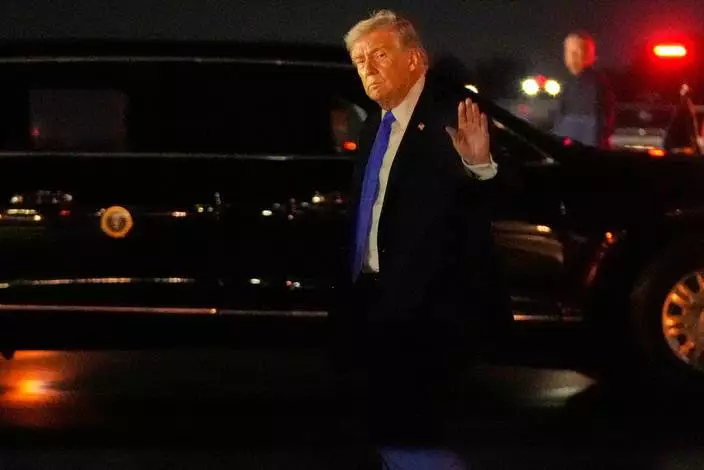
Two weeks in, Trump's Iran gamble has stopped following his script.
According to Reuters on March 13, at least three forces are pulling Trump in opposite directions. First up: Treasury and National Economic Council officials, who warn that US-Israeli strikes risk driving up gasoline prices — eroding public support and political capital. Chief of Staff Susie Wiles and Deputy Chief of Staff James Blair share those concerns. They are pushing for a narrowly defined victory and signalling that the operation is limited in scope and winding down.
Then there are the Republican hawks — Lindsey Graham and Tom Cotton — demanding that the offensive be pressed home, Iran's nuclear ambitions crushed permanently, and every attack on US forces answered decisively. On the other flank, Trump's populist base, former political mastermind Steve Bannon, and conservative media personality Tucker Carlson are doing everything they can to keep America out of another open-ended Middle Eastern quagmire.
This three-way tug-of-war has turned Trump's public statements into something close to performance art. On February 28, he set sweeping objectives. Days later, he described it as a limited operation with goals "basically achieved." Then on Wednesday the 11th, in Kentucky, he declared "We have won" — only to immediately add, "I don't want to withdraw too early. We must complete the mission." One adviser described Trump as trying to convince the hawks that operations are continuing, the markets that the war is nearly over, and his base that the conflict won't escalate.
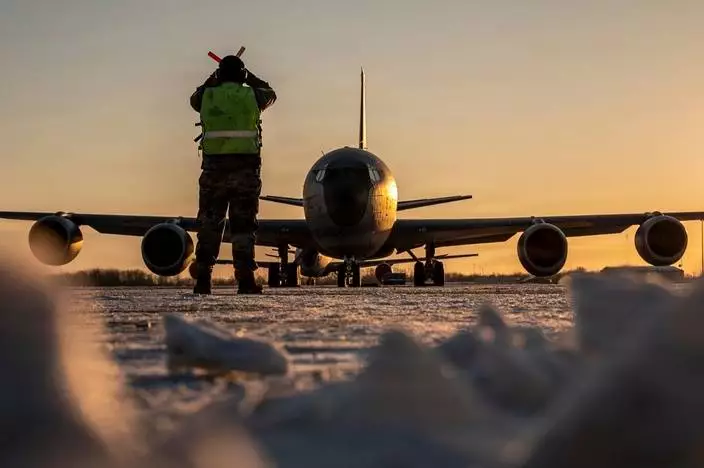
Three camps. Three agendas. One increasingly cornered president.
Spinning War, Spinning Markets
White House Press Secretary Karoline Leavitt pushed back on the Reuters report, dismissing it as built on anonymous hearsay — while simultaneously emphasising that Trump welcomes diverse views but remains the sole decision-maker. Reuters also noted that Trump launched the war with barely a word of explanation. Objectives shifted from preventing an Iranian "imminent attack," to destroying the nuclear programme, to regime change — a jumble of rationales that has only deepened the confusion.
The political and economic advisers who warned of economic blowback before the war — and were brushed aside — finally found their moment this week. They have played a central role in pushing Trump to calm markets and hold down rising oil and gas prices. Trump quickly shifted his public tone, downplaying the war's impact, insisting the operation was "short-term," and framing any oil price increases as temporary — a calculated effort to head off fears of an open-ended conflict.
But Iran is not playing along. Tehran has ramped up strikes on Gulf tankers and energy infrastructure, and its Strait of Hormuz blockade has driven oil prices sharply higher — effectively wiping out any US military gains at the messaging level. If prices spike enough, the approaching midterm elections could force Trump into an early ceasefire he never planned for.
People in the know disclose that some aides have tried — and failed — to convince Trump that this war cannot be won with the same "quick strike, quick win" playbook used in the Venezuela raid. Iran is a far harder target. Its religious and security structures are deeply embedded. Tehran has absorbed the strikes, launched effective counterattacks that have dealt serious blows to US, Israeli and allied forces, and its leadership shows no sign of buckling — making any unilateral declaration of victory ring hollow.
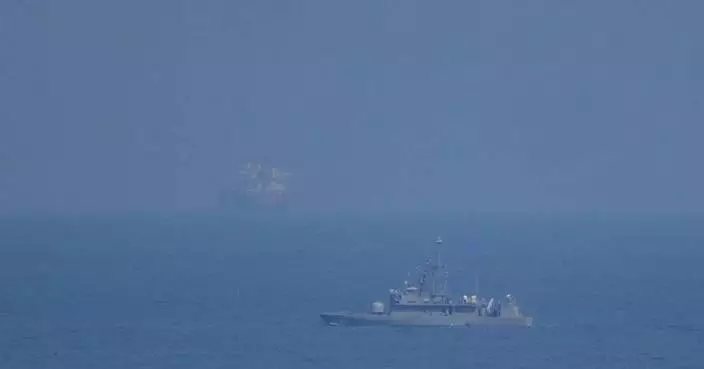
Mojtaba Khamenei's message in his first address as Supreme Leader was unequivocal: the Strait stays shut.
The Strait Holds, the Stakes Rise
On March 12, Iran's new Supreme Leader Mojtaba Khamenei delivered his first public address since taking office. His message was unequivocal: the Strait of Hormuz blockade must continue as a pressure tool. Analysts warn that if the war drags on — with casualties mounting and economic costs piling up — Trump's core base could start to crack.
CNN was blunt: America is running out of options. The Pentagon and the National Security Council, CNN reported, severely underestimated Iran's resolve to enforce the blockade when planning the operation. The national security team failed to game out the consequences. Some officials now believe the administration has stumbled into a worst-case scenario. Energy companies are refusing to send tankers through the Strait until the military situation de-escalates — traffic that once averaged 138 daily transits has collapsed to fewer than five. Meanwhile, the Pentagon regards deploying a naval escort fleet as extremely high-risk, and the military cannot spare the vessels, already committed to offensive operations elsewhere.
CNN also found that in past administrations, Treasury and Energy Department analyses were central to major decisions. In this one, they've been relegated to secondary considerations. Trump relies on a tight inner circle, sidelining broader inter-agency debate on the economic fallout of the Strait blockade. One former bipartisan official said contingency planning for precisely this scenario had been a cornerstone of US national security policy for decades — and that the current state of affairs has left him utterly dumbfounded.
Three sources revealed that senior officials told Congress in classified briefings that no contingency plan had ever been drawn up for an Iranian Strait blockade — on the assumption that such a move would hurt Iran more than the US. Tehran had threatened the same action last summer and never followed through, reinforcing that assumption. Officials tasked with managing the energy crisis still hope tanker escorts can begin as soon as possible — but for now, they have broadly agreed to manage the crisis in phases.
Emergency Levers, Limited Relief
On March 12 local time, Treasury Secretary Scott Bessent announced that the US Treasury would temporarily lift sanctions on Russian oil tankers stranded at sea.
Earlier that day, the White House signalled it was considering loosening the Jones Act — the century-old maritime law requiring that cargo transported between US ports be carried on American vessels. The move could help slow the rise in domestic gasoline prices.
Leavitt put it this way in a statement to CNN: "In the interest of national defense, the White House is considering waiving the Jones Act for a limited period of time to ensure vital energy products and agricultural necessities are flowing freely to US. ports." She added that the decision had not been finalized.
On top of that, the administration is weighing a series of additional measures, including executive orders aimed at easing pressure at the pump. One option under consideration: waiving certain warm-weather production requirements designed to reduce air pollution, that domestic gasoline producers are currently required to meet.
Quick Fixes, Structural Problems
Sources say that using executive orders to ease the regulatory burden on US gasoline producers could trim costs to some degree — and that the effect could linger for weeks even after the crisis has passed.
But some experts are openly sceptical. Clayton Seigle, an energy expert at the Center for Strategic and International Studies (CSIS), said the impact would be minimal. The dominant force pushing prices up right now is a global anxiety about the actual supply of refined products and crude oil — and no executive order fixes that.
Deep Throat
** The blog article is the sole responsibility of the author and does not represent the position of our company. **