Actions speak louder than words. Conn Selmer — the largest manufacturer of brass and orchestral instruments in the United States, owned by Wall Street billionaire John Paulson — has announced it will move production of tubas, marching tubas, and part of its French horn output from its Eastlake, Ohio plant to China. The factory closes at the end of June, cutting 150 jobs.

Conn Selmer – the largest manufacturer of brass and orchestral instruments in the United States.
The contradiction here is hard to ignore. Paulson is not only a major financial backer of Trump — he is a political ally who has publicly pledged to defend American manufacturing. His actions now run directly counter to his "America First" rhetoric, and the workers bearing the cost are furious.
Click to Gallery
Conn Selmer – the largest manufacturer of brass and orchestral instruments in the United States.
Paulson is both a major financial backer of President Trump and a political ally who has pledged to defend American manufacturing.
Conn Selmer previously informed the union representing 150 workers that the Eastlake plant closure and production shift had been finalized, with the shutdown scheduled for the end of June.
According to the U.S. Bureau of Labor Statistics, since Trump returned to the White House, U.S. manufacturing jobs have fallen by about 100,000.
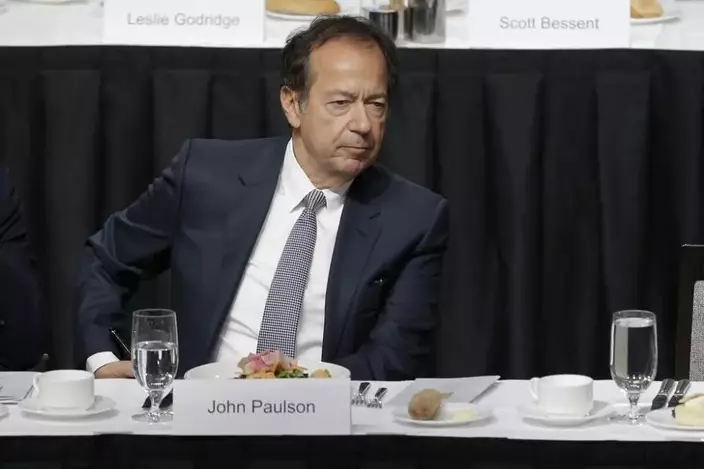
Paulson is both a major financial backer of President Trump and a political ally who has pledged to defend American manufacturing.
According to a Reuters report on April 17, Paulson raised about US$50.5 million for Trump's 2024 election campaign. In a September interview with CNBC that year, he declared: "We can’t have American producers closing American factories and offshoring. We need to protect American jobs and protect American manufacturing."
Yet this month, Conn Selmer confirmed that its Eastlake brass instrument plant will cease operations entirely, with production shifting to China. As early as February, The Guardian had revealed Paulson's plan to outsource most of the factory's operations, describing the move as "a slap in the face" to workers.
Paulson, now 71, heads the investment firm Paulson & Co. He earned the nickname "the God of Short-Selling" and is widely regarded as one of finance's most influential figures. His ties with Trump stretch back to 2016, when he publicly backed Trump after the Republican nomination and served as a top economic adviser to the campaign. Today, a deep rift has opened between his business decisions and his political stance — made all the more jarring given his past criticism of outsourcing and his vocal support for tariff policy.
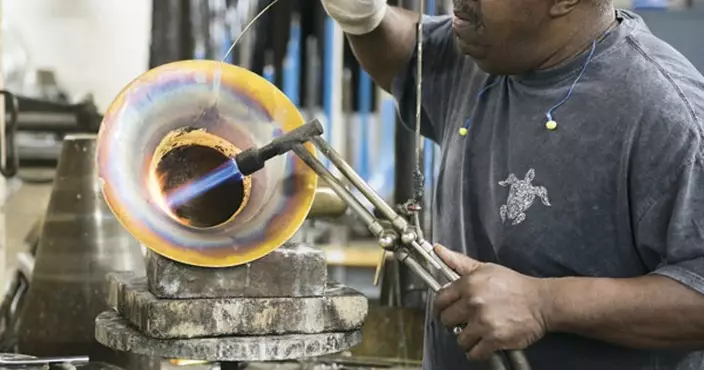
Conn Selmer previously informed the union representing 150 workers that the Eastlake plant closure and production shift had been finalized, with the shutdown scheduled for the end of June.
Conn Selmer had already informed the union representing 150 workers that the Eastlake closure was final, with a June-end deadline. A local United Auto Workers chapter said employees only learned of the shutdown last month, during contract negotiations — when the company made clear the decision was non-negotiable and the plant would simply close. The company had quietly established a factory in China last year and had been gradually shifting operations there. The restructuring is expected to cut US$13 million in costs in one stroke to maintain competitiveness. Even a 20.4% tariff on Chinese-made brass instruments did nothing to halt the move.
Keith Czika, an 18-year plant veteran, joined fellow union members in lobbying efforts, hoping Paulson's access to Trump might prompt a reversal. It got them nowhere. "Why would Paulson decide to move the factory to China? I still can't wrap my head around it," Czika said. "China, after all, is an economic rival of the United States."
Annette Dombrowski, a 64-year-old cleaner, broke down in tears multiple times during a briefing on severance arrangements. The irony stings: the briefing was held in the American Legion hall where she had once celebrated her own wedding. She relies on modest Social Security income and admits deep anxiety about what comes next. "I think America is in a terrible state right now," she said. "I'm starting to regret voting for Trump."
The political stakes are rising. John Plecnik, a Republican in Lake County, Ohio, issued a blunt warning: if job protection promises are not delivered before the November midterm elections, the party risks losing its working-class base. "If we don’t keep the promise of protecting jobs, I wouldn’t blame them for going right back and voting Democrat."
Of the six Trump-supporting workers Reuters interviewed, five said they would still back Republican candidates. Czika kept his support for Trump — but added a condition: "If you keep your promises, that'll be fine," he said. "If you don't, that'll be a problem. America First. Bring manufacturing back."
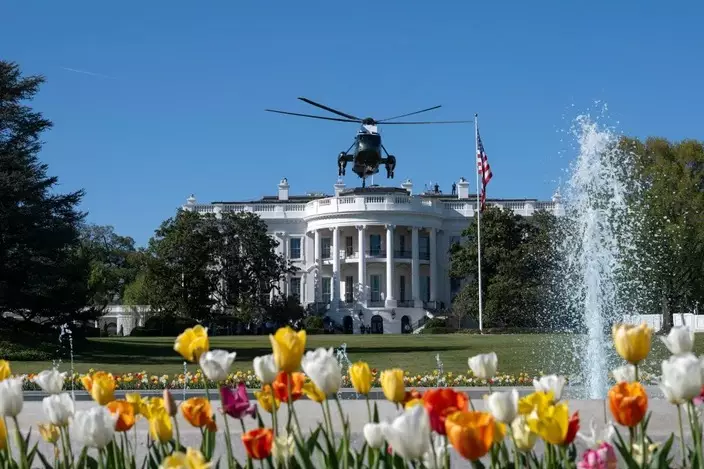
According to the U.S. Bureau of Labor Statistics, since Trump returned to the White House, U.S. manufacturing jobs have fallen by about 100,000.
The numbers tell a damning story. According to the U.S. Bureau of Labor Statistics, U.S. manufacturing employment has dropped by about 100,000 jobs since Trump returned to the White House. Conn Selmer's spokesperson said the plant closure "will enhance our competitiveness and better meet current market demand." As of now, the White House has not responded to workers' calls for Trump to intervene.
Deep Throat
** 博客文章文責自負,不代表本公司立場 **
US-Iran talks ended in a bust, and the US Navy moved to block the Strait of Hormuz, stopping ships from entering or leaving. That sent international oil prices climbing again, close to US$100 a barrel.
On April 14, though, the Associated Press ran an article headlined “Iran war’s global energy crisis sharpens China’s advantage in clean tech”, citing experts who said global energy turmoil is speeding the shift away from fossil fuels and toward clean and renewable energy — sectors where China holds a dominant position. The result, the AP said, is that China stands to benefit from the US-Iran war.
The article said most of the Strait of Hormuz is now shut, and most of the oil and gas moved through it originally flowed to Asia. Much of Asia has been hit hard by the fighting.
China, however, as the biggest buyer of Iranian oil, could gain from disruptions to fossil fuel supplies. It leads the world in exports of batteries, solar power and electric vehicles, and markets expect global demand for renewable energy products to rise further.
The AP said that by late February, before the US-Iran war broke out, China’s lead in clean energy was already widening. By contrast, US President Trump was cutting investment in renewable energy, leaning instead on his country’s oil and gas resources and aggressively expanding energy exports to reach what he called “energy dominance.”
Now the world is confronting how fragile fossil fuels are, and interest in low-emission energy products is rising by the day. Chinese industrial giants such as BYD and battery maker CATL are well placed to profit from that shift.
Sam Reynolds of the US Energy Economics and Financial Analysis Institute said, “The US-Iran conflict fully validates China’s approach to energy development and geopolitics.”
China’s Clean Tech Lead
The article notes that more than a decade ago, China already tied energy security to national security. Since then, fossil fuels still dominate the domestic energy mix, but China keeps pouring money into renewable energy.
International Energy Agency data show China produces more than 70% of the world’s electric vehicles and about 85% of its batteries. China’s current 15th Five-Year Plan, through 2030, keeps those industries at the top of the list.
Li Shuo, director of the China Climate Hub at the Asia Society Policy Institute, puts it bluntly: “They are at the forefront of this, ahead of any other country in the world, and certainly ahead of the United States.”
The United States remains the world’s largest oil producer and is pushing liquefied natural gas hard. Trump captured that approach with “drill, baby, drill,” a slogan that lays bare America’s tilt toward fossil fuels over renewable energy.
Reynolds says the prewar market was already splitting apart, with superpowers pursuing sharply different energy futures. That left other countries stuck weighing which model to back.
Rising Demand for Chinese Exports
The war in Iran is stoking global demand for Chinese technology. UK energy and climate think tank Ember says exports of Chinese products such as solar panels, batteries and electric vehicles reached a record nearly $22.3 billion in December 2025, up about 47% from a year earlier, with most of the goods shipped to Southeast Asia and Europe.
In recent years, Chinese automakers have pushed hard into electric vehicle research, development and manufacturing. Their export growth has also outpaced rivals in the United States and Europe, giving them a cheaper offer and helping them gain ground in markets such as Southeast Asia.
Amy Myers Jaffe of New York University’s Center for Global Affairs said the energy shock will benefit Chinese industry worldwide while hurting the US auto industry. At the same time, high US tariffs have effectively kept Chinese electric vehicles out of the Us market.
Bloomberg also reported that the oil-price spike triggered by the US-Israel-Iran war is setting off a wave of electric-vehicle buying across the Asia-Pacific region, with Chinese EV makers, thanks to their price and supply-chain advantages, first to reap the gains. The report said BYD has seen a sharp jump in demand in New Zealand, where sales of electric and hybrid vehicles on March 14 reached four times a normal weekend level.
Data from the Society of Motor Manufacturers and Traders showed that in March, Chinese automakers doubled their share of new-car sales in the UK from a year earlier. Analysts said consumer interest in electric vehicles surged after the Iran conflict broke out. Data from renewable energy group Octopus Energy showed that demand for EV leasing in the UK during the first three weeks of March was more than one-third higher than in the comparable prewar period in February; sales of rooftop solar products and related inquiries also rose.
Storage and Investment Gains
China is also seeing a fresh export surge in energy storage equipment. In the first two months of this year, total inverter exports — a core component of energy storage systems — rose 57% from a year earlier, with Europe the main importer.
Fitch Ratings says countries heavily dependent on energy imports, including many in Europe, are expected to step up investment in renewable energy and battery storage. Investors are betting the war will boost demand for renewable energy. In March, shares of CATL and BYD listed in Hong Kong rose about 24% and 11%, respectively.
James Bowen of ReMap Research told the Associated Press that households facing high energy costs may turn to clean energy.
Pakistan is an early example. The country began promoting renewable energy in 2017 and had imported more than 50 gigawatts of solar panels from China by last December. It still relies on imports for one-third of its energy; about 80% of its oil is transported via the Strait of Hormuz, and Qatar once supplied a quarter of its liquefied natural gas. Nabiya Imran of Renewables First said, "If [Pakistan] did not have solar power, the impact would be even greater,"
Even Indonesia, the world’s largest coal exporter, is making adjustments that could make it a bigger customer for China’s clean energy technologies. In March, Indonesian President Prabowo announced a major push to develop electric vehicles, including plans to produce EVs and expand charging infrastructure.
Emerging Markets Adapt Fast
Patrick Tan of energy consultancy Aurora Energy Research says the continuing surge in fuel prices could become a catalyst for the future of electric vehicles. But it will take time before that shows up in sales, in part because consumers may be waiting to see how the war unfolds.
The Guardian has also noted that, compared with other Asian economies reliant on Middle Eastern oil, China has large reserves of oil and liquefied natural gas, along with renewable energy sources such as wind and solar power.
It is also pushing ahead with new energy and electric vehicles to reduce its dependence on fossil fuels, giving it unusually strength in a crisis.
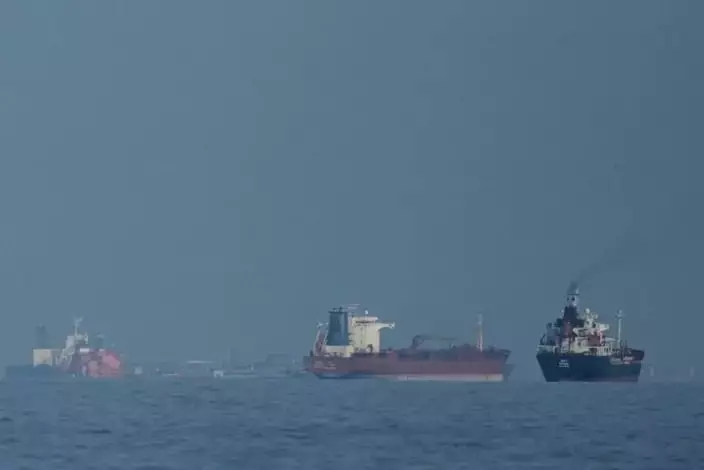
The US-Iran war has triggered a global energy crisis, yet an AP article says it has instead highlighted China’s advantage in clean energy.
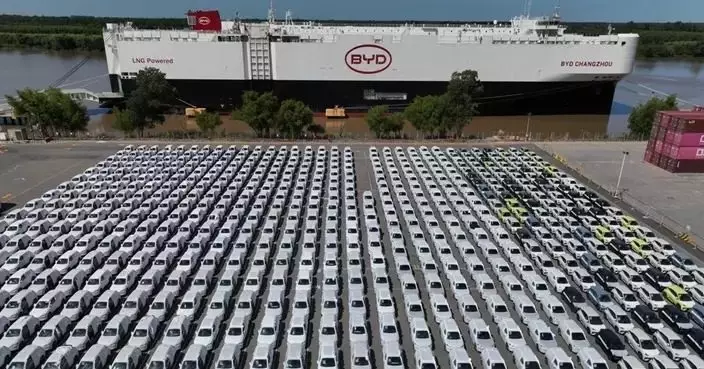
China accounts for more than 70% of global electric vehicle production.
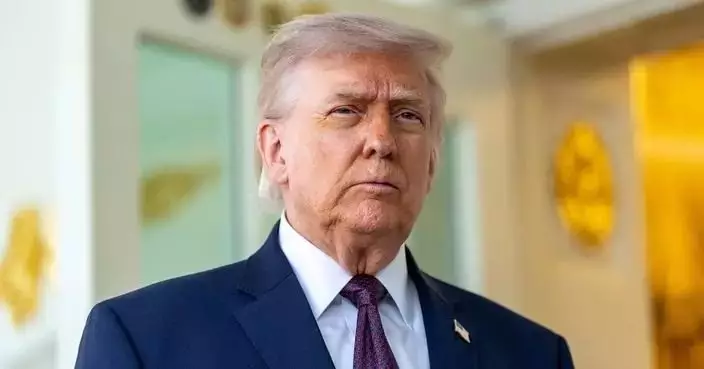
Trump’s strategy leans more toward fossil fuels than renewable energy.
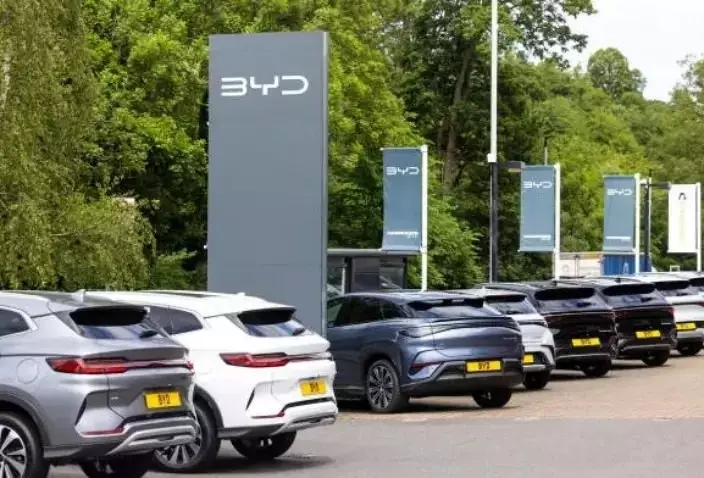
The US-Israel-Iran war has sent oil prices soaring, sparking a new round of EV buying across the Asia-Pacific region and boosting demand for BYD.
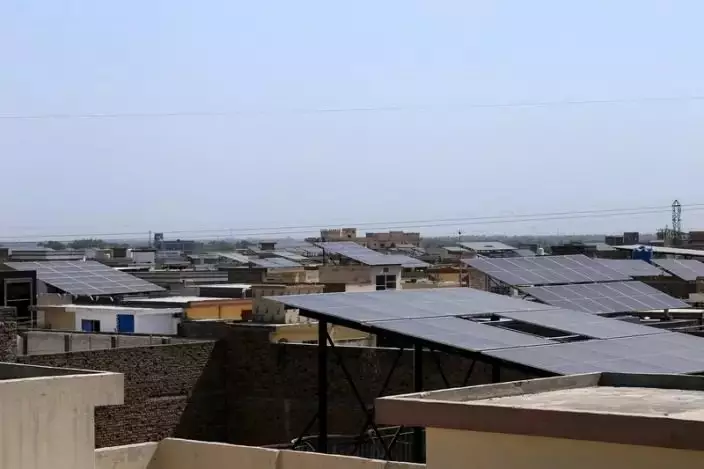
High oil costs are driving a surge in demand for new energy storage equipment, including solar panels.