Skip to Content Facebook Feature Image

Kennel Connection Integrates With iDogCam, Bringing Live Camera Access Directly Into Their Pet Parent Portal

News

Kennel Connection Integrates With iDogCam, Bringing Live Camera Access Directly Into Their Pet Parent Portal
News

News

Kennel Connection Integrates With iDogCam, Bringing Live Camera Access Directly Into Their Pet Parent Portal

2026-03-24 20:38 Last Updated At:21:00

MOORPARK, Calif.--(BUSINESS WIRE)--Mar 24, 2026--

Kennel Connection, a leading provider of pet care facility management software and a 100GROUP company, today announced its full integration with iDogCam, a camera solution built specifically for the pet care industry. The integration brings live, secure camera access directly into the Kennel Connection Client Portal, giving pet parents real-time visibility into their pet’s stay while creating new revenue opportunities for pet care facilities.

This press release features multimedia. View the full release here: https://www.businesswire.com/news/home/20260324192155/en/

For pet care businesses, trust is everything. Pet parents leave behind animals they love and want to know they’re safe, happy, and well cared for. The Kennel Connection and iDogCam integration makes it easier than ever for facilities to deliver that peace of mind, right from within the platform their clients already use to book appointments, sign contracts, and manage their accounts.

Seamless Camera Access, Built Into the Client Experience

Once configured, cameras appear automatically under a dedicated tab in the Kennel Connection Client Portal, accessible only when a pet is checked in. Facilities have full control over how and when cameras are available, including the ability to:

The integration is secured through a direct API handshake between Kennel Connection and iDogCam, adding an additional layer of protection that standalone camera systems cannot offer. Setup is straightforward, and adding cameras as a facility grows is quick and requires no complicated configuration.

Two Industry-Focused Companies, One Powerful Integration

iDogCam was built from the ground up for pet care, not retrofitted from a generic security or surveillance product. Co-founded by Aron Garrison, Phillip Cochran, and Kevin Hanson, three veterans of the broadcast technology industry with a combined collection of Technical Emmy Awards and a shared passion for animals, iDogCam was developed specifically to address the unique needs of kennels, daycares, grooming salons, and boarding facilities. The company works directly with each facility to ensure the setup is effective, reliable, and easy to manage.

Kennel Connection shares that same industry-first philosophy. As a software platform built by people who understand the pet care business, Kennel Connection has spent over 30 years developing tools that reflect the real-world needs of the facilities that use them. The integration with iDogCam is a natural extension of that commitment, pairing best-in-class camera technology with the platform pet care professionals already trust to run their businesses.

“Pet parents want to feel connected to their pet’s experience, and pet care businesses want a simple, reliable way to provide that,” said Jeff Brodsly, Owner and CEO of Kennel Connection and 100GROUP. “Our integration with iDogCam delivers both. It’s the kind of feature that builds real loyalty, and the fact that it’s woven directly into the client portal our customers already use makes it genuinely effortless for everyone involved.”

“iDogCam was designed to give pet care facilities a camera solution that actually fits the way they operate,” said Aron Garrison, President of iDogCam. “Integrating directly with Kennel Connection means our technology is no longer a separate tool businesses have to manage on the side. It’s part of the experience, for the facility and for the pet parent. That’s exactly where it should be.”

Build Trust. Boost Revenue.

For facilities looking to add a new revenue stream, the integration offers the option to charge for premium camera access as an optional service add-on. Whether offered free as a client experience perk or monetized as a paid feature, live camera access is proving to be a differentiator that resonates strongly with today’s pet parents.

“The webcam integration into our client portal was seamless, and our clients love the convenience,” said Colleen Kelley, Owner of Beck ’n Call Pet Services. “The ability to expand services with private access and add-on viewing options is exciting and creates new, profitable opportunities.”

To celebrate the integration launch, iDogCam is offering Kennel Connection clients 50% off up to 20 cameras for a limited time. The offer is available to both new and existing iDogCam users. To take advantage, clients must be on the Kennel Connection integrated platform with payments enabled.

Getting Started

The iDogCam integration is available now for Kennel Connection clients. Setup requires a Kennel ID and ERP Code provided by iDogCam and can be configured directly within the Kennel Connection platform under Manage > iDogCam. Both the Kennel Connection and iDogCam support teams are available to assist with onboarding and configuration.

For more information on the iDogCam integration or to get started, visit www.kennelconnection.com or www.idogcam.com.

About Kennel Connection

Kennel Connection is a leading provider of innovative software solutions for pet care businesses, offering a comprehensive suite of management tools designed to streamline operations and enhance customer experience. With a focus on empowering pet care professionals, Kennel Connection’s feature-rich platform encompasses reservation management, client communication, billing, and reporting, alongside innovative features such as Text-To-Pay, digital contracts, advanced online booking, and integrated credit card processing, all aimed at driving efficiency and organization in day-to-day operations. Kennel Connection leverages cutting-edge technology to deliver tailored solutions that cater to the unique needs of pet care providers nationwide.

For more information about Kennel Connection, visit www.kennelconnection.com.

About iDogCam

iDogCam provides cost-effective, reliable, and straightforward camera solutions built specifically for the pet care industry. Founded by broadcast engineering veteran Aron Garrison, iDogCam works directly with pet care facilities to deliver a seamless camera experience for both the business and its clients. iDogCam’s integration-first approach ensures its technology works in harmony with the software platforms pet care professionals already rely on.

For more information about iDogCam, visit www.idogcam.com.

Kennel Connection and iDogCam have partnered to deliver seamless live camera access through the Kennel Connection Client Portal. Pet care facilities can map cameras to runs, rooms, and play yards, set public or private viewing hours, and offer camera access as a complimentary perk or paid add-on, all from within the platform they already use to run their business.
Kennel Connection and iDogCam have partnered to deliver seamless live camera access through the Kennel Connection Client Portal. Pet care facilities can map cameras to runs, rooms, and play yards, set public or private viewing hours, and offer camera access as a complimentary perk or paid add-on, all from within the platform they already use to run their business.
GENEVA (AP) — Scientists in Geneva took some antiprotons out for a spin — a very delicate one — in a truck, in a never-tried-before test drive that has been deemed a success.

If this so-called antimatter came into contact with actual matter, even for a fraction of an instant, it would have been annihilated in a quick flash of energy. So experts at the European Organization for Nuclear Research, known as CERN, over the course of four hours Tuesday, brought about 100 antiprotons on the road.

The antiprotons were suspended in a vacuum inside a specially designed box and held in place by supercooled magnets.

After easing them from the lab and onto the truck, the scientists transported the antimatter on a half-hour drive to test how — if at all — the infinitesimal particles could be transported by road without seeping out. The antiprotons were then taken back to the lab in Tuesday's final stage that concluded with applause and a bottle of Champagne.

CERN spokeswoman Sophie Tesauri called the experiment successful. It was not immediately clear how many antiprotons had survived the entire journey, but roughly 91 of 100 were still there after the truck's trip.

The hard part: Manipulating antimatter, like antiprotons, can be tricky business. As scientists understand the universe today, for every type particle that exists, there is a corresponding antiparticle, exactly matching the particle but with an opposite charge.

If those opposites come into contact, they “annihilate” each other, setting off lots of energy, depending on the masses involved. Any bumps in the road on the test journey that aren't compensated for by the specially-designed box could spoil the whole exercise.

“The motivation behind these experiments is to compare matter and antimatter with extremely high accuracy and watch for differences which we might have not seen yet,” said Stefan Ulmer, the leader and spokesperson for Tuesday’s experiment.

And Tuesday’s practice was a first step toward making good on hopes, one day, to deliver CERN antiprotons to researchers at Heinrich Heine University in Düsseldorf, Germany, which is about eight hours away in normal driving conditions.

“We are scientists. We want to understand something about the fundamental symmetries of nature, and we know that if we do these experiments outside of this accelerator facility, we can measure 100 to 1000 times better,” Ulmer said.

The antiprotons were encased in a 1,000-kilogram (2,200 pounds) box called a “transportable antiproton trap.” It was compact enough to fit through ordinary laboratory doors and fit on a truck. It used superconducting magnets cooled to -269 degrees Celsius (-452 Fahrenheit) that allowed the antiprotons to be remain suspended in a vacuum — not touching the inner walls, which are made of ... matter.

The mass in Tuesday's test — slightly less than that of about 100 hydrogen atoms — is so little, experts say, that the worst possible outcome was the loss of the antiprotons. Even if they did touch matter, any release of energy would be unnoticeable, only an oscilloscope, which picks up electrical signals, was be able to detect it.

The trap, says Tesauri, “is supposed to contain these antiprotons no matter what: if the truck stops, if it starts again, if it has to slam on the brakes — all that.” Work remains: The trap can contain the antiprotons on its own for only about four hours, and the drive to Düsseldorf is twice that.

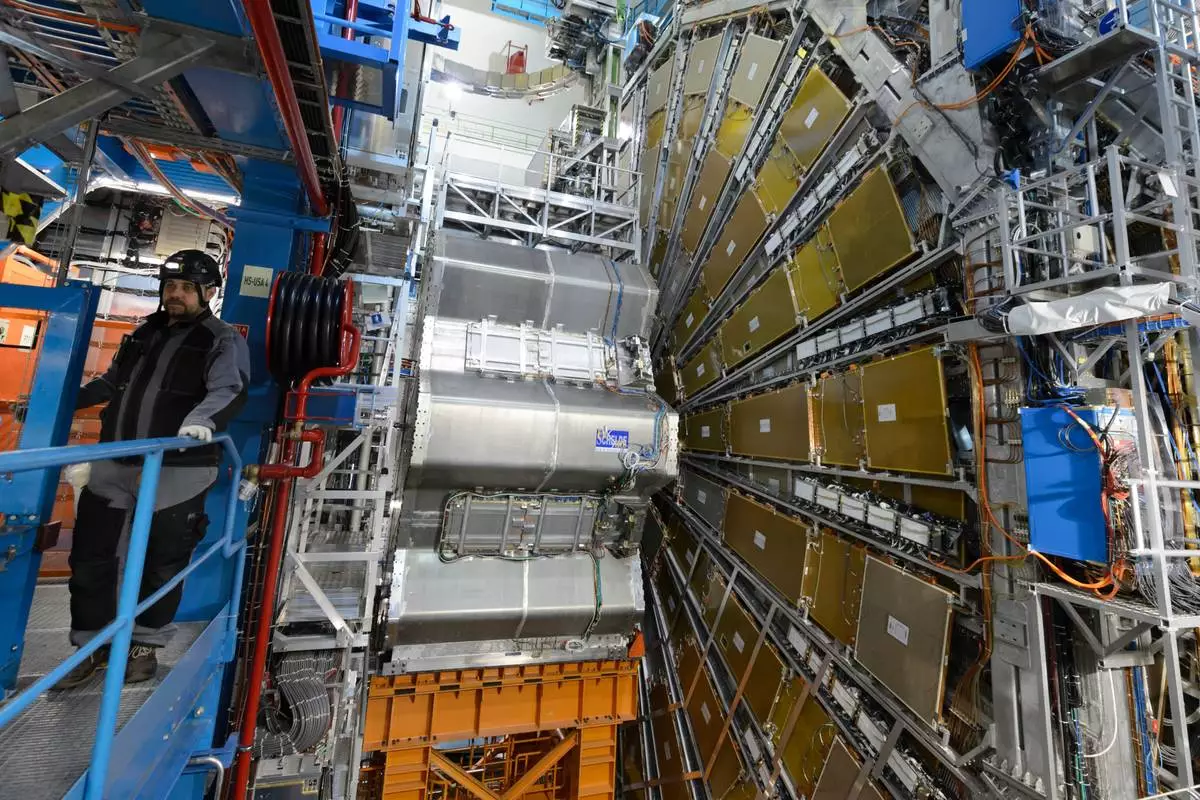
The Geneva-based center is best known for its Large Hadron Collider, a network of magnets that accelerates particles through a 27-kilometer (17-mile) underground tunnel and slams them together at velocities approaching the speed of light. Scientists then study the results of those collisions.

But the sprawling, buzzing complex of scientific experiment is more than just about smashing atoms together: the World Wide Web, for example, was invented here by Britain’s Tim Berners-Lee in 1989.

Heinrich Heine University is seen as a better place to study antiprotons in-depth because CERN, with all its other activities, generates a lot of magnetic interference that can skew the study of antimatter.

But to get them there, those antiprotons will have to avoid touching anything on the way.

The center's Antiproton Decelerator, where a proton beam gets fired into a block of metal, causes collisions that generate secondary particles, including lots of antiprotons. It’s billed as a unique machine that produces low-energy antiprotons for the study of antimatter.

CERN’s “Antimatter Factory,” lab officials say, is the only place in the world where scientists can store and study antiprotons.

The center has been experimenting with antimatter for years, and has made breakthroughs on measurement, storage and interaction of antimatter. Two years ago, the team transported a “cloud” of about 70 protons — not antiprotons — across CERN's campus.

It was a similar drill this time, except that with antiprotons, a much better vacuum chamber is needed, according to Christian Smorra, head of a team behind the apparatus designed to store and transport antimatter.

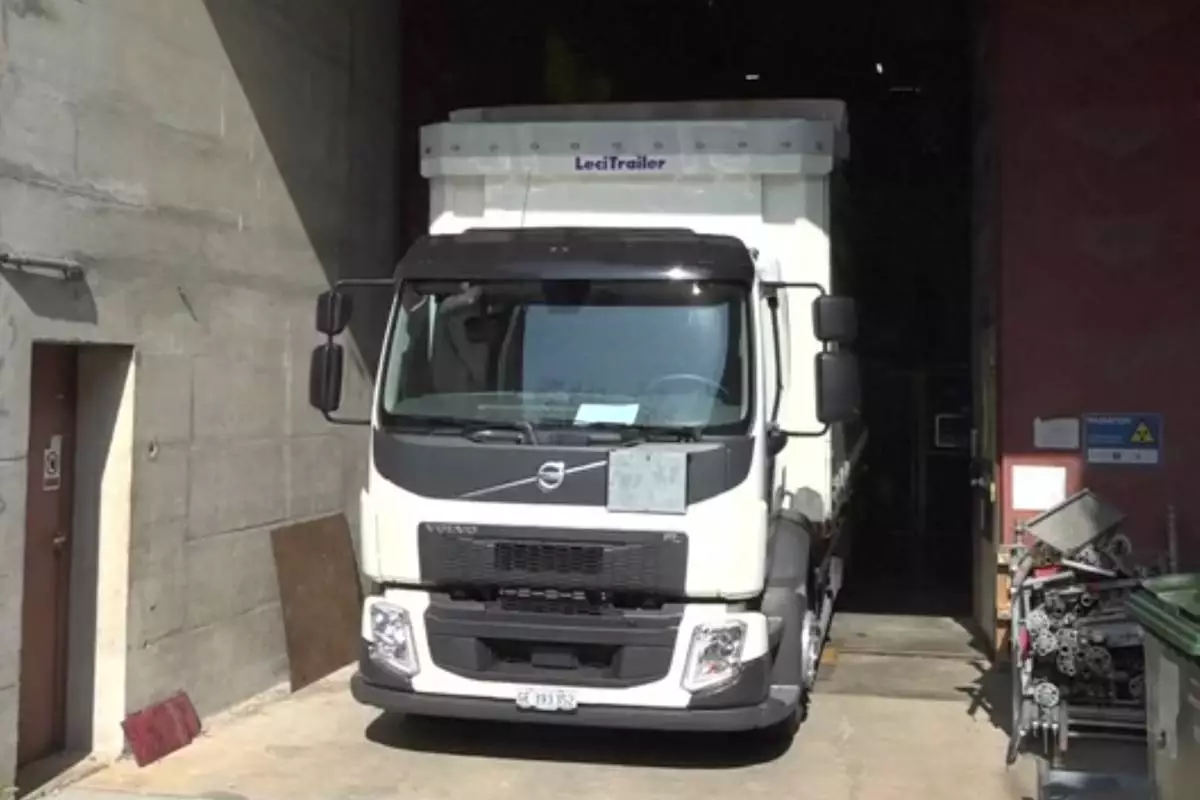
This image, taken from video, shows a truck transporting antiprotons in a first-ever test drive to study antimatter at the European Organization for Nuclear Research, CERN, in Meyrin, near Geneva, Switzerland, March 24, 2026. (AP Photo/Jamey Keaten)

This image, taken from video, shows a truck transporting antiprotons in a first-ever test drive to study antimatter at the European Organization for Nuclear Research, CERN, in Meyrin, near Geneva, Switzerland, March 24, 2026. (AP Photo/Jamey Keaten)

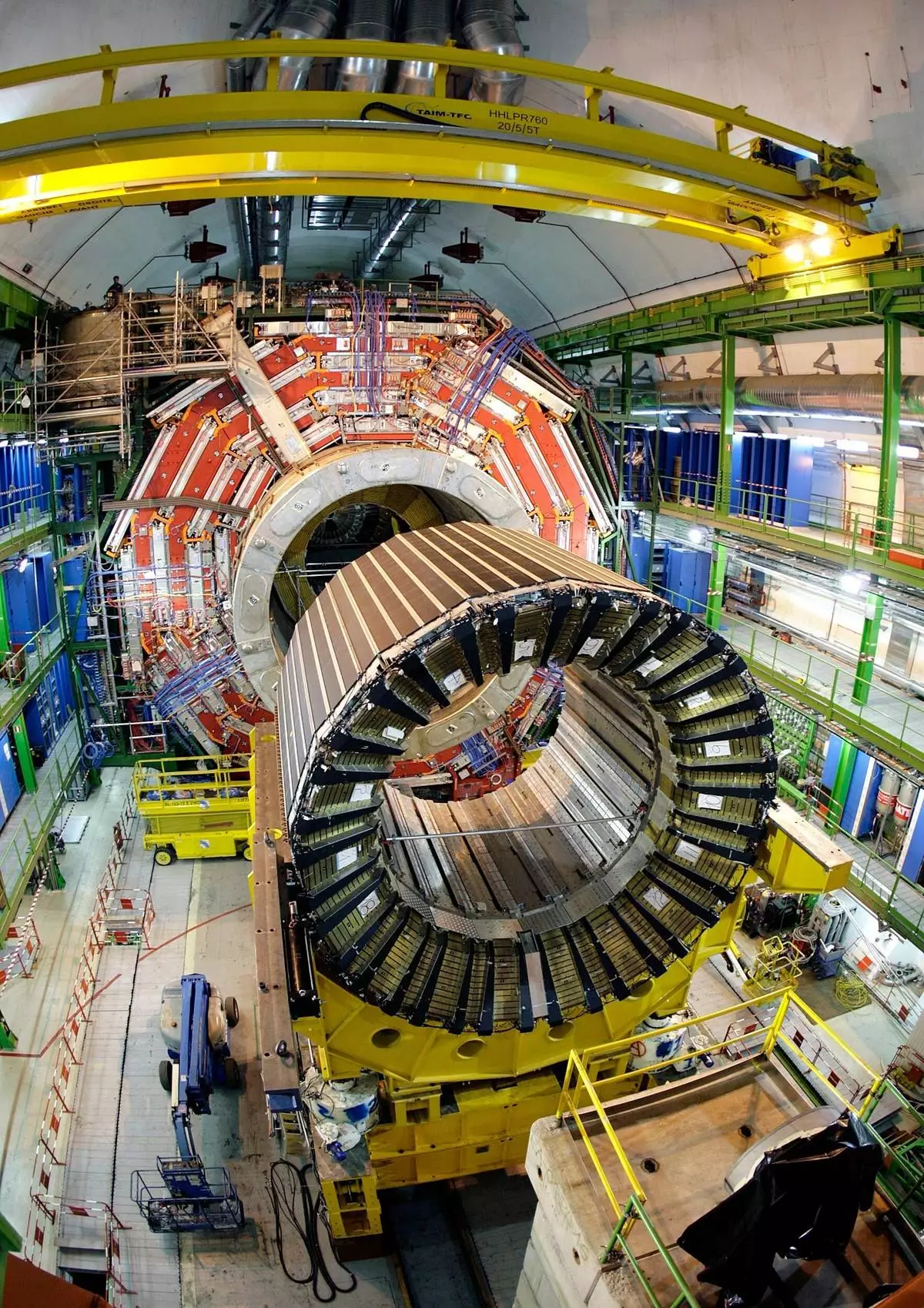
FILE - The magnet core of the world's largest superconducting solenoid magnet (CMS, Compact Muon Solenoid) at the European Organization for Nuclear Research (CERN)'s Large Hadron Collider (LHC) particle accelerator, in Geneva, Switzerland, March 22, 2007. (AP Photo/Keystone, Martial Trezzini, File)

FILE - The magnet core of the world's largest superconducting solenoid magnet (CMS, Compact Muon Solenoid) at the European Organization for Nuclear Research (CERN)'s Large Hadron Collider (LHC) particle accelerator, in Geneva, Switzerland, March 22, 2007. (AP Photo/Keystone, Martial Trezzini, File)

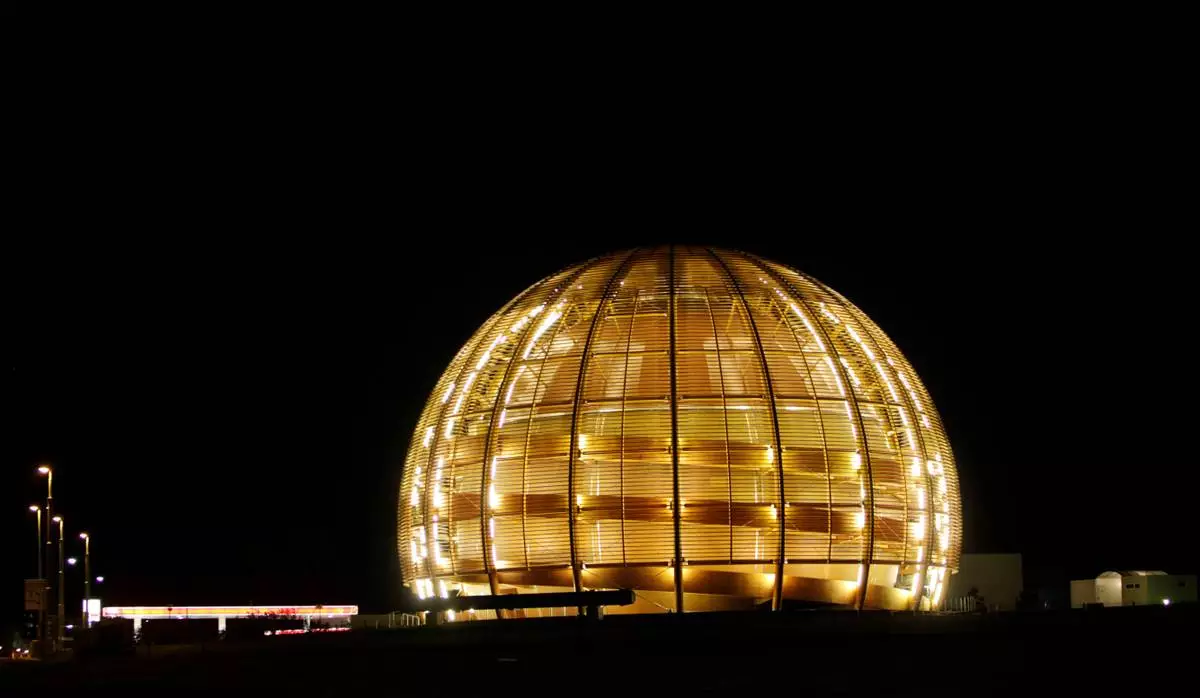
FILE - The globe of the European Organization for Nuclear Research, CERN, is illuminated outside Geneva, Switzerland, March 30, 2010. (AP Photo/Anja Niedringhaus, File)

FILE - The globe of the European Organization for Nuclear Research, CERN, is illuminated outside Geneva, Switzerland, March 30, 2010. (AP Photo/Anja Niedringhaus, File)

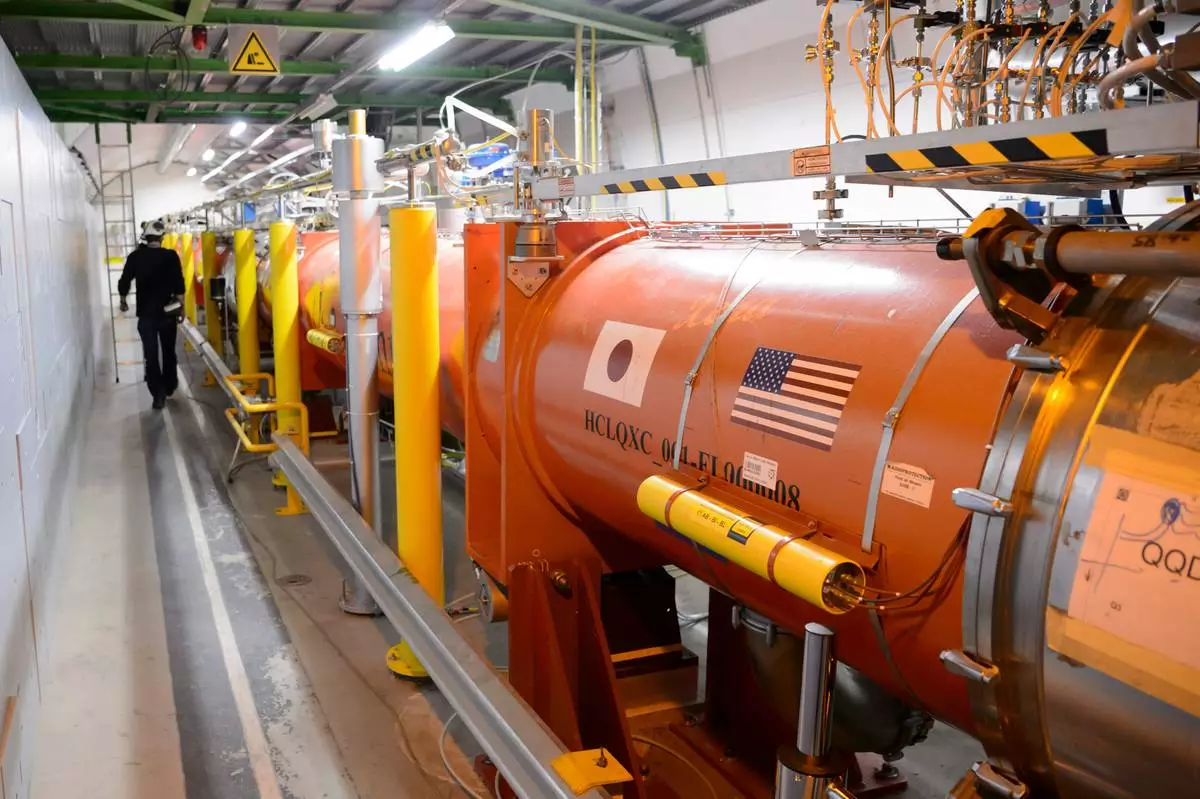
FILE - A technician works in the LHC (Large Hadron Collider) tunnel of the European Organization for Nuclear Research, CERN, during a press visit in Meyrin, near Geneva, Switzerland, Feb. 16, 2016. (Laurent Gillieron/Keystone via AP, File)

FILE - A technician works in the LHC (Large Hadron Collider) tunnel of the European Organization for Nuclear Research, CERN, during a press visit in Meyrin, near Geneva, Switzerland, Feb. 16, 2016. (Laurent Gillieron/Keystone via AP, File)

FILE - A technician works in the LHC (Large Hadron Collider) tunnel of the European Organization for Nuclear Research, CERN, during a press visit in Meyrin, near Geneva, Switzerland, Feb. 16, 2016. (Laurent Gillieron/Keystone via AP, File)

FILE - A technician works in the LHC (Large Hadron Collider) tunnel of the European Organization for Nuclear Research, CERN, during a press visit in Meyrin, near Geneva, Switzerland, Feb. 16, 2016. (Laurent Gillieron/Keystone via AP, File)

Recommended Articles