Skip to Content Facebook Feature Image

China's first 7-ton unmanned logistics aircraft ready for maiden flight

China

China

China

China's first 7-ton unmanned logistics aircraft ready for maiden flight

2026-03-30 19:41 Last Updated At:03-31 12:21

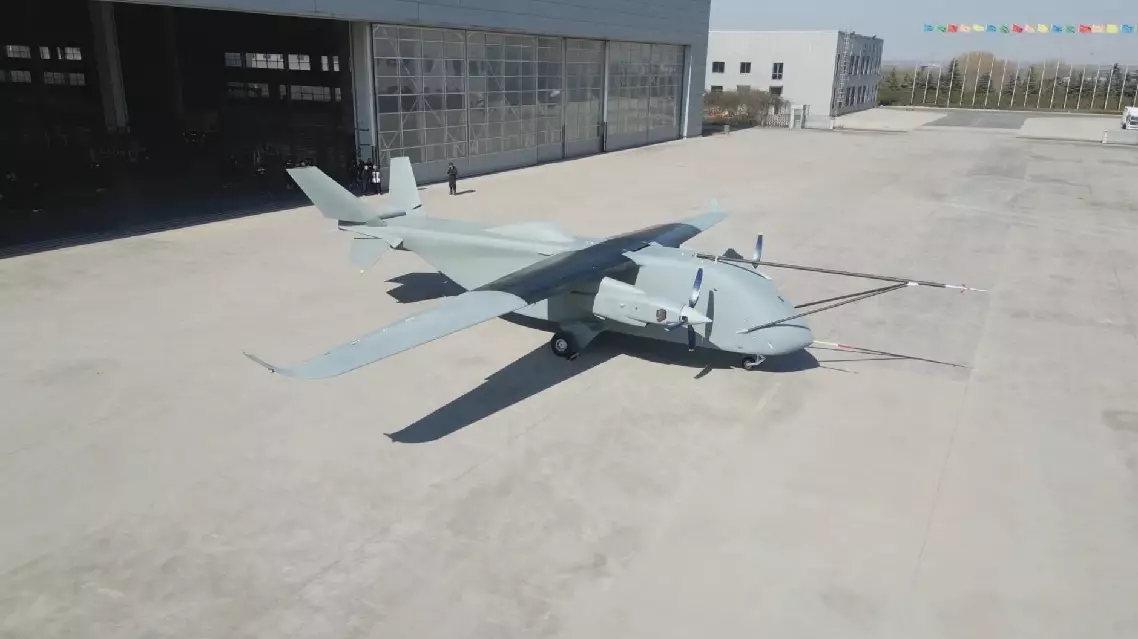
China's first seven-ton unmanned logistics aircraft, the Changying-8, has been well prepared for its maiden flight, according to the China North Industries Group Corporation Limited (NORINCO).

The maiden flight is scheduled to take place at Zhengzhou Shangjie Airport in central China's Henan Province, aiming to verify key subjects of various systems such as intelligent flight control, power fuel, and flight quality.

The Changying-8, 17 meters in length with a wingspan of 25 meters, is a large unmanned logistics aircraft independently developed by China.

Its 18-cubic-meter super-large cargo bay is capable of accommodating various types of standard air cargo containers and professional cold chain storage containers.

Moreover, it can complete loading and unloading within 15 minutes, significantly enhancing the efficiency of logistics turnover.

In addition, the Changying-8 owns a takeoff weight of seven tons, a payload capacity of 3.5 tons, and a maximum cruising range of over 3,000 kilometers. It is capable of taking off and landing at high altitudes, and within a short distance of 200 meters.

"What is currently underway is refueling. There is quite a lot of work to be done before the maiden flight. After the system integration, the static joint test of the entire aircraft was conducted, and the ground start-up of the engine and the taxiing tests at low and medium to high speeds were completed. The examination in the morning shows that it's good in overall condition, and ready for flight," said Shi Lei, technical director in charge of the aircraft with the NORINCO.

It is planned that the Changying-8 will take off through taxiing and fly for over 30 minutes to complete the verification of key subjects in various systems. "For the maiden flight, we prioritize safety. We need to verify the working coordination among systems, whether the Changying-8 can maintain a certain speed and altitude on the pre-bound route. We also need to verify the correctness and coordination of the command and control station's monitoring over the system," Shi said.
China's first 7-ton unmanned logistics aircraft ready for maiden flight
China's first 7-ton unmanned logistics aircraft ready for maiden flight

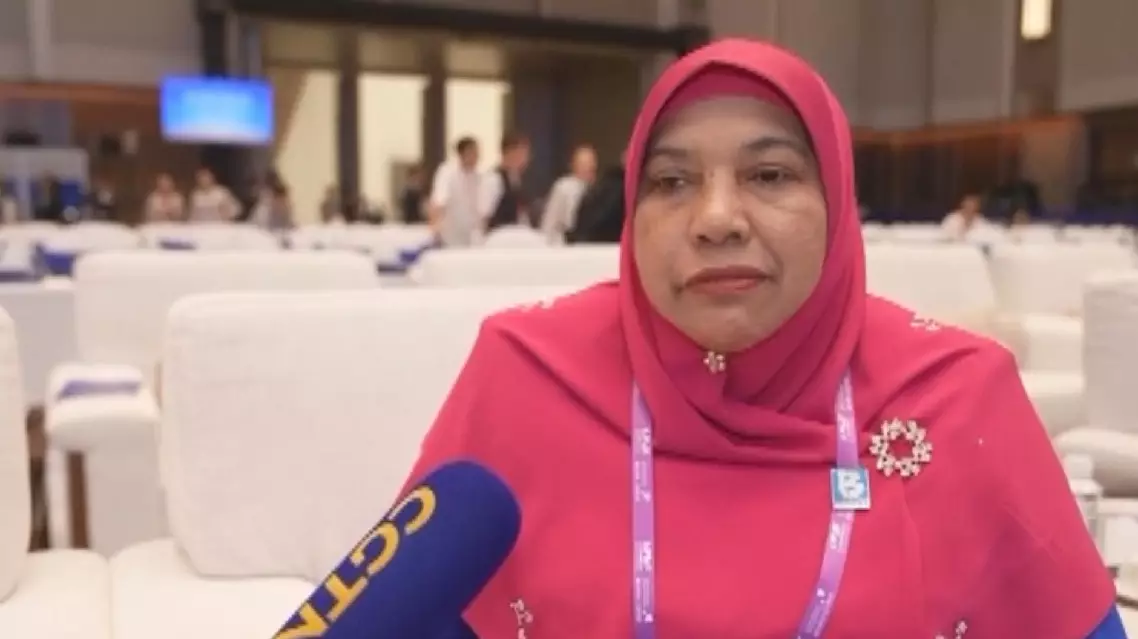
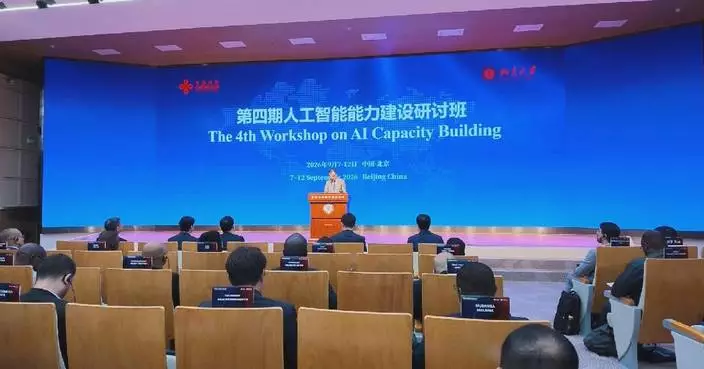
Journalists must exercise caution when using artificial intelligence (AI) to ensure it strengthens rather than undermines the core values of their profession, a senior Malaysian media executive said Saturday at the Asia‑Pacific Media Forum in south China's Shenzhen.

Datin Paduka Nur‑ul Afida Kamaludin, chief executive officer of the Malaysian National News Agency Bernama, stressed that accuracy, balance, fairness,transparency and human accountability must remain at the heart of journalism.

The forum brought together more than 400 representatives from media, think tanks and government sectors across 42 countries and regions, as well as United Nations agencies and other international organizations.

While AI offers journalists an efficient tool, it also carries the risk of generating misinformation and deepfakes on an unprecedented scale, Nur‑ul Afida Kamaludin told the forum.

She later highlighted the same point in an interview with China Global Television Network (CGTN), stressing the need for caution in adopting the technology.

"AI is bringing very rapid transformation to the media world, and especially among us, the journalists, but at the same time, despite using it as a tool to ease the process of our daily work, I believe that the journalists should also be extra careful using AI in their work," she said.

Looking ahead to the 53rd anniversary of establishing diplomatic relations between China and Malaysia next year, Nur-ul Afida called on the media to play a greater role in strengthening people-to-people ties.

"From a media perspective, I believe we need to focus more on the people-to-people relations. We have to produce more stories on the ordinary people, because that is the human interest stories that will attract our readers, our audiences. Let's look forward for a better relationship among the people and between the government, as well as companies between China and Malaysia," she said.

Malaysian National News Agency CEO calls for responsible AI use

Malaysian National News Agency CEO calls for responsible AI use

Recommended Articles