Xi Jinping, general secretary of the Communist Party of China (CPC) Central Committee, on Friday morning met with Cheng Li-wun, chairwoman of the Chinese Kuomintang (KMT) party, in Beijing.
Invited by the CPC Central Committee and Xi, Cheng is the first KMT chairperson to have led a delegation to the Chinese mainland in the past decade.
The delegation had visited Jiangsu Province and Shanghai before coming to Beijing.
Xi said this meeting between the CPC and KMT after 10 years is of great significance for developing relations between the two parties and across the Taiwan Strait.
Compatriots on both sides of the Taiwan Strait belong to the Chinese nation. People of all ethnic groups, including Taiwan compatriots, have jointly founded a unified multiethnic nation, written the splendid history of China, created the brilliant Chinese civilization, cultivated the great national spirit, and forged the common conviction that the Chinese territory must not be divided, the country must not descend into chaos, the nation must not be fragmented, and the civilization must not be fractured, which has guided the Chinese nation to strive unremittingly and the Chinese civilization to go on and on, Xi said.
Xi stressed that no matter how the international landscape and the situation across the Taiwan Strait may evolve, the overarching trend toward the great rejuvenation of the Chinese nation will not change, and the prevailing momentum for the Chinese on both sides of the Strait to come together will not change.
Xi said people on both sides of the Taiwan Strait hope for peace and tranquility, improved cross-Strait relations, and better life, adding that this is a responsibility that the CPC and the KMT cannot shirk, and also a driving force for the two parties to work together.
Xi expressed the willingness to work with all political parties in Taiwan, including the KMT, as well as groups and people from all sectors, to strengthen exchanges and dialogue, promote peace across the Taiwan Strait, improve the well-being of the people and advance national rejuvenation, on the basis of the common political foundation of adhering to the 1992 Consensus and opposing "Taiwan secession."
Xi said the future of cross-Strait relations should be firmly held in the hands of the Chinese people themselves.
Xi called for forging closer bonds across the Strait by upholding a correct understanding of identity.
Compatriots on both sides of the Taiwan Strait share the same roots, the same culture and ethnicity, and are one family bound by blood. They are a community with a shared future in which they share weal and woe, Xi said.
When a family get along, as long as they have calm discussions on matters of concern, there will be no conflicts or differences that cannot be resolved, he said.
Differences in social systems should not be an excuse for secession, Xi stressed.
The CPC, the KMT and compatriots on both sides of the Taiwan Strait should stand firm on the national position, carry forward and promote Chinese culture, strengthen the understanding of identity with the Chinese nation, Chinese culture and the great motherland, and become more proud, confident, and assured in their identity as upright Chinese people, Xi said.
Xi called for safeguarding the shared homeland through peaceful development.
Both the mainland and Taiwan belong to one China, and China is the common homeland of the Chinese nation. For safeguarding and building the shared homeland, the fundamental lies in adhering to the "1992 Consensus" and opposing "Taiwan secession," and the core lies in recognizing that both sides of the Strait belong to one China, he said.
Harmony is key to a prosperous family in all endeavors. "We welcome any proposals conducive to the peaceful development of cross-Strait relations and will spare no effort to advance any endeavors that promote such development," Xi said.
Taiwan secessionists are the chief culprit undermining peace across the Taiwan Strait. "We should neither condone nor tolerate it," Xi said.
The CPC, the KMT and compatriots on both sides of the Taiwan Strait must uphold the greater good of the nation and oppose separatist activities aimed at "Taiwan secession" and external interference, so as to promote peaceful development of cross-Strait relations and firmly safeguard the shared homeland of the Chinese nation, Xi said.
Xi called for fostering the well-being of the people through exchanges and integration.
The goal of developing cross-Strait relations is to enable compatriots on both sides of the Taiwan Strait to lead a better life. Guided by the conviction that people on both sides of the Taiwan Strait are of the same family, more efforts will be made to take specific steps, do good deeds and solve problems for the compatriots in Taiwan, Xi said.
Taiwan compatriots are welcomed to visit the mainland, Xi said. He encouraged young people in Taiwan to seek development opportunities in the mainland.
Taiwan agricultural and fishery products, as well as other high-quality goods, are welcomed to enter the mainland market, he added.
The CPC, the KMT and compatriots on both sides of the Taiwan Strait must jointly expand exchanges, interactions and integration across the Strait, and improve the well-being of compatriots on both sides, Xi said.
Xi called for joint efforts to achieve national rejuvenation.
The mainland has successfully explored a distinctive Chinese path to modernization, and the great rejuvenation of the Chinese nation is unstoppable. "We firmly believe that more and more Taiwan compatriots will gain a correct understanding of the mainland's social system and development path," he said.
"They will recognize that Taiwan's development prospects hinge on a strong motherland, and that the interests and well-being of Taiwan compatriots are closely linked to the great rejuvenation of the Chinese nation," Xi said.
He expressed the mainland's willingness to share its development opportunities and achievements with Taiwan compatriots and jointly build a stronger Chinese economy.
The CPC and the KMT should consolidate political mutual trust, maintain positive interaction and unite compatriots on both sides of the Taiwan Strait, so as to join hands to create a bright future of national reunification and rejuvenation, Xi said.
Cheng said that people on both sides of the Taiwan Strait are Chinese and belong to one family.
The KMT and the CPC should uphold the common political foundation of adhering to the 1992 Consensus and opposing "Taiwan secession," strengthen mutual political trust, preserve Chinese history, promote Chinese culture, and expand exchanges and cooperation across all fields, Cheng said.
She called for efforts to promote the peaceful development of cross-Strait relations, foster a brighter future for ties across the Strait, and advance the rejuvenation of the Chinese nation.
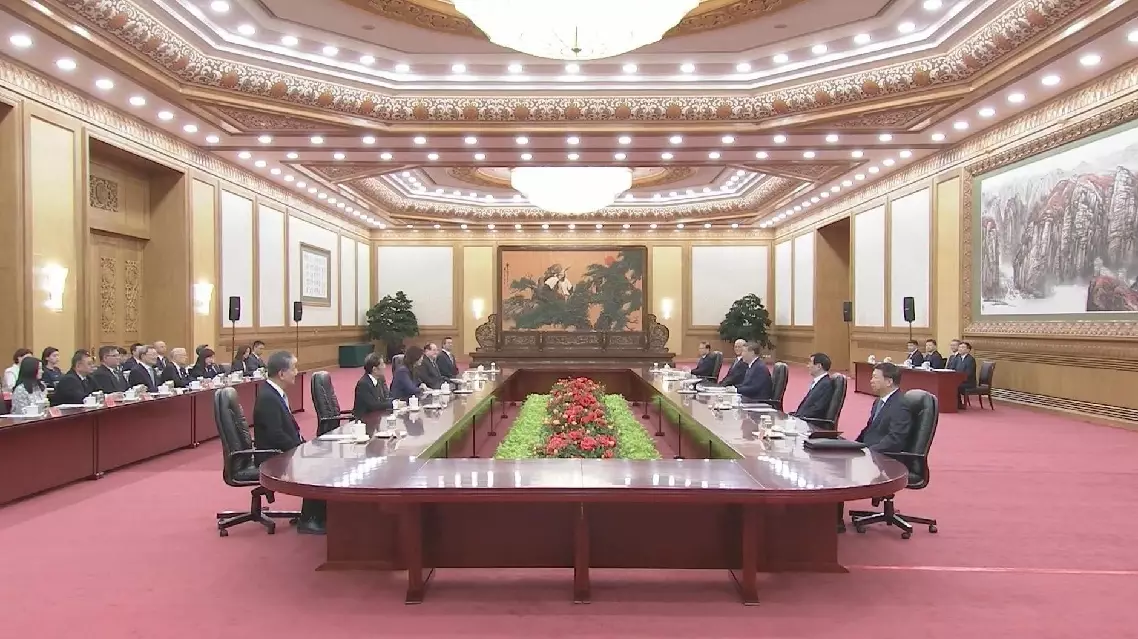
Xi meets KMT leader Cheng Li-wun in Beijing
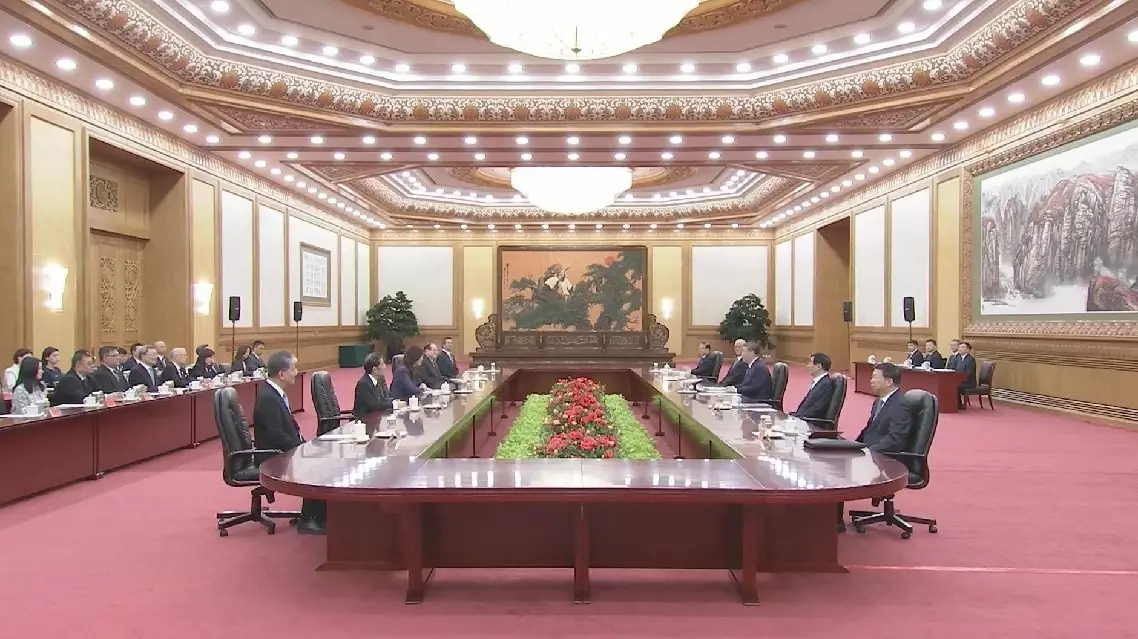
Xi meets KMT leader Cheng Li-wun in Beijing