China has designated Erenhot as part of its newly established Inner Mongolia Pilot Free Trade Zone (FTZ), tasking the border hub with driving international trade, logistics, cross-border tourism and medical services along the China-Mongolia-Russia Economic Corridor.
On Thursday, China unveiled the plan for the Inner Mongolia Pilot FTZ, its 23rd nationwide. The border hub of Erenhot is positioned to leverage its links with Russia, Mongolia and wider Eurasia in advancing high-level opening-up through policy support, industrial upgrading and improved connectivity.
The pilot FTZ spans 119.74 square kilometers and is divided into three subzones: Hohhot, the regional capital tasked with innovation and services; Manzhouli, a northern border city focused on trade with Russia; and Erenhot, a land port on the China-Mongolia border. Each subzone has differentiated functions tailored to local strengths, forming a complementary network rather than a uniform template.
Erenhot's role is pivotal because it sits on the China-Mongolia-Russia Economic Corridor, giving it direct leverage in cross-border logistics and tourism. Local authorities are already rolling out measures such as remote customs inspection and green channels for agricultural exports, turning policy design into tangible efficiency gains.
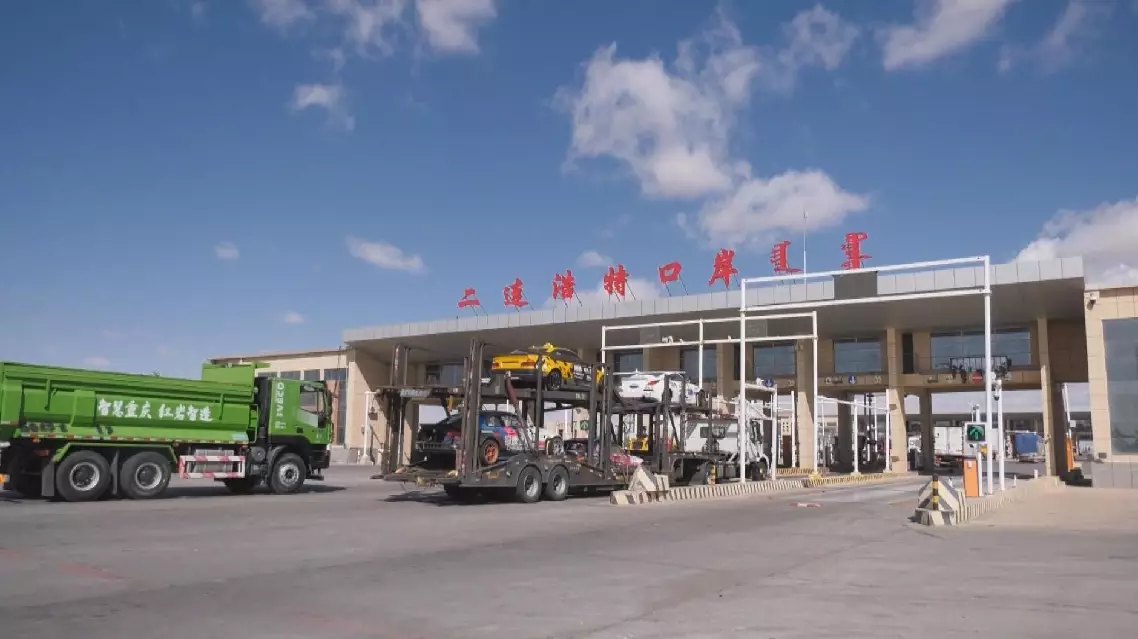
At Erenhot, China's largest land port on the Mongolian border, trucks loaded with fresh fruits and vegetables line up for inspection before heading to markets in Mongolia. Between 20 and 30 such shipments depart daily.
Previously, clearing customs with produce could take one or two days, but now, the time has been shortened to around two to three hours, thanks to the introduction of a remote inspection system, through which customs officers conduct remote inspection with the coordination of an on-site team at the inspection yard.
"Thanks to the green channel and remote inspection system, our vegetables are cleared and released quickly, helping us save time and reduce worry. Our vegetable supply and delivery efficiency has improved significantly, and the overall supply costs have dropped by about 20 percent," said Feng Zhigang, manager of a vegetable export company in Erenhot.
With customs clearance efficiency rising, freight volumes have followed suit. Statistics show that in the first quarter of this year, the Erenhot port handled 5.207 million tonnes of import and export cargo, a year-on-year increase of 15.5 percent, marking a strong start to the year.
"Leveraging the policy advantages of the pilot FTZ, we continuously optimize customs supervision models, deepen smart customs construction, and implement facilitation measures such as around-the-clock appointment-based customs clearance and rapid customs clearance for shipments through railway routes. These efforts aim at ensuring stable and smooth cross-border logistics and support the region's high-level opening-up," said Xin Hengyuan, deputy director of the fifth expressway supervision department of the Erenhot Customs.
In the first quarter of this year, the Erenhot Railway Port, a key hub on the "middle corridor" of the China-Europe Railway Express, handled a record-high 1,145 freight train trips, a 22.3 percent increase from last year, underscoring its role in stabilizing global supply chains and supporting foreign trade growth.
China launches Inner Mongolia pilot FTZ, with Erenhot to anchor corridor trade