Shaanxi and Anhui provinces in northwest and east China are leveraging their strengths in scientific and educational resources and industrial foundations to nurture emerging and future industries as outlined in the country's latest national socioeconomic development blueprint.
The 15th Five-Year Plan (2026-2030), approved by the National People's Congress at an annual session in March, outlines the goal of fostering more pillar and pioneering industries to build new competitive advantages in industrial development.
In the Xi'an High-Tech Zone of Shaanxi, a photonic sensing industrial cluster project has seen its construction completed, with more than 20 high-quality enterprises moving in.
Once fully operational, its annual output value is expected to reach 2 billion yuan (about 293 million U.S. dollars).
Taking advantage of the resources of the Shaanxi Institute of Advanced Oeic Technologies, these enterprises can avoid investments in large-scale instruments and equipment, thereby accelerating the research and development cycle from prototype to product.
"As a leading player in the photonics industry chain, the Xi'an Institute of Optics and Precision Mechanics has established the Shaanxi Institute of Advanced Oeic Technologies, providing a full range of services including funding, research and development, pilot plant test, process outsourcing and park hosting. It will work to accelerate the development of the photonics industry in fields such as commercial space, the low-altitude economy, high-end instruments, and next-generation information technology," said Shao Xiaopeng, deputy director of the Xi'an Institute of Optics and Precision Mechanics under the Chinese Academy of Sciences.
The 15th Five-Year Plan also provides for implementation of industrial innovation projects to advance the construction of innovation facilities, technological research and development, and product upgrading.
During the 15th Five-Year Plan period, Shaanxi will focus on aerospace, new materials, and new energy sectors to deploy projects targeting breakthroughs in key core technologies.
It will also accelerate improvement of the Shaanxi laboratory system and prioritize the cultivation of leading technology enterprises.
This year, the province will establish 20 new proof-of-concept and pilot production platforms to boost commercialization of scientific and technological achievements, and build a high-caliber team of 5,500 technology managers.
In Anhui Province more than 900 kilometers away, the Hefei High-Tech Zone in the provincial capital city of Hefei has become home to more than 80 enterprises in the quantum industry chain, covering major fields of quantum computing, communication and measurement.
This year, the Hefei Quantum-Supercomputer Hybrid Computing Center was established, enabling collaborative operation of quantum computing and supercomputing.
It has already undergone scenario validation in multiple sectors such as finance and biomedicine, laying a foundation for large-scale application of quantum technology.
Currently, Anhui is deeply advancing the application of quantum information, with plans to implement more than 300 new scenarios this year.
"We will take quantum-supercomputer hybrid computing as a breakthrough point to comprehensively build a diversified computing system featuring integrated and coordinated intelligent computing, general computing, and satellite computing, promote the dynamic alignment of high-quality computing power and data supply with multi-scenario application demands to provide solid computing support for the development of future industries," said Tu Ran, head of Hefei's next-generation computing cluster.
The 15th Five-Year Plan also outlines the goal of targeting key areas that will lead future development and building a comprehensive cultivation system for future industries.
In the plan's inaugural year, Anhui is deeply implementing a future industry cultivation and expansion project, strategically deploying future industry incubation bases, science and technology parks, and pilot zones in a phased manner, while simultaneously advancing technological breakthroughs, scenario applications and industrial incubation.
At the same time, the province is providing phased and differentiated support for the development of startups in future industries.
This year, Anhui Province's new quality productive forces investment platform plans to complete approximately 2 billion yuan in investments, with a focus on projects at the early stages, in small enterprises, over long time horizons, and in advanced and core technologies.
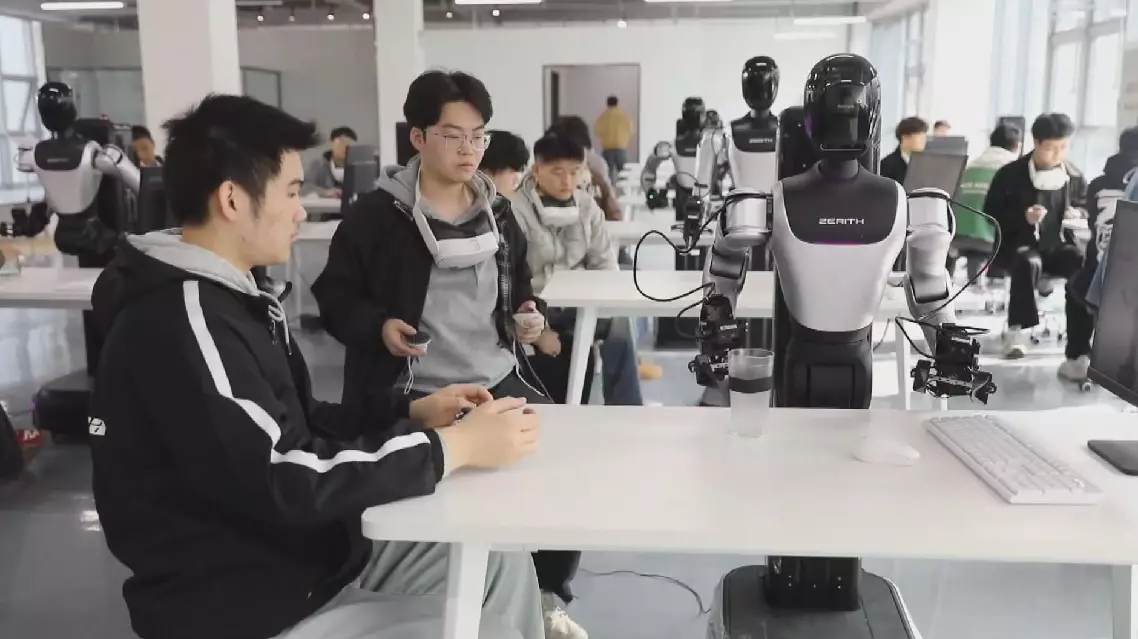
Chinese provinces redouble efforts to develop emerging, future industries