Thousands of families in south Lebanon displaced by Israeli military operations have sought refuge in the capital, Beirut, setting up tents along city streets as humanitarian needs far outpace available aid, local residents and officials said.
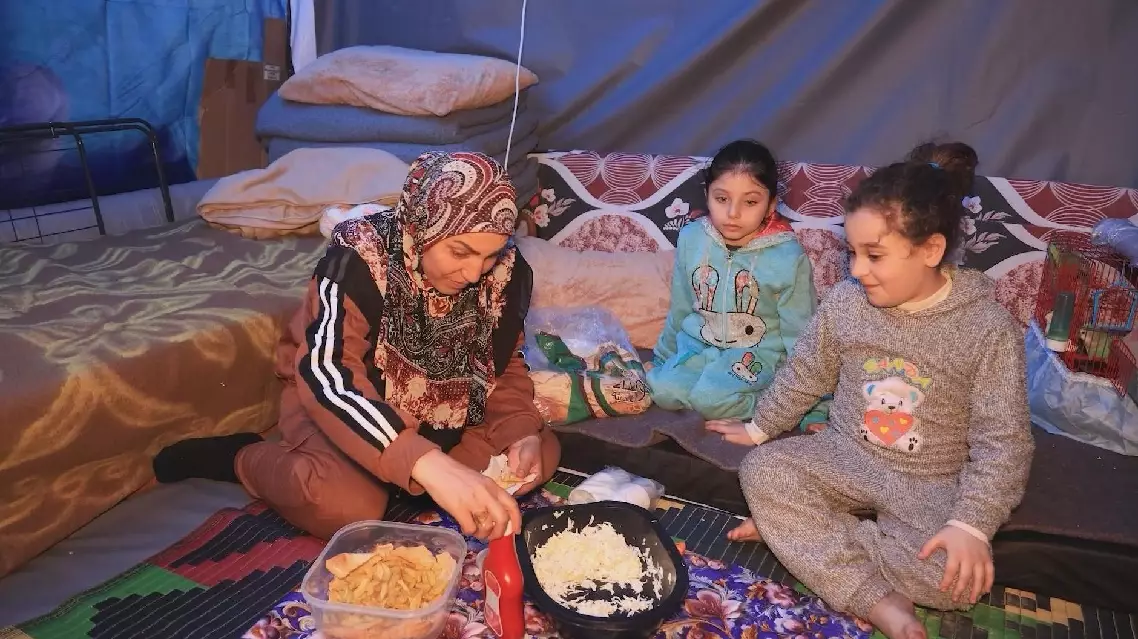
Among them is Rabia Harb, a mother of two from the southern town of Harouf. She has been living in a tent in central Beirut since the conflict escalated last month, sharing the shelter with two children from her extended family while relying on volunteer groups for assistance.
She is among a growing number of families who have sought safety in the capital, setting up makeshift shelters as they search for stability amid ongoing uncertainty.
"I came here and bought a tent. Then someone donated some tents, so my sister and many other people came, and the scene became, as you can see, all tents," she said.
Despite ongoing aid efforts, humanitarian needs in Lebanon far outpace available support. The country is grappling not only with the impact of the current conflict and the Israeli war on Lebanon in 2024, but also with the cumulative strain of years of entrenched economic instability and political crisis.
"The volunteers distribute to us whatever they receive, but this depends on what they get. Sometimes they receive food and give it to us; sometimes they receive water and give it to us. But we need clothes, everything for cooking. We need everything, including cleaning supplies. There are shortages sometimes, but they distribute whatever they receive," said Rabia.
On Friday, the Ministry of Health received medical aid from Qatar after issuing an urgent appeal for assistance to meet needs that have become severely exacerbated following Israel's large-scale attack on Lebanon on Wednesday, which left hundreds dead and wounded. Many still remain trapped under the rubble.
"The plane arrived today carrying 100 items, which the Ministry of Health will receive and distribute as needed to support the health sector," said Rakan Nassereddine, Lebanese Minister of Health.
As of April 2, 2026, UN reports indicate that more than 1.1 million people are displaced across Lebanon, including around 137,000 sheltering in roughly 700 designated facilities, while many others remain in informal camps or with host communities.
Children account for nearly one-third of the displaced population and face acute shortages of food, clean water, healthcare, and access to education. The scale and depth of the crisis point to challenges that go beyond those seen during the 2024 war.
Displaced Lebanese families crowd Beirut with aids in shortage