Leading international industrial media outlet Control Global has announced that Prof S. Joe Qin, President and Wai Kee Kau Chair Professor of Data Science of Lingnan University, has been inducted into the 2026 Process Automation Hall of Fame in recognition of his long-term outstanding contributions and far-reaching impact in industrial data analytics, process control and automation, the only scholar from the Hong Kong SAR to receive this distinction. Inductees over the years have been key figures driving industrial technological innovation and theoretical breakthroughs, and the accolade is held in very high esteem by both the international academic and industrial communities.
Control Global commended Prof Qin’s academic career for its distinctive interdisciplinary nature, saying that with training spanning electrical engineering, control theory, and chemical engineering, he has demonstrated remarkable versatility across disciplines, and published extensively in process monitoring, system identification, chemometrics, and machine learning.
Prof Qin responded “Being inducted into the Hall of Fame is not the capstone of my academic journey, but rather a prompt for me to share my experiences more openly, including both the right and wrong paths I have taken, so that younger generations may benefit. This spirit of academic inheritance and selfless contribution is a value I hope to carry forward. My best advice to young engineers is to resist the pull of short-term rewards, recognise the full arc you are capable of, and always keep the bigger picture in sight.”
In a feature titled “Engineering a lifetime of reinvention”, Control Global describes Prof Qin’s interdisciplinary academic journey, noting his unusual background. The professor was born in Rizhao, Shandong province, and grew up during a period when formal schooling was limited, yet by the time he was 11 he had already taught himself to make wooden chairs to earn a living. When the higher education system reopened, Prof Qin seized the opportunity to gain admission to Tsinghua University at the age of 16 with the top scores in his cohort to study automatic control, laying the foundation for his engineering career.
Prof Qin recalls in the interview that while he was at Tsinghua University, he met the renowned scholar Prof Harmon Ray, who was visiting the campus and who advised him to pursue a PhD in chemical engineering at the University of Maryland - “life changing” advice. During his doctoral studies, he embarked on early research into how machines learn, examining neural networks’ strengths and limitations from a statistical perspective. After graduation, he became a principal engineer at Emerson Process Management, where he developed two commercial products successfully before returning to academia to teach and conduct research at The University of Texas at Austin and the University of Southern California.
Looking ahead, Prof Qin predicts that while industry has accumulated vast amounts of data over the past decades, its full value has yet to be realised due to previous limitations in computational power. Now although computing capabilities have advanced significantly in recent years, technologies such as artificial intelligence and machine learning remain underutilised in chemical engineering, and Prof Qin believes that applying advanced analytics to process monitoring, control, and optimisation will represent an unprecedented opportunity. He emphasises that the next generation of process engineers will need to be as fluent in data analytics and machine learning as they are in thermodynamics and fluid mechanics.
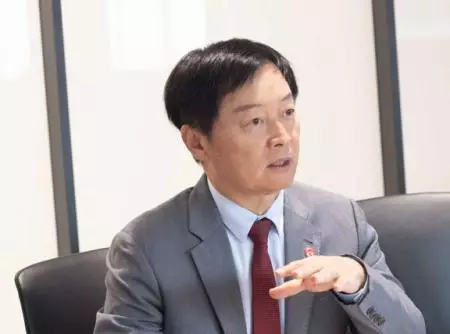
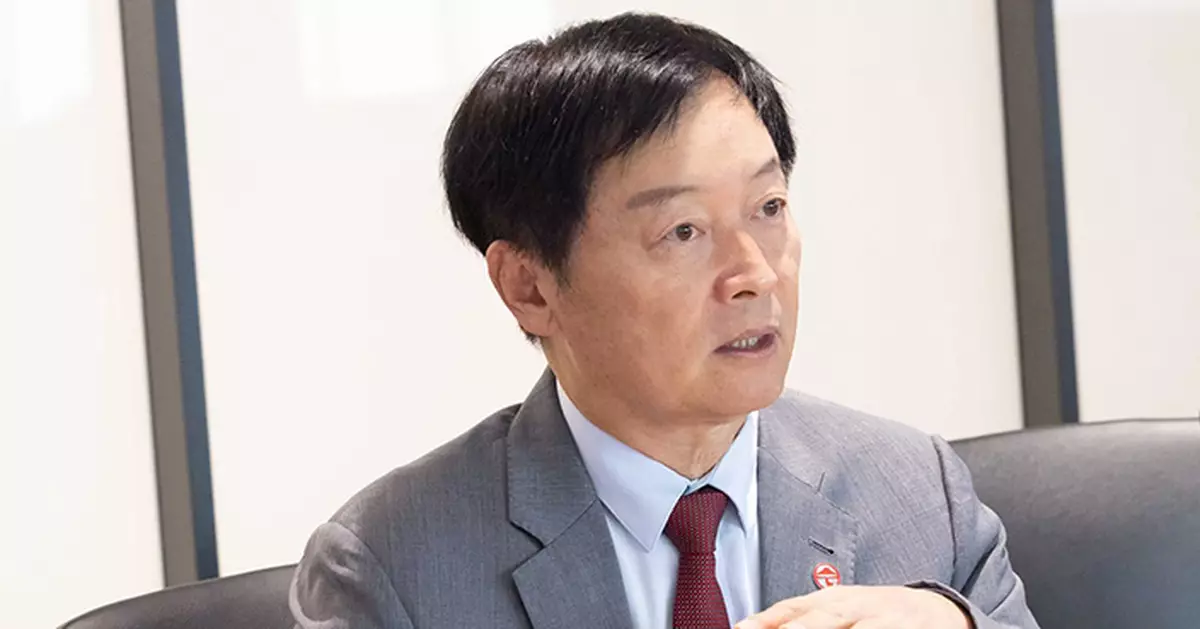
Prof S. Joe Qin, President of Lingnan University, has been inducted into the Process Automation Hall of Fame
Prof Qin also expresses concern about developments in engineering education, observing that, compared with 30 years ago, mathematical training in engineering programmes is weaker, and it has become more difficult to offer very rigorous courses. This is partly because most people want a programme where even the average student understands most of the concepts and graduates easily, although in the long run this may undermine the cultivation of advanced mathematical talent. Prof Qin suggests that universities create deliberately designed environments for mathematically gifted students to be challenged at an appropriate level, in order to preserve academic depth and international competitiveness.
Established in 2001, the Process Automation Hall of Fame recognises scholars and industry leaders for their outstanding contributions to process automation and control. The other inductees this year are Prof Manfred Morari of the University of Pennsylvania, an eminent international authority in modern systems engineering, and Prof Peter Morgan, longtime process engineer with Syncrude Canada and now an independent consultant.
For the full feature article, please visit: Engineering a lifetime of reinvention: 2026 Process Automation Hall of Fame's S. Joe Qin | Control Global
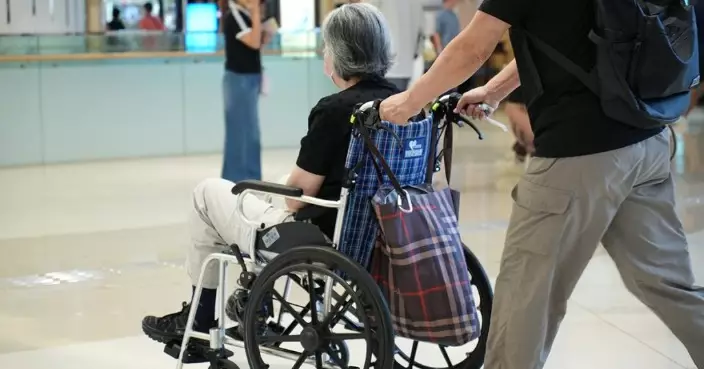
The Hong Kong Council of Social Service estimates that the number of carers across the territory reaches as high as 1.12 million. Some employed people are forced to juggle the demands of work alongside caring for parents, spouses, or children, taking on the arduous role of “compound carers”. The Asia-Pacific Institute of Ageing Studies (APIAS) at Lingnan University conducted in-depth interviews with over 40 multiple carers who care for at least two family members, one of whom has a disability or a chronic illness. The study found that these working compound carers face heavy pressure in balancing professional and family duties. Nearly half of those interviewed keep their caregiving responsibilities hidden at work for fear of being branded “troublesome employees”. Consequently, several had to give up promotions or switch to part-time work due to caregiving demands. Researchers note that current support networks remain fragmented, leaving compound carers to search for, evaluate, and arrange various services entirely on their own — adding substantial friction to an already overwhelming load. The research team recommends introducing dedicated Case Managers who will integrate healthcare, rehabilitation, and social welfare services.
Led by Lingnan and funded by the Research Grants Council of Hong Kong, the one-year study conducted in-depth interviews between April 2025 and January 2026 with 45 compound carers in the Hong Kong SAR, aged from 25 to over 75. Recruited through social welfare agencies and carer social media platforms, they were full- and part-time workers, full-time homemakers, and retirees, 35 of whom were female. In terms of their caregiving loads, 34 were looking after two family members, nine were caring for three, and two were single-handedly looking after four to five relatives.
The study revealed that many of these 104 care recipients suffered from complex comorbidities, which included chronic health conditions (30), diagnosed dementia (20), and severe mobility impairments or bedridden states resulting from conditions such as stroke (20). Respondents emphasised that their daily responsibilities encompassed coordinating frequent multi-speciality medical consultations, giving medication at fixed times, managing physical transfers, and responding to unpredictable medical emergencies, all of which represent an intensive, sustained care burden. Consequently, many carers reported feeling trapped in a relentless 24-hour on-call cycle, continually forced to make trade-offs between different responsibilities.
The study also showed that approximately 45 per cent of respondents had to balance paid employment with their caregiving duties. Most reported relying on annual leave, time off in lieu, or shift swaps to attend to family medical consultations and sudden emergencies. As leave requests accumulated, carers expressed growing concern that supervisors or colleagues might perceive them as having persistent family issues or lacking commitment to their role, thereby threatening their prospects for promotion and contract renewal. Consequently, nearly half of the employed respondents chose to conceal their carer status at work, with some preferring “to absorb the burden privately rather than risk being viewed as troublesome employees”.
For example, one respondent declined a promotion offer due to concerns over managing both workplace and caregiving responsibilities, explaining, “Because new roles typically offer no annual leave during the initial months, I needed to ensure my family members would have no medical appointments or sudden emergencies during that period.” Another respondent who very much wished to change jobs feared a new post might demand longer hours and limit the ability to respond immediately to family emergencies, forcing this individual to remain in the same position. The research team pointed out that these accounts illustrate how care responsibilities directly impact the career options of certain respondents.
Notably, caregiving responsibilities also take a severe toll on personal psychological well-being, with some carers undergoing psychiatric treatment due to the heavy pressure. One respondent highlighted having to care simultaneously for an 88-year-old amputee father with limited mobility and an 87-year-old mother living with dementia. This unceasing pressure resulted in chronic sleep disruption, physical exhaustion, and deteriorating mental health, ultimately leading to suicidal ideation during moments of profound helplessness and the need for ongoing psychiatric care.
Furthermore, the study underscored that respondents find the existing social support infrastructure highly fragmented. Carers are forced to navigate a complex maze of services across public hospitals, the Social Welfare Department, non-governmental organisations, residential care facilities, and online portals by themselves, investigating application procedures, waiting lists, means-testing requirements, and eligibility criteria in each case. Beyond these structural challenges, respite care capacity remains severely constrained on weekends, public holidays or times of emergency, daycare transport schedules frequently conflict with standard working hours, and rehabilitation transit routes and operational hours are restrictive, creating substantial hurdles for carers seeking support. The research team says that the bureaucratic complexity of the existing support apparatus and scattered information have become part of the overall chronic stress burden for compound carers.
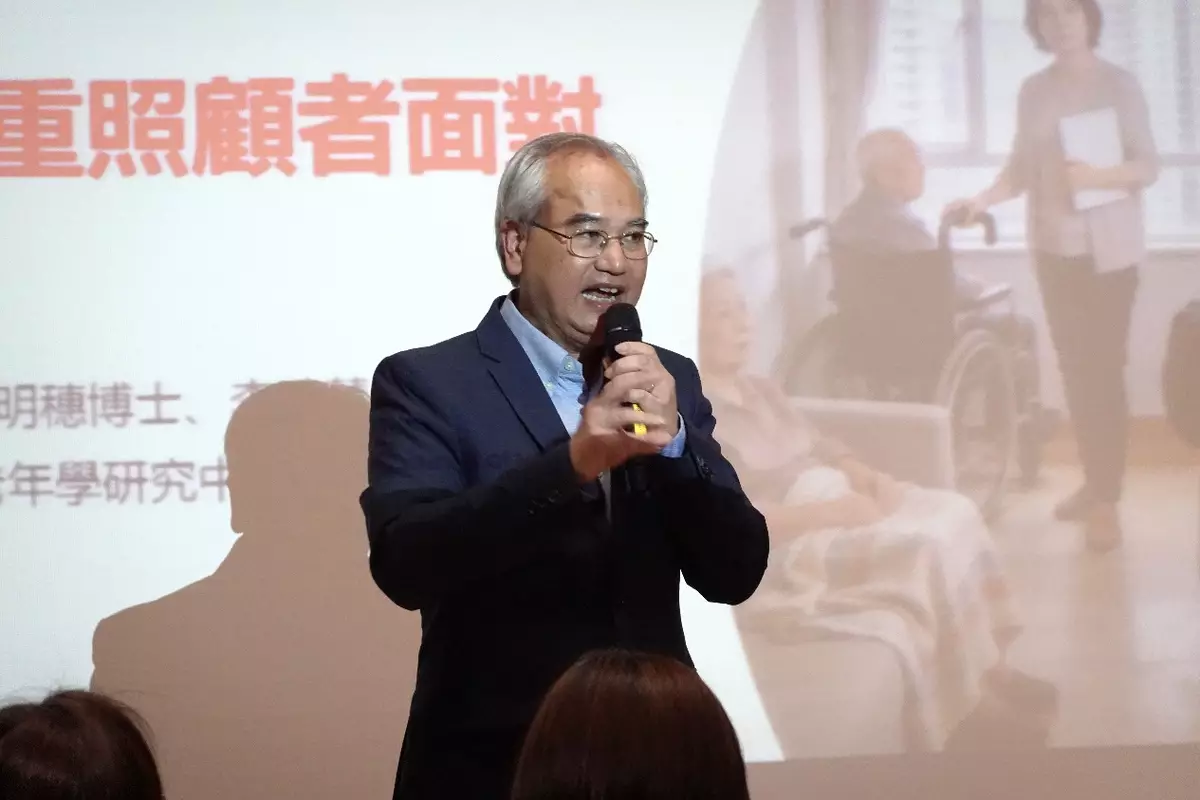
A study conducted by the Asia-Pacific Institute of Ageing Studies at Lingnan University finds that working compound carers face the dilemma of balancing professional and family duties. The photo shows Prof Dickson Chan Chak-kwan, Research Professor and Director of APIAS. Photo source: LU
Prof Dickson Chan Chak-kwan, Research Professor and Director of APIAS, said, “The public currently pays relatively little attention to the problems and needs faced by ‘compound carers’ who care for several dependents. These people encounter immense strain regarding time management and role execution, alongside psychological and financial pressure; they often face a heavier burden than carers looking after a single family member, yet existing policies offer meagre targeted assistance. We advocate formally recognising compound carers as core stakeholders within the Hong Kong SAR’s long-term care architecture. Strategic inter-agency coordination alongside dedicated funding streams would tangibly elevate quality of life for these households, while fortifying systemic sustainability against an accelerating demographic ageing curve to address the long-term challenges posed by an ageing population and growing demand for services.”
To operationalise this, the research team proposes establishing a dedicated Carer Case Manager framework, where designated professionals evaluate household needs, communicate with healthcare, rehabilitation, and social care networks, and design integrated post-discharge transition plans and service packages, eliminating the procedural burden on families. They also recommend short-term residential care and home support services beyond standard office hours and on weekends. Finally, they suggest carer-friendly employment standards, specifically introducing a statutory entitlement to seven days’ unpaid carer leave annually as well as corporate incentives for flexible scheduling, hybrid working arrangements, and agile shift swaps. Additionally, the monthly amount of the carer's allowance is only HK$3,300, which accounts for 15 per cent of the median monthly domestic household income and falls short of covering the various additional expenses associated with caregiving. Therefore, increasing the carer's allowance is the most direct and prompt way to assist carers facing financial hardship.
For the full research paper, please visit: https://commons.ln.edu.hk/apias_research/29/