Pakistan's Deputy Prime Minister and Foreign Minister Mohammad Ishaq Dar held a telephone conversation with his Iranian counterpart Seyed Abbas Araghchi on Sunday night, focusing on the evolving regional situation and efforts for peace, the Ministry of Foreign Affairs of Pakistan said on Monday.
The ministry said in a statement that the discussion centered on recent developments in the region and Pakistan's role in facilitating dialogue and reducing tensions through diplomatic channels.
In the phone conversation, the Pakistani foreign minister reaffirmed his country's continued commitment to fostering constructive engagement between Iran and the United States, emphasizing that dialogue and diplomacy remain the only viable path to peaceful resolution of issues and to lasting peace and stability in the region and beyond.
Speaking on the same occasion, Araghchi appreciated Pakistan's constructive role and its sincere efforts of mediation between the concerned parties, acknowledging Islamabad's engagement in promoting de-escalation, according to the ministry.

Pakistan, Iran foreign ministers discuss regional situation, stress diplomacy for peace
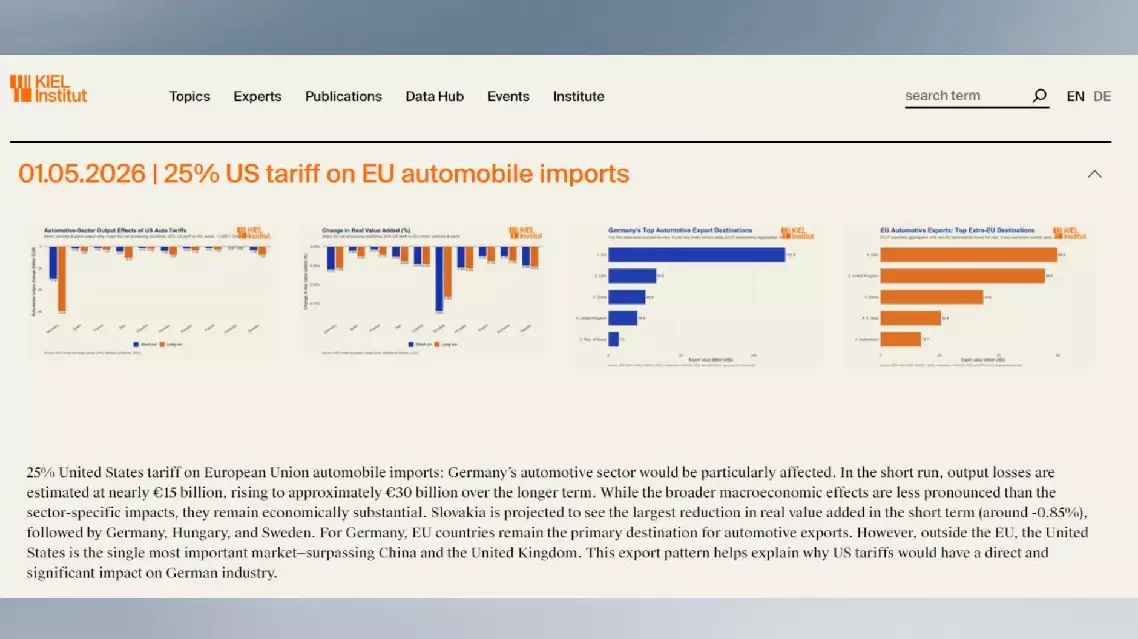
The Kiel Institute recently warned that the German auto industry could lose 15 billion euros (about 17.6 billion U.S. dollars) in short term from the 25 percent U.S. tariffs on cars of the European Union (EU).
The Kiel Institute, one of Germany's top five economic research institutions, reported on May 1 that the European automotive supply chain remains highly vulnerable to trade conflicts. According to its analysis, new U.S. car tariffs could result in short-term losses of 15 billion euros for Germany's auto sector, with long-term losses potentially reaching 30 billion euros.
In 2025, Germany exported approximately 3.17 million passenger cars, of which nearly 410,000 went to the United States, down nine percent year on year, according to the German Automotive Industry Association.
U.S. President Donald Trump said on May 1 on Truth Social that the EU was not complying with a trade agreement, and announced he will raise tariffs on European cars and trucks to 25 percent.
In response, the European Commission -- the executive arm of the 27-nation EU -- said it will keep options open to protect the EU's interests. A European Commission spokesperson said on the same day that the EU is implementing the relevant trade agreements in line with standard legislative procedures, and continues to keep the U.S. side fully informed throughout.
Leading research institution warns German auto industry could sustain heavy loss due to U.S. tariff hike