Skip to Content Facebook Feature Image

East China cities enrich tourists' experience with digital technologies during May Day holiday

China

China

China

East China cities enrich tourists' experience with digital technologies during May Day holiday

2026-05-04 15:10 Last Updated At:17:47

Two major cities in east China's Jiangsu Province -- Xuzhou and Lianyungang -- have both made a use of advanced digital technologies to enrich the experience of tourists during the ongoing May Day holiday, which runs from May 1 to 5.

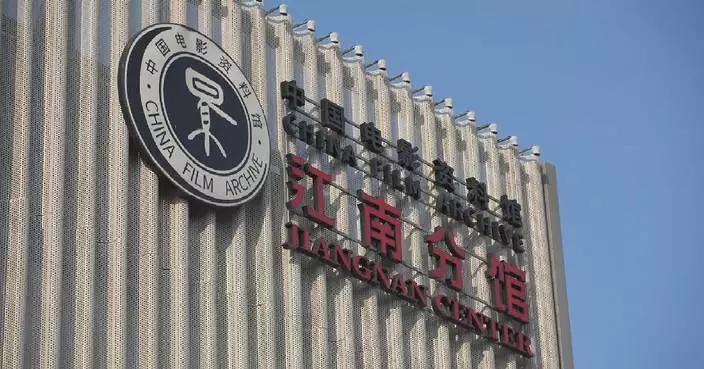
A digital experience in Xuzhou has become a viral check-in spot for tourists during this holiday.

Spanning over 1,000 square meters, the venue uses technologies such as naked-eye 3D and digital twin to help tourists develop an in-depth experience of the historical and cultural heritage of the city.

The site also has an interactive experience zone that features artificial intelligence generated content (AIGC) where the visitors can create a digital image of themselves simply by scanning a QR code.

The image can later be embedded into ancient painting scenes to interact with figures in the artwork.

"I think this exhibition is fantastic. It integrates a lot of modern technologies and brings visitors a kind of experience that combines education with entertainment," said a tourist.

The exhibition is expected to see nearly 5,000 tourist visits in the May Day holiday, marking a 185-percent increase compared with the ordinary days.

The Huaguo Mountain scenic area in Lianyungang City are receiving increasing numbers of tourists on the first day of the holiday season, with cutting-edge technologies including holographic phantom imaging, simulated mechanical models and water mist projection, impressing the visitors.

"I come from Chifeng, Inner Mongolia [Autonomous Region in north China], to see the waterfalls and caves here. The sound and lighting effects are absolutely stunning, and the kids are having a great time too," said a tourist.

In the first three days of the May Day holiday season, the scenic area processed nearly 60,000 tourist visits per day on average.

East China cities enrich tourists' experience with digital technologies during May Day holiday

East China cities enrich tourists' experience with digital technologies during May Day holiday

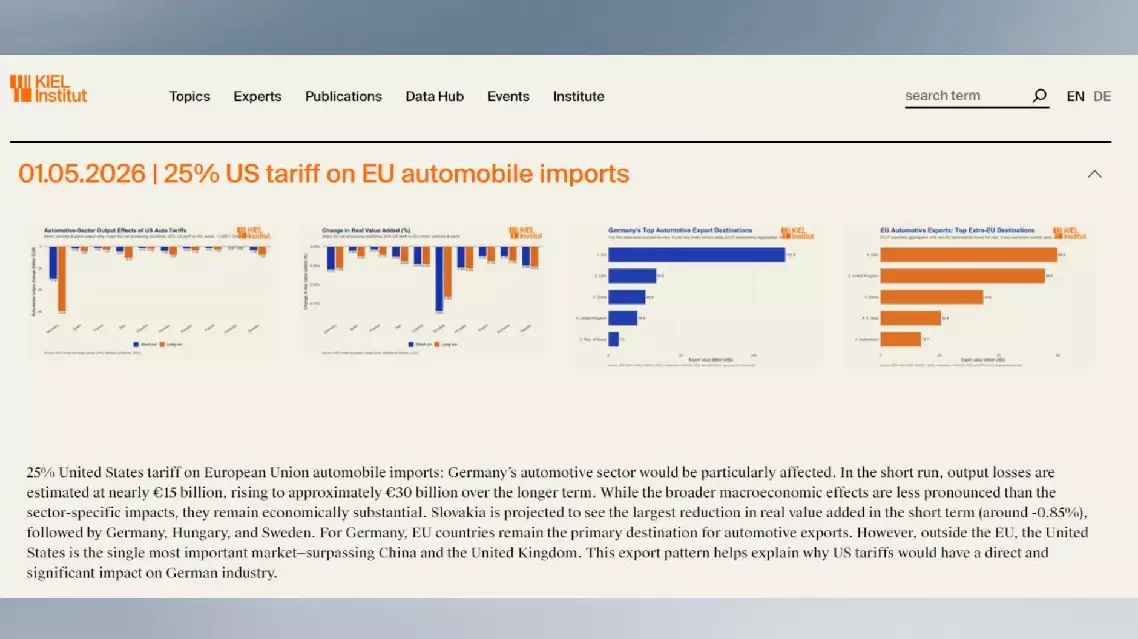
The Kiel Institute recently warned that the German auto industry could lose 15 billion euros (about 17.6 billion U.S. dollars) in short term from the 25 percent U.S. tariffs on cars of the European Union (EU).

The Kiel Institute, one of Germany's top five economic research institutions, reported on May 1 that the European automotive supply chain remains highly vulnerable to trade conflicts. According to its analysis, new U.S. car tariffs could result in short-term losses of 15 billion euros for Germany's auto sector, with long-term losses potentially reaching 30 billion euros.

In 2025, Germany exported approximately 3.17 million passenger cars, of which nearly 410,000 went to the United States, down nine percent year on year, according to the German Automotive Industry Association.

U.S. President Donald Trump said on May 1 on Truth Social that the EU was not complying with a trade agreement, and announced he will raise tariffs on European cars and trucks to 25 percent.

In response, the European Commission -- the executive arm of the 27-nation EU -- said it will keep options open to protect the EU's interests. A European Commission spokesperson said on the same day that the EU is implementing the relevant trade agreements in line with standard legislative procedures, and continues to keep the U.S. side fully informed throughout.

Leading research institution warns German auto industry could sustain heavy loss due to U.S. tariff hike

Leading research institution warns German auto industry could sustain heavy loss due to U.S. tariff hike

Recommended Articles