MILWAUKEE (AP) — Milwaukee Brewers right-hander Quinn Priester has been called back from his minor league rehabilitation assignment as he tries to recover from thoracic outlet syndrome.
Manager Pat Murphy said Friday the team will evaluate the next steps with Priester, which likely will include a return visit to a nerve specialist in Dallas. The nerve isn’t compressed, but Murphy said Priester continues to feel discomfort.
“We’ve got to reevaluate everything and see where he’s at,” Murphy said before the Brewers' game against the Philadelphia Phillies.
The right-hander, a key cog in the team’s rotation a season ago when he went 13-3 with a 3.32 ERA in 29 appearances (24 starts), remains on the 60-day injured list. He has not pitched in the majors this season. Priester was expected to play a major role again this season in a rotation that so far has been led by hard-throwing Jacob Misiorowski and newcomer Kyle Harrison.
In five rehab games at Triple-A Nashville, two in Arizona and one at High-A Wisconsin, Priester has a 15.75 ERA and 2.88 WHIP in 16 innings, along with 24 walks, 18 strikeouts, four hit batters and six wild pitches.
“There’s been some good things and some concerns,” Murphy said of Priester’s outings.
When asked is surgery is on the table right now, Murphy said: “It’s jumping to conclusions a little bit, but it is at the end of the rainbow for anybody that has (thoracic outlet syndrome). You try to avoid it.”
The Brewers are also keeping an eye on veteran pitcher Brandon Woodruff, who the team was also counting on to be part of the rotation this season. Woodruff has been on the 15-day injured list since April 30 with right shoulder inflammation after experiencing a significant drop in velocity. Imaging showed no structural damage to the shoulder.
In a 68-pitch rehab start at the Arizona Complex League on Wednesday, Woodruff allowed five hits and three runs while walking two and striking out five in 3 2/3 innings with his velocity topping out at 93 mph.
Woodruff, who's in his 10th season with the Brewers, is 2-1 with a 3.60 ERA in six starts this season. He went 7-2 with a 3.20 ERA in 12 starts in 2025 after missing the 2024 season due to right shoulder surgery.
“I think he’s on track. We need a healthy Woody up here,” Murphy said. “I think we’ll get that whenever that time is.”
Murphy also said reliever Jared Koenig, who has been on the injured list since April 6 with a left UCL sprain, is "working his way back.” Murphy added: “We really need him.”
Koenig was 6-1 with a 2.86 ERA and two saves in a career-high 72 appearances for the Brewers last season.
—
AP MLB: https://apnews.com/MLB
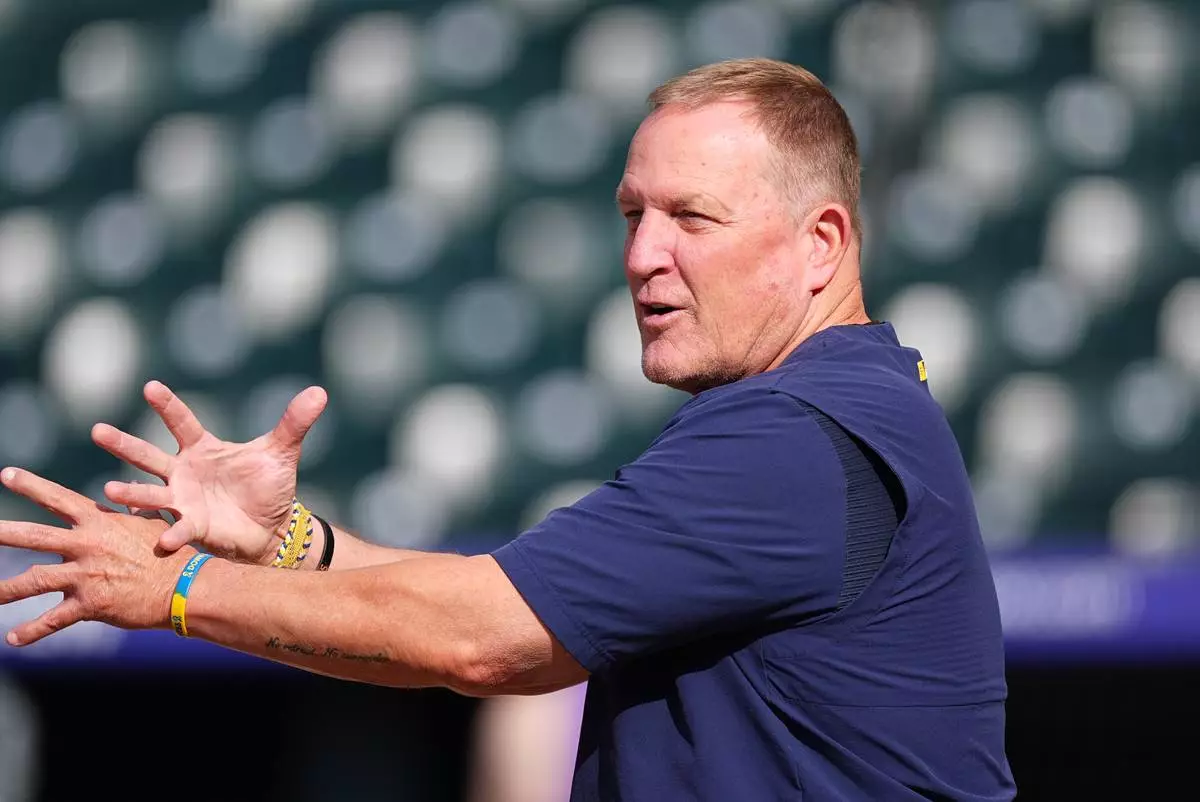
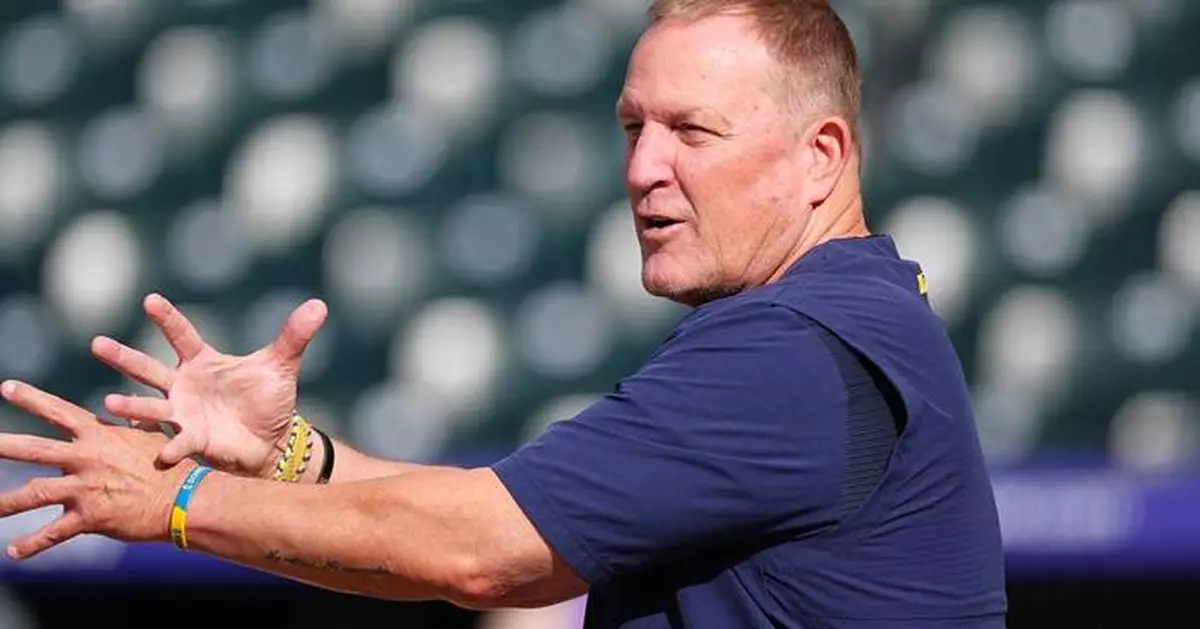
Milwaukee Brewers manager Pat Murphy confers with players as they warm up before a baseball game against the Colorado Rockies, Saturday, June 6, 2026, in Denver. (AP Photo/David Zalubowski)
NEW YORK (AP) — Gene Shalit, a movie critic and arts reporter for the “Today” show over four decades who was known for his puffy hair, oversized handlebar mustache and affection for groan-inducing puns, has died. He was 100.
Shalit's family announced the death Friday to NBC News, saying in a statement that he “passed away peacefully today after 100 years of an amazing life.”
Shalit joined “Today” as a contributor in 1970 and became arts editor in 1973, later settling in for his segment, “Critic’s Corner." When he left the show in 2010, he was one of the last high-profile film critics on a major network.
“What resonated above his unusual appearance was his incredible wit, his remarkable intelligence. But he didn’t pound you over the head with it. He amused you. He enlightened and amused whatever subject he was on,” Guy Ludwig, Shalit’s producer for more than 20 years, wrote in an essay of his time.
It was no coincidence that Chicago critics Roger Ebert and Gene Siskel’s local “thumbs-up, thumbs-down” movie-review program, “Sneak Previews,” went national on PBS in the late 1970s and that “Today” show's ABC rival, “Good Morning America,” hired Joel Siegel to be its movie critic in 1981.
“Shalit was instrumental in changing the balance of critical power in America. When he began his ‘Today’ tenure, newspapers and magazines were the primary sources for movie reviews. That’s where cinematic opinion was sparked and shaped,” The Plain Dealer wrote in 2010, calling Shalit “Daniel Boone in a bow tie and Groucho glasses.”
Shalit started as an entertainment columnist for McCall’s magazine, eventually becoming senior film critic for Look magazine in 1968 and writing for Ladies’ Home Journal. His popularity in magazines led to an offer from NBC.
“No one at NBC had seen him. They’d only read his stuff. So he walked into this executive’s office and the executive took one look at him and said, ‘Mr. Shalit, have you ever thought of radio?’” wrote Ludwig. “They didn’t know how the public would react to someone who looked so different from people who were typically on TV in 1967.”
On the air, Shalit was a middle-of-the-road critic. Of 1986’s classic “Stand By Me,” he said it was different from other movies about youth “because of instead of grossing you out, ‘Stand by You’ is engrossing.”
“Many critics will give so much of the plot of a movie away that they destroy the movie for the viewer... I just don’t give away the story,” he told The Associated Press in 1993.
He liked “Defiance” starring Daniel Craig and Jude Law, calling it “a vivid dramatization of one of history’s titanic turning points.” But he called “Brokeback Mountain “wildly overpraised, but not by me” and drew condemnation from GLAAD for calling Jake Gyllenhaal’s character, Jack, a “sexual predator.” Shalit apologized.
He called “Frozen” “very cool.” He said the oddball title of “The Men Who Stare at Goats” was “heard to bleat,” and his review of “The Lovely Bones” read in part: “There’s no bones about it.”
He began reviewing on the air the year of “Patton” and “Love Story” and ended his run with a critique of “Shrek Forever After,” of which he noted that the “bellow fellow is now a mellow fellow.” One highlight of this tenure was his descent into a fit of giggles while interviewing Carol Channing.
He called a remake of “King Kong” so “gargantuan that I must create new words to describe it: fabularious … a brilliantological humongousness of marvelosity.” His take on Steven Spielberg’s adaptation of Alice Walker’s “The Color Purple”: “It should be against the law not to see it.”
In a 1981 interview with John Belushi and Dan Aykroyd, Belushi said Shalit’s hair looked like “an ant farm on fire.” Nevertheless, he peppered his guest with so many questions about their daily life that it felt like therapy. He asked both comedians what their last meals would be. “What do you want to be doing 10 years from now, John Belushi?” Shalit asked. “‘Fiddler on the Roof’” Belushi replied.
During his tenure, he traded quips with anchors ranging from Edwin Newman, Barbara Walters and Jane Pauley to Tom Brokaw, Bryant Gumbel, Katie Couric, Jane Pauley, Al Roker and Meredith Vieira.
Gumbel was not always a fan, once saying Shalit’s reviews “are often late and his interviews aren’t very good.” The critique came in what was supposed to be a confidential memo to Marty Ryan, the show’s executive producer at the time.
In 1994, while in St. Pete Beach, Florida, to cover Major League Baseball spring training, a car hit Shalit as he was crossing a street and broke his leg. After that, “Today” began recording his movie reviews in his home studio.
He was born in New York and grew up in Morristown, New Jersey, starting his grammar school’s first newspaper before writing a humor column for the newspaper while a student at Morristown High School. He graduated from the University of Illinois in 1949.
Shalit played the bassoon, but he said he started out on the clarinet.
“I didn’t practice for a few weeks and the teacher got furious,” he recalled in 1988, before playing bassoon in a New York City fundraiser. “He took away my clarinet and as punishment he said, ‘From now on, you’re gonna play THIS.’”
In 1987, he edited a book called “Laughing Matters: A Celebration of American Humor,” saying he wanted to introduce and reintroduce such old and new masters of American humor as Mark Twain, James Thurber and Russell Baker.
Shalit was regularly mocked on “Saturday Night Live” by cast member Horatio Sanz, who would appear on the Weekend Update desk dressed as Shalit and go on an extended, barely coherent rants that punned the title of every movie he reviewed. Shalit also made cameos on “Sesame Street,” “Family Guy” and “Spongebob Squarepants.”
He is survived by a daughter, Willa Shalit.
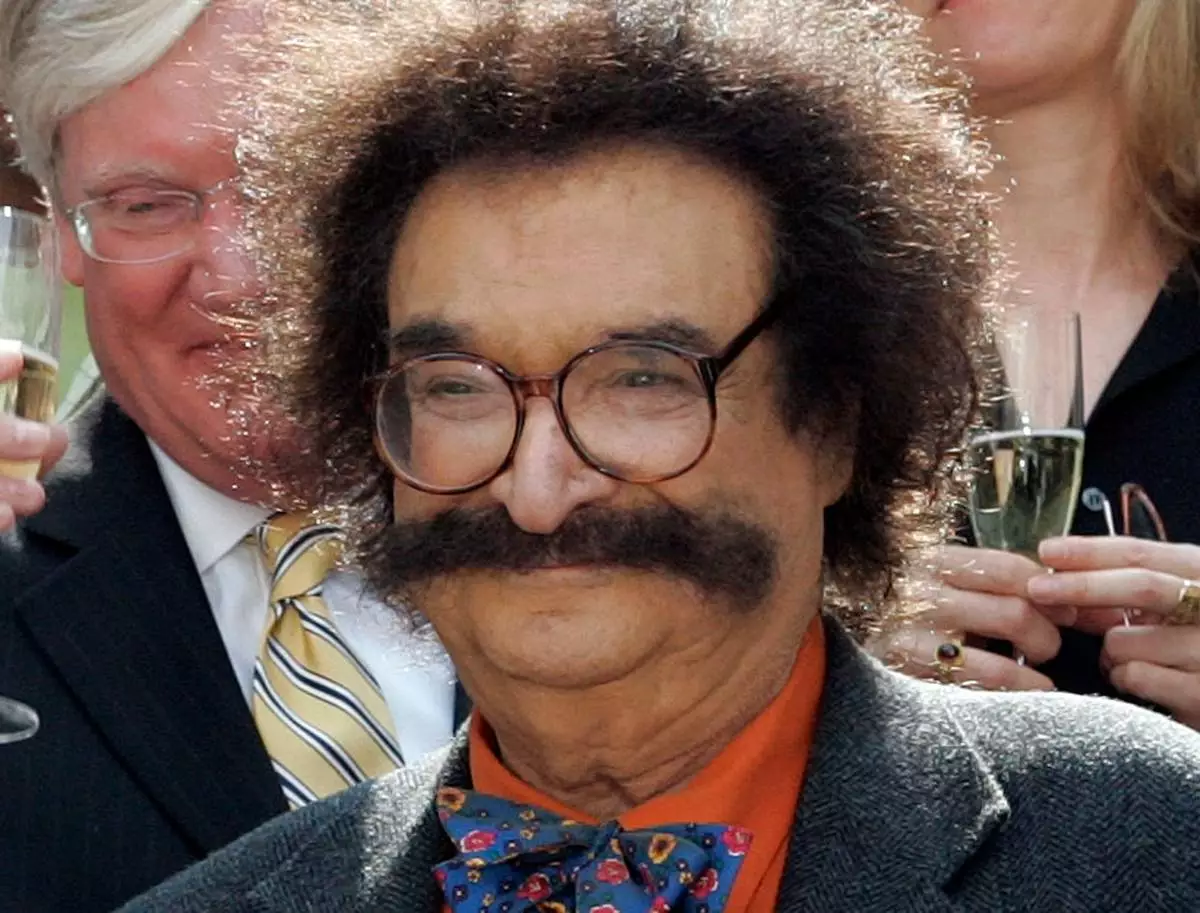
FILE - In this May 31, 2006 file photo, film critic Gene Shalit is seen during a toast with "Today" show cast and crew at the end of Katie Couric's final show, in New York. (AP Photo/Richard Drew, File)