The evil deeds committed by members of the Imperial Japanese Army's (IJA) clandestine Unit 731 on Chinese soil never received the trials they deserved, and the process by which they escaped accountability for war crimes is inseparable from the shelter provided by the United States, a Chinese history researcher said.
When there are too many people involved in an action, the individuals feel little personal accountability for the outcome, even if they played a part in it.
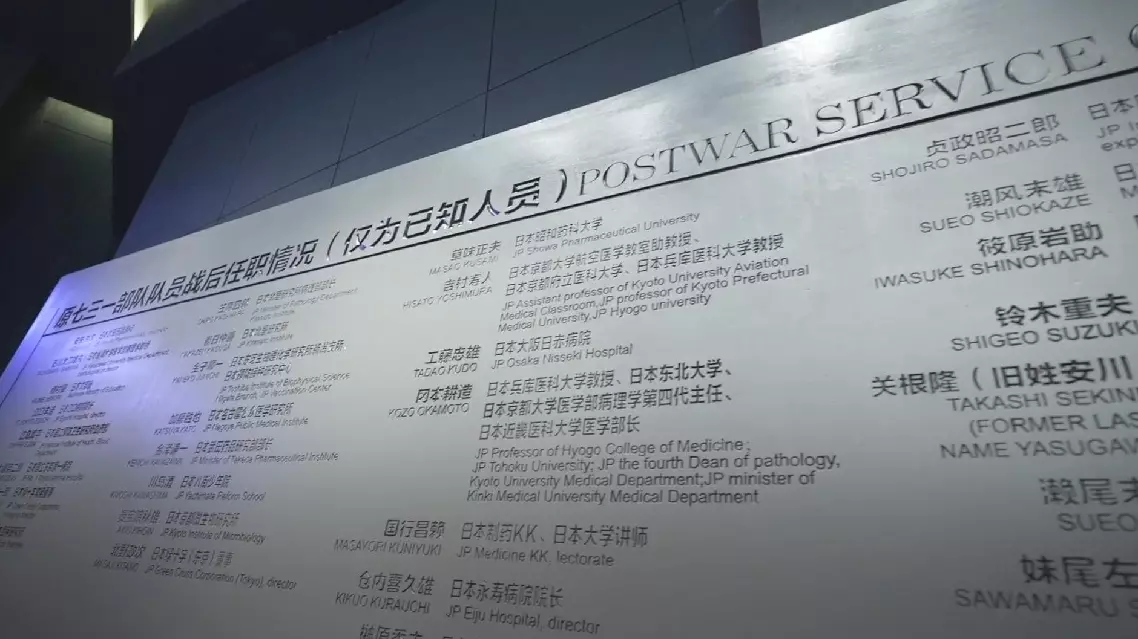
The members of the infamous Unit 731 exemplified this dynamic perfectly. They were called "technicians," with more specific titles including doctor, professor, researcher, and scholar. These individuals personally took part in horrifying crimes against humanity. Yet not only did they escape punishment for their actions -- avoiding the Tokyo Trials altogether -- some even went on to hold senior positions in education and the public sector after the war, without a sense of guilt.
There is no accurate tally of how many "technicians" there were at Unit 731. According to a revelation in 2024, there were 57 "technicians" operating there between February 1944 and August 1945. They were the core of this unit.
These people knew full well that their actions violated international law. Otherwise, they would not have blown up the very facilities they had used for germ research before leaving China, said Zhang Yang, Deputy Director of the Exhibition Hall of Evidences of Crime Committed by Unit 731 of the Japanese Imperial Army.
"The 1925 Geneva Protocol explicitly prohibits any nation from engaging in bacteriological warfare research. While researching bacteria in itself is not illegal, Japan violated international law by conducting experiments on the Chinese. If their actions had been legal, they wouldn’t have needed to destroy all evidence -- burning documents, killing test subjects and demolishing the entire facility before fleeing," said Zhang.
In 1945, before Japan announced its surrender on August 15, Unit 731 -- a key military force of the Japanese army -- had already received orders to retreat as early as August 9. Before leaving, they blew up the entire facility, burned the research documents, then killed the test people used in human experiments, and took with them the most important human experiment reports -- evidence of war crimes of the heaviest weight.
But under the protection of the United States, the evidence of their crimes never reached the courtroom of the Tokyo Trials. Not a single war criminal from Unit 731 was ever brought to justice. After the war, they went on to become professors, hospital directors, medical college lecturers, and government health officials. No one was punished.
"After returning to Japan, the U.S. quickly learned of their activities and negotiated with high-ranking officials and leaders of Unit 731 like Shiro Ishii and Masaji Kitano, threatening to try them at the Tokyo Trials. However, Ishii handed over the crucial research data to the United States, which then shielded them from accountability. As a result, not a single member of Unit 731 stood trial in Tokyo. Instead, many later held prominent positions -- university presidents, hospital directors, and other high-ranking roles. This is how they evaded justice," said Zhang.
Historian recounts reasons why Japanese Unit 731's crimes went unpunished