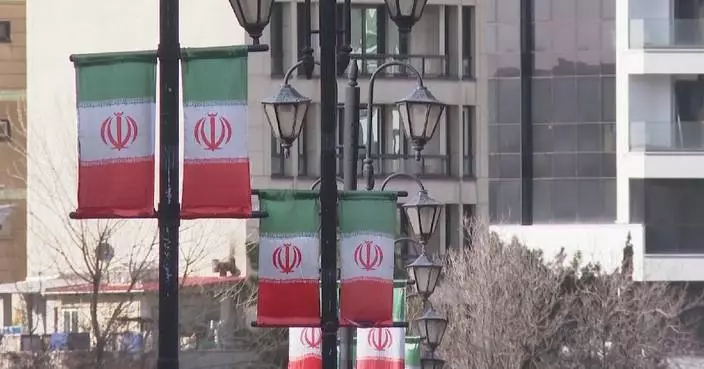
Iran's Supreme National Security Council said early Monday that a memorandum of understanding (MoU) between Tehran and Washington has been finalized and the war and military operations on all fronts, including Lebanon, have stopped immediately and permanently.
The MoU was finalized Sunday night following months-long, difficult and intensive negotiations, and based on its approval, the council said.
"Based on the agreement reached, the war and military operations on all fronts, including Lebanon, will end immediately and permanently as of tonight, and in addition, the (U.S.) naval blockade against Iran will end immediately and completely," it said.
The document will be officially signed on June 19, and negotiations between Iran and the United States on a final agreement will be postponed until the two sides fulfill their commitments under the MoU.
Before the Iranian announcement, Pakistani Prime Minister Shehbaz Sharif announced early Monday that the U.S. and Iran had reached a peace agreement following intensive negotiations. U.S. President Donald Trump also said that the U.S.-Iran deal "is now complete" and that he has authorized the immediate removal of the U.S. naval blockade against Iranian ports.
Elaborating on the MoU in an interview with state-run IRIB TV early Monday, Iranian Deputy Foreign Minister for Legal and International Affairs Kazem Gharibabadi said the MoU was not the result solely of diplomatic efforts and consultations, but also of Iran's military achievements.
Gharibabadi said Iran's positions and other issues considered important by the country have all been included in the MoU, stressing that after its official signing, the text will be published.
He emphasized that the document's implementation is of great importance, and Iran has a specific plan to monitor the U.S. fulfillment of its commitments under the MoU.
Gharibabadi said that following the MoU's signing, negotiations will be held between Iran and the United States within a 60-day period to reach a final agreement, and Iran's entry into the 60-day talks, which will be mainly on Tehran's nuclear program and the removal of sanctions, will hinge on the U.S. fulfillment of its commitments under the MoU.
In a report by Iran's semi-official Mehr News Agency on Sunday, Mehdi Mohammadi, strategic advisor to the head of the negotiating team, explained the details of a previously-revealed draft text of the MoU, covering contents on cessation of conflicts, release of assets, removal of sanctions and nuclear negotiations in the next stage.
According to Mohammadi, the draft text stipulates that the current war must cease on all fronts, including Iran and Lebanon. Following that, the opposing side must commit not to initiate any new wars or military operations.
The U.S. would provide this commitment both on its own behalf and on behalf of Israel, he said, adding that once the agreement is signed, the other side will be obligated to end the war immediately.
With regard to maritime restrictions and economic sanctions, the process of unfreezing certain Iranian assets and suspending certain economic restrictions and sanctions will begin to create conditions for expanded economic exchanges and oil sales.
Addressing the issues of the naval blockade, Mohammadi said that the lifting of maritime restrictions and the prevention of any interference with Iranian shipping must begin immediately upon signing the agreement. This process must, within 30 days, restore shipping activity to the level that existed before the blockade was imposed.
Negotiations on nuclear issues will take place in the next stage and will not be included in the current agreement.
"Everything has been deferred to the future. First, we must see whether the other side lifts the blockade, releases our frozen assets, suspends oil sanctions, and ends the war in Lebanon. If these things happen, then we can think about the next stage," said Mohammadi.
Also on Saturday, a U.S. official rejected Iranian claims that it would gain unconditional access to 12 billion U.S. dollars in blocked assets before the start of the 60-day negotiating period, saying that no frozen funds will be released without the Iranian side implementing its commitments.
U.S. Defense Secretary Pete Hegseth said on Sunday that some of the terms in the agreement are "performance-based" and "no money (will be) released to Iran until they perform."
On Feb. 28, Israel and the United States launched joint attacks on Tehran and other Iranian cities. Iran responded with waves of missile and drone attacks targeting Israel and U.S. bases and assets in the region.
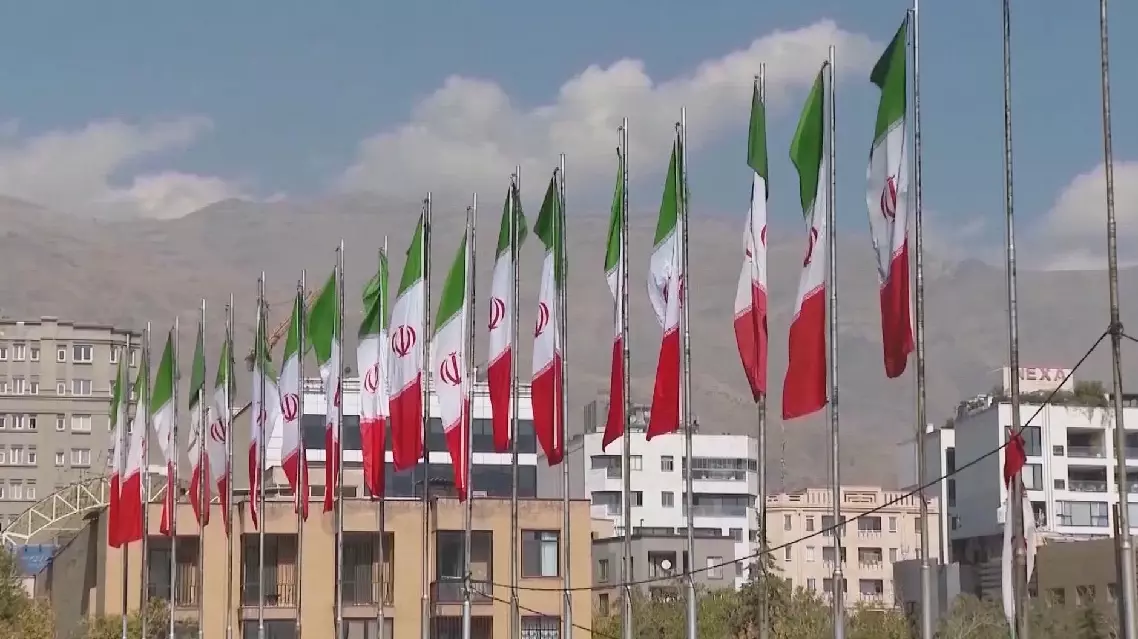
Iran says MoU with U.S. finalized, war stops on all fronts