The number of inbound and outbound passengers passing through Xiamen Gaoqi International Airport in east China's Fujian Province has exceeded 2 million so far this year, setting a new record.
Since the beginning of 2026, Chinese mainland residents have made more than 1.1 million cross-border trips at the airport, accounting for more than half of the total.
Meanwhile, nearly 600,000 foreigners have entered or exited China through the airport, a year-on-year increase of nearly 20 percent. Among them, more than 170,000 foreign nationals entered China visa-free, marking a surge of over 35 percent year on year.
The rise was largely driven by the country's enhanced visa-free and travel facilitation measures.
China's current visa-free transit policy allows foreigners from 55 countries to stay in designated Chinese cities for up to 240 hours without a visa when transiting to a third country or region, and allows nationals of all other countries around the world to stay in China for no more than 24 hours.
"Coming to China is very easy. Public transport is quite good. That's something that I think is a very good thing for the country. There's a lot of photography, a lot of mountains, a lot of rivers. And overall, the environment is really amazing. The food is amazing," said Eastin, a British traveler.
"My wife [has not been to] China yet, so I want to have her also introduced to China, because I like it here. And today, we would like to use the 24-hour visa to explore a little bit of Xiamen City before we go to Jakarta tomorrow," said William, a Dutch traveler.
Driven by visa-free policies, international cultural and tourism events, and an expanded network of international flights, Xiamen's inbound tourism market has seen a significant boost.
To address a growing number of tour groups, the city's border control authorities have set up dedicated group passage lanes and adopted a "tidal flow" management model to flexibly handle large crowds during peak hours.
"We would accurately divide the waiting area into various categories in real time based on the specific time and passenger compositions of different flights to ensure there is no congestion during peak hours and that no facility is idle during off-peak hours," said Chen Jinlai, deputy head of Gaoqi Immigration Inspection Station.
Currently, the Gaoqi airport operates 27 international and regional passenger routes, with an average of about 550 inbound and outbound passenger flights per week.
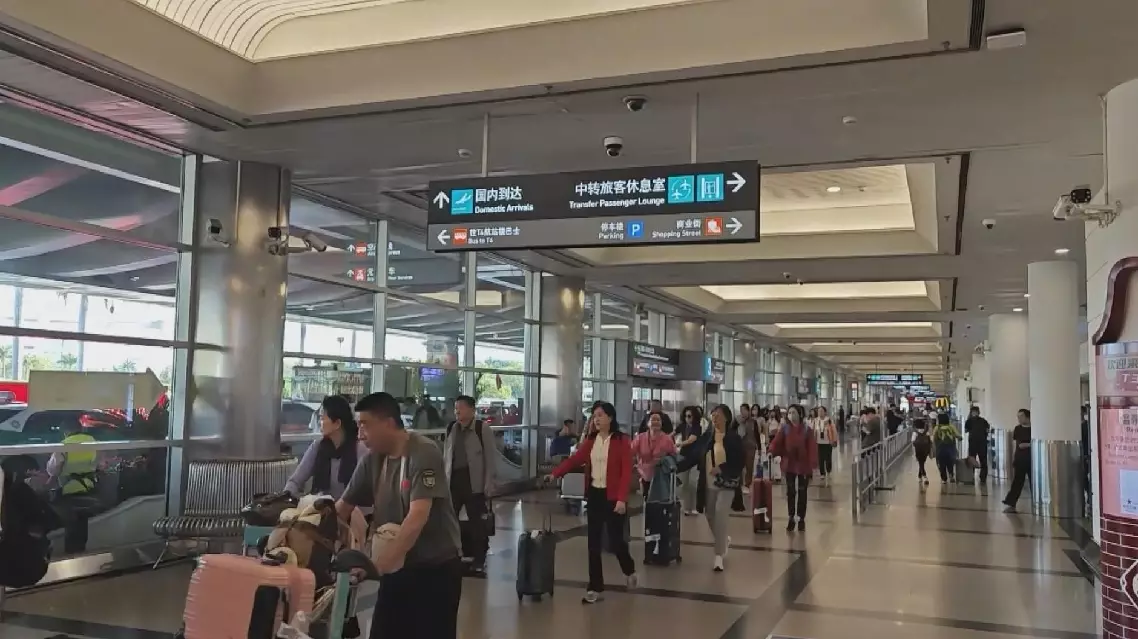
China's Xiamen city sees record high cross-border trips this year