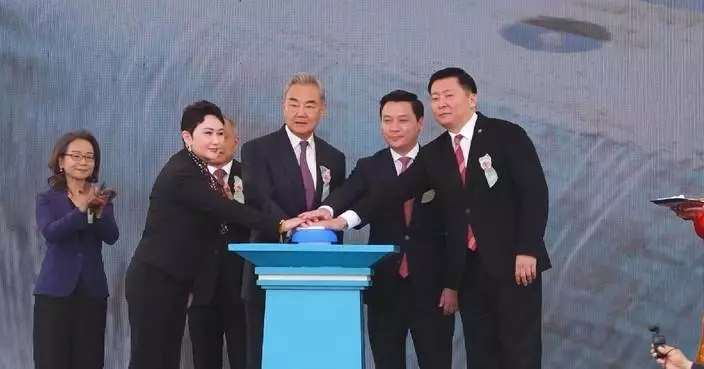
China has planned Lijian-1 mission every month and two sea launches in the latter half of this year, according to CAS, the country's commercial spaceflight company.
China on Monday launched a Lijian-1 Y14 carrier rocket carrying eight satellites.
The rocket blasted off at 11:44 (Beijing Time) from a commercial space innovation pilot zone in northwest China and successfully sent its payload into the planned orbit.
This was the 14th flight mission of the rocket series, which was developed by CAS Space, a commercial spaceflight company founded by the Institute of Mechanics under the Chinese Academy of Sciences (CAS).
According to the rocket maker, the Lijian-1 series has launched a total of 105 satellites, with a combined payload weight of over 15 tonnes.
This rocket series has achieved three consecutive launches in the second quarter of 2026, accelerating its high-density launch schedule for the year.
"In the second half of the year, regular monthly launches will be initiated. Relying on the dedicated launch station and technical factory of the CAS Space in the Dongfeng Commercial Aerospace Innovation Test Zone, the Lijian-1 carrier rocket has realized flight-like operation, and the test launch cycle at the launch site has been compressed to 10 days," said Meng Xiangfu, deputy chief commander of the Lijian-1 mission.
In addition to the land-based launches, sea-based launches are also advancing smoothly, with a number of key technologies having been verified in previous tasks.
"In the second half of this year, two sea launches are planned while ensuring the frequency of land launches. At present, the sea launch missions are progressing smoothly and have met the launch conditions, which are suitable for the high orbit and low inclination angle requirements of satellites, and can better provide global users with cost-effective launch services with good experience," Meng said.
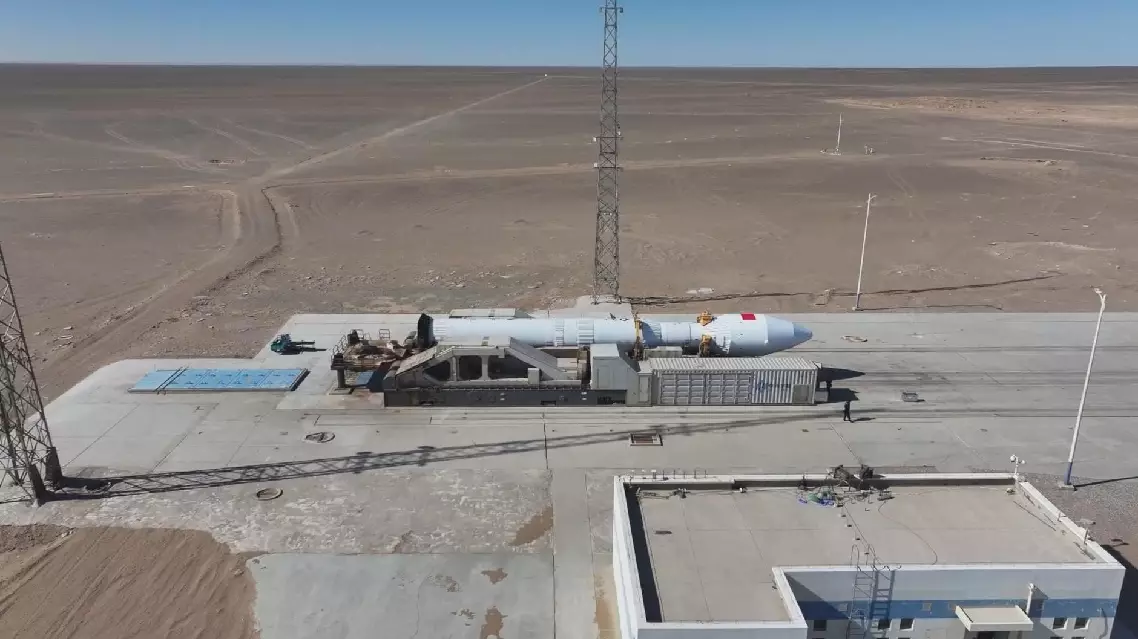
China plans monthly Lijian-1 launch in this year's latter half
A leading Japanese economist has warned that the Bank of Japan's anticipated interest rate hike will not address the country's fundamental economic problems, calling instead for structural reforms and stronger support for small and medium-sized enterprises.
The economist's comments come as the yen exchange rate continues to hover near 160 yen per U.S. dollar, with Japanese media and financial markets widely expecting the Bank of Japan to announce a rate hike at its monetary policy meeting on June 15 and 16.
"Japanese political and economic scholar Hamada Kazuyuki said: "The future trend of the Japanese economy is also affected by factors such as rising crude oil prices and inflation, and there are no signs of these problems being resolved anytime soon. If left unchecked, they will develop into a serious inflationary trend. This will not only affect enterprises but also the daily lives of ordinary people. Therefore, in order to curb these impacts, the Bank of Japan is taking countermeasures and adjusting toward the direction of raising interest rates. However, whether these measures can truly be effective still remains highly uncertain," he said.
He also noted that the operations of small and medium-sized enterprises in Japan continue to face pressure, and the overall recovery of the Japanese economy is filled with uncertainty. The Japanese government's model of relying on debt to rescue the market only addresses symptoms rather than root causes and cannot solve the fundamental problems of the Japanese economy, he added.
"More than 80 percent, or even 90 percent, of Japanese enterprises are small and medium-sized enterprises. Only a small number of large enterprises have gained profits from exchange rate fluctuations. The vast majority of small and medium-sized enterprises are already on the edge of life and death. Therefore, without more adequate support policies for small and medium-sized enterprises, it will be very difficult for the Japanese economy to achieve recovery or restoration. The current government is in a rather difficult situation. Originally, it said no supplementary budget was needed, but as the economy deteriorates, it has no choice but to rely on supplementary budgets and deficit financing to barely cope. But this is not a fundamental solution. Continuing down this path will only make Japan's situation further deteriorate. Therefore, if the government truly wants to improve the economy, it must cut waste within the existing fiscal scope and concentrate resources into truly effective areas. This is the necessary direction," he said.

Japanese economist warns rate hike inadequate, urges structural reform