Chinese Foreign Minister Wang Yi on Monday said the establishment of the Shanghai Cooperation Organization (SCO) marked a new chapter in contemporary international relations.
Addressing a reception in Beijing to celebrate the SCO's 25th anniversary, Wang, also a member of the Political Bureau of the Communist Party of China Central Committee, said SCO members have developed the Shanghai Spirit of mutual trust, mutual benefit, equality, consultation, respect for diverse civilizations and pursuit of common development, and have built a new type of international relations.
He said the four major global initiatives proposed by China and the building of a community with a shared future for humanity have pointed out the right direction for the world, and that the SCO should play a greater role and set an example in promoting world peace, development, cooperation and win-win results.
Wang added that China is ready to share development opportunities with other member states of the SCO and achieve win-win cooperation.
SCO Secretary-General Nurlan Yermekbayev said that the 2025 SCO Summit in Tianjin adopted the SCO's development strategy for the next decade, which has set an ambitious yet realistic and feasible course for development.
It is hoped that SCO members will make a joint effort to continuously benefit their peoples, and advance the cause of regional peace and development, said Yermekbayev.
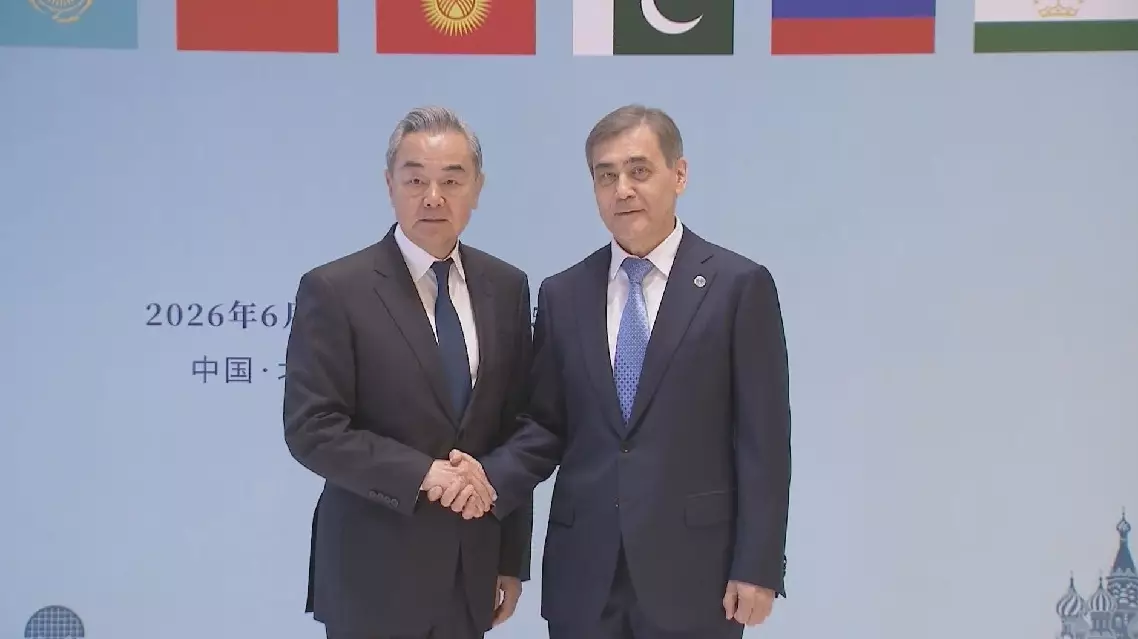
Chinese FM attends reception marking 25th anniversary of SCO
China has always placed its relations with Nepal in an important position in its neighborhood diplomacy, and pursues a friendly policy toward all Nepali people, Chinese Foreign Minister Wang Yi said on Monday.
Wang, also a member of the Political Bureau of the Communist Party of China Central Committee, made the remarks when holding talks with Nepali Foreign Minister Shisir Khanal in Beijing.
China will, as always, support Nepal in safeguarding its national sovereignty, independence and territorial integrity, and in exploring a development path suited to its own national conditions, Wang said.
He said China is willing to work with Nepal to jointly advance the high-quality Belt and Road cooperation, focus on collaboration in power grids, highways, border ports and aviation, and help Nepal transform from a land-locked country into a land-linked country.
Wang called on both sides to fully utilize various cooperation platforms and mechanisms, deepen practical cooperation, and promote cultural exchanges.
China encourages Chinese enterprises to invest and do business in Nepal, and hopes that the Nepali side will provide a more equitable and transparent business environment, he added.
Khanal expressed gratitude for China's long-standing support for Nepal's national development and improvement of people's livelihoods, noting that China has always treated Nepal as an equal and respected its sovereignty and independence.
Nepal remains firmly committed to the one-China policy, supports China's efforts to achieve complete reunification, and will never allow any forces to use Nepal's territory to undermine China's interests, Khanal said.
Noting that China's development presents opportunities for Nepal, Khanal said Nepal welcomes investment from China and is willing to provide Chinese enterprises with a fair, law-based, and friendly business environment.
Nepal fully endorses the vision of building a community with a shared future for humanity and supports a series of global initiatives proposed by China, Khanal added.
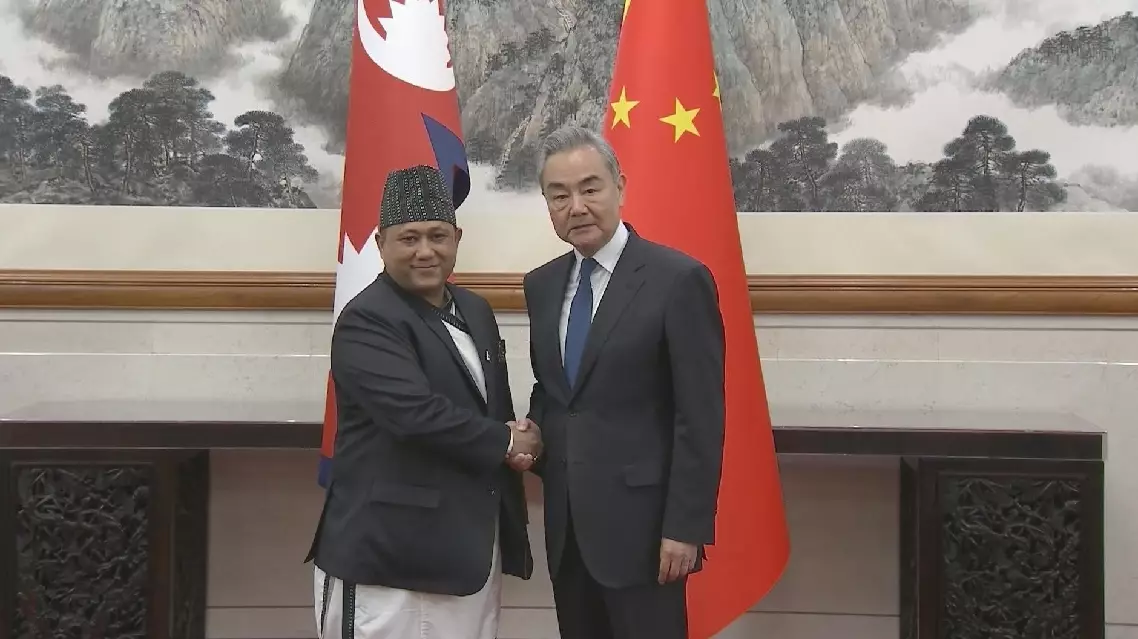
Chinese, Nepali foreign ministers hold talks in Beijing