PHOENIX (AP) — The two Republican congressmen running for Arizona governor pitched themselves at a debate Wednesday as the only candidate with broad enough voter appeal to unseat Democratic Gov. Katie Hobbs amid the state’s affordability struggles.
U.S. Rep. Andy Biggs, who is the GOP primary’s front-runner and has the endorsement of President Donald Trump, portrayed himself as being able to cross party lines and having the right experience to be the state’s chief executive.
Click to Gallery
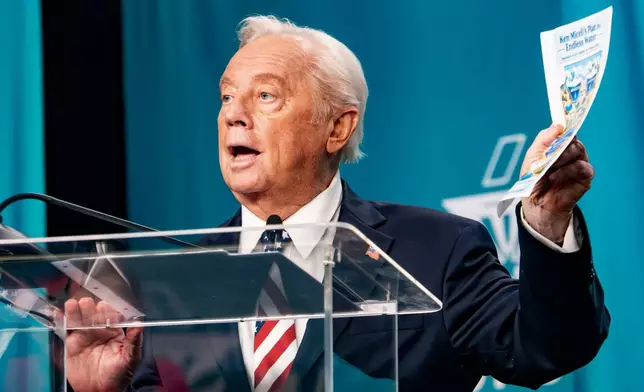
Ken Miceli speaks during a debate with his Republican opponents in the 2026 AZ Clean Elections governor primary debate, Wednesday, June 17, 2026, in Scottsdale, Ariz. (Diannie Chavez/The Arizona Republic via AP, Pool)
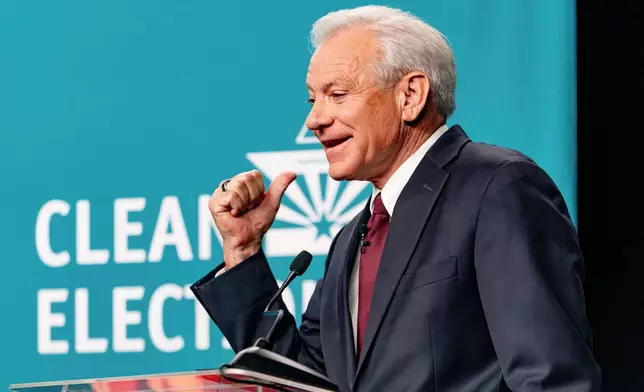
Rep. David Schweikert, R-Ariz., debates with his Republican opponents in the 2026 AZ Clean Elections governor primary debate, Wednesday, June 17, 2026, in Scottsdale, Ariz. (Diannie Chavez/The Arizona Republic via AP, Pool)
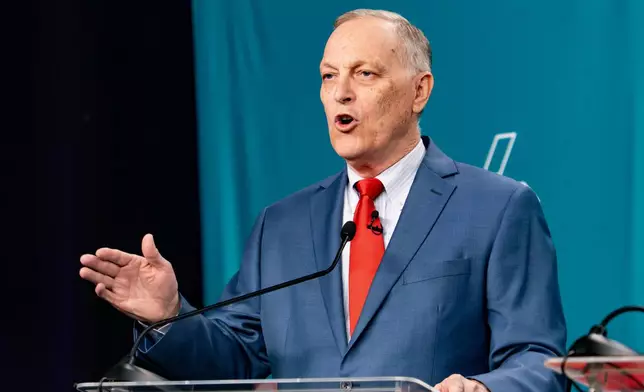
Rep. Andy Biggs, R-Ariz., debates with his Republican opponents in the 2026 AZ Clean Elections governor primary debate, Wednesday, June 17, 2026, in Scottsdale, Ariz. (Diannie Chavez/The Arizona Republic via AP, Pool)
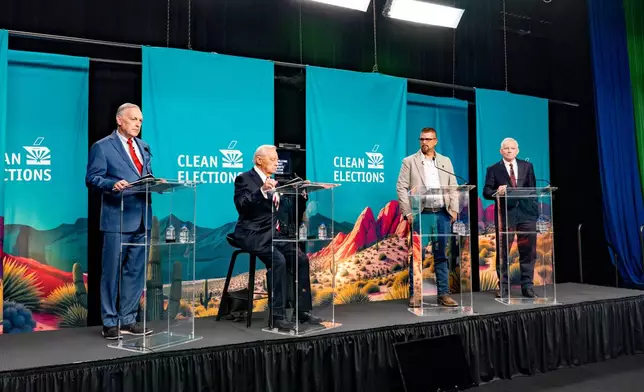
Rep. Andy Biggs, R-Ariz., left, Ken Miceli, second from left, Scott Neely and Rep. David Schweikert, R-Ariz., right, stand on the stage in the 2026 AZ Clean Elections Republican governor primary debate, Wednesday, June 17, 2026, in Scottsdale, Ariz. (Diannie Chavez/The Arizona Republic via AP, Pool)

Scott Neely debates with his Republican opponents in the 2026 AZ Clean Elections governor primary debate, Wednesday, June 17, 2026, in Scottsdale, Ariz. (Diannie Chavez/The Arizona Republic via AP, Pool)
“There’s not a doubt in my mind, if you look at the polling data that you’re going to find, I am the most competitive with Katie Hobbs of anybody on this stage in any Republican in the state,” Biggs said.
U.S. Rep. David Schweikert, who has survived three tough Democratic challenges in recent years, believes his focus on government finances and his drive to bring new business to the state make him the singular Republican candidate.
“These are wonderful people, but they’ve never actually been in the great battle,” Schweikert said of Biggs and two other Republican opponents.
Businessman Scott Neely, who ran an unsuccessful gubernatorial campaign in 2022, said after the debate that if Biggs wins the primary, Republicans will lose the election.
The winner of the July 21 primary will face Hobbs, who’s running unopposed in the primary.
Biggs has served five terms in the U.S. House, representing a heavily GOP district in the eastern Phoenix suburbs and serving at one time as chairman of the conservative U.S. House Freedom Caucus.
Before that, Biggs served in the Arizona Legislature from 2003 through 2016, including four years as president of the state Senate. He battled with then-Republican Gov. Jan Brewer on a Medicaid expansion in 2013 and pushed school choice measures and bills targeting abortion providers.
Biggs is one of Trump’s top defenders in Congress and supported Trump’s false claims the 2020 presidential election was stolen from him.
Schweikert, a budget hawk known for railing against government debt, has represented an affluent district that includes parts of northeast Phoenix and Scottsdale for eight terms. He served in the Arizona House in the 1990s and as Maricopa County’s treasurer in the 2000s.
Schweikert has focused his congressional career on sounding the alarm about the federal budget deficit and the ballooning U.S. debt, often in late-night speeches to a nearly empty House chamber and bleary-eyed C-SPAN viewers. Schweikert has praised Trump’s 2017 tax cuts but has called for more spending cuts to reduce federal borrowing.
His reputation was tarnished by ethics scandals. In 2022, he received a $125,000 fine by the Federal Election Commission for misappropriating campaign funds. Two years prior, he agreed to pay a $50,000 fine and accept 11 campaign finance violations after an investigation by the U.S. House Committee on Ethics. In his last three general campaigns for Congress, Schweikert staved off challenges from Democrats.
Biggs voiced support for Arizona's recent passage of a three-year moratorium on tax incentives for new data centers — a move Hobbs also has touted. “They shouldn’t be given a break,” Biggs said, noting the large amounts of power and water that data centers use.
Schweikert bemoaned Arizona’s unfavorable affordability rankings as “pretty miserable,” but said consumer prices don’t come down magically. He vowed to aggressively recruit businesses to Arizona and push for wage growth.
Both congressmen were asked about the expired healthcare subsidies for those getting coverage under the Affordable Care Act.
“We’re going to have to deal with the reality of subsidization of everything in the economy is not going to work,” Schweikert said.
Biggs said he introduced legislation in Congress to bring down healthcare costs and also voiced support for Trump’s proposal to send money directly to Americans for health savings accounts so they can handle insurance and health costs as they see fit.
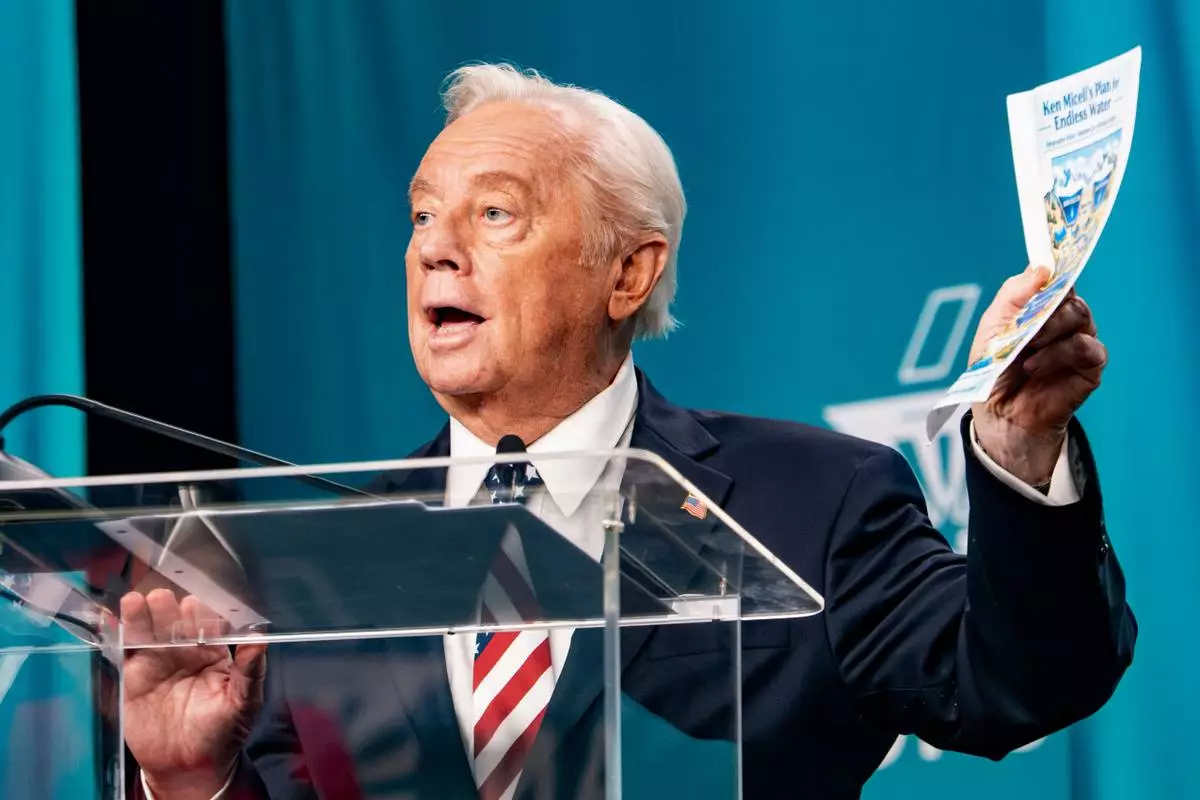
Ken Miceli speaks during a debate with his Republican opponents in the 2026 AZ Clean Elections governor primary debate, Wednesday, June 17, 2026, in Scottsdale, Ariz. (Diannie Chavez/The Arizona Republic via AP, Pool)
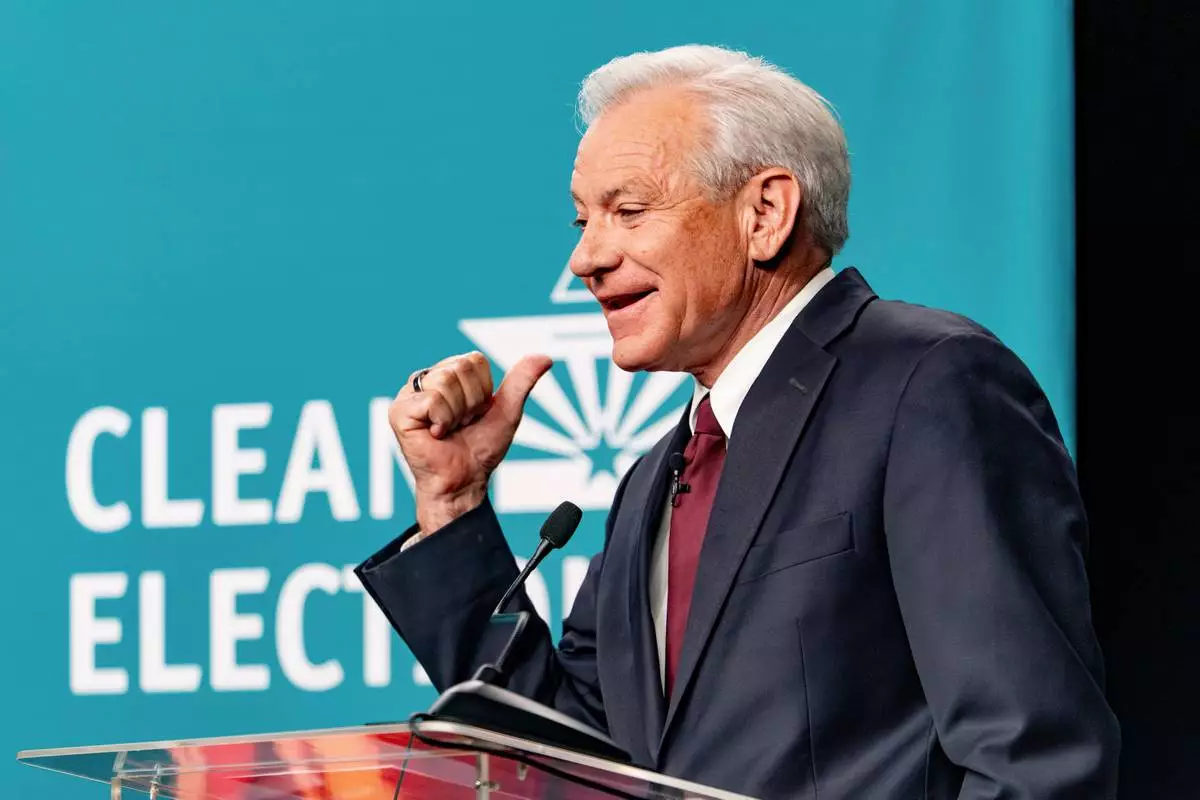
Rep. David Schweikert, R-Ariz., debates with his Republican opponents in the 2026 AZ Clean Elections governor primary debate, Wednesday, June 17, 2026, in Scottsdale, Ariz. (Diannie Chavez/The Arizona Republic via AP, Pool)
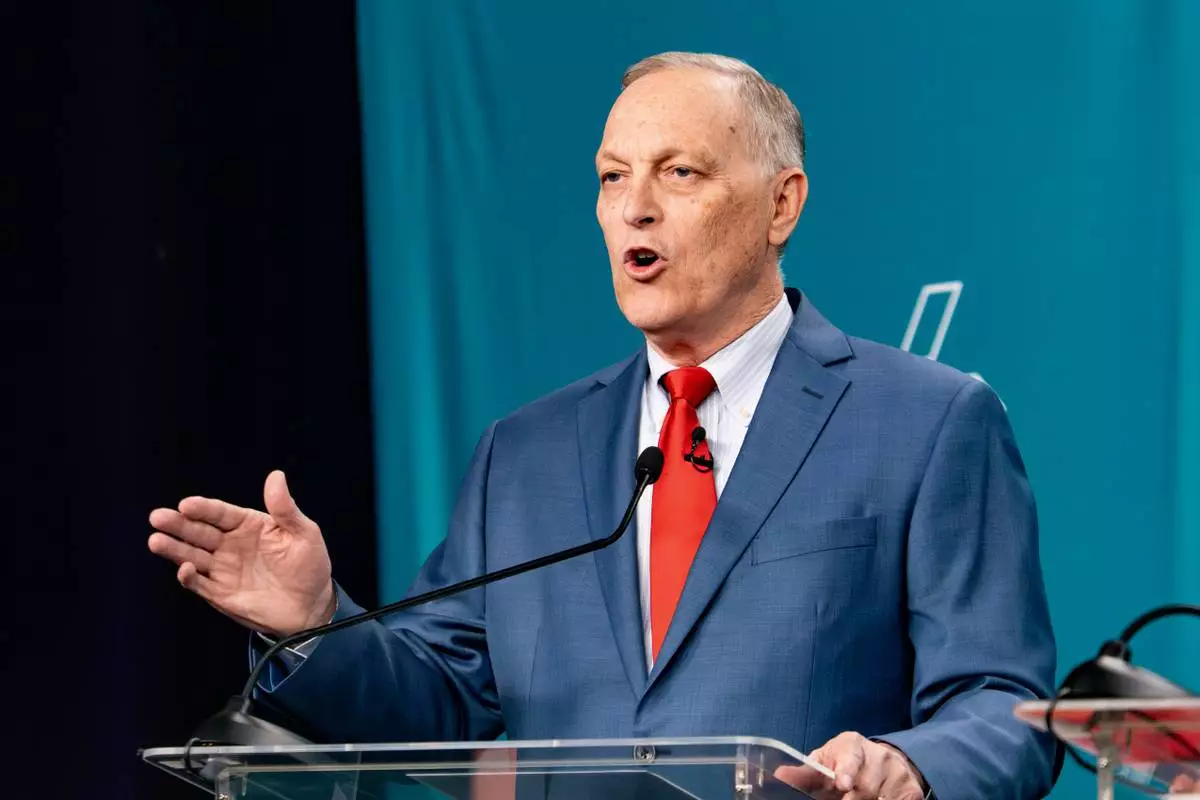
Rep. Andy Biggs, R-Ariz., debates with his Republican opponents in the 2026 AZ Clean Elections governor primary debate, Wednesday, June 17, 2026, in Scottsdale, Ariz. (Diannie Chavez/The Arizona Republic via AP, Pool)
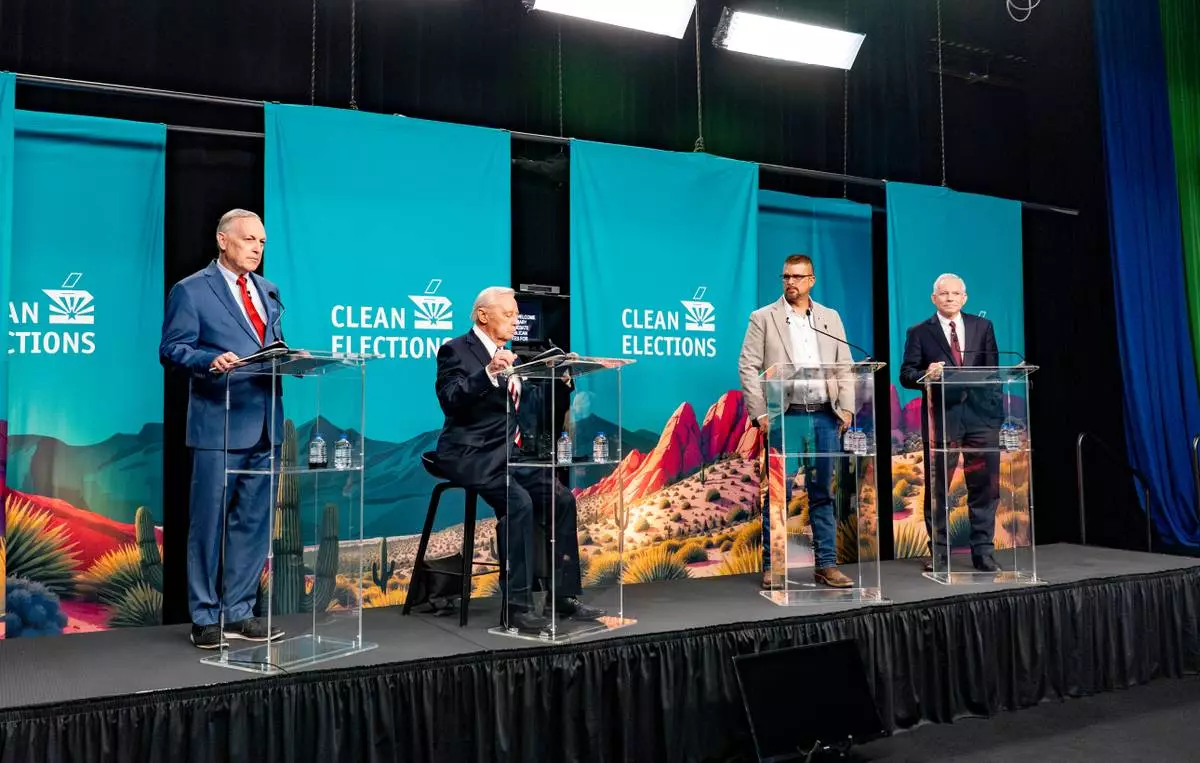
Rep. Andy Biggs, R-Ariz., left, Ken Miceli, second from left, Scott Neely and Rep. David Schweikert, R-Ariz., right, stand on the stage in the 2026 AZ Clean Elections Republican governor primary debate, Wednesday, June 17, 2026, in Scottsdale, Ariz. (Diannie Chavez/The Arizona Republic via AP, Pool)
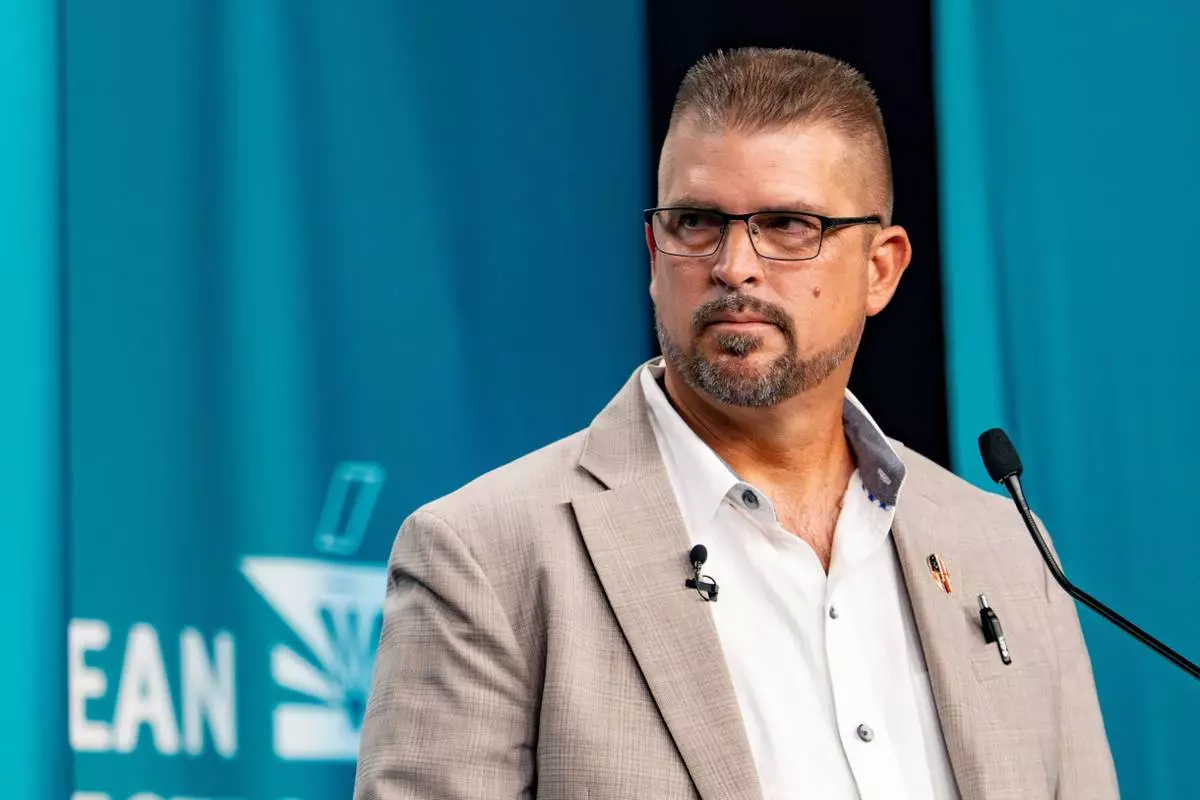
Scott Neely debates with his Republican opponents in the 2026 AZ Clean Elections governor primary debate, Wednesday, June 17, 2026, in Scottsdale, Ariz. (Diannie Chavez/The Arizona Republic via AP, Pool)