In east China's Shanghai municipality, robots are no longer just laboratory innovations - they have become one of China's newest standout performers in foreign trade, and are in ramped up shipment overseas, largely to developed economies.
Overseas, Chinese robots have become synonymous with efficient production. China-made handling robots excel in service and construction industries, while maturely engineered cleaning robots are gaining traction in households worldwide.
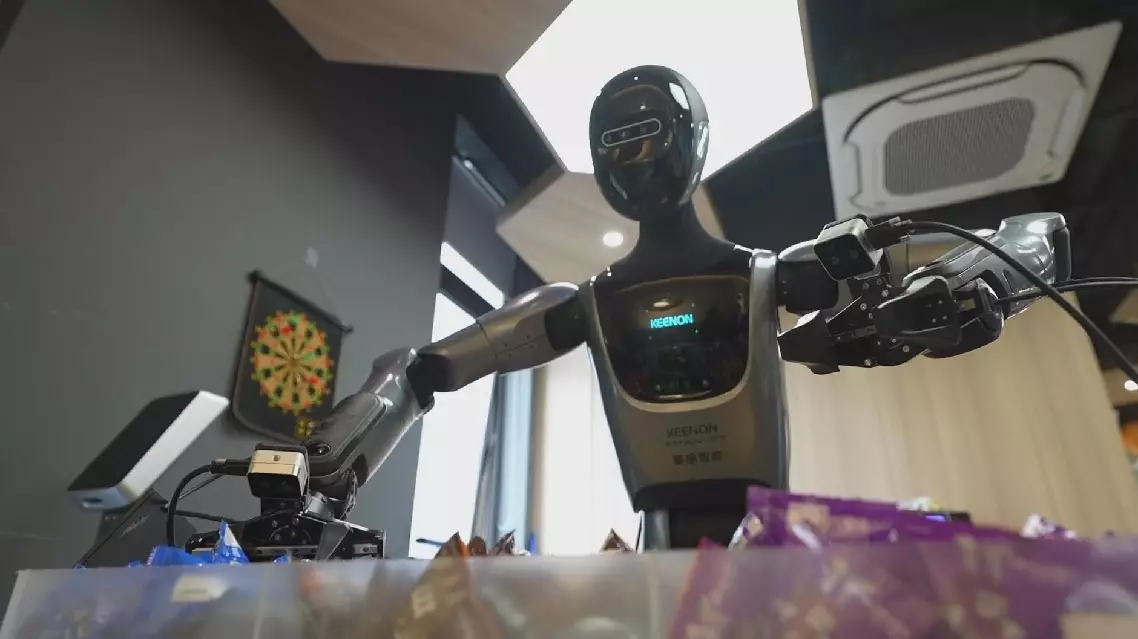
At one of Shanghai's "little giant" robotic tech firms, its lab tests the latest humanoid robots. Its lineup spanning delivery, cleaning and humanoid robots operates in over 70 other countries and regions globally.
"Overseas revenue accounts for over half of our total revenue. Our key markets lie in developed economies including Europe, the U.S., Japan and South Korea. We lead the global service robot sector with more than 20 percent of the market share, with our food delivery robots holding over 40 percent. Our diversified export portfolio benefits from Shanghai's smart tech industrial cluster, robust supply chains and geographic strengths, as well as our proprietary technology backed by over 1,100 patents. We prioritize localized R and D tailored to overseas demands: compact, user-friendly robot designs for Asia, and more tech-focused aesthetics for Europe and the U.S. We aim not only to go global, but to integrate our robots into the daily lives of users worldwide," said Wan Bin, Chief Operating Officer, Keenon Robotics.
At Yangshan Port in Shanghai, Chinese-built robots are being shipped to Southeast Asia, Europe and North America.
Shanghai Customs data show robot exports through the Shanghai Port hit over 8.3 billion yuan in (1.23 billion U.S. dollars) the first five months of 2026, representing 42.5 percent of China's national total and topping all ports. Cleaning robots dominate exports with over 70 percent of the total. Smart bionic robots registered 120 million yuan (17.7 million U.S. dollars) in exports, kicking off the first global commercial wave of lab-born embodied intelligence.
"China switched from a net importer to a net exporter of industrial robots in 2025, a shift clearly visible at ports. Vessel declarations show a marked rise in outbound containers. At Nangang Terminal, exports of robots and smart equipment have surged, far outstripping imports. This highlights high-value, tech-intensive domestic smart manufacturing goods emerging as a new pillar of China's foreign trade. Amid this boom in high-end smart manufacturing exports, Shanghai Border Inspection authorities are adopting efficient, smart border control to balance security and operational efficiency," said Wang Jing, Deputy Captain of Duty Team 1, the Shanghai Yangshan Border Inspection Station.
Recently, China's AGIBOT's G2 robot has got the CE certification in the EU and access approvals in the U.S. Unitree Robotics opens its ecosystem for overseas users' further development. Overseas expansion of Chinese robots goes beyond mere product sales, evolving into deep ecological cooperation.
"We are speeding up development of embodied intelligence and humanoid robots adapted for overseas demand. We cooperate with overseas companies such as KT, SoftBank and Hyundai. Going forward, we will boost global adoption of Chinese-made robots," Wan said.
Robots become China's new standout performer in foreign trade