For years, Japan stood as the undisputed champion of Asian travel for Australians. But the reality is shifting fast, with China rapidly rising to take the crown. More Australian tourists are now choosing China as their preferred Asian destination. Flight searches for the country have surged 44% year-on-year. This jump officially pushes China past Japan in search volume. Data from the Australian Bureau of Statistics confirm the trend, showing a 16.5% spike in visits to China over the past year.
Australian Bureau of Statistics travel data confirm a 16.5% jump in Australian visits to China over the past year.
The numbers paint a clear picture of shifting loyalties. Travel search platform Skyscanner reported the 44% year-on-year growth in flight searches for China among Australian travelers on July 13, via Australian outlet 9News.
Click to Gallery
Australian Bureau of Statistics travel data confirm a 16.5% jump in Australian visits to China over the past year.
Shaun, a seasoned Australian traveler, points first-time visitors straight to Shanghai.
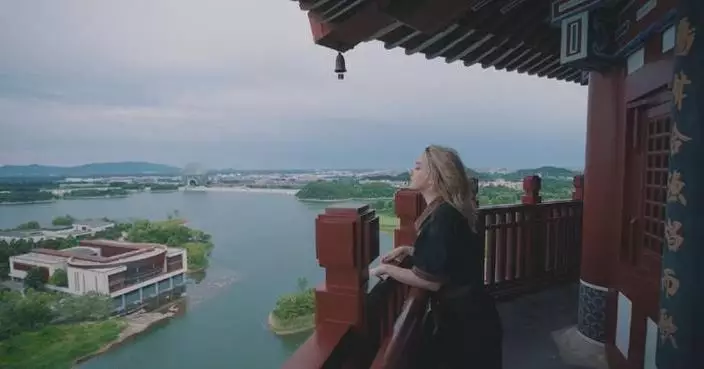
The dramatic peaks of Zhangjiajie act as a powerful magnet for international tourists.
Shaun also pushes visitors toward Suzhou, the picturesque water town near Shanghai.
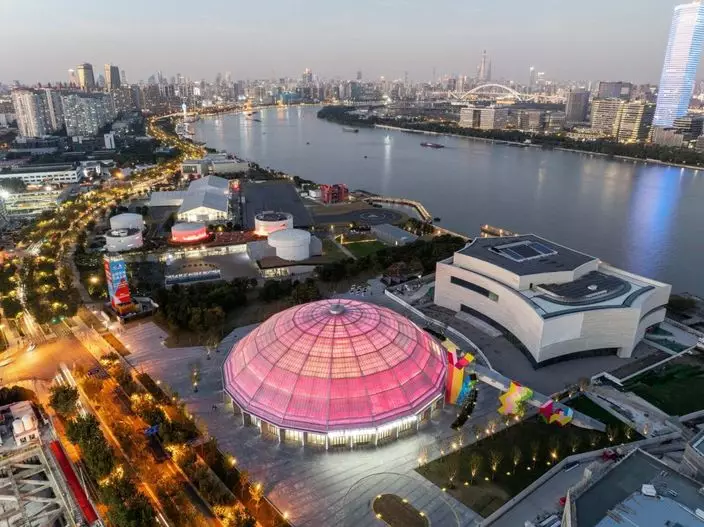
Shaun, a seasoned Australian traveler, points first-time visitors straight to Shanghai.
The momentum is equally visible at Wendy Wu Tours, an Australian travel agency specializing in Asian trips. Their bookings for China have more than doubled so far this year. This reflects a strong, growing appetite among Australians to explore the country. Australian Bureau of Statistics travel data mirror this enthusiasm, confirming the 16.5% climb in visits over the past 12 months.
China is hardly a hidden gem on the global stage. Yet, for Australian travelers, it historically lagged behind heavyweights like Japan and Bali on the ultimate wish list. That old mindset is finally cracking.
Economics and logistics are driving the change. Australians increasingly recognize China as a budget-friendly destination with convenient direct flights. The real game-changer was China's 2024 visa-exemption policy. This move allows short-term visitors to stay up to 15 days without the hassle of a prior visa. Lowering the barrier to entry directly fueled the spike in visitor numbers. Beyond convenience, China delivers deep cultural immersion and a massive portfolio of refreshing, largely undiscovered attractions.
Perception is catching up with reality. Simon Bell, general manager of Wendy Wu Tours, points to a shift in how travelers view China's ongoing modernization. He notes that the country's rising global profile acts as a magnet for Australian curiosity. People simply want to experience China by themselves.
The appeal goes well beyond checking off a bucket list. Repeat visitors are surging alongside first-timers. These returning travelers are eager to push past the well-worn tourist routes. Moving away from standard package tours, China attracts a new breed of visitor hungry to dive deep into local culture.

The dramatic peaks of Zhangjiajie act as a powerful magnet for international tourists.
Diversity is China's ultimate trump card. The options stretch from Beijing's Great Wall and Xi'an's Terracotta Warriors to the hyper-modern skyline of Shanghai. Nature lovers can pivot from the dramatic peaks of Zhangjiajie National Forest Park, famous as an Avatar filming location, to the tropical beaches of Hainan. Add in a vibrant street food culture spanning the nation, and China delivers an experience entirely distinct from Japan or Southeast Asia.
Consider Shaun, a Melbourne-based traveler who knows the terrain better than most. He has crisscrossed China more than 50 times for work over the past two decades. He makes a habit of extending his business trips to uncover new corners of the country. Shaun also emphasizes that China's massive scale and cultural variety guarantee a fresh experience on every single visit.

Shaun also pushes visitors toward Suzhou, the picturesque water town near Shanghai.
For rookies, Shanghai is his undisputed top pick. He praises the city for offering something for everyone. His highlights range from the historic architecture along the Bund to world-class dining and the massive shopping district on Nanjing Road. He also highly recommends Suzhou, often dubbed the "Venice of the East." Located just a 30-minute high-speed train ride from Shanghai, Suzhou captivates visitors with its famous gardens and network of canals.
The reality is that language can still present a hurdle. Shaun admits the communication gap can be tricky at times. Yet, he insists the consistent warmth and genuine friendliness of the locals easily outweigh the challenges.
Mao Paishou
** 博客文章文責自負,不代表本公司立場 **
The holiday season is still months away. But Christmas trees have already turned into an unlikely flashpoint in the US-China rivalry. As the two countries try to stabilize relations through a newly proposed bilateral trade mechanism, the loudest opposition in the room are not coming from tech firms or manufacturers. They belong to American Christmas tree growers, determined to keep tariffs on Chinese-made artificial trees firmly in place.

Christmas trees caught in the crossfire. Even before the holiday season begins, trees have become a flashpoint in the US-China trade war.
In May this year, a summit between the Chinese and US leaders produced an agreement to establish a "Board of Trade" and an investment council. This shift moves both countries away from the old crisis-driven habit of retaliatory tariff hikes every time a dispute flares up. In its place comes a more institutionalized, routine framework for managing disagreements, and the two sides plan to draw up a bilateral list of "non-sensitive" goods worth roughly US$30 billion. These ordinary consumer items, unrelated to national defense or core technology, could see reduced or even zero tariffs going forward. Think of it as a shock absorber bolted onto an otherwise bumpy trade relationship.

The tariff referee. The Office of the US Trade Representative decides which "non-sensitive" goods get tariff relief.
The US Trade Representative's office opened a public comment period soon after. By the morning of July 11, it had received around 280 submissions from sectors spanning apparel, kitchenware, furniture, toys, and snacks. Most called for lower tariffs to bring in more affordable, high-quality imports and ease domestic prices. The loudest pushback, though, came from an unexpected corner. Christmas tree growers accounted for roughly a quarter of all submissions, and every one of them demanded that punitive tariffs on Chinese artificial trees stay exactly where they are.

Made in China, banned by tariffs. Chinese-imported artificial trees now sit at the center of a trade dispute.
Scott Powell knows the stakes firsthand. As chairman of the American Christmas Tree Association and a second-generation grower in Michigan, he argues that lowering the additional tariffs on Chinese artificial trees would once again expose tens of thousands of family farms to below-cost import competition. That competition, he says, has already eroded their market for more than 20 years. Powell also warns that roughly 87% to 90% of artificial Christmas trees imported into the US come from China. That leaves "a near-total dependence on a single adversary supplier for a culturally significant consumer good", and it exposes American buyers to serious supply chain risk.

Testimony at a USTR hearing in May lit the fuse for the growers' campaign. Nathaniel Roland, an executive and general counsel at Balsam Hill, a major importer of artificial Christmas trees, argued that these trees qualify for tariff reductions precisely because they are neither sensitive goods nor tied to national security. He put it bluntly: "Let me be clear on who bears the cost when tariff policy gets this wrong. Christmas trees are not strategic products like microchips or critical pharmaceuticals." Artificial Christmas trees were historically tariff-free until last year, when they got swept into across-the-board tariff hikes. Importers say that move has hurt their business ever since.
This dispute exposes a deeper contradiction sitting at the heart of US trade policy. Siva Yam, president of the Chicago-based Chinese American Chamber of Commerce, points out the irony. The proposed Board of Trade is more likely to help American farmers gain better access to the Chinese market through lower tariffs, yet it's the Christmas tree growers pushing to raise tariffs on Chinese imports. American agricultural groups actually stand to be among the biggest beneficiaries of this new mechanism, with various agricultural and forestry products set to enjoy tariff cuts and smoother access to China's massive consumer market. These same tree farm owners want to cash in on the Chinese market with one hand while fiercely blocking affordable Chinese goods from entering the US with the other. The double standard is hard to miss.

A symbol turned political. Christmas trees, once a simple holiday staple, now carry geopolitical weight.
Look at the market and the picture gets clearer still. America's homegrown real Christmas trees carry high costs, steep prices, tedious upkeep, and high wastage rates. They have fallen behind what modern households actually want: convenience, ease, and value. China, by contrast, leverages a mature, fully integrated supply chain to produce artificial trees that are diverse in style, durable, attractive, and affordably priced. That is genuine product strength, and it has won China 90% of the market. Consumers are simply voting with their wallets. Since the tariffs took effect, US imports of artificial Christmas trees have plunged, supply has tightened, and inventories have run low. Distributors facing soaring costs have had no choice but to raise prices, leaving ordinary consumers across the country to quietly foot the bill.

Real trees, real costs. America's homegrown Christmas trees are pricey, high-maintenance, and hard to sustain.

Fake it better. China's supply chain edge delivers artificial trees that are cheaper, sturdier, and more stylish, capturing 90% of the market.
Beijing has consistently emphasized that US-China economic and trade cooperation benefits both sides, while confrontation harms both. Managing disagreements through institutionalized mechanisms, rather than through ad hoc escalation, remains the only sustainable path forward.