
Why Germans Don't Have Air Conditioning
Europe can afford almost anything. Except, it turns out, an air conditioner.
Click to Gallery

Europe's historic buildings are under strict protection, leaving many property owners unable to drill into exterior walls to install traditional split-unit air conditioners.
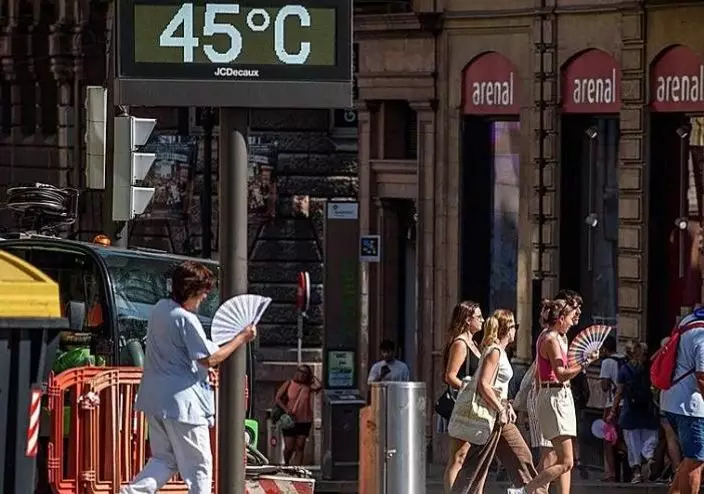
Temperatures across Europe approached or exceeded 45°C, with extreme heat turning air conditioning into an overnight necessity for survival.

In the past, European summers stayed mild enough that residents relied on outdoor shade and natural cooling to get through.

Portable split-unit air conditioners require no wall drilling. Users can complete installation themselves using a specially designed sealing kit.
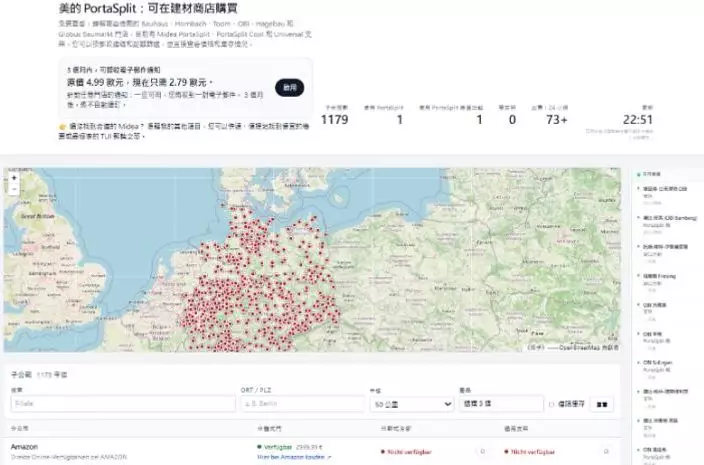
On a website offering a real-time stock map of over a thousand stores across Germany, most regions remain marked red, indicating sold-out status.
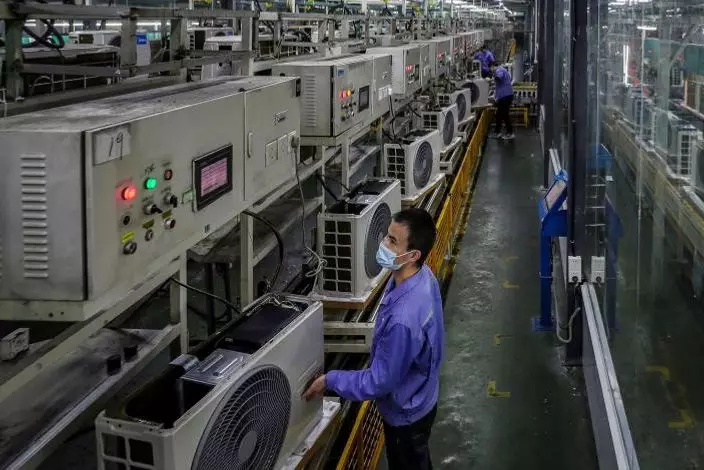
China's air conditioner exports to multiple European countries have surged, with production lines running at full capacity to fill Europe's massive domestic supply gap.
Air conditioning penetration in German households has long hovered between just 3% and 6%, with the European average sitting below 20%. Historic buildings are under strict protection, meaning many property owners simply cannot drill through exterior walls to install traditional split-unit systems.
Installation costs alone often exceed €1,000 (roughly HK$8,700), frequently surpassing the price of the unit itself. In the past, European summers stayed mild enough that electric fans and thick, heat-absorbing walls sufficed. Air conditioning was never considered essential.
Europe's historic buildings are under strict protection, leaving many property owners unable to drill into exterior walls to install traditional split-unit air conditioners.
This year, however, proved entirely different. In late June, temperatures across multiple German regions surged past 37°C. Moeckern-Drewitz in the east recorded 41.5°C, shattering Germany's all-time meteorological heat record.
Southwestern France spiked to 44.3°C, while parts of Spain approached 45°C. The UK Met Office issued only its second-ever "red extreme heat warning" in history, forcing over 1,000 schools to close. Spanish official statistics revealed that between June 21 and 24 alone, just four days, the country recorded more than 212 excess deaths directly linked to the heat.
Europeans finally grasped a hard truth. This wasn't a matter of "enduring a few tough days." It was the new annual normal under climate crisis. Overnight, air conditioning shifted from a discretionary purchase to a matter of survival.
Temperatures across Europe approached or exceeded 45°C, with extreme heat turning air conditioning into an overnight necessity for survival.
In the past, European summers stayed mild enough that residents relied on outdoor shade and natural cooling to get through.
Chinese Air Conditioners Hit Europe's Exact Pain Point
At precisely this moment, Chinese appliance giant Midea had already developed a product tailored for the European market. It's called the "PortaSplit," a portable split-unit air conditioner. In hindsight, its design seems almost eerily suited to this very heatwave.
The unit requires no wall drilling. The outdoor component simply sits on a windowsill or balcony, venting hot air through a specially designed sealing kit. Users can install it themselves without hiring technicians or damaging any building structure.
Priced at roughly €700 to €800 (about HK$6,100 to 6,960), it undercuts the total cost of a traditional air conditioner plus installation by a wide margin. It also features heat pump technology, doubling as a heater in winter for a genuine year-round solution. One user who tested the unit for over 200 hours reported electricity costs under €30, underscoring its impressive energy efficiency.
Portable split-unit air conditioners require no wall drilling. Users can complete installation themselves using a specially designed sealing kit.
The three obstacles that have long plagued Europeans are the inability to drill walls, unaffordable installation, and heritage building restrictions. A single product design solved all three. This wasn't coincidence. It was the product of sharp market insight paired with genuine R&D capability.
Panic Buying Spirals Out of Control
The inevitable result was a supply shortage. By late June, stock at major German home-improvement chains had run dry across the board. On e-commerce platforms like Amazon, resale prices surged to nearly three times the official retail price. One unit sold for €2,679 (about HK$23,000), and buyers still snapped it up.
Austrian internet user Denis Yurchak, unable to sleep through a week of relentless heat, built his own AI-powered tracking program to monitor stock of this Chinese air conditioner across Europe around the clock. He eventually got an alert that one last unit remained in Linz, roughly 200 kilometres from his home. He drove through the night to secure it. His story quickly went viral online, striking a chord with countless users facing the same struggle.
The chaos also created business opportunities. Adrian Kubel, a programmer in Cologne, built a website called braucheklima.de (German for "I need air conditioning") within just a few days. The site provides a real-time stock map covering over a thousand stores across Germany. Users simply enter their postal code to check nearby availability.
For a one-time fee of about €2.69 (roughly HK$23), users can subscribe to three months of restock alerts, receiving an email notification the moment inventory appears. As of late June, the vast majority of stores on the site's map remained marked red for "sold out."
On a website offering a real-time stock map of over a thousand stores across Germany, most regions remain marked red, indicating sold-out status.
The numbers confirm the scale of this buying frenzy. Midea Group reported that since the heatwave began in late May, sales on German e-commerce platforms rose roughly 37% year-on-year. Shipment volumes to Spain and France surged 108% year-on-year.
Customs data show that air conditioner export values from China to France, the Netherlands, and Belgium all doubled year-on-year in the first five months of this year. Exports of portable units climbed more than 70% year-on-year. Chinese manufacturing is filling Europe's massive domestic supply gap with real, measurable volume.
China's air conditioner exports to multiple European countries have surged, with production lines running at full capacity to fill Europe's massive domestic supply gap.
Tariff Barriers Can't Cool Things Down
Some European politicians were still debating how to impose tariffs on Chinese appliances. Meanwhile their own citizens were already queuing outside supermarkets, paying inflated prices online, and driving hundreds of kilometers overnight, all just to secure a Chinese-made air conditioner.
The heatwave even ignited political debate in France. Far-right National Rally leader Marine Le Pen publicly declared that if she came to power, her top priority would be ensuring hospitals, care homes, and schools are fully equipped with air conditioning. The political correctness once surrounding "environmental priorities" and "energy conservation" quietly collapsed in the face of days of 40-degree heat.
Many European netizens have taken to social media to recommend this Chinese air conditioner, praising it as offering "far better value than any European domestic brand." One user put it bluntly. "I hope the EU doesn't restrict imports for political reasons. Ordinary citizens will be the only ones who suffer."
The market never lies. As Europeans scrambled to buy Chinese-made products just to survive, they delivered the most direct rebuttal yet to "decoupling" rhetoric. It isn't China begging Europe to buy. It's Europe begging China to sell. The European politicians pushing "de-Sinicization" likely never expected this day to arrive quite so soon, or quite so hot.
Mao Paishou
** 博客文章文責自負,不代表本公司立場 **