LOS ANGELES--(BUSINESS WIRE)--Jul 16, 2026--
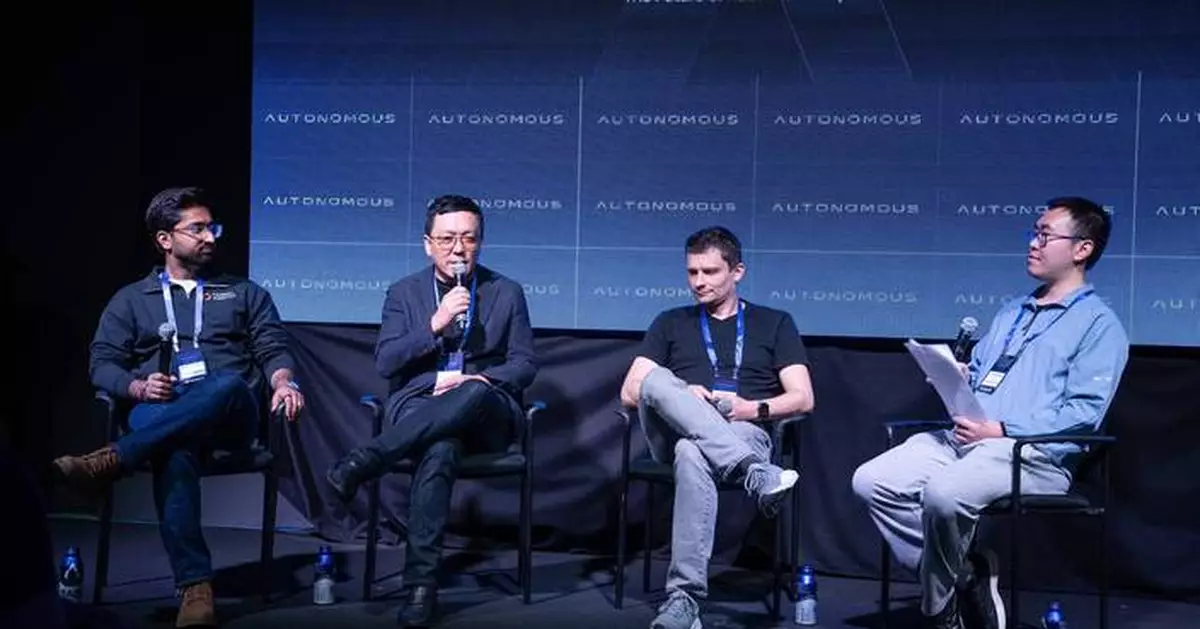
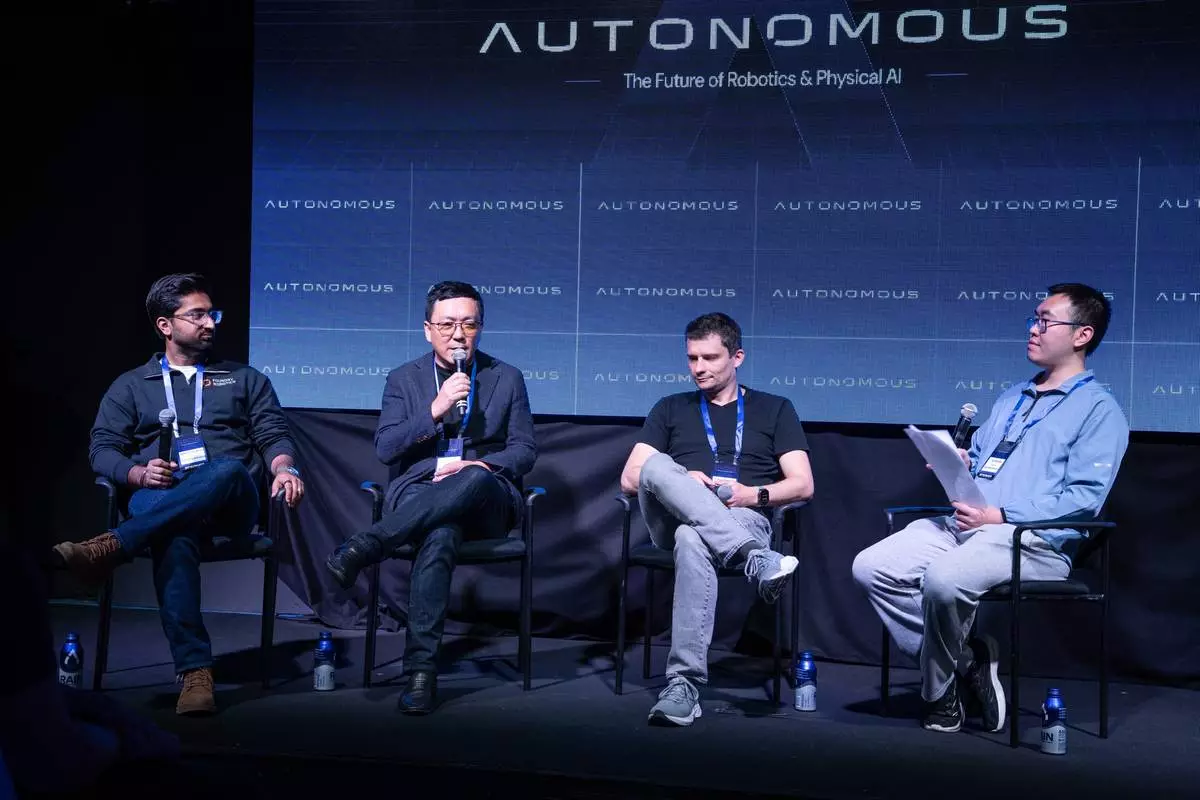
Faraday Future Intelligent Electric Inc. (NASDAQ: FFAI) (“Faraday Future”, “FF” or the “Company”), a California-based global Embodied AI (EAI) ecosystem company, today shared highlights from its participation in three high-level robotics and AGI industry summits in Silicon Valley, where Chris Chen, Co-CEO of FF AI-Robotics, is demonstrating the Company's EAI robots and delivering remarks on its robotics strategy.
This press release features multimedia. View the full release here: https://www.businesswire.com/news/home/20260716670944/en/
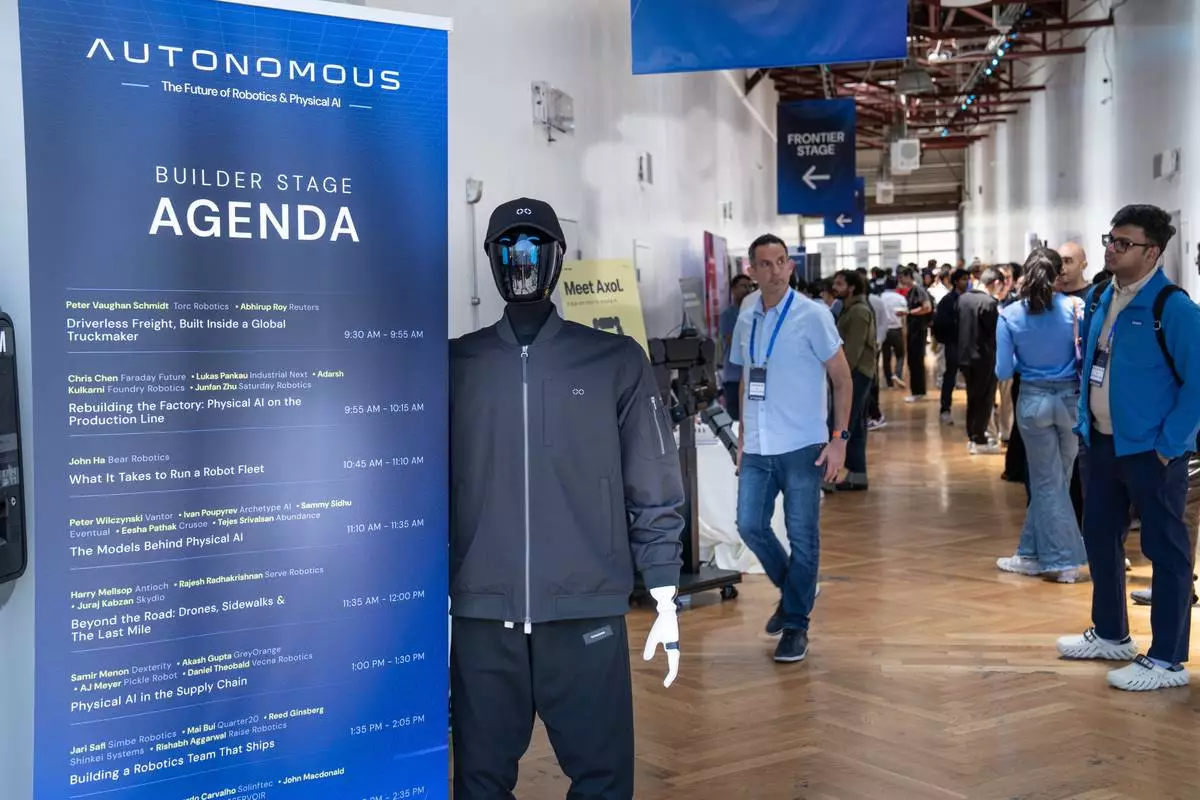
The three summits gather leading academic, industry, and frontier-technology communities in the Bay Area. On Sunday, July 12, FF joined the Humanity & AGI Summit 2026: Robotics for Future Civilization, hosted by the AI Robotics Alliance of America (AIRA) at the Stanford Faculty Club. On July 16, FF was invited to take part in AUTONOMOUS 2026 at The Midway in San Francisco, a full-day gathering of hundreds of robotics founders, engineers, and investors. It will next appear at AGI Summit SF 2026 at the Palace of Fine Arts on July 18 and 19, one of Silicon Valley's largest AGI conferences, with FF's session set for Sunday, July 19.
At each summit, FF brought its robots onto the show floor for live demonstrations. It showcased the All-New Futurist, an All-in-One professional expert humanoid robot, alongside Navi, the first foundational EAI education quadruped robot in the U.S., putting real motion control, autonomous navigation, and open, developer-ready design in front of working roboticists, researchers, and founders.
The response was strong. Developers, researchers, investors, and potential partners engaged the FF team in extensive discussions about its open EAI Brain and developer platform, a sign that FF, though a new entrant, has quickly won the attention of Silicon Valley's core robotics and AI community.
On that momentum, FF is now advancing cooperation agreements with several developers from Stanford and UC Berkeley backgrounds, centered on the industrial, security & inspection, and education sectors. Together they aim to bring more robot Skills and Agents and complete industry productivity solutions into real-world deployment.
That work maps directly onto FF's upgraded robotics strategy, which recently evolved from the “Three-in-One” ecosystem to the “Four-Core Full-Stack AI” ecosystem by adding Industry Productivity Solutions and Developer Platform as a fourth core, alongside the EAI Brain, EAI Devices, and EAI Data Factory. Targeting education, industrial, security & inspection, and other existing markets, the new core marks FF's shift from standalone device capabilities to complete, deliverable industry solutions, with its Silicon Valley engagement turning frontier research talent into solutions built around real industry needs.
“Silicon Valley brings together some of the world's strongest robotics and AI talent, and the response to our EAI robots at these summits confirms that developers are looking for open, deployable platforms they can build real products on,” said Chris Chen, Co-CEO of FF AI-Robotics at FF. “We are moving quickly to turn that interest into signed collaborations with developers from top institutions, and to channel their work into industry productivity solutions across education, industrial, and security & inspection scenarios. This is exactly what our upgraded Four-Core Full-Stack AI strategy is built to accelerate.”
FF views an open developer ecosystem as a core driver of its EAI strategy. By combining its Full-Form FF EAI Robot World, open EAI Brain and developer platform, EAI Data Factory, and a growing base of external developers, the Company aims to speed the practical deployment of robots across real industry scenarios and advance the transformation of the U.S. robotics industry.
ABOUT FARADAY FUTURE
Founded in 2014, Faraday Future (FF) is a U.S.-based Physical AI ecosystem company dedicated to reshaping the future of robotics and mobility solutions through AI innovation and technologies. FF focuses on two major product strategies within the Embodied AI (EAI) robotics business: EAI humanoid and bionic robots, and EAI automotive-focused robots. By building a “Four-Core Full-Stack AI” ecosystem of “EAI Brain, EAI Device, Industry Productivity Solutions and the Developer Platform, and EAI Data Factory,” FF aims to create an evolutionary flywheel: scaled device delivery, data collection and training, continuous evolution of the EAI Brain, stronger product capability, and even larger-scale delivery and deployment. Through this flywheel, FF seeks to maximize its commercial value and lead to the advancement of Physical AI. For more information, please visit Faraday Future's official website: https://www.ff.com/
FORWARD LOOKING STATEMENTS
This press release includes “forward-looking statements” within the meaning of the safe harbor provisions of the United States Private Securities Litigation Reform Act of 1995. When used in this press release, the words "plan to," "can," "will," "should," "future," "potential," and variations of these words or similar expressions (or the negative versions of such words or expressions) are intended to identify forward-looking statements. These forward-looking statements, which include statements regarding potential future legal actions against alleged illegal market manipulation or similar improper activities, and FF's entry into the embodied AI robotics market and robotics deliveries and development, involve a number of known and unknown risks, uncertainties, assumptions and other important factors, many of which are outside the Company's control, which could cause actual results or outcomes to differ materially from those discussed in the forward-looking statements.
Important factors, that may affect actual results or outcomes include, among others: the Company's ability to timely regain compliance with Nasdaq's minimum bid requirement; the Company's common stock will be suspended from trading on Nasdaq if its closing price is $0.10 or less for 10 consecutive trading days; the Company's ability to continue as a going concern and improve its liquidity and financial position; the Company's ability to pay its outstanding obligations, which it currently lacks; the availability of sufficient share capital to meet its current obligations and execute on its strategy, which the Company currently lacks; the agreement of stockholders to substantially increase the Company's share capital, which could result in substantial additional dilution; the willingness of convertible debt investors to fund the Company while it lacks sufficient share capital for conversions; demand for the Company's robotics products; the ability of B2B preorder companies to locate customers to purchase our robotics products, on which their nonbinding preorders substantially depend; competition in the robotics industry, which includes companies with far superior experience, funding and name recognition; the ability of the Company to build an EAI education ecosystem that serves both the B2C consumer market and the B2B institutional education market; the acceptance by teachers and students of the Company's robotics products in the education market; the Company's reliance on a single OEM for most of its robotics products; the Company's ability to get the planned robotics products to comply with all applicable U.S. rules and regulations; the ability of the robotics OEM to timely supply robotics to the Company; tariff uncertainty for imported products, particularly from China; demand from automobile dealers for robotics products; the Company's ability to homologate FX vehicles for sale; the Company's ability to secure the necessary funding to execute on the FX strategy, which is substantial; the Company's ability to secure an occupancy certificate covering all of its Hanford facility; the Company's ability to remediate its material weaknesses in internal control over financial reporting and the risks related to the restatement of previously issued consolidated financial statements; the Company's limited operating history and the significant barriers to growth it faces; the Company's history of substantial losses and expectation of continued losses; the success of the Company's payroll expense reduction plan; the Company's ability to execute on its plans to develop and market its vehicles and the timing of these development programs; the Company's estimates of the size of the markets for its vehicles and cost to bring those vehicles to market; the rate and degree of market acceptance of the Company's vehicles; the Company's ability to cover future warranty claims; the success of other competing manufacturers; the performance and security of the Company's vehicles; current and potential litigation involving the Company; the Company's ability to receive funds from, satisfy the conditions precedent of and close on the various financings described elsewhere by the Company; the result of future financing efforts, the failure of any of which could result in the Company seeking protection under the Bankruptcy Code; the Company's indebtedness; the Company's ability to use its "at-the-market" program; insurance coverage; general economic and market conditions impacting demand for the Company's products; potential negative impacts of a reverse stock split; potential cost, headcount and salary reduction actions may not be sufficient or may not achieve their expected results; circumstances outside of the Company's control, such as natural disasters, climate change, health epidemics and pandemics, terrorist attacks, and civil unrest; risks related to the Company's operations in China; the success of the Company's remedial measures taken in response to the Special Committee findings; the Company's dependence on its suppliers and contract manufacturer; the Company's ability to develop and protect its technologies; the Company's ability to protect against cybersecurity risks; and the ability of the Company to attract and retain employees, any adverse developments in existing legal proceedings or the initiation of new legal proceedings, and volatility of the Company's stock price. You should carefully consider the foregoing factors and the other risks and uncertainties described in the "Risk Factors" section of the Company's Form 10-Q for the quarter ended March 31, 2026, filed with the SEC on May 14, 2026, and Form 10-K filed with the SEC on March 31, 2026, and other documents filed by the Company from time to time with the SEC.
Faraday Future Showcases Its EAI Robot World Across Three High-Level Silicon Valley Robotics and AGI Summits, Drawing Strong Developer Interest and Advancing Its New "Four-Core Full-Stack AI" Ecosystem Strategy
Faraday Future Showcases Its EAI Robot World Across Three High-Level Silicon Valley Robotics and AGI Summits, Drawing Strong Developer Interest and Advancing Its New "Four-Core Full-Stack AI" Ecosystem Strategy