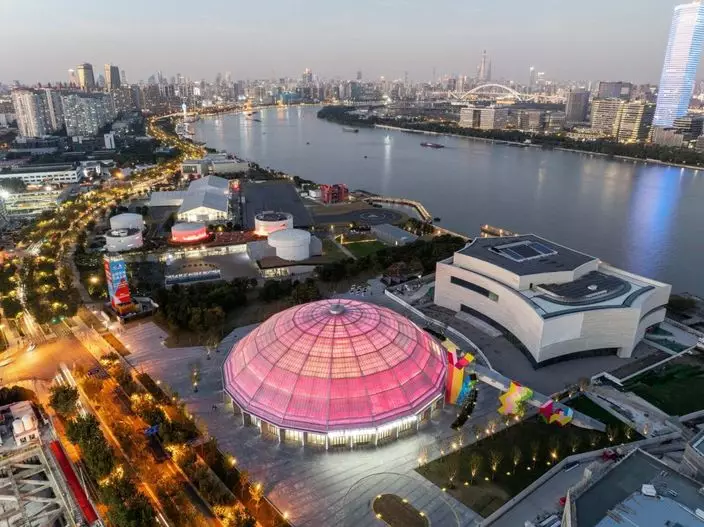

China's total foreign trade value has smashed through RMB 25 trillion in the first half of this year, according to the latest data from the General Administration of Customs. That figure comes to roughly HKD 27 trillion, or USD3.7 trillion, a historic high for the country. Behind the headline number lies an industry competition drawing top talent from the world's leading universities, one that points to where the next wave of growth will come from.
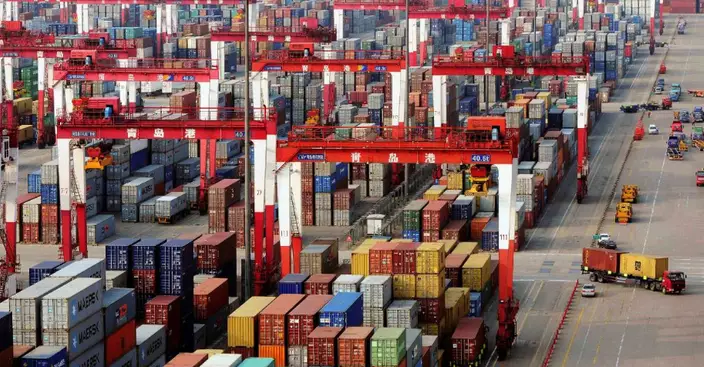
China's H1 trade hits a record RMB 25 trillion, showing strong resilience.
On July 14, the General Administration of Customs reported that June's total import-export value reached RMB 4.78 trillion, up 24.2% year-on-year. Exports alone hit RMB 2.82 trillion, growing 20.8% and far outpacing the market's forecast of 19%.
Click to Gallery
China's H1 trade hits a record RMB 25 trillion, showing strong resilience.
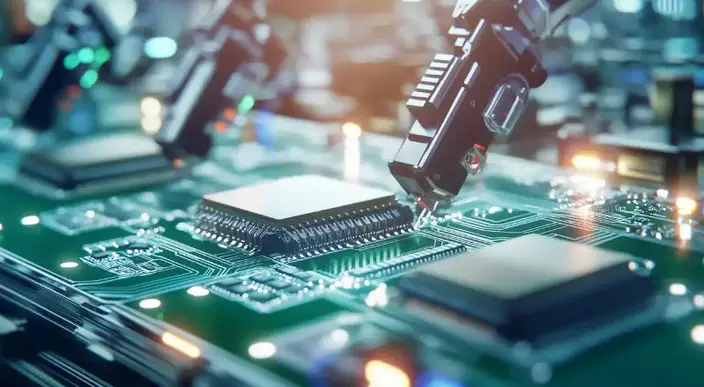
AI powers trade: Computing hardware imports surge over 50% in H1.
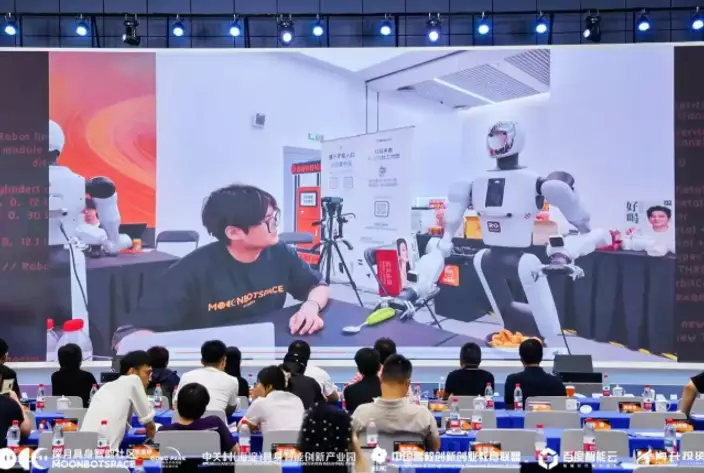
Young devs race to build AI prototypes at the first Moonshot Physical AI Hackathon.
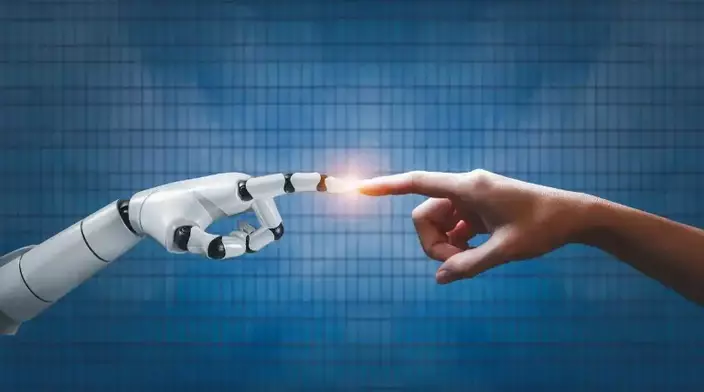
Embodied AI: The next tech frontier drawing top global talent.
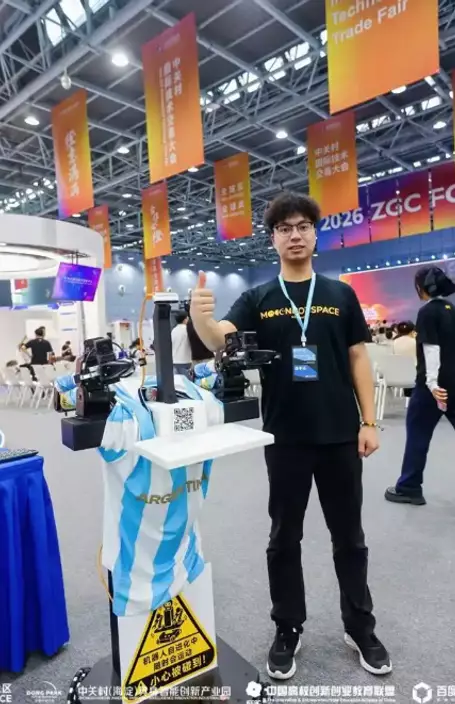
Teams rapidly built and deployed multi-algorithm retail robots.
For the first half of the year, total import-export value reached RMB 25.47 trillion, up 16.9% year-on-year and RMB 3.68 trillion more than the same period last year. The first time the figure has topped RMB 25 trillion for this period, and it extends 17 consecutive months of growth.
In US dollar terms, June's total export value reached USD 412.39 billion, or roughly HKD 3.22 trillion, up 27% and again beating the market's 19% forecast. Wang Jun, Deputy Director of the General Administration of Customs, said directly at the press conference that despite a complex and volatile external environment, "China's innovation momentum remains strong, its economic actors remain vibrant, and its level of openness remains high." The foundation of foreign trade, he added, remains solid.
China's trade with countries participating in the Belt and Road Initiative reached RMB 12.97 trillion in the first half of the year, up 14.8% year-on-year. That accounts for over half of total foreign trade value, and it reflects a foreign trade landscape accelerating away from dependence on traditional European and American markets.
Computing hardware import-export grew by over 50% in the first half of the year, according to Customs data. That signals AI-related industries are becoming a new engine for foreign trade.
AI powers trade: Computing hardware imports surge over 50% in H1.
Meanwhile, China's total import-export value with the United States stood at RMB 2 trillion, down 3.6% year-on-year. China-US trade's share of the total continues to narrow, showing that China's foreign trade dependence on any single market has significantly decreased.
Where Does This New Engine Come From?
The answer may lie in a competition held in Haidian, Beijing, on July 12. The finals of the inaugural "Moonshot Programme, Physical AI Hackathon" took place at the Zhongguancun International Technology Exchange Center.
Young devs race to build AI prototypes at the first Moonshot Physical AI Hackathon.
Over the previous two days, more than 200 young developers from top universities, research institutions, and tech companies worldwide gathered in Haidian. Organized into 50 elite teams, they spent two days and nights in extreme development, rapidly turning ideas that existed only in their minds into working, tangible prototypes.
Organizer-provided data shows that many contestants came from top institutions including Tsinghua University, Peking University, Zhejiang University, Wuhan University, the Hong Kong University of Science and Technology, MIT, UC Berkeley, Carnegie Mellon University, and Stanford University. Current students made up 53.6% of participants, while AI and software engineers accounted for 15.6%. Startup team members or entrepreneurs made up 14.3%, and hardware or robotics developers accounted for 7.6%.
On the technical side, 41.9% of contestants possessed full-stack capabilities. Most could independently complete an end-to-end closed loop, taking a project from model to demo and from software to hardware.
"Embodied intelligence" is viewed as the next global tech frontier following the internet and mobile internet. This track was previously dominated by Silicon Valley's capital advantages. The fact that students from the world's top universities are now heading north is, in itself, a signal that the tide is turning.
Embodied AI: The next tech frontier drawing top global talent.
The winning team, LoopMaster, comprised four members from Beijing, Shanghai, Shenzhen, and Changsha. They had only known each other online before forming an ad hoc team for the competition.
Team leader Li Pengdong is a tech blogger and former robotics company engineer. Algorithm lead Zou Yanwen is a PhD student at Shanghai Jiao Tong University. Interaction designer Xie Jun is a second-year master's student at Northeastern University, and product designer Xu Xinhao previously worked as a designer at an automotive company.
Meeting in person for the first time, the four collaborated over just two days to build a self-evolving retail robot named "Massi." The robot stole the show on-site, dressed in a jersey matching that of football star Messi.
Teams rapidly built and deployed multi-algorithm retail robots.
Xie Jun revealed that the robot integrates vision, grasping, and large-model operation algorithms. It requires only a simple demonstration to automatically optimize its selling behavior, with an estimated potential to cut sales costs for supermarkets and small vendors by around 40%.
Zhao Mingguo, researcher in Tsinghua University's Department of Automation and Director of its Robotics Control Laboratory, encouraged the contestants on-site. "What you've built here today," he said, "may be worth more than three years of experiments in many laboratories."
The Industrial Scale Behind the Competition
The real data worth watching is the industrial scale behind the competition. According to the Zhongguancun Science City Management Committee, Haidian has attracted 331 companies related to embodied intelligence robotics so far. That includes 25 humanoid robot manufacturers, 3 listed companies, 7 unicorn enterprises, and 21 "little giant" enterprises specializing in niche technology sectors.
Together, these companies form a complete industrial chain centered on the "brain, cerebellum, and body." In other words, from algorithmic models to mechanical components, Haidian district alone now possesses self-sufficient, full-chain production capability. This is precisely the industrial foundation behind the "over 50% growth in computing hardware import-export" seen in the trade figures.
At the competition venue, organizers directly provided robotic arms from Galbot, dexterous hands from LinkerBot, and humanoid robots from Galaxea General for contestants to use free of charge. That spared participants the need to bring their own costly equipment, significantly lowering the barrier for integrated software-hardware development and validation.
Representatives from well-known investment institutions such as Tsinghua Holdings' Shuimu Fund and Blue Lake Capital took notes as they watched, scouting for investment targets. One investor described their role as not just there to judge, but to scout projects.
Wang Xiang, former President of Xiaomi Group and founding partner of Moonshot, described the organizers' role as building a bridge to help laboratory projects cross the gap to commercialization. Award-winning projects will get priority to move into Haidian's Embodied Intelligence Innovation Industrial Park after the competition, connecting with Dongsheng Science Park and top-tier capital to form a complete closed loop from talent and technology to capital.
As early as February 2025, the Zhongguancun (Haidian) Embodied Intelligence Innovation Industrial Park was officially inaugurated. It became the nation's first specialized industrial park named after "embodied intelligence."
Bordering top universities such as Tsinghua and Peking University to its west, the park has established the shortest possible conversion pathway from "laboratory breakthrough" to "pilot iteration" to "industrial implementation." To date, it has attracted nearly 50 tech companies, covering the full industrial chain from intelligent algorithms and core components to complete robotic units and application scenarios.
On one hand, there is the RMB 25 trillion trade report card announced by Customs. On the other, there is the frontline scene of students from the world's top universities heading north to compete.
Put together, these two pictures trace a clear trajectory of China's economic transformation. As traditional export engines continue to power ahead, hard-tech industries like embodied intelligence are quietly taking shape, becoming the new driving force for the next round of growth.
While Silicon Valley continues to grapple with headaches over large AI models and chip supply chains, China has already brought talent, capital, and industrial chains together onto the same track. This momentum, moving from laboratory to factory and from campus to market, may well be the real confidence underpinning the trade figures.
Mao Paishou
** 博客文章文責自負,不代表本公司立場 **