China's maritime search and rescue crews have always given priority to saving lives when emergencies take place in the South China Sea, regardless of nationalities of the people in distress.
When a Singapore-flagged cargo ship with 21 Filipino crew members on board capsized in the South China Sea in January this year, China responded, saving the lives of more than a dozen people.
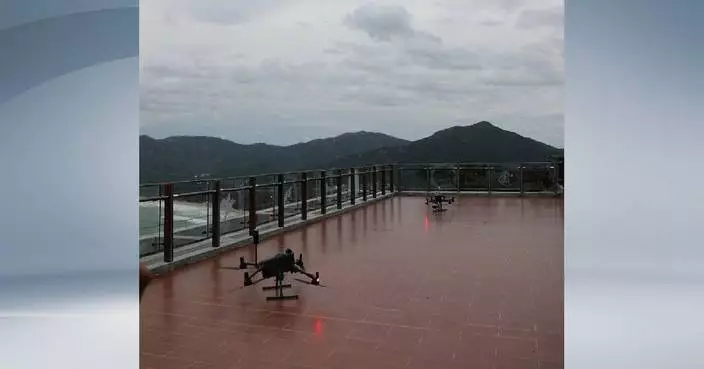
In Hainan, China's southernmost province, nearly 30 organizations gather to train for maritime emergencies.
This drill simulates a range of maritime emergencies: people overboard, the transfer and treatment of injured personnel, onboard fires, oil spills, and even the recovery of lost containers. In the South China Sea, any of these situations can quickly become a lot more complicated.
"The South China Sea spans vast deep-water areas and involves multiple neighboring countries, making the deployment of rescue resources especially challenging. Receiving distress signals can also be more difficult in such conditions. And as typhoon season approaches, the risks facing vessels navigating these waters increase significantly," said Wu Qiancheng, director of the command center of the Hainan Maritime Safety Administration.
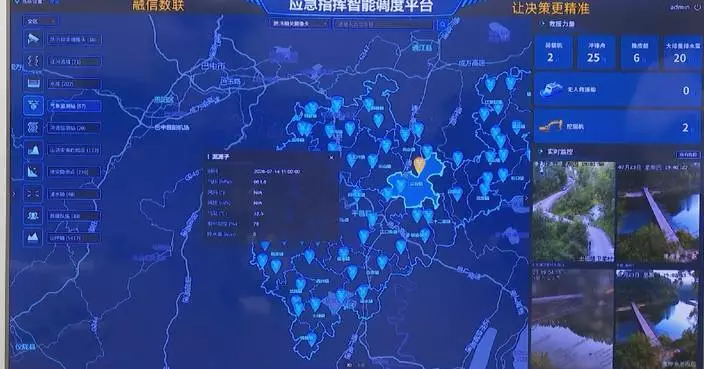
Getting help where it's needed requires that ships, aircraft, rescue teams, and government agencies work together, as exemplified by the January mission, when the Singapore-flagged cargo ship capsized near Huangyan Dao, putting the lives of 21 Filipino crew members at risk.
"First, we verified the emergency. Based on the initial reports, we determined that the vessel carrying nickel ore was at high risk of capsizing. After confirming the situation, we alerted relevant authorities, including the South China Sea Rescue Bureau. We also issued a navigation warning to passing merchant vessels and coordinated with rescue centers in Hong Kong, Hainan, and other agencies to launch a joint response," said Sun Yuxiang, director of the command center of the Sansha Maritime Safety Administration.
Each agency plays a specific role in the response. For example, experts from China's Ministry of Natural Resources are tasked with narrowing the search area.
"Finding someone in the open sea is like looking for a needle in a haystack. That's why drift prediction is essential. We rely on environmental data such as wind, ocean currents, and waves to predict drift paths. So, instead of searching the entire ocean, we're searching a defined zone, which improves the chances of finding survivors," said Yang Yiqi, an associate researcher from the National Marine Environmental Forecasting Center.
At sea, every minute can mean the difference between life and death. In case of the January rescue operations, multiple teams rushed to the scene as the two closet Chinese Coast Guard vessels arrived within hours of the alert, searching for survivors through strong gusts, waves exceeding three meters and poor nighttime visibility.
"The crew were widely scattered. We couldn't locate them using radar. We had to rely on visual search, looking for the faint glow of life rafts and life jackets to find their positions," said Xia Kai, a China Coast Guard (CCG) officer.
Once life rafts were spotted, the rescue operation entered its most critical stage: lifting the stranded sailors out of the water.
"Given they had been drifting for at least six hours, they were likely exhausted or unconscious and unable to self-rescue with life rings. We secured ourselves to the ship with ropes, jumped into the sea, tied the survivors, and were pulled back aboard together by the crew on deck," said Zhang Lei, another CCG officer.
Thanks to joint efforts involving Chinese rescuers, the Philippine Coast Guard, and other international vessels, 17 people were recovered from the sea. Fifteen survived, who expressed great gratitude to the Chinese rescuers.
Rescue officials say they are driven by a commitment to building the South China Sea into a sea of peace, friendship and cooperation, a commitment that transcends nationality.
"As the rescue force in this region, our job is to keep all mariners and vessels safe and provide effective help when emergencies occur. We do not distinguish by nationality -- whenever anyone is in danger at sea, we coordinate rescue efforts. This is the international responsibility our country upholds in the South China Sea," said Wu.
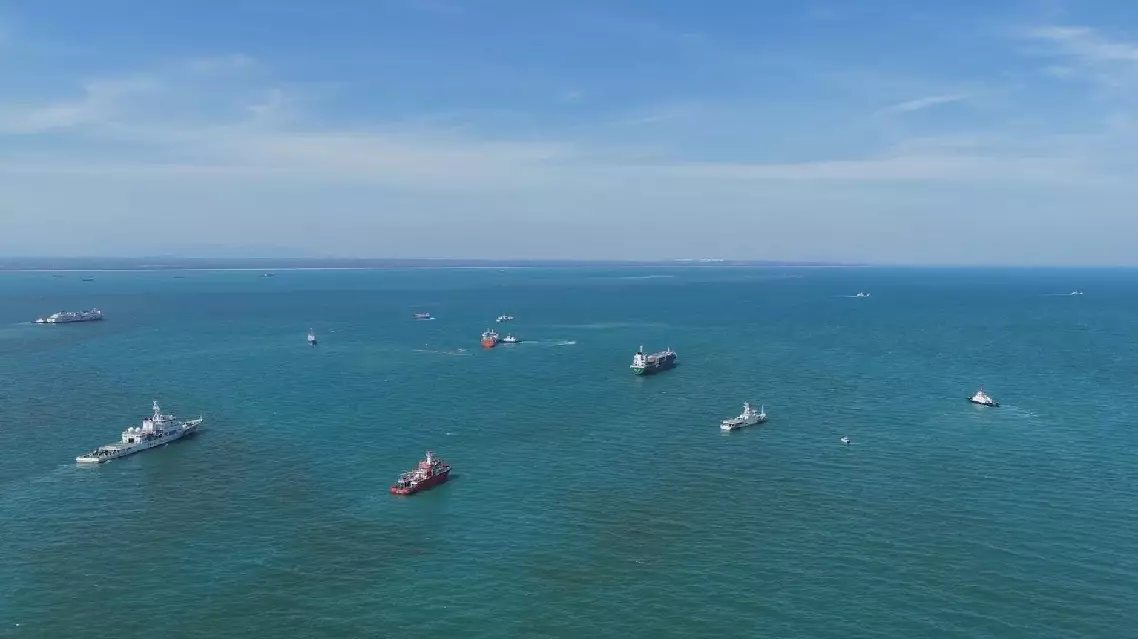
China prioritizes saving lives in emergencies in South China Sea, regardless of nationalities