Eight Palestinians, including women and four Hamas members, were killed in an Israeli airstrike on a cafe in the seaport area west of Gaza City on Tuesday.
The strike also caused the injury of ten others, the majority of them women and children seeking respite from the summer heat.
Eyewitness Ibrahim Ghattas described the chaotic scene. "We were sitting there safely when we were suddenly hit by two missiles that struck the area with great force. We rushed to rescue people. It was a massacre, there were body parts, and women and children among the dead and injured. Many displaced people were here, as well as people who had come to relax and spend some time outside. It was shocking for all of us," he said.
The place is a shelter for hundreds of Palestinian displaced families who live out in this seaport for many months now.
One displaced resident, Abu Samir Asaliya, shared his experience, saying, "My daughter and I were sitting at the entrance of our tent when the missile suddenly struck. We thought our own tent had been hit. When we looked outside, there were many people here who had come to escape the heat and spend some time outside. They were torn apart."
Abeer Hammam, another displaced Palestinian, echoed this sentiment, highlighting the tragedy that unfolded as families sought safety.
"We are displaced and living here at the port. The missile struck people here, children and women who were sitting at the cafe. We saw what happened, how some were torn apart and others were injured. There were victims everywhere, adults, children and young people," she said.
Hamas condemned the airstrike, saying it is apparently aimed at sabotaging the ongoing efforts for a ceasefire or for moving forward towards that second phase of the ceasefire, which involves Hamas' disarmament.
The attack came amid renewed diplomatic efforts to advance talks on the Gaza ceasefire plan.
U.S. President Donald Trump's son-in-law Jared Kushner and Israeli Prime Minister Benjamin Netanyahu held talks on Monday and have agreed to establish two working groups to advance the demilitarization of Gaza and address infrastructure and public health needs in the war-devastated enclave.
Earlier this month, Netanyahu rejected a U.S.-backed 15-point roadmap for Gaza, insisting Israel will not withdraw until Hamas is fully disarmed. Hamas, in turn, tied any progress to arrangements concerning a ceasefire, Israeli withdrawal, and future administration of the enclave.
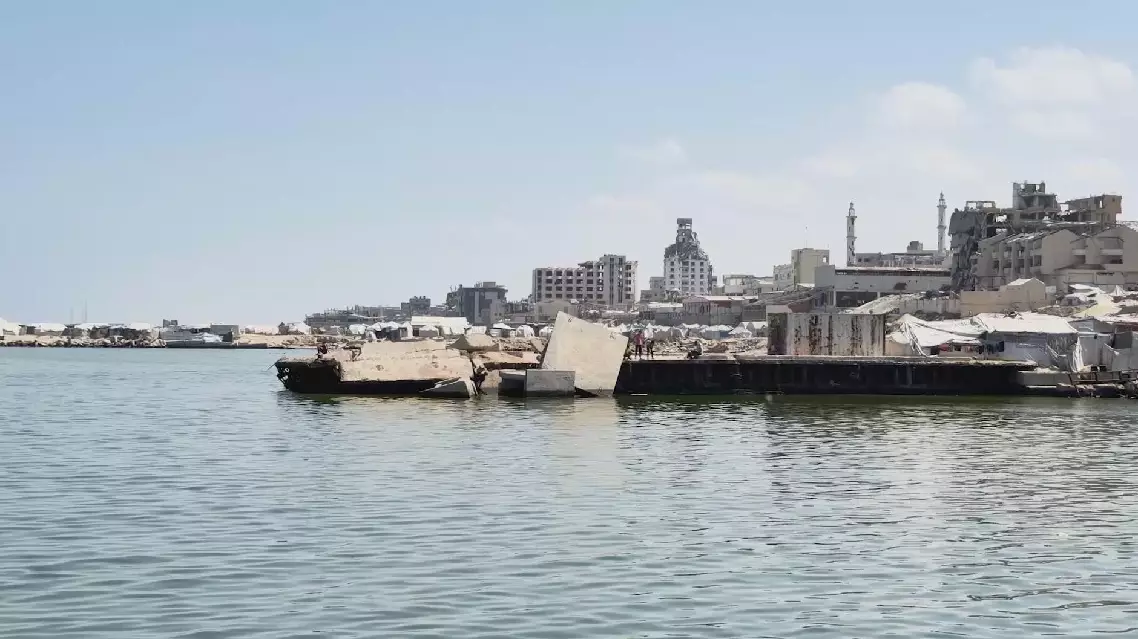
Eight killed in Israeli airstrike on Gaza seaport cafe
The Asia-Pacific Economic Cooperation (APEC) Energy Think Tank Forum was held in Dalian City, northeast China's Liaoning Province on Thursday, bringing together more than 100 representatives from 17 member economies of the APEC, international organizations, think tanks, and research institutions.
Participants engaged in in-depth discussions on energy security and regional resilience, energy technology and innovation cooperation, and multilateral cooperation and think tank network building, aiming to pool intellectual consensus for deepening practical regional energy cooperation and promoting shared prosperity in the Asia-Pacific.
Energy serves as a cornerstone of Asia-Pacific economic prosperity.
Faced with the current complex and volatile international energy situation, participants reached a consensus that Asia-Pacific economies should further eliminate barriers through institutionalized cooperation, coordinate energy security with green transition, strengthen collaborative innovation in key core technologies, promote interconnectivity in regional energy markets, and build an open and resilient Asia-Pacific energy security system.
However, uneven energy development within the region remains prominent. Energy access for remote areas and low-income groups still has shortcomings, and the energy transition process must also guard against excessively rapid increases in energy costs for people's livelihoods.
"We should adhere to a people-centered approach and integrate the concept of inclusive benefit throughout all aspects of energy cooperation, continuously promoting the extension of energy infrastructure to underdeveloped regions, and enhancing the stability and coverage of basic energy services," said Xiong Minfeng, Deputy Director General of the International Cooperation Department of the National Energy Administration of China.
The forum released a report on China and APEC energy cooperation.
The report shows that since joining the APEC in 1991, China has continuously aligned its energy development strategies with those of other economies, with cooperation covering traditional energy, new energy, electricity, and other fields, spanning the entire chain of investment, trade, and infrastructure. This has formed an energy cooperation pattern featuring complementary supply and demand, green empowerment, interconnection and supply chain stability, and collaborative governance, contributing Chinese strength to regional energy common security and sustainable development.
"The report targets 2030 and 2050. We need to persist in energy cooperation, which has formed an international practice and international consensus," said Lu Ruquan, Director of the Economics and Technology Research Institute of the China National Petroleum Corporation.
The 16th APEC Energy Ministerial Meeting is scheduled to be held in Beijing from Sept 10 to 11.
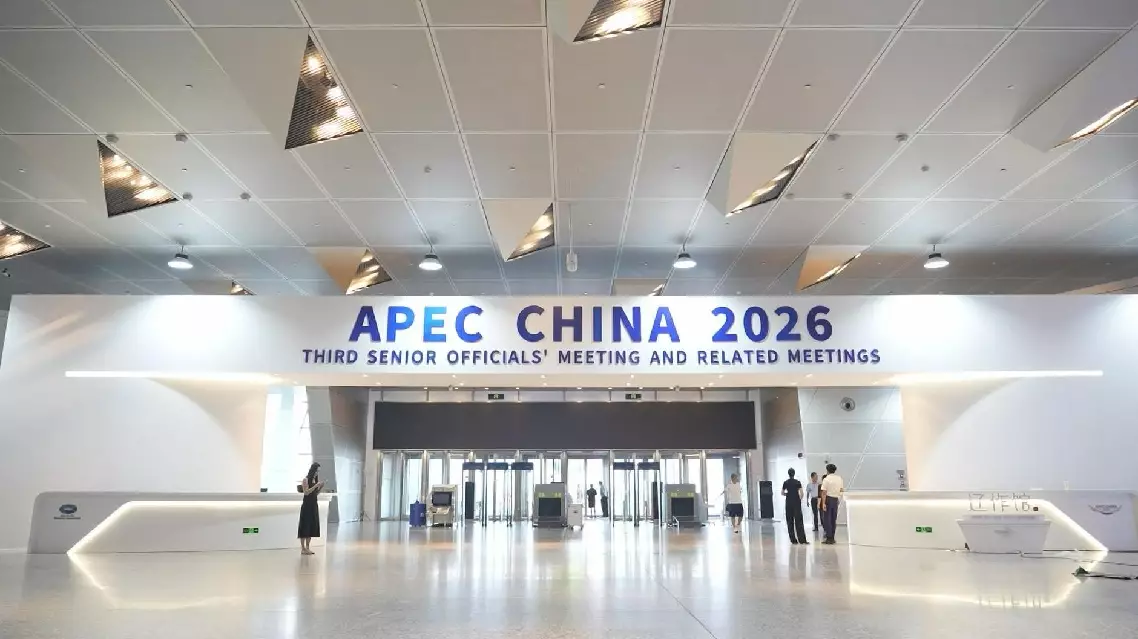
APEC Energy Think Tank Forum held to advance regional cooperation