Skip to Content Facebook Feature Image

China, India hold special representatives talks on boundary question in Beijing

China

China

China

China, India hold special representatives talks on boundary question in Beijing

2026-08-25 23:11 Last Updated At:08-26 10:17

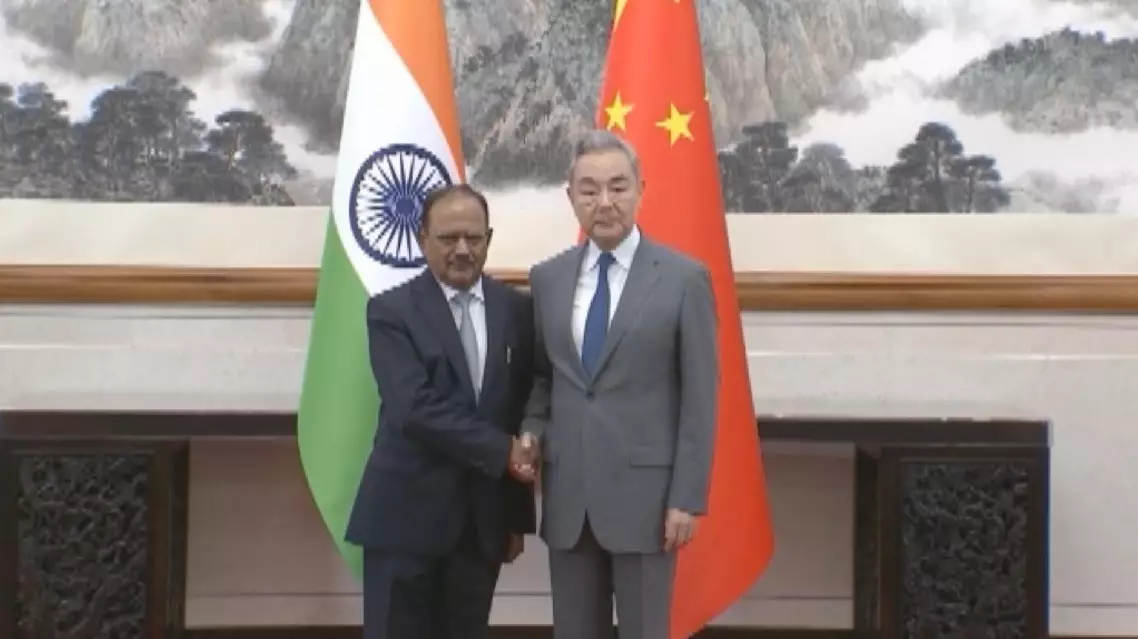
China and India on Tuesday held the 25th round of talks between the two countries' special representatives on the boundary question in Beijing, conducting comprehensive, in-depth, friendly and candid communication on issues such as the boundary question and bilateral ties.

Wang Yi, a member of the Political Bureau of the Communist Party of China Central Committee, director of the Office of the Central Commission for Foreign Affairs and China's Special Representative on the Boundary Question between China and India, said that the sound and stable development of China-India relations serves the fundamental interests of the two peoples and carries global and strategic significance.

China is ready to work with India to develop bilateral relations from a strategic and long-term perspective, be good neighbors and friends as well as partners that help each other succeed, and realize the "Dragon-Elephant Tango," Wang said.

Noting that both sides are implementing the consensus reached at the special representatives' meeting in an orderly manner, Wang said both sides should place the border question in an appropriate position in bilateral ties, press ahead without stagnation, regression or deviation, and gradually build a positive narrative for China-India border affairs, making dialogue, peace, consultation and cooperation the mainstream.

India's Special Representative and National Security Advisor Ajit Doval said the Indian side is willing to further enhance strategic communication with the Chinese side, effectively manage the border areas, explore solutions to the border question, and promote the accelerated improvement and development of India-China relations.

The two sides had in-depth communication on advancing boundary negotiations, properly managing and controlling the border, improving mechanism building and promoting cross-border cooperation.

Both sides reaffirmed that they will, in the spirit of mutual respect and mutual understanding, seek a fair, reasonable and mutually acceptable package solution to the boundary question.

The two sides will continue to properly handle the boundary question through dialogue and consultation and jointly maintain peace and tranquility in the border areas.

The two sides agreed to hold the 26th round of talks between the two countries' special representatives on the boundary question in India in 2027.
China, India hold special representatives talks on boundary question in Beijing


China, India hold special representatives talks on boundary question in Beijing
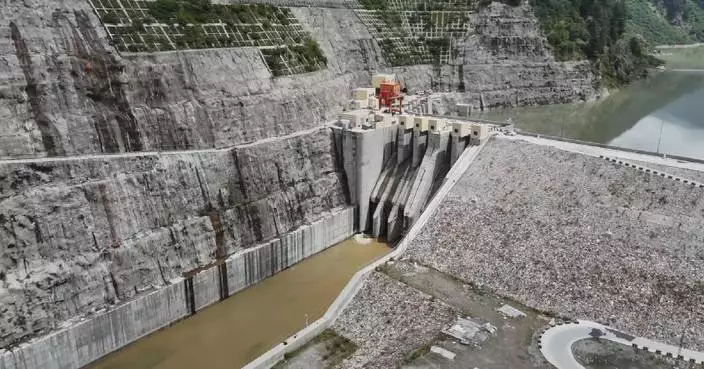
A Chinese-built AI platform is helping smallholder farmers across APEC economies fight back against extreme weather, delivering smarter tools to boost productivity, resilience and sustainability.

The Feiniao intelligent farming platform, developed by a team led by Professor Shi Qian at Sun Yat-sen University's School of Geography and Planning, is an AI-powered system that digitizes farm conditions, monitors daily crop growth and pest risks, and generates precision planting guidance, enabling effective agricultural management from planting to harvest.

During an interview with CGTN on Tuesday, Professor Shi discussed the role of AI in enhancing food security and shared her perspective on international cooperation in smart agriculture, particularly among APEC member economies.

According to her, the Feiniao system tackles a pressing challenge: how to help millions of small-holder farmers, who often lack both economic resources and technical know-how, adapt to a rapidly changing climate.

"The rising frequency of extreme weather events increases the risk of crop stress, and a large proportion of agricultural producers are small-holder farmers who often lack economic knowledge and practical planting capacity. We can frame its value along three dimensions: early warning, precise decision-making and broader reach. AI helps close productivity gaps between smallholders and large-scale commercial farmers," said Shi.

The technology has already moved from pilot testing to full deployment in China, while similar field-level trials are underway in several other APEC economies. Emphasizing that a one-size-fits-all approach is not viable, Shi said the team will adapt its AI models to each location based on locally collected data.

"We have carried out adaptive local trials with agriculture partners in Southeast Asia. For instance, we localized our remote-sensing-driven AI models in Indonesia and Malaysia. We adjust our algorithm with local soil, climate and crop data sets. We also actively share China's practical experience on AI-powered early warning service and inclusive small farmer solutions. Looking ahead, we can build inclusive digital agriculture services so small-scale farmers across the APEC economies can actually benefit from AI tools," said the expert.

China's AI system helps bridge agricultural gaps in APEC economies

China's AI system helps bridge agricultural gaps in APEC economies

Recommended Articles