BETHLEHEM, Pa. (AP) — Mike Gibbons sat out the presidential election two years ago, frustrated that Democrat Kamala Harris did not take a stronger stand against Israel's war in Gaza and unable to bring himself to cast a vote for Republican Donald Trump.
That is not his plan this year.
The 33-year-old restaurant server in this eastern Pennsylvania town that once housed one of the world's largest steelmakers is eager to vote for any Democrat he can in November. As the war with Iran that Trump initially said would last weeks surpasses six months on Friday, Gibbons is feeling the fallout every time he fills his tank at nearly $1 per gallon more than last year.
“The price of gas affects the price of everything and the price of everything's up and my pay hasn't gone up,” he said. “I'm doing blue no matter who this time.”
The Iran war has reshaped the rapidly approaching midterm elections, undermining Trump's campaign pledge to steer clear of foreign conflicts and challenging Republicans who would rather focus on their tax cuts as they cling to narrow majorities in Congress.
While the president's supporters are undeterred, the war's unpopularity and economic ripple effects could tilt the scales in tightly contested U.S. House districts like the one in Bethlehem, where Republican Rep. Ryan Mackenzie is one of this year's most vulnerable incumbents.
Midterm elections are always difficult for the party in power in Washington. But interviews with voters around the country show how a war that Trump expected to end with a swift victory could undermine the final years of his presidency.
About two-thirds of U.S. adults say the war with Iran has not been worth fighting, according to a July poll from The Associated Press-NORC Center for Public Affairs Research. That includes the vast majority of Democrats and independents, as well as more than one-third of Republicans.
Although Trump has long criticized Iran's leadership, he did little to prepare Americans or allies for such a lengthy conflict. Republican President George W. Bush, for instance, spent more than a year making a case for launching a war in Iraq through speeches and attempts to build an international coalition. Trump did none of that.
Trump has refused to acknowledge the war's cost, saying this month he would “never apologize” for higher prices stemming from it and insisting he did “the right thing" to prevent Iran from obtaining a nuclear weapon. His administration announced new sanctions this week in an attempt to further isolate Tehran.
In Congress, Republicans have shifted from initially cheerleading Trump's moves in Iran to expressing concern about the toll of the war. But the party has largely unified to block measures that would curb Trump's war powers and leaders have shown no interest in cutting off money for the war, preferring to portray Democrats as extremists who cannot be trusted to govern.
Democrats who were blamed just two years ago for presiding over high prices see an opportunity to turn the issue back on their opponents. As part of his comeback U.S. Senate bid in Ohio, Sherrod Brown released an ad this week filmed at a gas station as he said “the cost of gas is out of control and we're the ones paying for it.”
Speaking to a group of older adults recently in a Republican-dominated swath of western Maryland, Democratic U.S. Sen. Angela Alsobrooks blamed higher prices on the war. Heading into November, she encouraged fellow Democrats to stay focused on the war's impact and what it says about Trump's leadership.
“We ought to be saying what is obvious, which is our country is heading in the wrong direction,” she said in an interview.
That resonates with voters such as Brandon Bane, a fast-food worker in Bakersfield, California, where Republican Rep. David Valadao is also in a competitive congressional race. Bane, who described himself as a political independent, said he often has to balance paying rent and groceries, noting high gas prices have only added to the challenge.
“It hasn’t been worth it at all,” he said of the war, adding that he plans to vote for Valadao’s challenger, Democrat Randy Villegas.
Melissa Wegman, a Democratic retiree who is also from Bakersfield, said she was shocked when the pump recently whirled to $128 to fill the tank on her SUV.
“I have to manage a budget," she said.
But there is a risk, too, that the war does not provide Democrats with the political boost they are expecting.
While there is plenty of frustration about prices, there are also voters willing to make adjustments without blaming Republicans. Many remain aligned with Trump and are not interested in seeing Democrats return to power.
North Carolina is a top pickup opportunity for Democrats hoping to flip a U.S. Senate seat. But at the State Farmers Market in Raleigh, North Carolina, Lucienda Lowe of Sugarloaf Orchards said her faith in Trump is solid.
“There has to be a reason why they’re over there,” she said. “They wouldn’t be over there doing that if there wasn’t something more going on than what we’re seeing.”
She has not raised her prices on apples even as fuel and fertilizer costs soar. Her family has been farming since 1846 so she feels resilient to weather the next rough patch and tells others to do the same.
“Suck it up, buttercup," she said.
Similarly in Iowa, where Democrats are bullish on their prospects of flipping everything from a U.S. Senate seat and the governor's mansion to several U.S. House races, Larry Cole said higher gas prices as a result of the war are just the “nature of the beast.”
The 66-year-old Republican service manager from Perry, Iowa, said he will back Republicans in this midterm elections and does not want to see Democrats gain control in either chamber. He said Trump has taken action that other presidents were not willing to do to keep Iran in check.
Trump “hit them where they need to be hit,” Cole said.
Mark Duffy, 65, of Scottsdale, Arizona, said he did not expect the Iran war to go on as long as it has, but it has not had material effects on his life.
“I didn’t think it would go this long,” said Duffy, who retired a year ago from his career selling electronic components. “I don’t think anybody did, but now the next wave is the economic sanctions, so we’ll see if that works and maybe that is a way for other people to join.”
For others, the war has only reinforced a sense that neither political party is responsive to the needs of voters.
As he left a tattoo parlor in Ashland, Virginia, 26-year-old Evan Mise said he feels the increase in gas prices and worries about whether his mom will be able to retire or whether he will someday be able to.
But he had not decided whether to support Democrats or Republicans in November.
“I feel like our government is pretty corrupt through and through," he said. “It’s kind of just a sit-back-and-watch thing. And I think my generation especially feels helpless."
Sloan reported from Washington. Associated Press writers Allen G. Breed in Raleigh, N.C., Michael R. Blood in Bakersfield, Calif., Sarah Rankin in Ashland, Va., Jonathan J. Cooper in Scottsdale, Ariz., and Hannah Fingerhut in Des Moines, Iowa, contributed to this report.
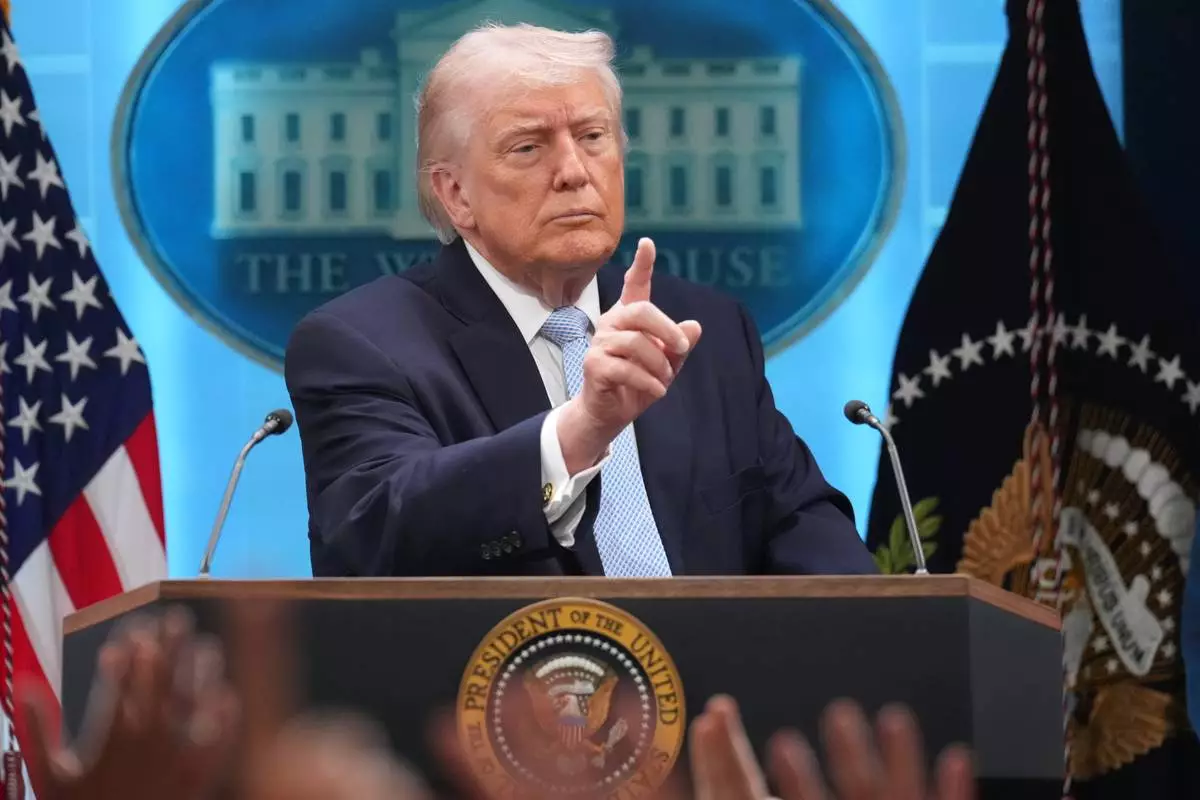
FILE - President Donald Trump speaks with reporters during a news conference in the James Brady Press Briefing Room at the White House, April 6, 2026, in Washington. (AP Photo/Mark Schiefelbein, File)

Lucienda Lowe of Sugarloaf Orchards, whose family has been farming since 1846, talks to a customer at the State Farmers Market in Raleigh, N.C., on Friday, Aug. 21, 2026. (AP Photo/Allen G. Breed)
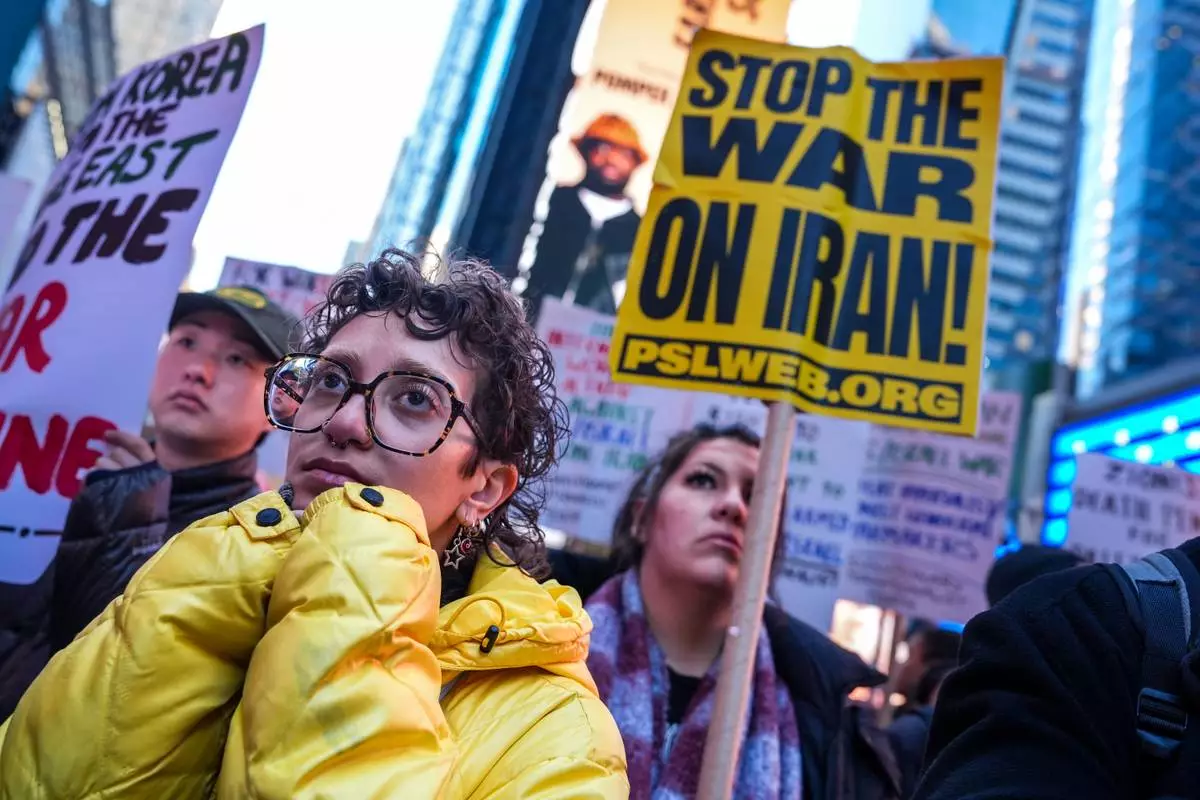
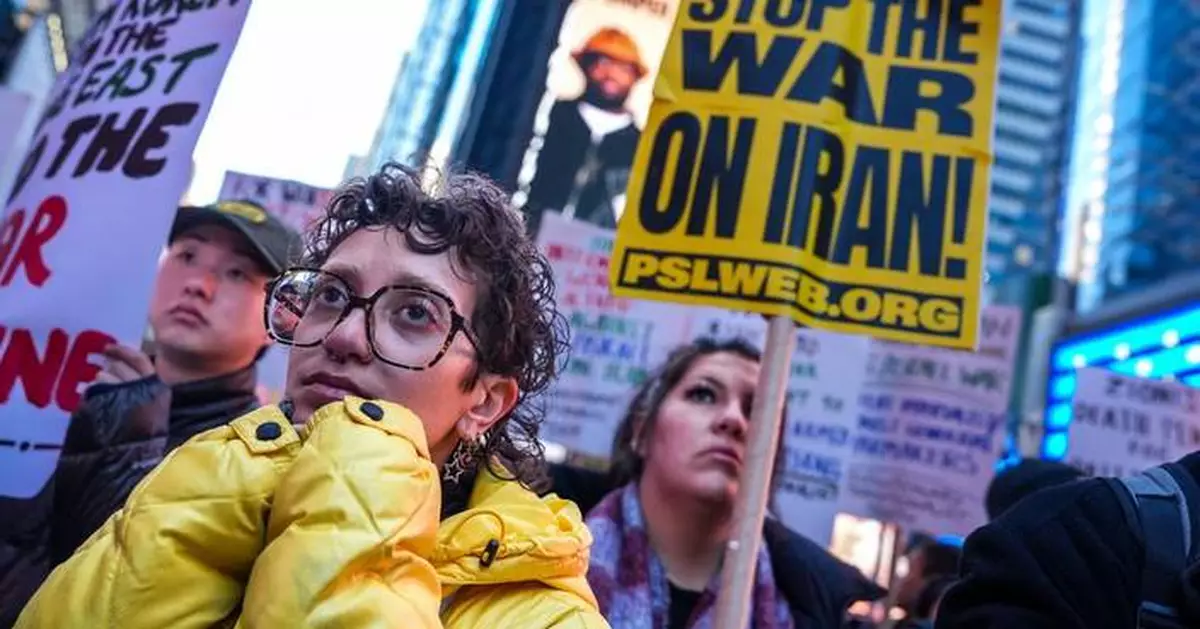
FILE - People march while taking part in a protest against the U.S.-Israeli war with Iran, and against conflict in Lebanon, Wednesday, April 8, 2026, in New York. (AP Photo/Ryan Murphy, File)
BENGALURU, India (AP) — The deadly flash flood in Nepal on Wednesday was likely caused by a huge chunk of a glacier that broke off and temporarily dammed a river, according to preliminary investigations by scientists. That may have led to the backed-up water surging downstream with enormous force a few hours later, they suggested.
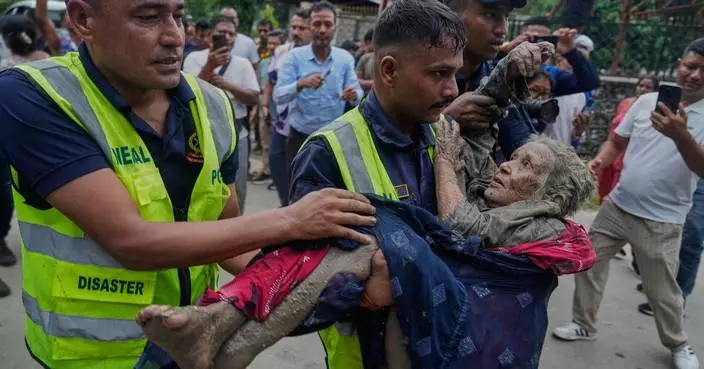
Scientists are still piecing together information from satellite and ground-level data to figure out exactly what happened to cause the flood, which killed at least 273 people and left more than 1,300 missing, including foreigners and pilgrims.
The U.S. Geological Survey on Wednesday reported a magnitude 5.2 glacier collapse that sent debris flowing downstream with catastrophic impact on communities. It said its determination was based on data from nearby seismic stations, long period seismic waves and satellite imagery.
“A lower part of a glacier has really come off,” said Jakob Steiner, a geoscientist at the University of Graz in Austria who is currently based in Bangladesh. “If you look at the imagery it’s like someone cut with a huge knife through the whole lower part and it fell off.”
Steiner said a mass of glacial ice dropping from a great height could have felt like a bomb exploding, resulting in the chaos that followed.
Scientists said it is too early to draw a direct connection between global warming and Wednesday’s catastrophe. However, they said that as Earth’s temperature rises because of human activities such as burning oil, gas and coal, the chances of such disasters increase, especially in the Himalayan mountains, which are warming considerably faster than many other parts of the world.
“We have to be cautious and not draw a connection yet. However, rising temperatures are changing the Hindu Kush Himalaya region and melting glaciers,” said Saswat Sanyal, a disaster risk reduction specialist at the Kathmandu-based climate research group International Centre for Integrated Mountain Development.
Hundreds have lost their homes across the Himalayan region, and officials reported large-scale damage to critical infrastructure, including hydropower dams, roads, buildings and bridges in the region.
Water levels in rivers across the flood-affected region rose by as much as 9 meters (29.5 feet) in 30 minutes as a result of the surge from the glacial detachment upstream, researchers at the Kathmandu-based climate research group said.
“It was a huge rise, a huge surge of water that happened suddenly,” said Sanyal.
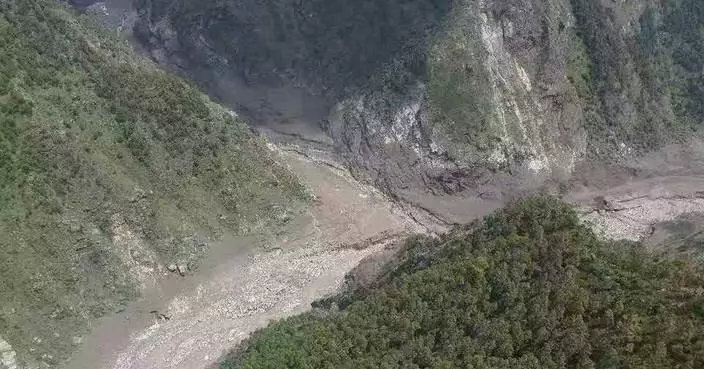
Preliminary evidence suggests a large volume of ice and rock may have plunged into the Lhende Khola, a tributary of the Bhote Koshi River. Researchers said the collapse could have displaced water and picked up loose sediment and boulders, producing a powerful surge downstream. Researchers are also examining whether debris temporarily dammed the river before the impounded water burst through, magnifying the flood.
Steiner said the area has a history of destructive mountain hazards. Floods originating from a glacial lake struck the same valley in 2025, while an ice and rock avalanche occurred elsewhere in the area in 2024. The broader Langtang region was also hit by devastating avalanches during Nepal’s 2015 earthquake.
The Hindu Kush Himalaya is warming rapidly, driving major changes in glaciers, snow cover, permafrost and mountain slopes, according to climate scientists.
The mountains contain the largest volume of snow and ice outside the polar regions. More than 63,000 glaciers in the area feed at least 10 major Asian river systems and support the food, water, energy and livelihood security of billions of people.
However, around 78% of the glacier area, located between 4,500 and 6,000 meters above sea level, is highly exposed to warming.
“What happened yesterday is unfortunately the new normal. It’s going to get worse from here onwards,” Steiner said.
The last decade was the hottest multi-year period globally since records began, and 2024 was the warmest year ever recorded. United Nations reports have found that between 2000 and 2019, glaciers lost 267 gigatons of ice per year, roughly equivalent to the mass of 46,500 Great Pyramids of Giza.
In a warming world, the reports project the loss of up to 50% of all glaciers — excluding those in Greenland and Antarctica — by 2100, even if global warming can be limited to 1.5 degrees Celsius (2.7 degrees Fahrenheit.)
Current global policies put Earth on a trajectory to warm by about 2.8 degrees Celsius (5 degrees Fahrenheit) above preindustrial levels by the end of the century.
Research by the Kathmandu-based group has found that glaciers across these mountains are melting at an accelerating rate, with ice-loss rates doubling since 2000.
Melting glaciers can feed and enlarge glacial lakes, increasing the potential for sudden floods.
As glaciers retreat, mountain rock that was previously insulated and supported by ice becomes exposed to warmer temperatures, rain and repeated freezing and thawing. Permafrost — ground that has remained frozen for years — can also thaw, weakening rock faces and slopes.
“The chances that material starts to move down from mountains increase,” Steiner said.
Sanyal said that may be the kind of cascading hazard behind what happened Wednesday in Nepal: An avalanche or glacier collapse that turns into a debris flow, river blockage and devastating flash flood.
Steiner said about 10% of Nepal’s power production was located in the valley affected by the latest disaster. He said the repeated losses raise questions about whether enough has been done to install warning systems for residents and visitors alike after previous floods and avalanches.
The country's landscape has long been a draw for tourists, with more than a million people visiting the country annually in recent years.
Scientists say stronger early warning systems, better monitoring and faster cross-border information sharing will be increasingly important as temperatures rise and mountain landscapes become less stable.
But monitoring thousands of glaciers, steep slopes and river valleys across the Himalayan arc is extremely difficult.
And when cascading disasters begin, there may be only minutes to act.
“We don’t have hours,” Sanyal said. “We have sometimes a few minutes to actually prepare.”
Steiner said a “red line” has already been reached where some regions of Nepal are just too risky to live in now.
“We expected previous similar disasters to be a wake-up call for governments in the Himalayan region, but it’s a bit frustrating that the damages never seem to be horrible enough,” Steiner said.
“I’m not super optimistic that from tomorrow onwards there will be clear solutions,” he added. “We know what can be done, but various stakeholders need to coordinate and make things happen.”
Arasu can be followed on X at @sibi123. Reach him at sarasu@ap.org.
The Associated Press’ climate and environmental coverage receives financial support from multiple private foundations. AP is solely responsible for all content. Find AP’s standards for working with philanthropies, a list of supporters and funded coverage areas at AP.org.
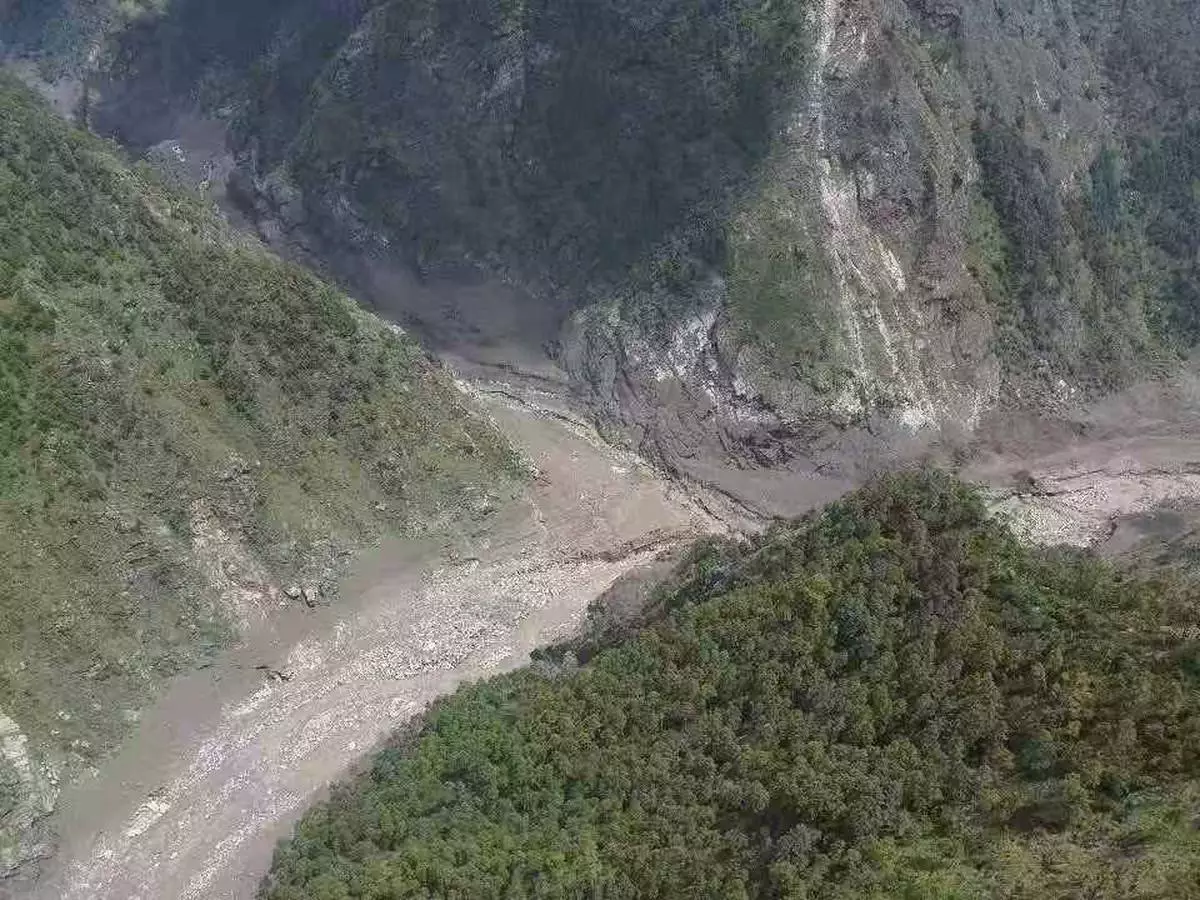
This photo released by Xinhua News Agency, shows a mudslide-hit area near Gyirong Port in southwestern China's Tibetan Autonomous Region on Wednesday, Aug. 26, 2026. (Xinhua via AP)
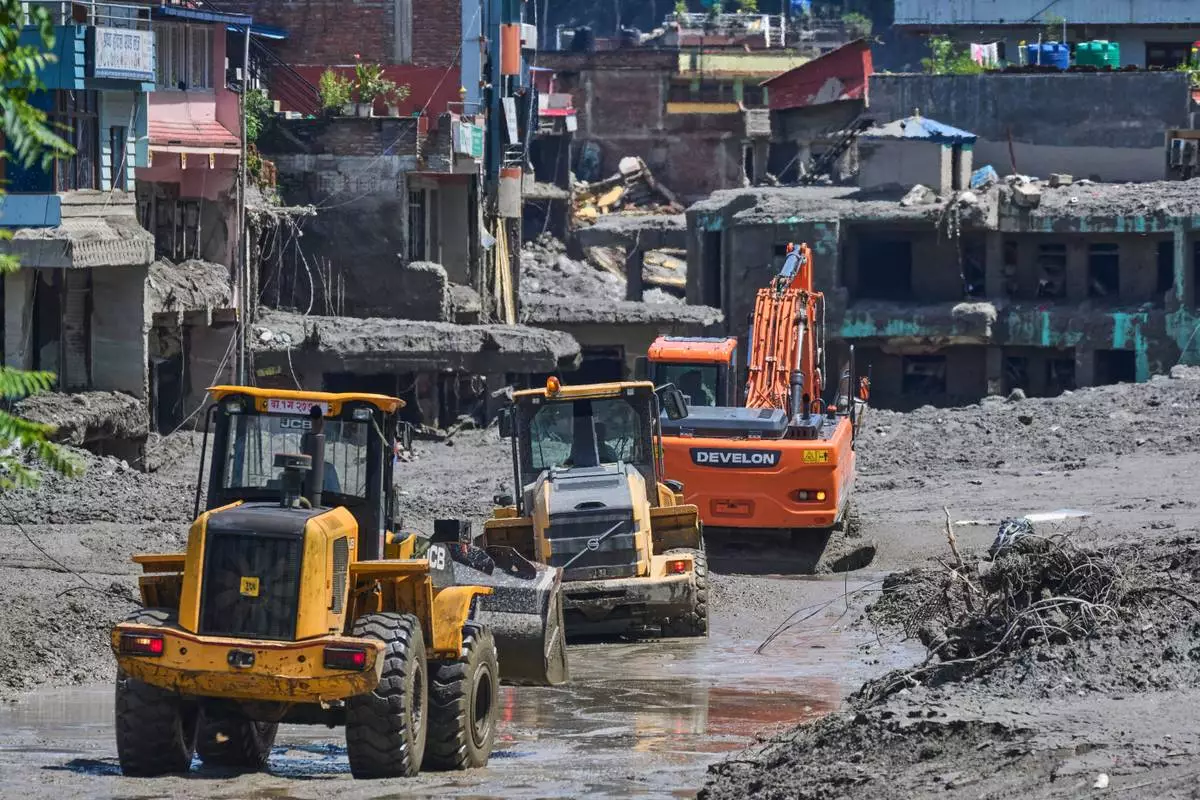
Earthmovers clear the debris of flash flooding in Nepal's Nuwakot district, Thursday, Aug. 27, 2026. (AP Photo/Niranjan Shrestha)
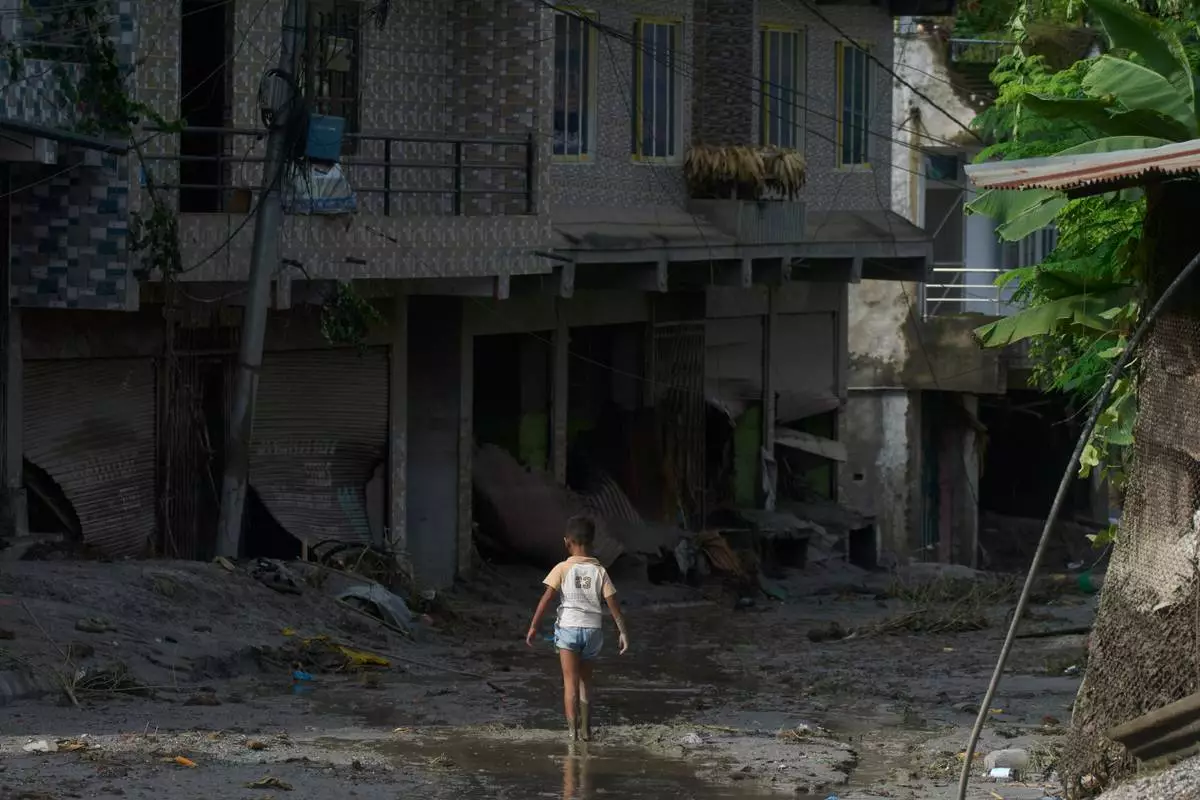
A child walks in mud in the aftermath of a flash floods in Devighat in the Nuwakot district in Nepal, Thursday, Aug 27, 2026. (AP Photo/Niranjan Shrestha)
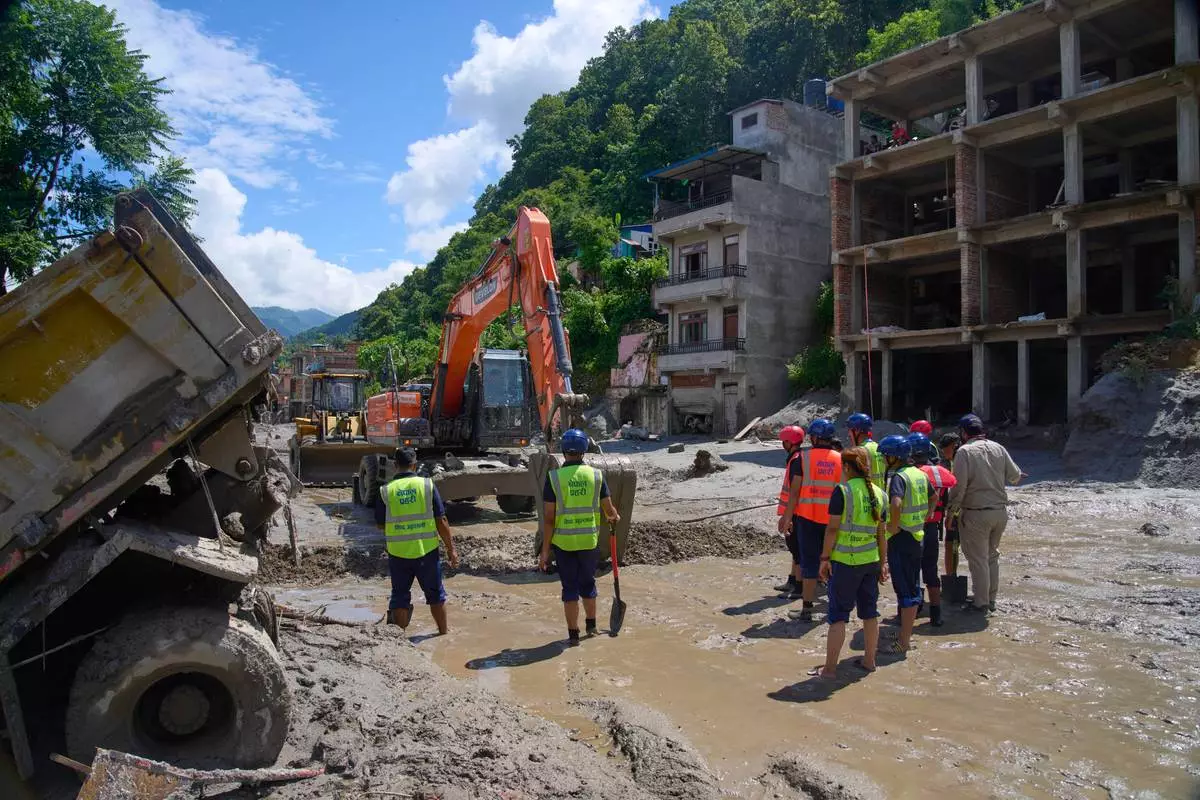
Earthmovers clear the debris from flash flooding in Nepal's Nuwakot district, Thursday, Aug. 27, 2026. (AP Photo/Niranjan Shrestha)
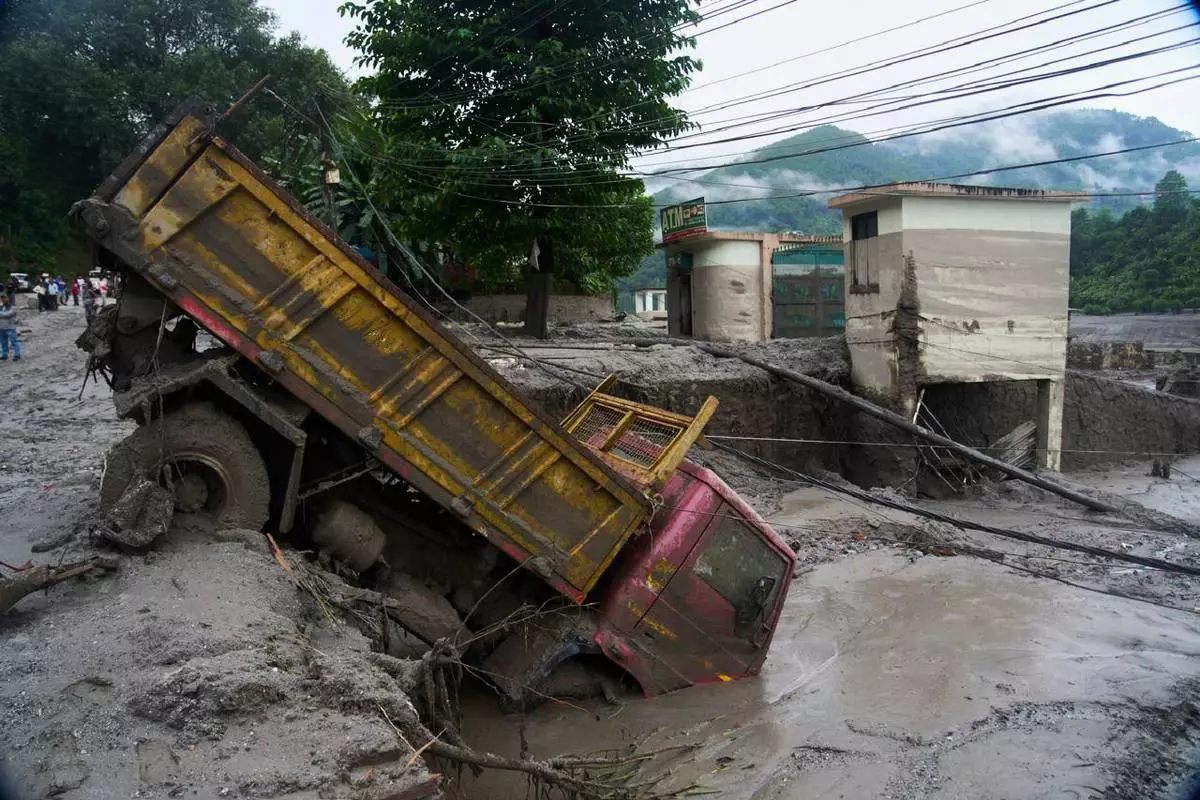
A vehicle is seen in the aftermath of a flash floods in Devighat in the Nuwakot district in Nepal. Thursday, Aug 27, 2026. (AP Photo/Niranjan Shrestha)