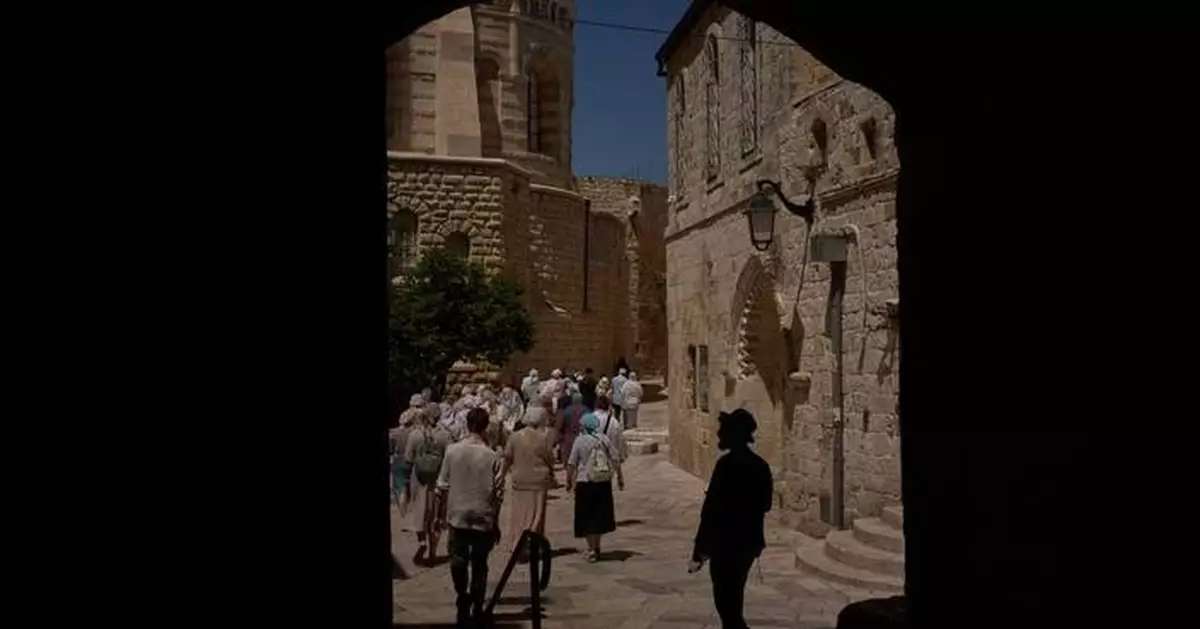
JERUSALEM (AP) — A Jerusalem Magistrate’s Court judge acquitted a man accused of attacking a Catholic nun based on his insanity defense, but ordered him committed to psychiatric hospitalization for up to six years.
The violent assault in April on a nun walking in her habit in Jerusalem’s Old City sent shock waves across Israel and its many Christian communities.
Clergy and advocates say verbal abuse and spitting have grown increasingly common in the densely packed historic heart of Jerusalem. There, Christians, Jews and Muslims daily cross paths, mostly uneventfully, as they visit some of the holiest sites of Christianity, Islam and Judaism.
But the violent beating of the nun was seen as a rare and worrisome escalation in the volatile environment that people of all faiths have been experiencing in nearly three years of war.
On Wednesday, a judge ruled that there was evidence that a Jewish man from a settlement in the occupied West Bank committed the actions he was charged with, but he was entitled to an insanity defense after the district psychiatrist found he was psychotic at the time of the attack.
The director of The French Biblical and Archeological School of Jerusalem, where the nun is a researcher, told The Associated Press that he hoped the psychiatric hospitalization would be carried out in full “so that public safety can be assured, our colleague can recover psychologically, and people can live in and visit Jerusalem without fear, regardless of their belonging to any community.”
But Friar Olivier Poquillon added he regretted the decision not to impose a criminal penalty.
“At the moment of the incident, his judgment was nevertheless sufficient for him to deliberately choose a Catholic nun as his victim from among all the people present,” he said.
Yisca Harani, who founded the organization Religious Freedom Data Center to track harassment of Christians, said even mentally unstable people can be influenced to act by the prevailing discourse around them.
“He is still someone who is the product of either the ignorance or the incitement that is around him,” she said. “Even if he is mentally unstable, he was fed with all that anti-Christian material that is around us now.”
Harani’s organization has tracked a near-tripling of incidents in Jerusalem from four years ago to the last three months recorded — about one a day now — virtually all by Jewish religious nationalists.
Their hostility to Christians is grounded in the history of persecution of Jews in Christian-majority European countries, in faith practices they see as idol-worshipping, and in seeing their presence as an affront near areas historically sacred to Jews, like the Western Wall, experts say.
Ambassador George Deek, Israel's new special envoy to the Christian world, said that earlier this month, Israeli police appointed an English-speaking officer to be a first point of contact for Christians in case of incidents, “so there will be a rapid response.”
“We are going to come up with practical solutions to how we can minimize or stop, if possible, the phenomenon,” Deek said. “We take these issues very seriously.”
Associated Press journalist Koral Saeed contributed from Herzliya, Israel.
Associated Press religion coverage receives support through the AP’s collaboration with The Conversation US, with funding from Lilly Endowment Inc. The AP is solely responsible for this content.
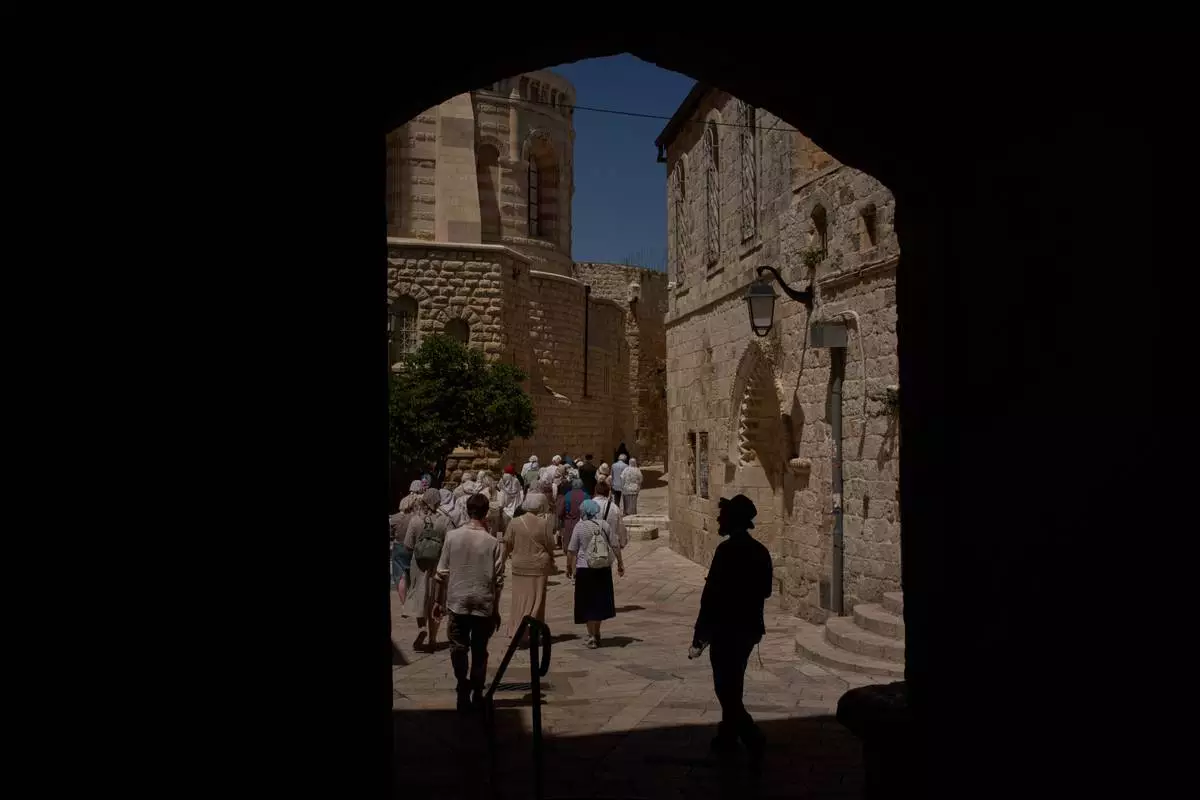
FILE - Christian pilgrims walk past the site where a nun was attacked by a man last Wednesday, after visiting the Cenacle, traditionally believed to be the site of the Last Supper, in Jerusalem, Friday, May 1, 2026. (AP Photo/Leo Correa, File)
BEIJING (AP) — More than 100 of the nearly 1,300 people missing after massive floods in a border area of Nepal and China were on a pilgrimage to Mount Kailash, a sacred site in the Himalayas. The disaster left at least 168 people dead and displaced hundreds of people across the Himalayan region.
Here’s what to know about the mountain and its centuries-old role as a pilgrimage site.
Mount Kailash is a Himalayan peak in southwestern Tibet, near China’s borders with Nepal and India. It rises more than 6,400 meters (21,000 feet) above sea level and lies close to Lake Manasarovar. Both have long been part of Sanskrit religious and literary traditions.
Mount Kailash holds sacred significance for Hinduism, Buddhism, Jainism and the Tibetan Bon tradition. Each associates the mountain with different beliefs and sacred histories.
According to the International Centre for Integrated Mountain Development, the mountain is considered the home of Shiva, the Hindu god of destruction, and Parvati, a Hindu goddess associated with marriage, fertility and motherhood.
Followers of the Tibetan Bon tradition regard it as a seat of spiritual power and associate the region with Tonpa Shenrab, the tradition’s founder.
Geographer Emily Yeh, a professor at the University of Colorado Boulder, who has conducted research in Tibet, wrote in 2017 that Kailash is associated with the mythical Mount Meru, considered the center of the world in Hindu and Buddhist cosmology.
The surrounding landscape also figures in local legends and Himalayan traditions. “Shared Sacred Landscapes,” a book published by ICIMOD in 2017, gathers some of them.
One story tells of Guru Nanak, the founder of Sikhism, who visits villagers longing to make the pilgrimage to Mount Kailash. Nanak teaches them that the true pilgrimage is a spiritual journey within themselves.
India’s government operates an official Kailash Manasarovar pilgrimage from June through August or September each year, with routes through the states of Uttarakhand and Sikkim. Private operators also organize pilgrimages through Nepal.
Pilgrims traditionally walk around Mount Kailash rather than climb it, completing a roughly 33-mile (53-kilometer) circuit around the mountain.
The journey around the peak is believed to cleanse pilgrims of their sins and can take about three days to complete. Hindus and Buddhists traditionally circle the mountain clockwise, while followers of Bon travel counterclockwise.
At nearby Lake Manasarovar, some Hindu pilgrims bathe in its waters as a ritual of spiritual purification.
Yeh wrote that Tibetan pilgrims stop at monasteries and other sacred sites along the route, touching prayer beads or their foreheads to features believed to bear sacred imprints. Other rituals are meant to test a pilgrim’s merit, sin or fortune.
The disaster has left at least 165 dead and 826 people missing in Nepal, and three dead and 558 missing in Tibet, authorities said. Hundreds of those missing were foreigners.
Nepal’s tourism board said 179 of those missing were from India. Officials said most were on pilgrimage to Mount Kailash. Also missing were 65 from the United States, 35 from Australia, 33 from Britain and 25 from Canada.
Indian spiritual guru Jaggi Vasudev, also known as Sadhguru, said in a post on X that 77 people returning from the mountain with groups organized by his Isha Foundation were at an immigration center in Gyirong, Tibet, when the floods struck.
The floods followed a glacier collapse that sent debris rushing downstream through communities on both sides of the border. Similar flash floods have struck the region as warming temperatures increasingly destabilize Himalayan ice.
Associated Press religion coverage receives support through the AP’s collaboration with The Conversation US, with funding from Lilly Endowment Inc. The AP is solely responsible for this content.
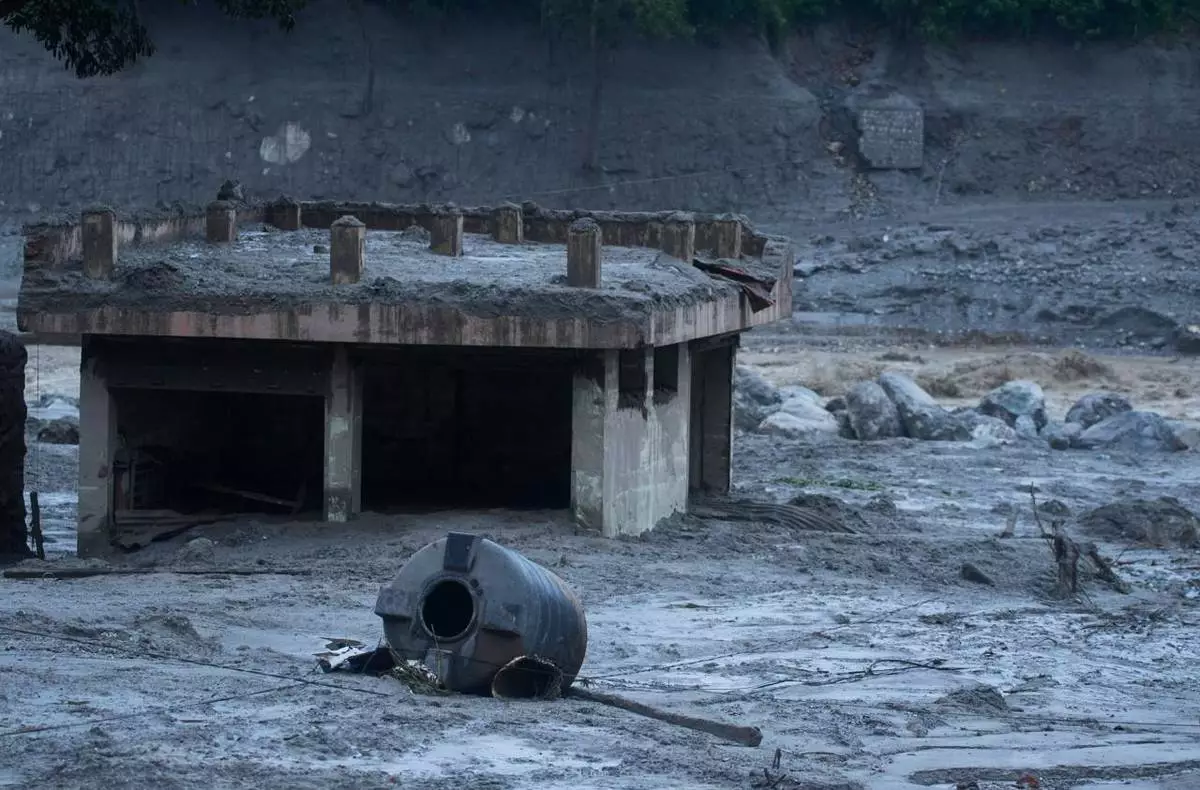
Damage in the aftermath of flash floods in Devighat in the Nuwakot district in Nepal, Thursday, Aug 27, 2026. (AP Photo/Niranjan Shrestha)
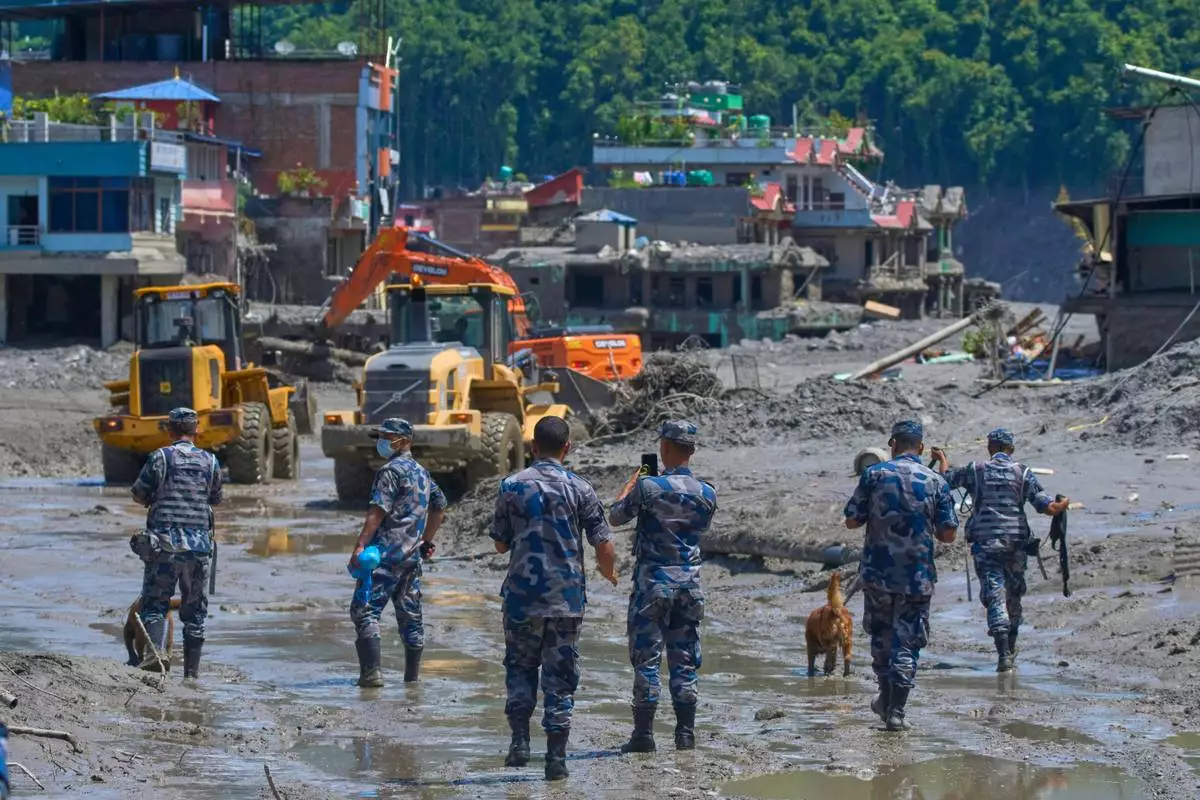
Nepalese policemen watch as earthmovers clear the debris of flash flooding in Nepal's Nuwakot district, Thursday, Aug. 27, 2026. (AP Photo/Niranjan Shrestha)
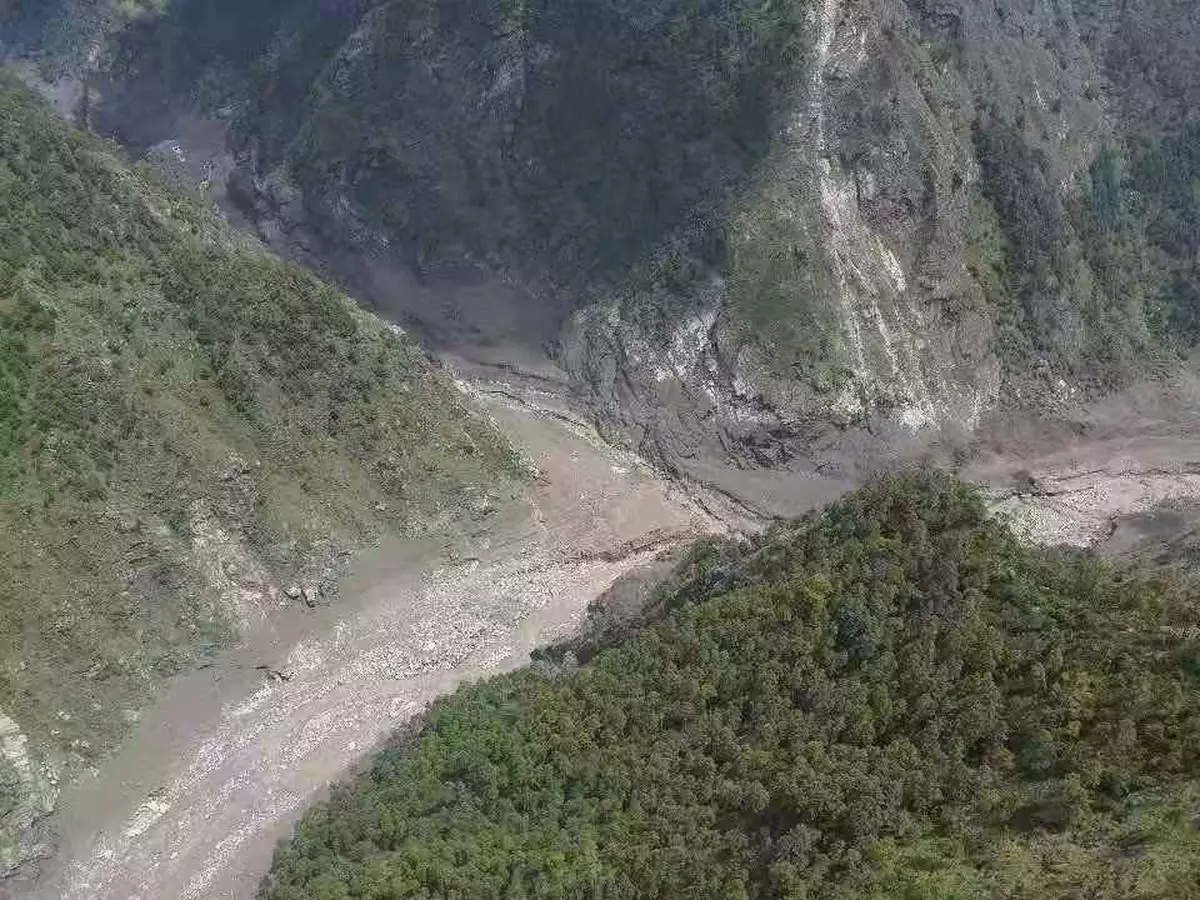
This photo released by Xinhua News Agency, shows a mudslide-hit area near Gyirong Port in southwestern China's Tibetan Autonomous Region on Wednesday, Aug. 26, 2026. (Xinhua via AP)