A Chinese national pulled out alive from a mudslide-hit hydropower tunnel in Nepal has recalled his miraculous rescue 11 days after the deadly disaster.
The individual, Lu Haitao, was located Saturday by Nepali Army rescuers, joined by a South Korean disaster expert team, in Rasuwa District. He was airlifted by an army helicopter to a local hospital and is in stable condition.
Recalling his ordeal inside the tunnel, Lu said he never lost hope, even when rescue seemed far away.
"Every time I saw the rescue team's lights in the distance, I would shout as loudly as I could," he recounted. But perhaps he was too far for them to hear. When the rescuers eventually drew close and their lights appeared directly in front of him on Saturday, he said it was almost impossible to believe it was real.
The mudslide, triggered by an ice-rock avalanche, swept through the Bhotekoshi and Trishuli river systems, causing extensive destruction to hydropower projects and infrastructure. Many workers remain unaccounted for, with search efforts ongoing at several sites.
The Chinese Embassy in Nepal confirmed on the same day that Nepalese rescuers had saved a Chinese national from a hydropower plant hit by the devastating mudslide.
Chinese Ambassador to Nepal Zhang Maoming later visited Lu at the hospital.
"We are deeply heartened by Lu Haitao's rescue today. It's a miracle and has further strengthened our resolve to continue rescue efforts for Chinese citizens in Nepal," Zhang said.
Local authorities in Nepal reported that the disaster has claimed 1,344 lives on the Nepalese side, with nearly 4,900 people still missing. Search and rescue operations continue with cooperation from technical teams from China, India, South Korea and other countries.
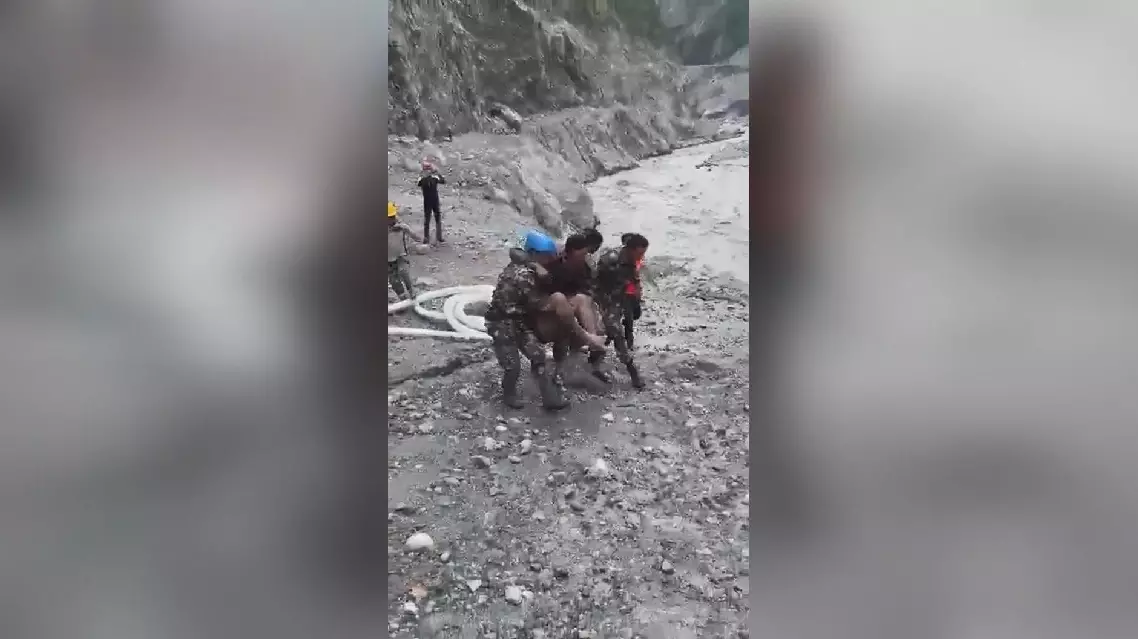
Chinese hydropower plant worker recalls miraculous rescue 11 days after Nepal mudslide
As the world grapples with multiplying crises and a dangerous decline in international trust, a senior Uzbek lawmaker has called for greater unity and multilateral cooperation to tackle shared crises.
Sodiq Safoyev, first deputy chairman of the Senate of the Oliy Majlis (national parliament) of Uzbekistan, said the world is navigating a complex era of "polycrisis" marked by wars, pandemics, and growing division, and that the response should not be to create new dividing lines, but to unite people and act collectively.
"Today we're living in a difficult time worldwide. Even some academicians defined the contemporary world as in a time of polycrisis or simultaneous occurrence of several catastrophic events, indeed, wars, pandemia, fragmentation of the world. And I think that it's a time not to create new division lines, but to unite the people and act together, vis-a-vis global challenges. I think that such an idea, proposed by his Excellency, Chairman [President] Xi Jinping, is very important, because it brings very clear idea that today we need to build cooperation and to think about the next generation's destiny, to save the earth from the challenges which we have," said Safoyev.
Safoyev also pushed back against the notion that deglobalization has taken hold, saying that international trade, information flows, and migration remain unstoppable. However, he warned that rising interconnectedness has been accompanied by a dangerous decline in mutual trust and understanding.
"Some people think that the process of deglobalization has started. I don't think so. I don't think that it's possible to stop international trade, flow of information, migration of people who want to study abroad, who want to work abroad. Globalization is not stopping and that's why interconnectedness of the nations only increases. But at the same time, simultaneously, we're absorbing diminishing of trust and understanding. It's a very dangerous combination. We connected, but we don't understand each other," said Safoyev.
Acknowledging that international organizations fail to meet public expectation in resolving conflicts, Safoyev said that regional mechanisms such as the Shanghai Cooperation Organisation (SCO) and cooperation between China and Central Asian countries offer models for effective cooperation.
"And I think that international organizations today are not matching expectations of the people in the regard with preventing conflicts, preventing the problems and resolving them. And it's the most challenging issues of the contemporary world. And I think that's why the experience of Shanghai organizations [the Shanghai Cooperation Organization] and cooperation between China and Central Asian countries is very important to demonstrate that it's possible," said Safoyev.
He also said that Central Asia serves as a prime example of overcoming fragmentation and uniting, as the region has transformed from one plagued by border disputes, suspicion, and resource conflicts a decade ago into a cohesive, cooperating bloc.
"From the more positive side, I'd like to note that the situation in Central Asia is something which might give us some more optimism. Twenty years ago, even 10 years ago, Central Asia was divided, divided by suspicion, divided by unresolved issues like unresolved borders, many conflicts of interest in the regard with the using the water resources of the transnational water resources etc. Today, in a relatively short time, period of time, Central Asia became completely different, more and more consolidating, uniting, having joint approach to the regional problems. And that's why Central Asia started to lure more attention worldwide. We're seeing that [there are] more interests of the global actors with the Central Asia, and I think that it demonstrates to the whole world that it's possible today now to overcome fragmentation and to unite. And that's why we, as usual, have both some concerns. But at the same time, we must be optimists in looking ahead," said Safoyev.
He also said that wisdom of humanity and visionary leadership inspire optimism that building future of common shared destiny is possible.
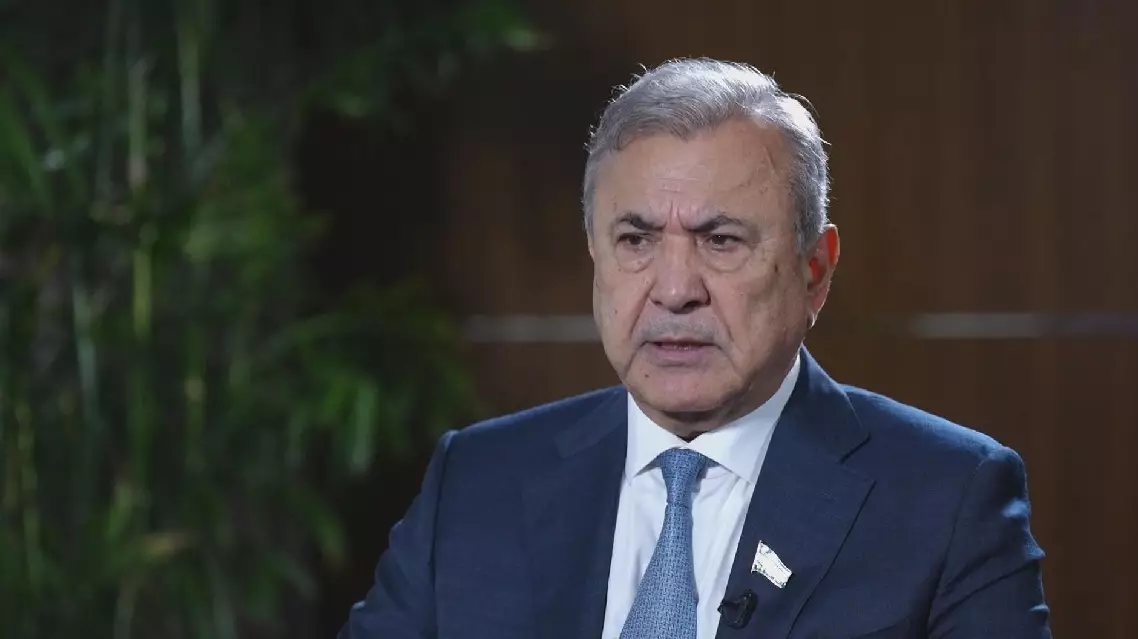
Senior Uzbek lawmaker calls for regional unity, cooperation amid global "polycrisis"