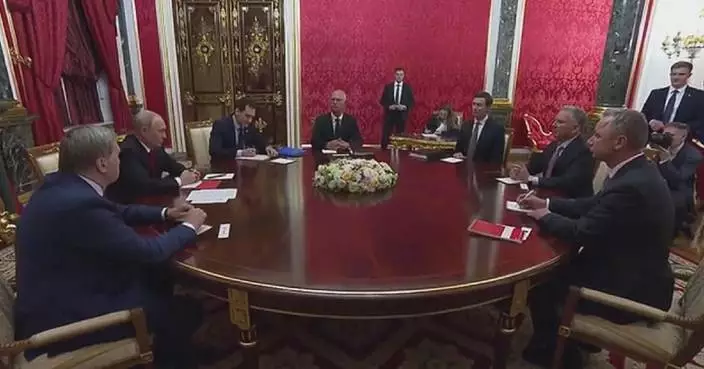
U.S. President Donald Trump's special envoy Steve Witkoff and Jared Kushner, Trump's son-in-law, arrived in Moscow on Saturday for talks aimed at ending the Russia-Ukraine conflict.
Witkoff and Kushner landed at Moscow's Vnukovo Airport at 12:52 local time (0952 GMT). They were welcomed at the airport by Russia's special presidential envoy Kirill Dmitriev.
Trump said Friday that the two U.S. negotiators were set to travel to Moscow and Kiev to seek chances to end the years-long Russia-Ukraine conflict.
Trump said at the White House that they were sent over to see "whether or not we can get something done" and "there may be a good chance that we'll do it."
Multiple media outlets reported earlier Friday that Witkoff and Kushner were set to visit Russia and Ukraine over the weekend.
Ukrainian President Volodymyr Zelensky later confirmed on social media that the two U.S. envoys would travel to Kiev by Sept. 6 following their visit to Moscow. He added that Ukraine would refrain from launching airstrikes during the negotiations and that Russia should reciprocate accordingly.
U.S. Central Intelligence Agency (CIA) Director John Ratcliffe made an unannounced visit to Russia on August 25.
During a radio interview on Aug. 26, Trump suggested that Ratcliffe's visit to Russia could help efforts to end the Russia-Ukraine conflict.
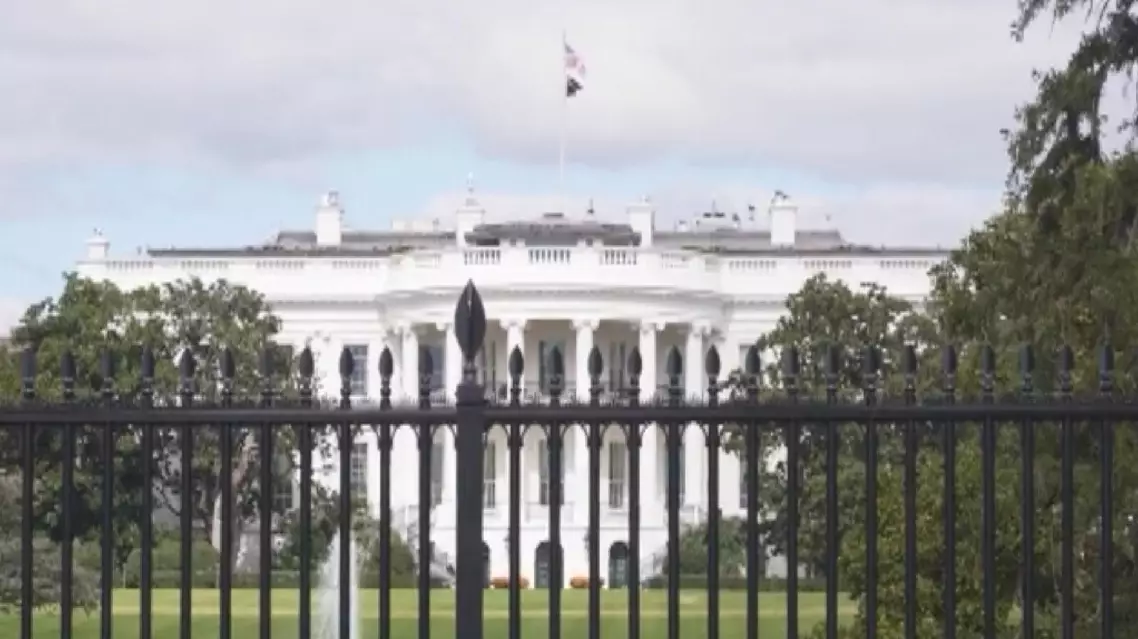
Trump's envoys arrive in Moscow for talks aimed at ending Russia-Ukraine conflict
The U.S. National Highway Traffic Safety Administration (NHTSA) has opened an investigation into Tesla's certification that its new Cybercab meets all applicable Federal Motor Vehicle Safety Standards (FMVSS).
The probe, formally designated as an Audit Query, was opened on Sept. 3 and covers an estimated 1,000 Cybercab vehicles, according to an NHTSA investigation document made public on Friday. It will examine the process and technical data Tesla relied upon when certifying the Cybercab, as well as related issues. Tesla began commercial deployment of a small number of Cybercab vehicles in Austin, Texas, on Thursday and notified the agency that it had certified the vehicles as compliant with all applicable FMVSS. Tesla also told the NHTSA that it plans to gradually expand commercial deployment of the Cybercab to include additional vehicles and locations.
The vehicles lack permanently attached conventional manual controls, such as a brake pedal, gas pedal, steering wheel and mirrors, according to the NHTSA.
The agency said the inquiry will examine, among other issues, the extent to which Tesla's certification depended on determinations that certain FMVSS are inapplicable to the Cybercab.
In the United States, the NHTSA establishes vehicle performance requirements, while automakers must certify that their vehicles meet applicable standards before entering the U.S. market, subject to agency oversight to confirm compliance. The NHTSA said it conducts investigations when certified vehicles appear not to adhere to those requirements.
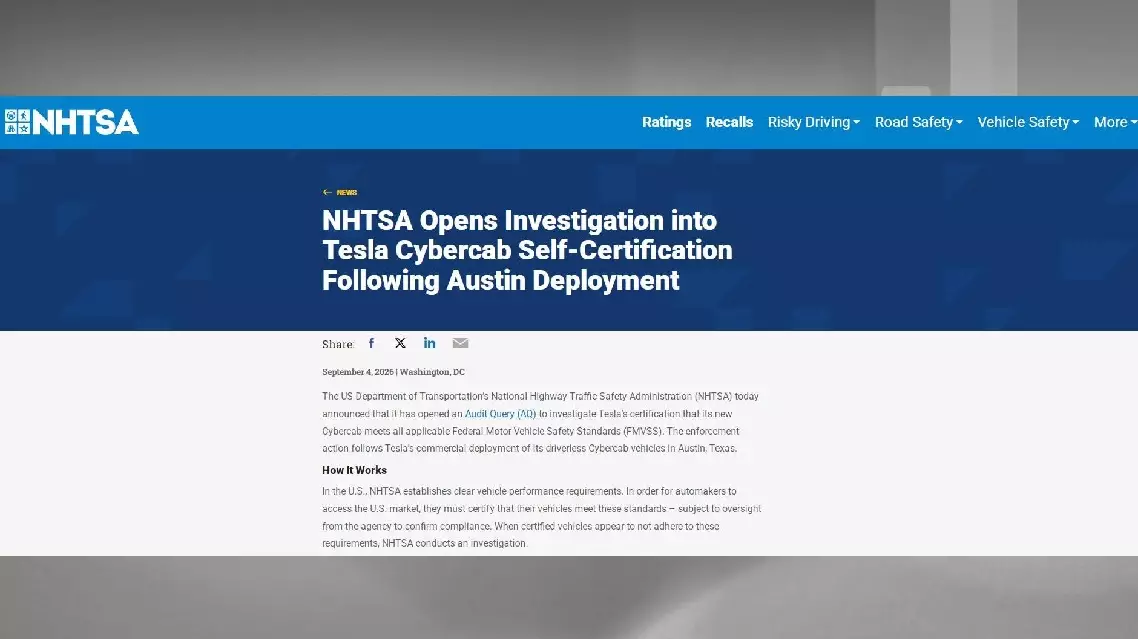
U.S. regulator opens probe into Tesla Cybercab self-certification