The China-South Africa Security Smart Trade Lane (SSTL), launched in August 2025, is making cross-border trade more efficient and extending BRICS trade benefits beyond the two countries to markets across Africa.
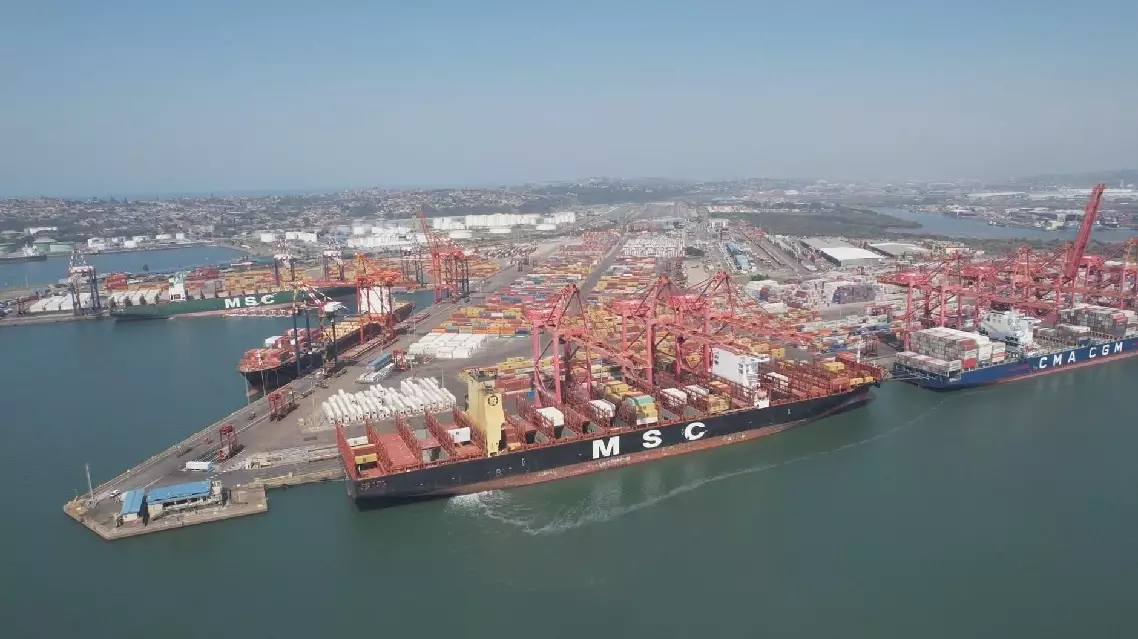
At the Port of Durban, South Africa's largest container port and a key maritime gateway for the wider southern African region, the first BRICS SSTL pilot route linking Xiamen in eastern China with Durban opened in 2025. A second route to Cape Town opened in June 2026.
Unlike traditional infrastructure cooperation in ports, railways and roads, the SSTL's significance lies in information sharing and mutual recognition of supervision between customs authorities, allowing qualified goods to enjoy faster and more efficient clearance.
"BRICS plays a very important role in our country. We have very close trading relationships with all the countries within BRICS. The important part about this model is that it reduces the cost of doing business between the two countries. The ships are actually coming to our country; they don't waste time and we are able to discharge cargo, and it can be efficiently transported out of the port to our hinterland," said Mpumi Dweba-Kwetana, port manager at the Durban Harbour for the Transnet National Ports Authority (TNPA).
Under the SSTL model, cargo inspected by the exporting country's customs is generally exempt from re-inspection by the importing country's customs, with priority clearance available in both countries.
Preliminary estimates show exports to South Africa are clearing more than 60 percent faster under the SSTL program. By the end of August 2026, the Xiamen-Durban route had recorded cumulative export value of 170 million yuan (about 25 million U.S. dollars), carrying 4,800 tonnes of cargo.
As goods transit through South Africa to other African markets, the model demonstrates how coordinated regional and multilateral efforts can open trade corridors.
"People from outside of the country, like Zimbabwe for example, Zimbabwe, Zambia, Mozambique, they come and buy from us," said Philip Netha, a market trader in Johannesburg.
Tshilidzi Bethuel Munyai, a member of South Africa's National Assembly, said China has been playing an important role in promoting regional connectivity and coordinated development.
"China has been part of supporting Africa infrastructure development, underpinned by the quality of the Belt and Road initiatives. It helps us to build the ports, build the rail infrastructure. China, it's also creating employment. This is significant," he said.
"Once we have coherence of what a region wants to do, what a continent wants to do, and what a multilateral platform like BRICS wants to do, it means you can leverage resources, both human and capital. It means we can open corridors of trade. It means we can also mobilize solidarity," said Busani Ngcaweni, director of the Center for Public Policy and African Studies at the University of Johannesburg.
Trade corridor boosts African markets under BRICS framework