China's robot skin sector is now moving toward mass production as rising demand from the fast-developing humanoid robot industry brings growing orders and accelerates product application.
The expansion of humanoid robot industry has been boosting the demand for bionic skin, with a textile equipment manufacturer based in Changshu City, east China's Jiangsu Province, receiving 13,000 orders in June alone.
The enterprise is capable of producing soft textile that can conduct heat, prevent static electricity, and provide collision buffering.
"Humanoid robots' clothing looks just like human clothing from a distance, but they are actually different in many points. First, they are different in the way they are put on and taken off. Second, they are different in their joints. You see this purely white clothing of ours, we make different structures and differentiations at many joints, not only to meet its strength, elasticity and supportive capacity, but also to take care of its heat dissipation," said Liang Yong, general manager of the business department of Jiangsu Jinlong Technology Co., Ltd.
China's flexible sensing enterprises are also accelerating the mass production of robot skin. A sensor manufacturing company in the nearby Suzhou City is capable of producing flexible thin-film pressure sensors, which enable robots to sense the magnitude of force and control their gripping strength.
"Humanoid robots now can use their 'hands' to grasp eggs, drive screws, and perform many other similar tasks. We expect humanoid robots to enter households in the future, so they should be able to sense the touch like caress. Our electronic skin is also able to generate heat, so when you shake hands with a robot, you can feel the warmth of its hand," said Zhou Zhen, chairman of Suzhou Nengsida Electronic Technology Co., Ltd.
Industry insiders said currently, the robot skin sector is at a critical turning point, where many firms are moving away from small-scale lab-based manufacturing to establish standardized production lines for mass production.
"We have now cumulatively delivered over 40,000 units for our orders and many of them were ordered in the past six months. This demonstrates that the demand for the industry is growing rapidly," said Chen Shuting, principal scientist at Zhejiang Fulai New Materials Co., Ltd.
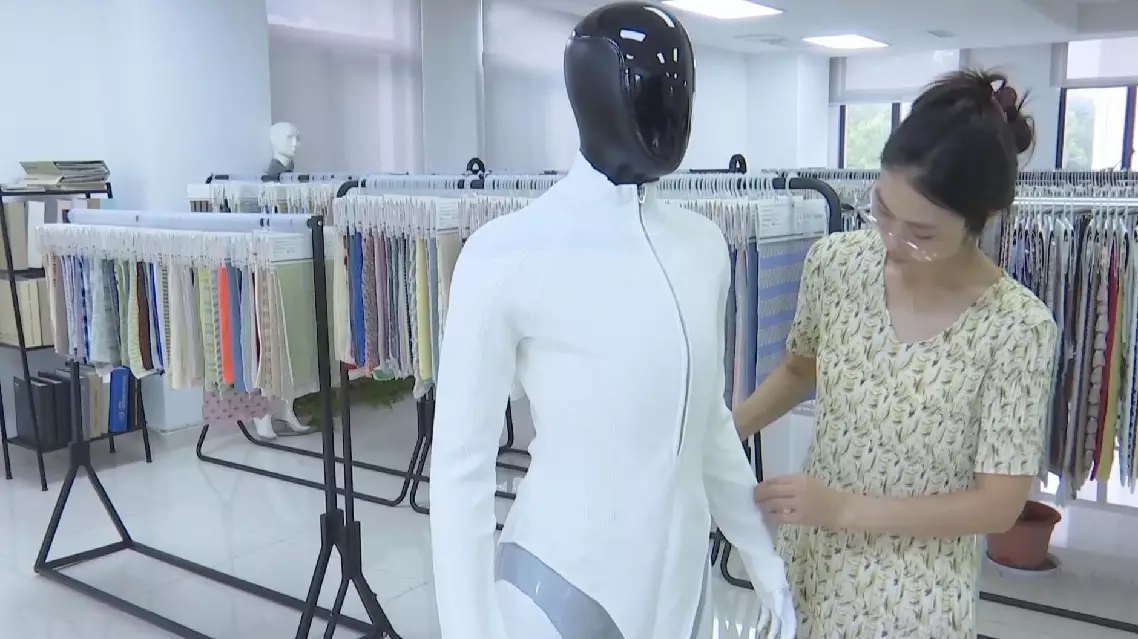
China's robot skin aims at mass production
An age-old feather duster craft in north China's Hebei Province has found new life online, as livestreaming turns a village tradition into a source of income for elderly residents. In Luan'nan County, Tangshan City, Liu Wenhao, Party secretary of Zhangmawan Village, is promoting the village's handmade feather dusters alongside fellow villagers in livestreams. Since 2024, he has led villagers in bringing the traditional craft online, quickly turning it into an internet sensation.
Elderly villagers now craft dusters while also serving as online hosts, participating in livestreams and welcoming tourists. Liu Huiying is one of them.
"This is no small income. I earn about 20,000 yuan (about 2,981 U.S. dollars) a year, which is more than enough. They call me an internet celebrity. I'm happy," she said.
The feather duster craft has a long history in Zhangmawan. Once a sideline for villagers during the agricultural off-season, craftsmen worked from dawn to dusk only to sell a single duster for 0.3 to 0.5 yuan. Sales were slightly better at rural fairs, but earnings were barely enough to make a living. As modern cleaning products diversified, traditional feather dusters gradually faded from daily life.
In recent years, with the rise of short-video platforms, several young people in the village began experimenting with short videos. Their first video showing the making of a feather duster garnered more than 600,000 views.
"Our village's traditional craft was well-known throughout the region. So we thought, with so many people here skilled at making feather dusters, why not sell them online and help boost their incomes?" said Liu.
Zhangmawan has more than 200 residents over the age of 60. To boost their incomes and pass on the craft, product transformation was key. Young villagers pooled their ideas and decided to enter the cultural and creative market.
While veteran artisans persisted in handmade production, younger people focused on innovative designs, launching new items such as car hangings, bag charms, desktop ornaments and cat teasers, tailored to modern aesthetics and lifestyles.
Online popularity has also boosted offline tourism. The village has leveraged its advantages to offer craft workshops, rural sightseeing, farm meals and educational study tours, attracting a large number of visitors and children.
"You can hang it on a schoolbag or car keys -- it can go in many places. And if something gets dirty, you can use it to sweep," said Meng Shixuan, a young visitor.
"We want to keep updating our cultural and creative feather duster products, and through short videos and livestreaming, develop the village's study tour and sightseeing businesses to provide more jobs and income opportunities," Liu said.
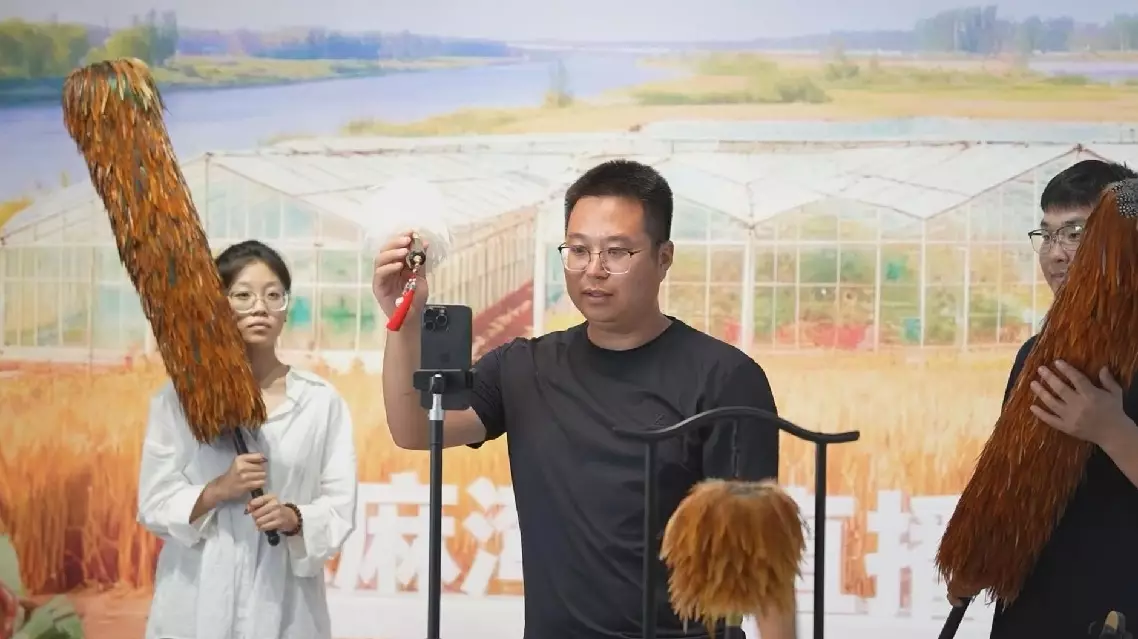
Chinese village turns traditional feather duster craft into online hit