Skip to Content Facebook Feature Image

China calls for restraint, negotiations as Red Sea tensions escalate

China

China

China

China calls for restraint, negotiations as Red Sea tensions escalate

2026-09-16 14:38 Last Updated At:17:27

A Chinese envoy on Tuesday called on all warring parties in Yemen to stop the armed conflict and return to the track of diplomatic negotiations at an early date, as the situation is on the verge of a full escalation.

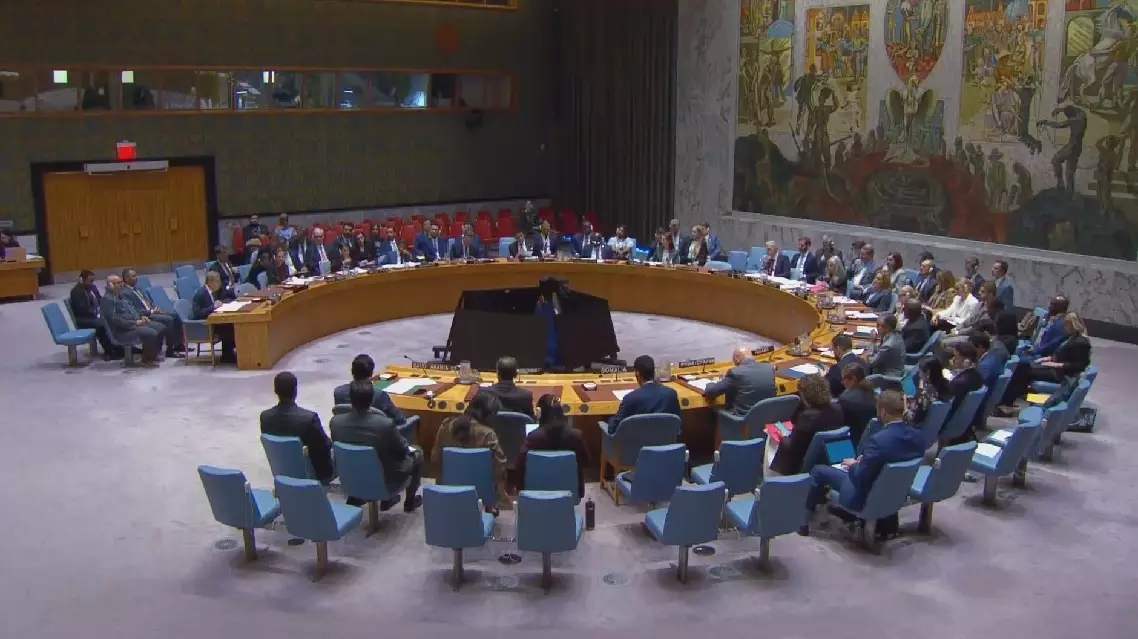
China expresses deep concern over the escalating armed conflicts in Yemen and the Red Sea, said Sun Lei, charge d'affaires of China's Permanent Mission to the United Nations, at an emergency session of the UN Security Council to discuss the situation surrounding the critical Bab al-Mandab Strait shipping route.

Noting that China has always supported maintaining the respective sovereignty, security and territorial integrity of Yemen and Saudi Arabia, Sun said China opposes attacks on civilian infrastructure, including energy facilities.

The Red Sea and the Bab al-Mandab Strait are important international channels for transporting goods and energy, and maintaining the normal shipping order in the relevant waters is a common international responsibility, said the Chinese envoy, emphasizing that China opposes any attack on civilian vessels, and the navigation rights of all countries' merchant vessels in the Red Sea in accordance with international law should be respected by all parties.

"The Yemen situation is on the verge of a full escalation. No matter how big the differences are, relevant sides should seek a way out with negotiations rather than gunfire. The top priority now is for all parties to exercise calm and restraint, and immediately stop the conflict," said Sun.

China supports Gulf countries in leveraging their advantages and playing a greater role in mediating the conflicts, said the Chinese envoy.

He said China stands ready to work with all parties to help keep international shipping lanes safe, end the conflicts in the Middle East, and restore security and stability in the region.

Yemen's Houthi group said on Tuesday that Saudi warplanes had carried out 52 airstrikes across five provinces over the past 24 hours, as cross-border hostilities between the two sides continued to escalate.

Houthi military spokesperson Yahya Sarea said in a statement that the strikes "will not go unanswered," suggesting further Houthi retaliation against Saudi Arabia.

The cross-border escalation comes amid a Houthi offensive launched on Sept. 3 that has shifted front lines along Yemen's Red Sea coast. The group captured the strategic port city of Mocha on Sept. 10 before advancing into the Bab al-Mandab area and seizing Mayun Island at the heart of the strait on Sept. 11.

Renewed fighting in Yemen has displaced at least 125,000 civilians since the start of September, said the UN Office for the Coordination of Humanitarian Affairs (OCHA) on Monday.

The UN Human Rights Office has verified 40 civilian casualties -- eight dead and 32 injured in the first two weeks of this month. Women and children account for half of those killed and more than half of those injured.

Yemen's conflict erupted in late 2014 when the Houthis seized Sanaa and much of northern Yemen, prompting a Saudi-led coalition to intervene in March 2015 in support of the internationally recognized government.
China calls for restraint, negotiations as Red Sea tensions escalate
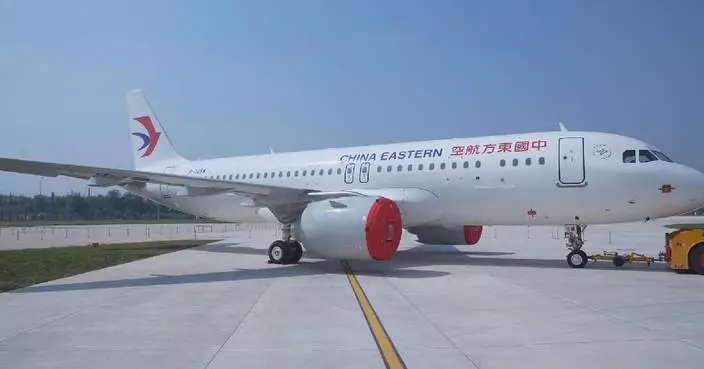
China calls for restraint, negotiations as Red Sea tensions escalate

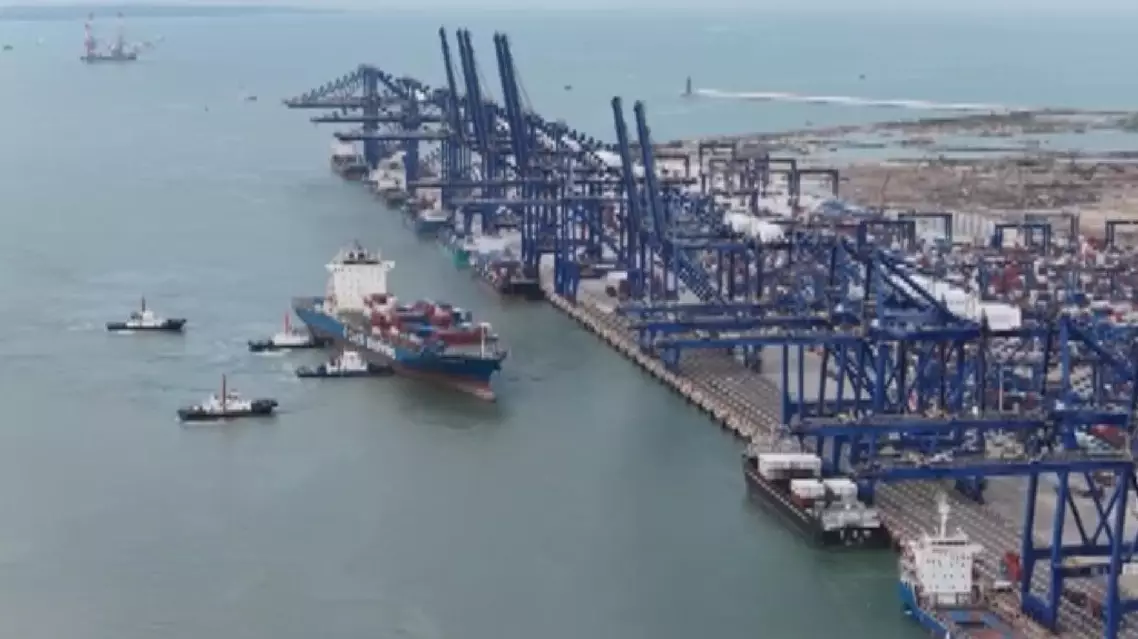
With the Pinglu Canal in the Guangxi Zhuang Autonomous Region officially open to shipping, Yangpu Port in south China's Hainan Province will fully leverage the policy and geographical advantages of the Hainan Free Trade Port (FTP) to accelerate its development into an international shipping hub, further connecting the New International Land-Sea Trade Corridor with global markets.

The canal stretches along the New International Land-Sea Trade Corridor, a strategic trade route connecting China's inland regions with ASEAN and other global markets. It is the first river-to-sea canal project planned and coordinated at the national level since the founding of the People's Republic of China in 1949.

Located in the northwest of the island province, Yangpu Port is the deep-water port closest to the main international shipping routes in the Beibu Gulf, and is also one of the maritime outlets of the New International Land-Sea Trade Corridor.

The opening of the Pinglu Canal to navigation has opened up a new sea-river intermodal transport corridor for goods entering and leaving the southwestern region, and has also brought new opportunities to some enterprises.

At a petrochemical enterprise in Danzhou City, robotic arms are bagging and packaging chemical products on a conveyor belt, and these goods will be shipped to southwest China's Guizhou Province and other places.

Most of this enterprise's customers in the Chinese mainland are concentrated in the southwestern Chinese provinces of Yunnan, Sichuan and Guizhou. At present, the enterprise is adjusting its future shipping plans in response to the logistics changes brought by the opening of the Pinglu Canal to navigation.

"We plan to shift about 70 percent of our goods to this new sea-river intermodal transport corridor, and overall logistics costs are expected to drop by 30 to 40 percent. Next year we also plan to build another plant in Hainan, which will allow us to take advantage of the free trade port's policies, import raw materials from places like Indonesia, and after processing, sell the products to the southwestern region or re-export them. This is expected to add about 200,000 tons of production capacity," said Wei Jianqiang, head of Hainan Oxiranchem Co., Ltd.

Behind the enterprises' expansion of production and the busier flow of goods, there is also the upgraded service support made possible by the opening of the Pinglu Canal to navigation. In this regard, the relevant authorities have also made full preparations.

"After the Pinglu Canal opens to navigation, we will strengthen safeguard measures in areas such as facilitating the entry and exit of container ships on fixed routes, credit-based regulation, and cross-regional coordination," said Jiang Yufeng, head of the Xiaochantan Maritime Patrol and Law Enforcement Brigade, Yangpu Maritime Safety Administration.

Pinglu Canal underscores growing role of Yangpu Port as int'l shipping hub

Pinglu Canal underscores growing role of Yangpu Port as int'l shipping hub

Recommended Articles