As the Mid-Autumn Festival draws near, mooncake sales across China have surged to their annual peak, with merchants offering minimalist gift boxes, sugar-free options, and creative products featuring local culture to satisfy the diverse tastes of consumers nationwide.
The Mid-Autumn Festival is traditionally associated with the full moon, which symbolizes unity, harmony and family reunion. This year, the festival falls on Sept 25. Mooncake is a Chinese bakery product traditionally eaten during the festival.
This year, mooncake gift boxes span a reasonable price range, with boxes priced between 30 yuan (4.4 U.S. dollars) and 100 yuan (14.7 U.S. dollars) featuring minimalist packaging each. Sugar-free and innovative mooncakes have also been produced to grab young people.
"Health is now the main focus. For example, medicinal food series and low-sugar series are selling relatively well," said a mooncake vendor.
In Gaoping City of north China's Shanxi Province, local merchants have launched customized services to meet customers' demand for specialty mooncakes. A mooncake, with a diameter of 60 centimeters, is inscribed with the words "Hometown of Emperor Yandi" and paired with a wheat ear pattern, symbolizing a bumper harvest and favorable weather. They have also optimized the recipe and reduced fat and sugar so that the traditional mooncake retains its flavor while being healthier to eat. In Heze City of east China's Shandong Province, local artisans have combined traditional flower bun craftsmanship with Mid-Autumn cuisine to create innovative steamed mooncakes with unique shapes and auspicious meanings. With their distinctive creativity and authentic taste, the innovative steamed mooncakes have become popular in the market and are well received by consumers.
"Nowadays, people appreciate holiday treats that are creative and offer a ceremonial sense. These flower bun mooncakes are visually stunning, especially the lotus and jade rabbit designs, which are very festive. They are colored with fruit and vegetable juice and are steamed, so they have a soft texture," said a local resident.
In Shandong's Zibo City, which rose to fame for barbecue in early 2023, some merchants have integrated local cultural features into the traditional food. After wrapping fillings in kneaded dough, pastry chefs place them into custom molds, and cultural creative mooncakes imprinted with landmarks are instantly formed.
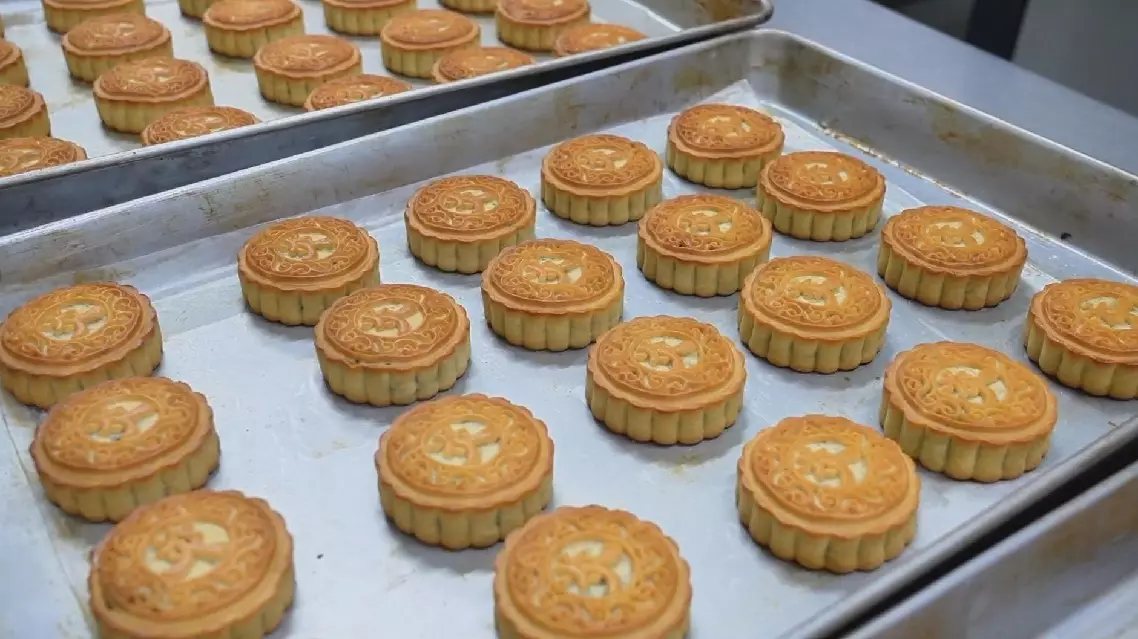
Mooncake sales hit peak as Mid-Autumn Festival approaches
With the Pinglu Canal in the Guangxi Zhuang Autonomous Region officially open to shipping, Yangpu Port in south China's Hainan Province will fully leverage the policy and geographical advantages of the Hainan Free Trade Port (FTP) to accelerate its development into an international shipping hub, further connecting the New International Land-Sea Trade Corridor with global markets.
The canal stretches along the New International Land-Sea Trade Corridor, a strategic trade route connecting China's inland regions with ASEAN and other global markets. It is the first river-to-sea canal project planned and coordinated at the national level since the founding of the People's Republic of China in 1949.
Located in the northwest of the island province, Yangpu Port is the deep-water port closest to the main international shipping routes in the Beibu Gulf, and is also one of the maritime outlets of the New International Land-Sea Trade Corridor.
The opening of the Pinglu Canal to navigation has opened up a new sea-river intermodal transport corridor for goods entering and leaving the southwestern region, and has also brought new opportunities to some enterprises.
At a petrochemical enterprise in Danzhou City, robotic arms are bagging and packaging chemical products on a conveyor belt, and these goods will be shipped to southwest China's Guizhou Province and other places.
Most of this enterprise's customers in the Chinese mainland are concentrated in the southwestern Chinese provinces of Yunnan, Sichuan and Guizhou. At present, the enterprise is adjusting its future shipping plans in response to the logistics changes brought by the opening of the Pinglu Canal to navigation.
"We plan to shift about 70 percent of our goods to this new sea-river intermodal transport corridor, and overall logistics costs are expected to drop by 30 to 40 percent. Next year we also plan to build another plant in Hainan, which will allow us to take advantage of the free trade port's policies, import raw materials from places like Indonesia, and after processing, sell the products to the southwestern region or re-export them. This is expected to add about 200,000 tons of production capacity," said Wei Jianqiang, head of Hainan Oxiranchem Co., Ltd.
Behind the enterprises' expansion of production and the busier flow of goods, there is also the upgraded service support made possible by the opening of the Pinglu Canal to navigation. In this regard, the relevant authorities have also made full preparations.
"After the Pinglu Canal opens to navigation, we will strengthen safeguard measures in areas such as facilitating the entry and exit of container ships on fixed routes, credit-based regulation, and cross-regional coordination," said Jiang Yufeng, head of the Xiaochantan Maritime Patrol and Law Enforcement Brigade, Yangpu Maritime Safety Administration.
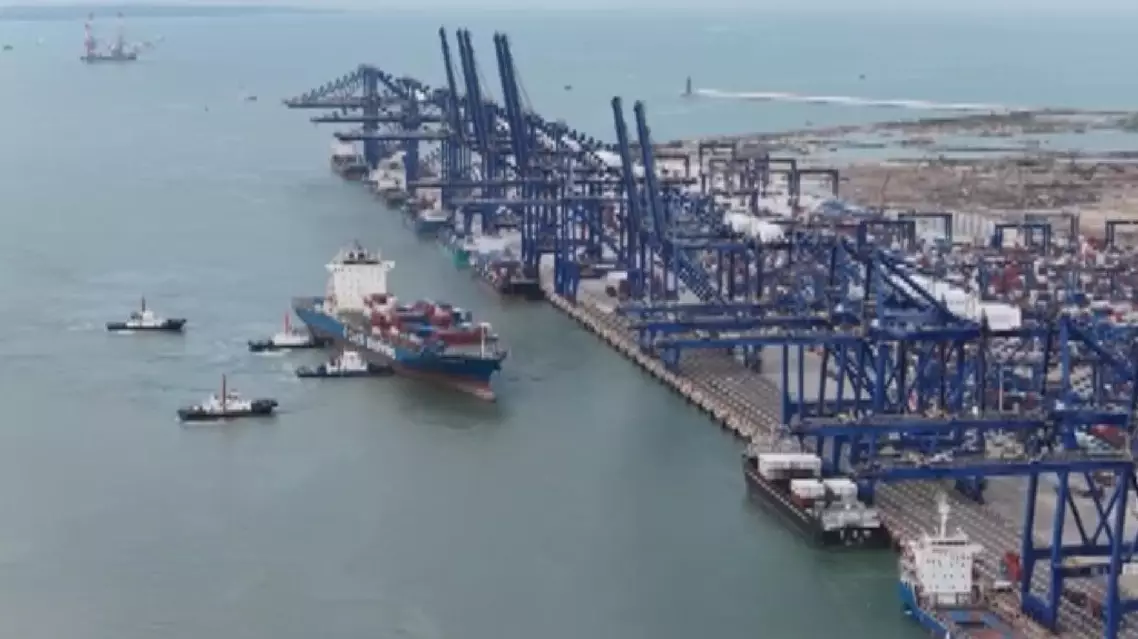
Pinglu Canal underscores growing role of Yangpu Port as int'l shipping hub